

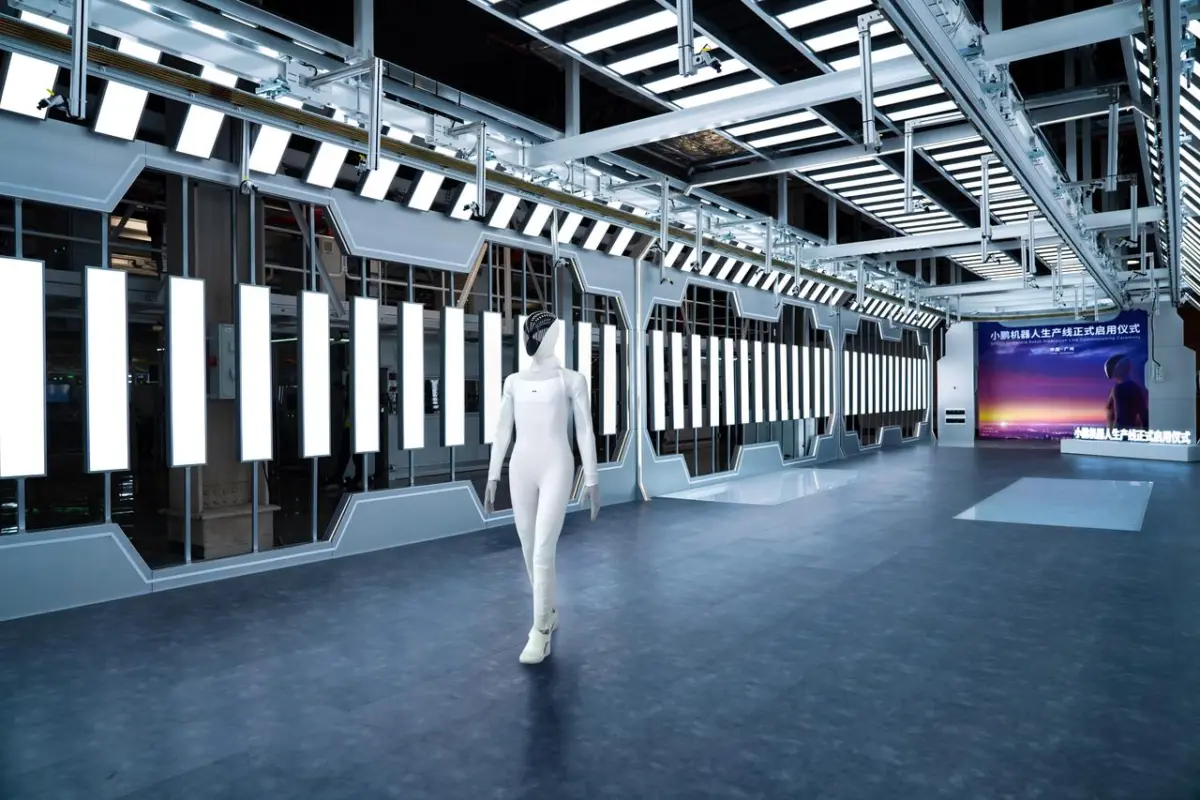
GUANGZHOU — In what represents a monumental shift for both the electric vehicle industry and the burgeoning embodied AI sector, Chinese automaker XPeng has officially powered up what it claims is the world’s first fully automated production line dedicated to advanced humanoid robots.
The milestone event took place at the company’s advanced manufacturing facility in Guangzhou, where the next-generation "IRON" humanoid robot walked off the assembly line entirely under its own power. According to XPeng, the newly commissioned line boasts a staggering 80% automation rate for its core manufacturing processes, signaling a definitive transition for the company from research-and-development prototypes to true industrial-scale manufacturing.
While numerous technology startups and automotive giants have showcased nimble bipedal machines on theatrical stages over the last few years, XPeng’s latest maneuver moves the needle past the era of viral marketing tricks. With a target of achieving mass production by the end of 2026, the company is attempting to establish a commercial blueprint that rivals—and potentially outpaces—its Western competitors.
Main Facts: The Anatomy of an Industrial Milestone
The commissioning of the Guangzhou production line is not merely a symbolic victory; it represents the convergence of automotive manufacturing rigor and cutting-edge artificial intelligence.
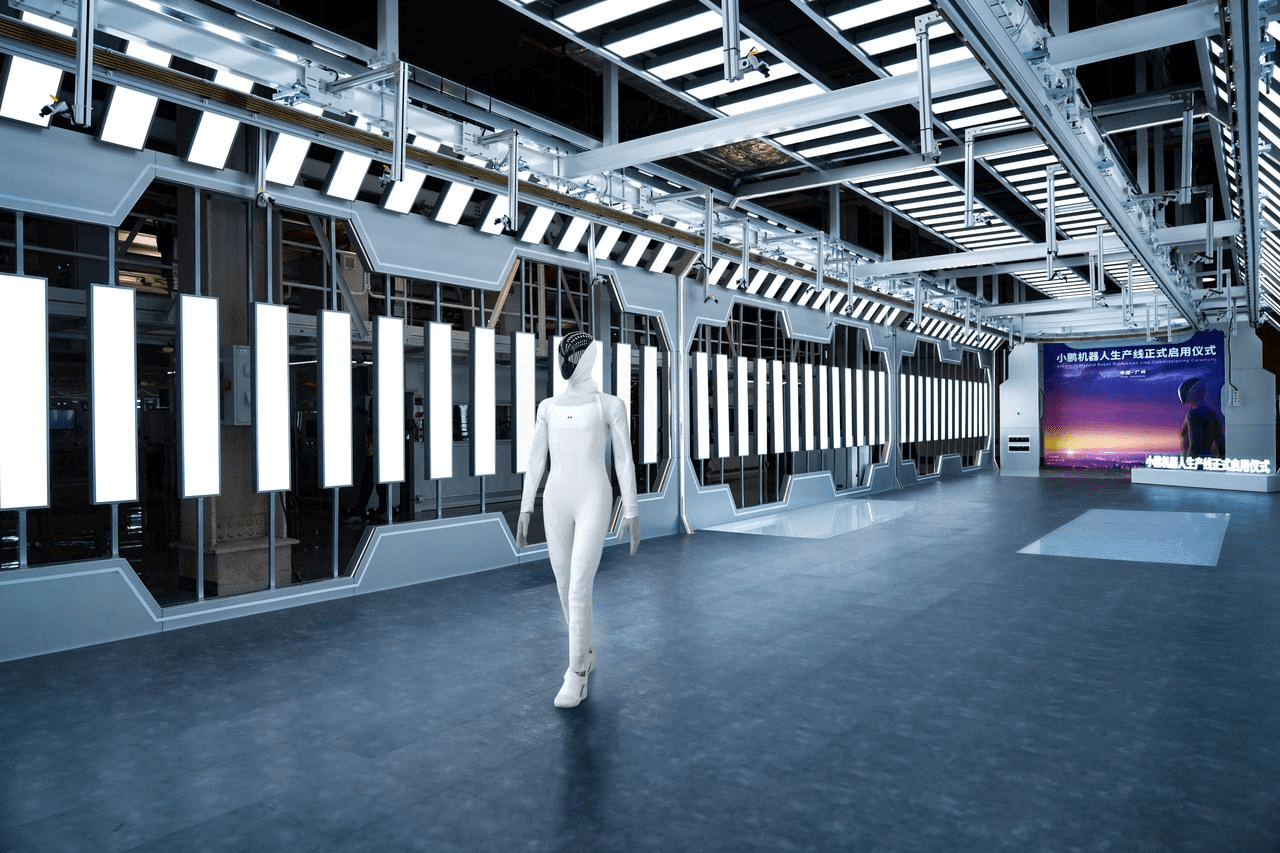
- Automotive-Grade Manufacturing: XPeng has leveraged its decades of EV production experience to build the IRON line from scratch. The company is applying the same strict quality control, supply chain oversight, and structural testing used for its electric cars to a product category with no historical precedent.
- Exceptional Physical Specs: The IRON robot features an impressive 76 degrees of freedom across its entire skeletal structure, complemented by 21 degrees of freedom in each hand. Its frame is encased in a flexible lattice structure that serves both as a protective outer skin and a crucial safety mechanism for human-robot collaboration.
- Proprietary Intelligence: Under the hood, IRON runs on a trio of XPeng’s proprietary Turing AI chips, generating up to 2,250 TOPS (Tera Operations Per Second). This formidable computing power allows the robot to run its Physical AI foundation model entirely onboard, eliminating the need for remote human teleoperation during standard tasks.
- Aggressive Production Targets: XPeng aims to scale production swiftly, targeting an output of over 1,000 units per month on its path toward a long-term goal of one million robots annually by 2030. Initial deployments will see the robots integrated into XPeng’s own retail stores and corporate campuses before wider commercial sales commence in 2027.
Chronology: From a Viral Stage Stunt to the Assembly Line
To understand the significance of IRON’s debut on the factory floor, one must look back at the skepticism that initially greeted the platform.
November 2025: The Viral Revelation
XPeng first introduced the world to the IRON humanoid during the company’s annual AI Day. The robot’s fluid, human-like bipedal gait stunned onlookers—so much so that skepticism ran rampant across social media. Critics openly accused XPeng of utilizing a human actor hidden inside an elaborate costume. To debunk the conspiracy theories live on stage, engineers famously unzipped and cut open the robot’s leg housing to expose its intricate network of actuators and internal framing.
August 2026: Capital Infusion
The robotics arm of XPeng secured a staggering $900 million in a private funding round, valuing the robotics division at $6.3 billion. Led by venture capital heavyweight IDG Capital, with significant backing from tech giants Tencent and Alibaba, the funding round stood as the largest single private investment in China’s embodied AI sector to date, laying the financial bedrock for the production line’s development.
September 2026: Factory Commissioning
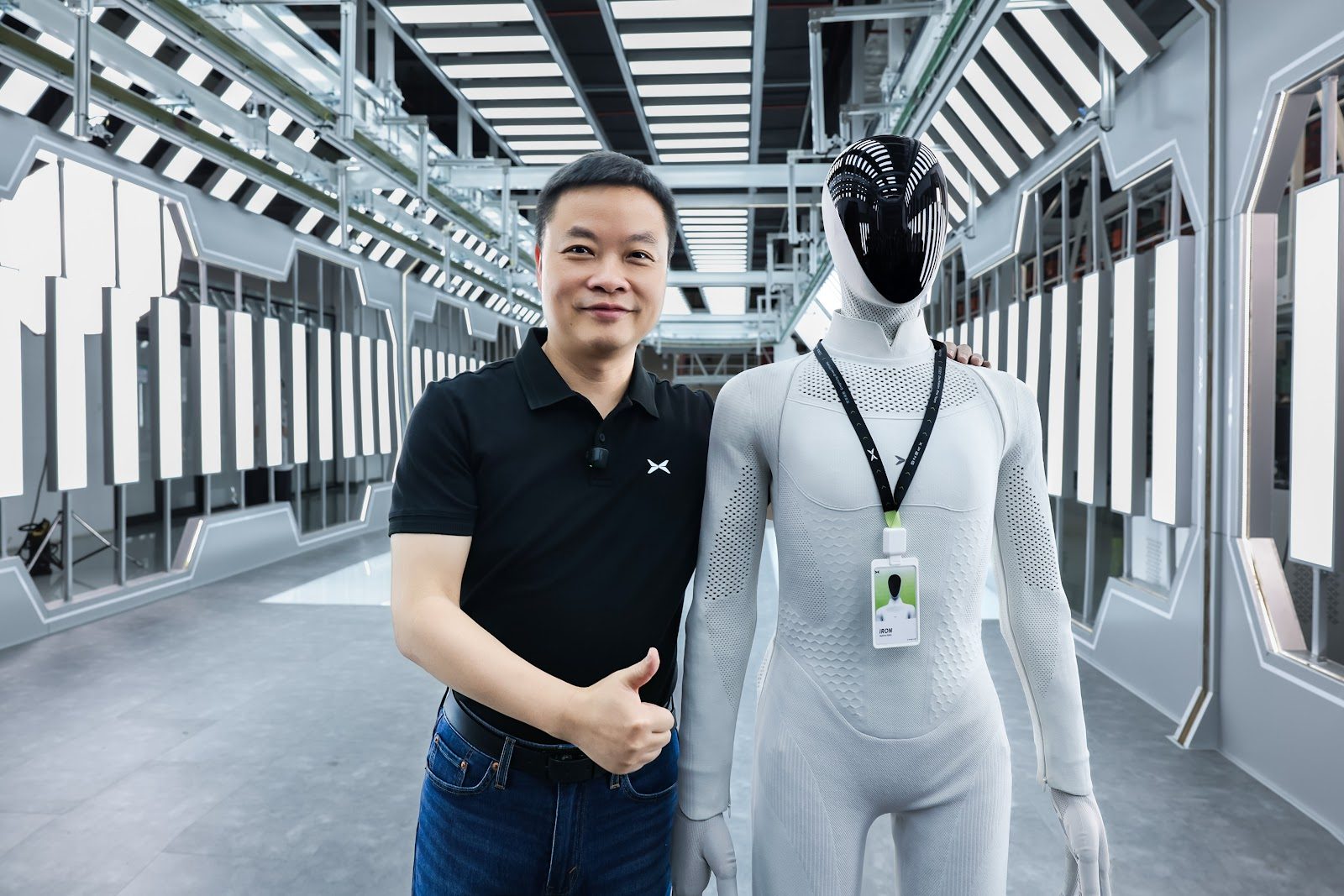
XPeng officially switched on the Guangzhou production line. Chairman and CEO He Xiaopeng marked the occasion by physically clipping an official staff employment badge onto an IRON robot, signaling that the machine was officially "on the payroll" and ready to begin real-world duties.
Supporting Data and Financial Backing
The economics of humanoid robotics have long been the primary barrier to mass adoption. Building a single functional prototype in a laboratory setting can cost hundreds of thousands of dollars; scaling that production down to a commercially viable price point requires billions in capital and unprecedented supply chain optimization.
XPeng’s recent $900 million funding haul provides the liquidity necessary to weather the high burn rate associated with scaling hardware manufacturing. Furthermore, the company has stated its long-term financial objective: achieving a per-unit gross margin for the IRON robot that is "significantly higher" than its traditional electric vehicle lineup.
However, industry analysts point out that these figures remain projections. While the underlying technology—powered by the Turing AI chips and robust venture capital backing—is formidable, XPeng has yet to ship a single production unit to a paying commercial customer. The true test of the company’s financial model will depend on whether the robots can deliver measurable labor efficiencies once deployed inside retail environments.
Official Responses and Leadership Vision
During the commissioning ceremony in Guangzhou, XPeng’s leadership emphasized the groundbreaking and uncharted nature of the manufacturing feat.
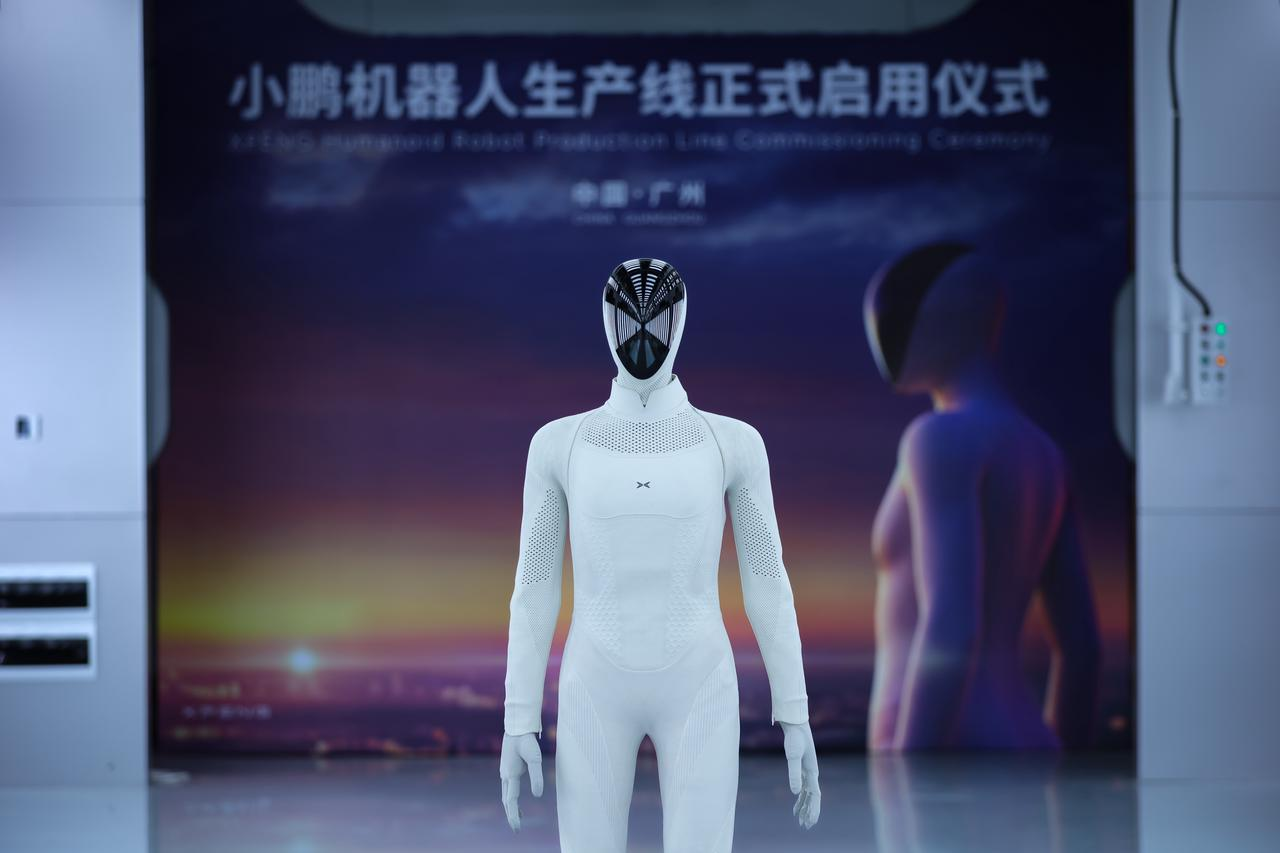
"The robot production lines were created from scratch with no precedent to follow," told He Xiaopeng, XPeng’s chairman and CEO, addressing the assembled engineers and media. "Today’s step is small, but XPeng is building the production lines for an entirely new product category."
He’s framing of the event as a "small step" underscores the immense challenge ahead. While turning on an automated line is a major achievement, transitioning from a single unit walking off the assembly line to a high-volume, defect-free manufacturing ecosystem remains the ultimate hurdle for the robotics industry. By outfitting the robot with an employee badge, leadership sought to humanize the technology, positioning IRON not just as a piece of machinery, but as a foundational pillar of the company’s future workforce.
The Tesla Comparison: A Race for Factory Supremacy
In the global race for humanoid robot supremacy, comparisons to Tesla and CEO Elon Musk are inevitable—and currently, the narrative heavily favors the Chinese automaker.
Elon Musk previously stated ambitions for Tesla to manufacture roughly 10,000 Optimus robots throughout 2026. However, reality has repeatedly collided with those timelines. Earlier in the year, Tesla admitted that none of its deployed Optimus units were yet performing commercially useful labor, and initial production at the Fremont facility has faced slow outputs and continuous delays regarding the long-awaited V3 hardware reveal. Tesla’s strategy has largely relied on retrofitting existing automotive assembly lines to accommodate bipedal robots.

In contrast, XPeng has constructed a dedicated, highly automated manufacturing ecosystem specifically optimized for humanoid production from day one. While Tesla commands immense brand loyalty and formidable AI talent through its Full Self-Driving (FSD) endeavors, XPeng has managed to physically beat its Silicon Valley rival to the punch by transitioning from concept to an active, automated manufacturing line.
Implications for the Future of Labor and Manufacturing
The activation of XPeng’s automated line carries profound implications for multiple global sectors:
- The Evolution of Smart Manufacturing: If XPeng successfully hits its target of mass production by late 2026, it could establish a manufacturing template for competitors worldwide, proving that automotive-grade precision can be successfully translated to bipedal robotics.
- Corporate Workforce Integration: By deploying the initial waves of IRON units into its own retail showrooms and corporate campuses, XPeng is opting for a controlled rollout. This strategy allows the company to stress-test the robots’ onboard foundation models in dynamic, human-centric environments without exposing early external customers to software bugs or hardware failures.
- Geopolitical and Economic Shifts: The massive financial backing from Chinese tech giants like Alibaba and Tencent, combined with substantial state-backed momentum in the broader EV and AI sectors, highlights China’s aggressive push to dominate the next generation of industrial automation.
Industry Takeaway
Humanoid robots have historically thrived in controlled laboratory demonstrations where stage tricks can easily mask underlying manufacturing limitations. Building thousands of these complex machines reliably, affordably, and with generalized physical AI capabilities is the exact wall that has stymied competitors like Tesla.
XPeng has undeniably taken a massive, tangible swing at this challenge by bringing an automated, automotive-grade production line online. The company’s hardware specifications are elite, and its financial backing is secure. Yet, the true test of this endeavor will not be measured by how smoothly a robot walks down a newly painted factory floor, but by whether IRON can perform genuinely useful, revenue-generating labor when it begins appearing in XPeng stores.

As the industry looks toward the end of 2026 and the projected rollout of commercial deliveries in 2027, the gap between theatrical demos and industrial reality is finally beginning to close. Whether XPeng can maintain its lead—or if Western competitors will rapidly adapt to match its manufacturing pace—will define the next era of technological innovation.
