

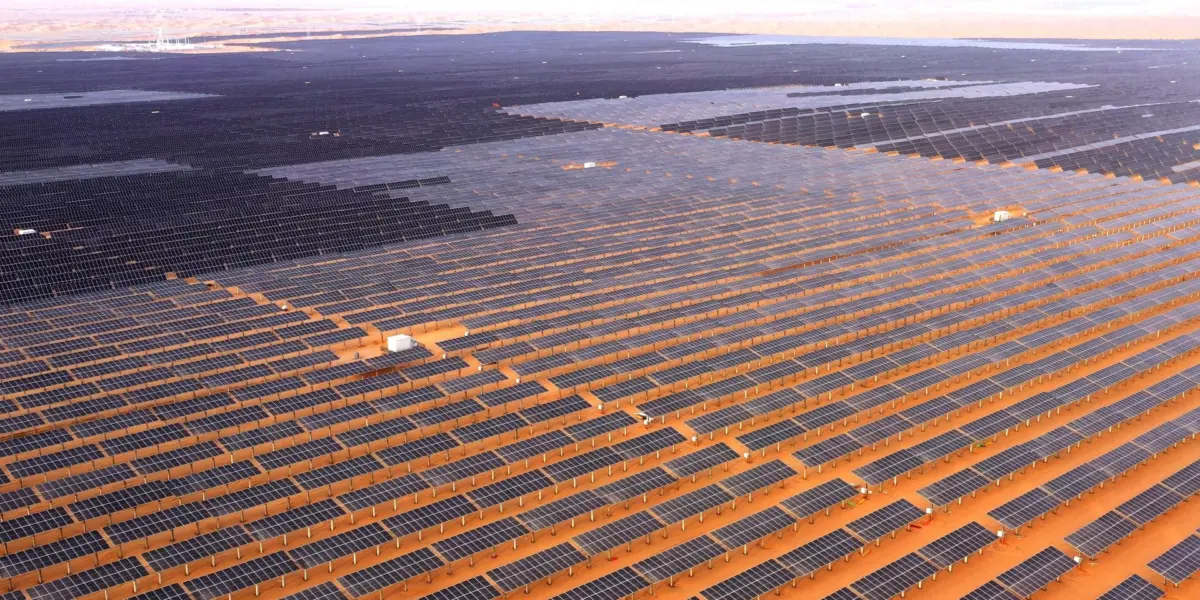
BEIJING — For decades, the global narrative of economic growth was inextricably tethered to an insatiable appetite for fossil fuels, with China acting as the undisputed engine of that expansion. Between 2000 and 2025, the world’s second-largest economy accounted for roughly half of all worldwide increases in oil demand and more than 90% of the growth in coal demand.
Today, that paradigm is undergoing a historic and seismic reversal.
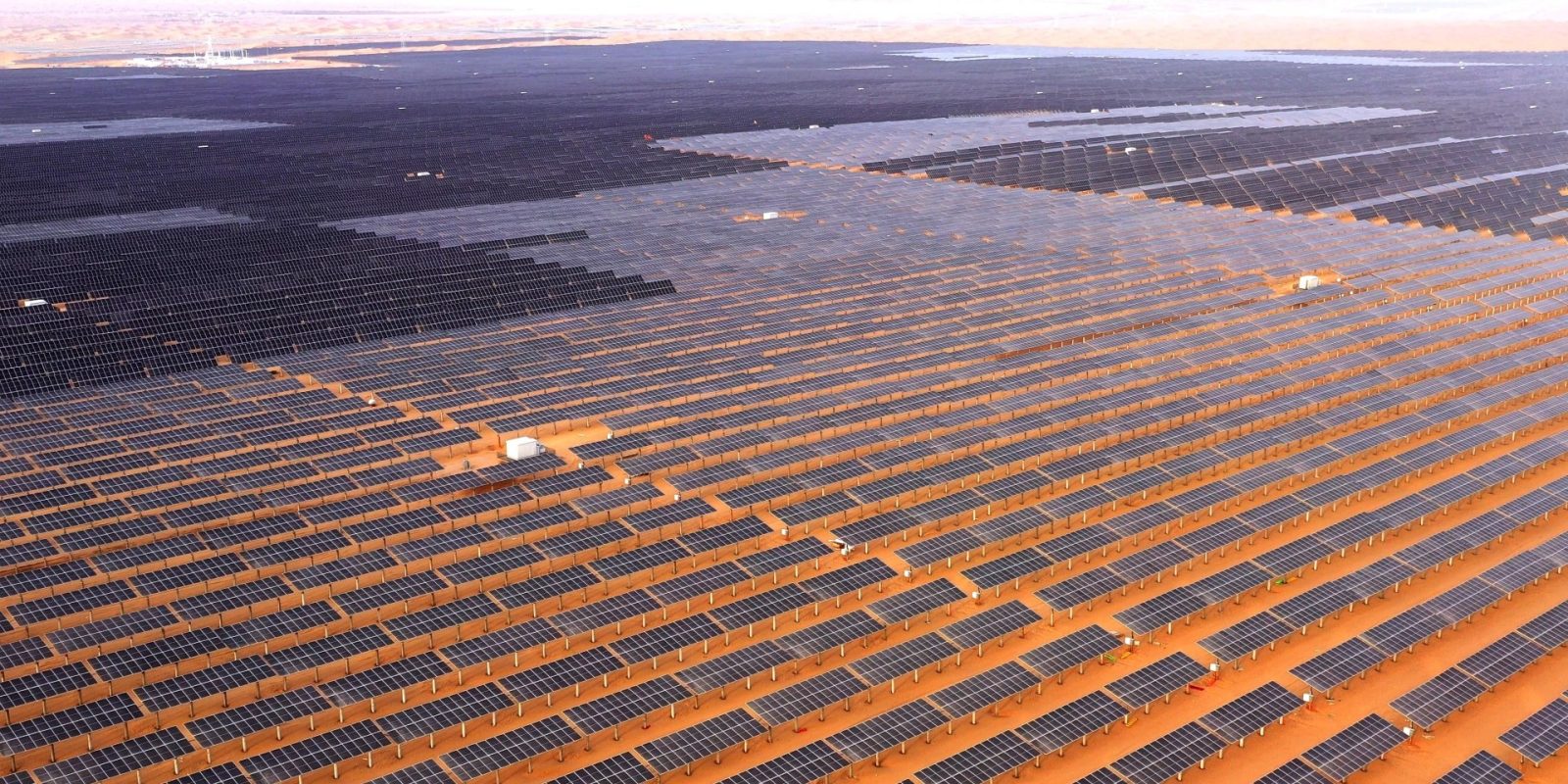
According to a comprehensive new energy transition review published by the global energy think tank Ember, China’s clean energy machine is now operating at a velocity so breathtaking that it is simultaneously satisfying a surging national demand for electricity and forcing traditional thermal power backward.
Rather than merely piling renewable generation on top of an ever-growing fossil fuel baseline—a strategy Beijing long described as "building before breaking"—the country has entered the much more disruptive phase of "building while breaking." For the first time in modern industrial history, a major developing economy is expanding its green infrastructure aggressively enough to not only meet rising energy needs, but to actively cannibalize and shrink its domestic coal and oil consumption.
Main Facts: The Turning Point for Thermal Power and Industrial Fossil Fuels
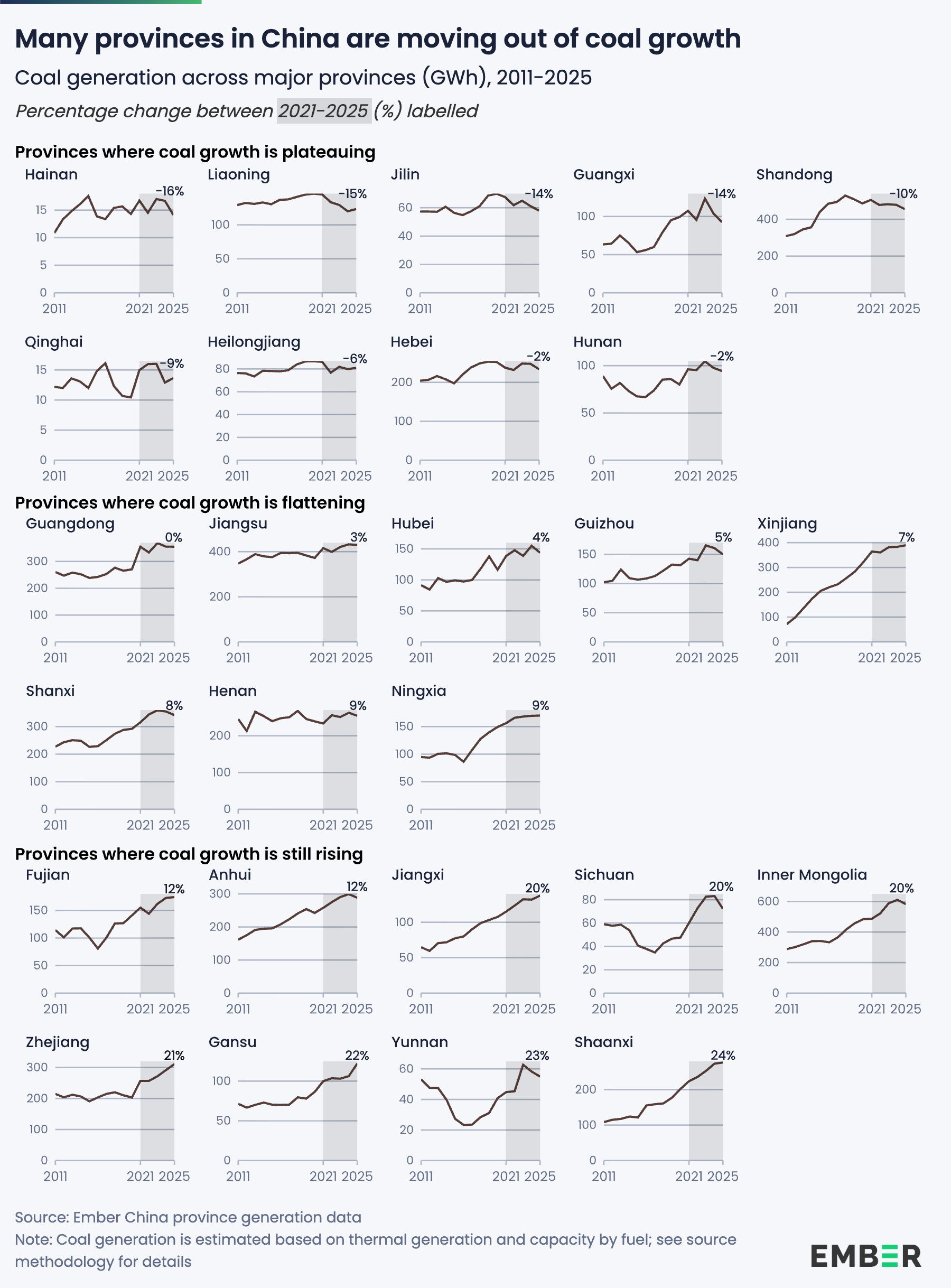
The statistical evidence of this transition is stark. Data analyzed across 26 Chinese provinces and regions—encompassing industrial powerhouses such as Shandong and Hunan, which together account for more than half of the nation’s total thermal power capacity—reveals that coal generation has entirely stopped growing in 17 of those administrative zones.
On a national scale, thermal generation (the vast majority of which is coal-fired) dropped by 0.7% over the course of 2025. This contraction occurred despite a robust 5% surge in total electricity demand.
To contextualize this achievement, energy analysts point to 2015, the last time China recorded a decline in thermal generation. That prior drop was accompanied by a nearly stagnant electricity demand that crawled upward by just 0.5%. By contrast, the 2025 contraction happened amid strong, vibrant economic growth driven by heavy electrification. Clean electricity generation scaled rapidly enough to cover every kilowatt-hour of new demand while actively displacing legacy fossil fuels.
Furthermore, Ember’s tracking indicates that coal generation has remained flat on a 12-month rolling average since early 2024. This signals that the 2025 dip is not an anomalous statistical blip driven by short-term weather patterns or temporary industrial curbs, but rather the structural manifestation of a permanent trend.
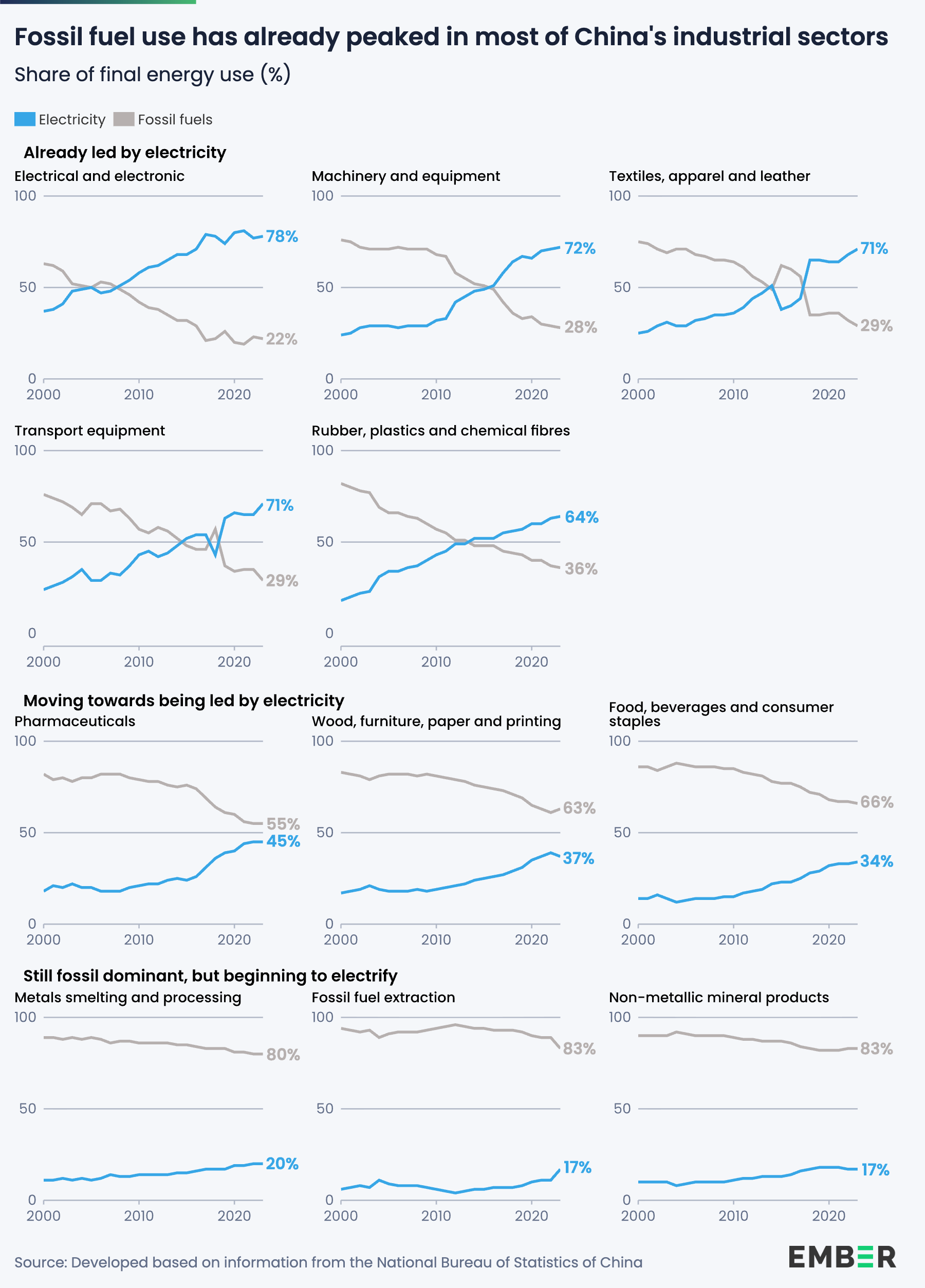
Beyond the power sector, the pivot away from fossil fuels is transforming China’s industrial core. Fossil fuel use has already peaked in eight of the 11 major industrial sectors tracked by Ember, with most of these peaks occurring since 2018.
The retreat of fossil fuels in manufacturing is profound:
- Food and beverage manufacturing: Fossil fuel use has plummeted by 26%.
- Transport equipment manufacturing: Fossil fuel consumption has dropped by 52%.
- Fossil fuel extraction industries: Energy use tied directly to extraction has fallen by a staggering 71%.
Crucially, this reduction in fossil fuel consumption has not come at the expense of industrial output. Per capita industrial production has continued an upward trajectory, proving that China is successfully substituting fossil fuels with electricity rather than merely deindustrializing or exporting its carbon footprint.
Chronology of the Transition: From "Building Before Breaking" to Structural Realignment
To understand how China reached this pivotal juncture, observers must look back at the strategic roadmap laid out by policymakers over the past fifteen years.
- 2010–2015 (The Foundation Era): China initiated massive investments in domestic solar and wind manufacturing, recognizing both an environmental imperative and an economic opportunity to dominate future global supply chains. However, during this period, renewable integration was plagued by curtailment issues, and coal remained the undisputed king of base-load power.
- 2016–2020 (The Strategic Doctrine of "Building Before Breaking"): Guided by state energy directives, China codified its "building before breaking" philosophy. The government poured trillions of yuan into building out the world’s most advanced ultra-high-voltage (UHV) transmission grids, hydro projects, and vast solar and wind bases in remote northern and western deserts (such as the Gobi Desert), while simultaneously permitting new coal plants to ensure grid stability.
- 2021–2024 (The Tipping Point): The deployment of renewables achieved exponential scale. By the end of 2024, battery energy storage systems (BESS) officially overtook pumped hydro as China’s largest source of installed energy storage capacity. Simultaneously, the 12-month rolling average for coal generation leveled off, signaling the end of thermal expansion.
- 2025–Present (The "Building While Breaking" Phase): Entering 2025 and moving toward 2026, the strategy shifted. With a reliable, hardened clean energy grid backed by surging battery storage capacity, China began registering absolute declines in thermal generation and industrial fossil fuel use, marking the true dawn of the post-coal era in key provincial regions.
Supporting Data: Electrification, Batteries, and the Electric Vehicle Revolution
The velocity of China’s decarbonization is supported by massive leaps in electrification, energy storage, and clean transportation technologies.
The Rise of Grid-Scale Battery Storage
Integrating intermittent wind and solar power at a national scale requires robust grid balancing. China has addressed this challenge not just through pumped hydro, but through a meteoric rise in battery storage. Following its surpassing of pumped hydro at the end of 2024, China’s battery storage capacity expanded by an additional 84% in 2025. Furthermore, average battery utilization rates roughly doubled between 2022 and 2025, confirming that these systems are actively being deployed to manage peak loads and stabilize the national grid.
Deepening Electrification in Manufacturing and Homes
Electricity’s share of China’s final energy consumption reached 29% in 2024, a dramatic rise from just 22% in 2015. To put this into a global perspective, electricity accounts for roughly 23% of final energy consumption in Europe and 21% in the United States.
In light manufacturing sectors—such as machinery, electronics, and textiles—electricity now supplies approximately 75% of final energy demand. Even in notoriously hard-to-abate sectors like metal smelting and non-metallic mineral production, industrial electrification is making steady inroads.

The Electric Vehicle Juggernaut
Transportation, long a stubborn bastion of petroleum dependency, is experiencing an unprecedented electric revolution.
- Electric passenger vehicles accounted for 67% of all new car sales in June 2026.
- Electric truck sales doubled in both 2024 and 2025, capturing 26% of the new truck market last year.
- Globally, nine out of every ten electric trucks sold worldwide in 2025 were purchased in China.
This hyper-adoption of electric mobility is fundamentally altering China’s oil import equations. In 2020, the country’s nascent EV fleet displaced roughly 100,000 barrels of gasoline demand per day. By 2024, that figure quadrupled to an estimated 400,000 barrels per day. When combined with rail electrification and electric freight, Ember estimates that China successfully avoided at least 1 million barrels per day of oil demand.
Official Responses and Expert Analysis
The monumental shift underway has drawn widespread attention from energy economists, international organizations, and domestic policy analysts.
Dr. Muyi Yang, a senior analyst at Ember, emphasized the structural nature of the transition during the release of the organization’s report:

"The clean electricity system is gaining both strength and scope, and the fossil fuel system is already registering the shift. You can see fossil fuel use flattening out, sector by sector and province by province."
Domestically, Beijing’s official economic planners have maintained a pragmatic approach. China’s current Five-Year Energy Plan formally targets the peaking of absolute coal and oil consumption before 2030, alongside a goal for electricity to account for 35% of final energy consumption. However, independent think tanks like Ember note that reality is consistently outpacing official bureaucratic timelines, with key sectors and regions hitting their fossil fuel peaks years ahead of schedule.
International energy markets are also waking up to the reality of China’s transformation. Traditional fossil fuel exporters—many of which built their state budgets on supplying raw coal and crude oil to China’s industrial boom—find themselves in an ironic geopolitical position: they are now turning around and importing Chinese-manufactured solar panels, lithium-ion batteries, and electric vehicles to manage their own domestic energy transitions. In the first half of 2026 alone, China’s clean technology exports topped $220 billion, accounting for 6.6% of all Chinese exports, up sharply from just 2.7% in 2020.
Global Implications: Why China’s Fossil Fuel Slowdown Matters Everywhere
The implications of China’s energy pivot extend far beyond its borders, sending shockwaves through global commodity markets and geopolitical boardrooms.

For a quarter-century, international oil and coal producers built multi-decade capital expenditure models assuming that China’s demand would march upward indefinitely. If Chinese fossil fuel demand has indeed entered a structural plateau and begun its descent, global energy markets face a profound reckoning. Major fossil fuel companies that fail to pivot risk being trapped with stranded assets in an oversupplied market.
Furthermore, China’s aggressive reduction of its oil import dependence addresses what has long been considered a primary national security vulnerability. Importing more than 70% of its petroleum left the Chinese economy exposed to maritime trade chokepoints and geopolitical volatility in the Middle East. By replacing internal combustion engines with domestically generated electricity—powered by ubiquitous wind, solar, and nuclear resources—Beijing is insulating its economy from external supply shocks.
To be sure, formidable challenges remain. China still burns staggering volumes of coal to maintain grid stability during peak industrial cycles, and the clean energy transition is distributed unevenly across different provinces. Western regions rich in renewable potential are surging ahead, while certain heavy-industrial provinces are navigating a more complex decoupling process.
Nevertheless, the rubicon has been crossed. Clean energy in China is no longer an auxiliary supplement riding on the coattails of a fossil-fuel-dominated economy. Across an expanding breadth of factories, highways, and provincial power grids, the clean energy system has grown strong enough to take over—signaling the beginning of the end for the fossil-fuel era in the world’s most populous nation.
