


BEIJING — Xiaomi has officially shaken up the Chinese automotive landscape once again. During its highly anticipated fall launch event today, the consumer electronics giant-turned-automaker pulled back the curtain on the final pricing and configuration details for its heavily teased SkyNomad SUV family.
Comprising four distinct extended-range electric vehicles (EREVs), the SkyNomad lineup marks Xiaomi’s bold debut in the lucrative extended-range segment. True to form, the company has targeted established market leaders—namely Li Auto and the Huawei-backed AITO—with aggressive pricing that significantly undercuts domestic flagships while packing a heavy technological punch.
With a starting price of RMB 209,900 (approximately $31,275), the entry-level SkyNomad N70 Pro puts a spacious, feature-rich, large-format family vehicle into the market at the price point of a traditional compact crossover. As Xiaomi accelerates its automotive ambitions, the launch of the SkyNomad family underscores the company’s ruthless efficiency in identifying high-demand vehicle segments and deploying disruptive pricing strategies.
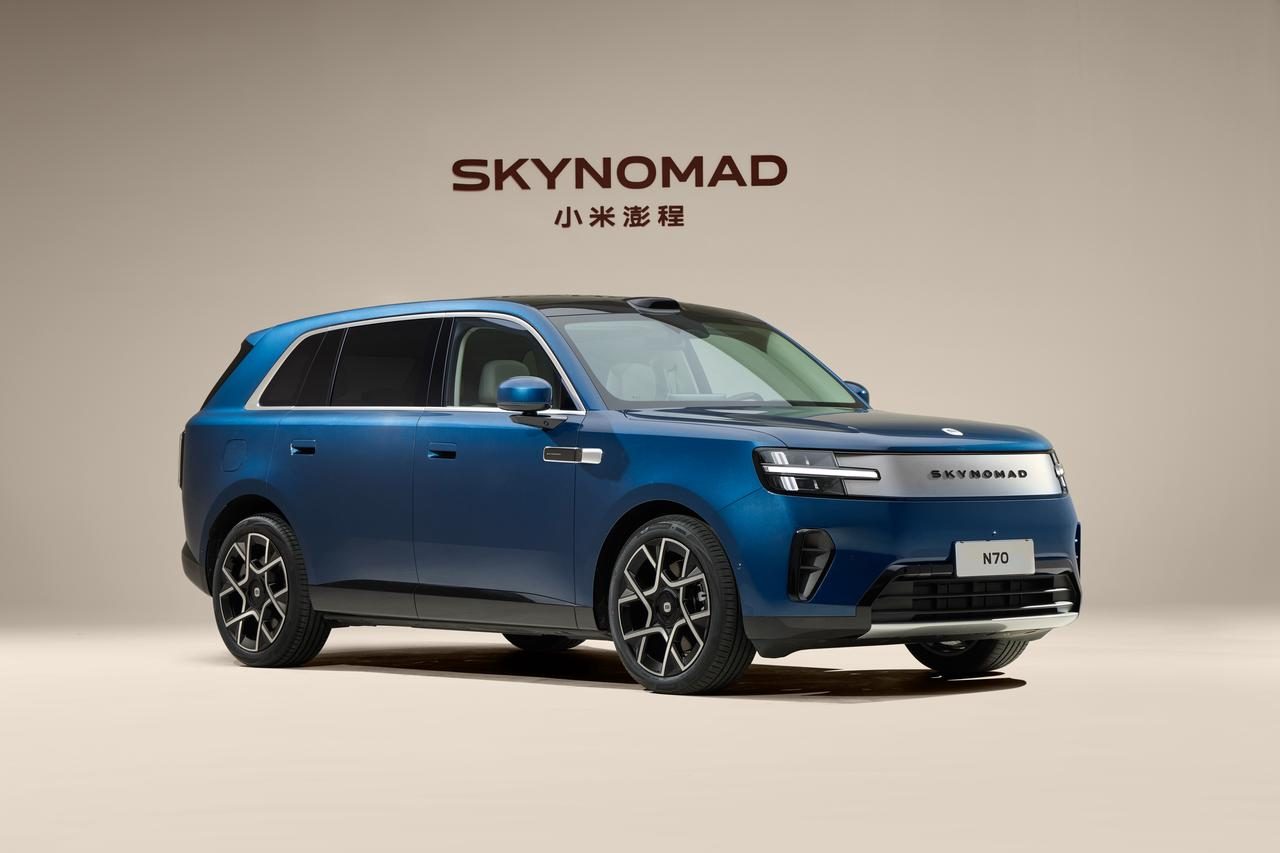
Main Facts: The SkyNomad Lineup and Specifications
The SkyNomad family represents a strategic departure for Xiaomi. While the company’s previous automotive successes—such as the sleek SU7 sedan and the YU7 SUV—are purely battery-electric vehicles (BEVs), the SkyNomad series relies on EREV technology. Every model pairs a large lithium iron phosphate (LFP) or nickel-manganese-cobalt battery pack with a gasoline range extender. This internal combustion engine functions solely as a generator to feed the battery and never directly drives the wheels.
The four-model lineup spans two core body sizes (the 4.96-meter N70 and the larger 5.285-meter N90) and incorporates advanced platform architecture:
- Xiaomi SkyNomad N70 Pro (Base): Features a 52 kWh LFP battery pack, offering 351 km (218 miles) of pure-electric CLTC range and an impressive 1,351 km (840 miles) of combined total range.
- Xiaomi SkyNomad N70 Max: Steps up to a larger battery pack, dual-motor all-wheel drive, a brisk 0–100 km/h sprint time of 5.5 seconds, 505 km (314 miles) of electric range, and a combined range of 1,461 km (908 miles). Xiaomi claims a 20% to 80% fast-charge takes as little as 18 minutes.
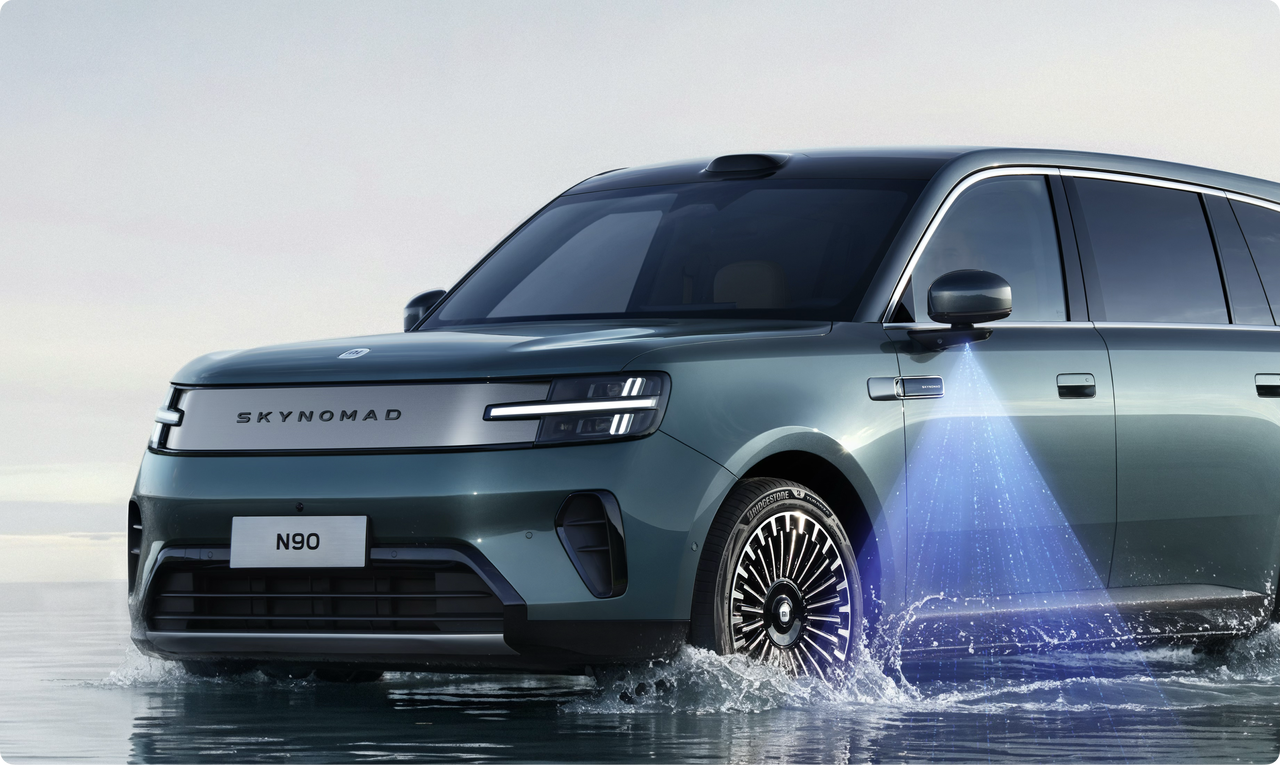
- Xiaomi SkyNomad N90 Max: Stretching to 5,285 mm in length with a 3,080 mm wheelbase, this seven-seat flagship posts the lineup’s headline range figures: 464 km (288 miles) on pure electricity and a staggering 1,705 km (1,059 miles) combined range.
- Xiaomi SkyNomad N90 Max Studio: Positioned as a mobile studio and recreational camper at RMB 299,900 (~$44,685), this variant includes a factory-integrated electric pop-up roof, a two-level loft space, tri-zone heated flooring, a fold-out second-row bed, and a built-in 30-inch projector screen.
Every model in the SkyNomad family rides on Xiaomi’s brand-new Kunlun platform, which features a flat floor, long sliding seat rails, and high-tech cabin configurations, including front seats that can rotate 180 degrees to face the second row around a fold-out table. Furthermore, standard equipment across the board includes an advanced NVIDIA Thor assisted-driving chip, LiDAR, and radar sensor suites.

Chronology: From Summer Unveiling to Fall Pricing Confirmation
The path to today’s launch has been marked by rapid development and tightly controlled information releases designed to build maximum consumer suspense.
- July 2026: Xiaomi first publicly previewed the SkyNomad platform, showcasing the vehicle’s expansive dimensions, rugged exterior styling, and flexible interior space (including the rotating front-row layout and camper variants). Initial buzz centered around the vehicle’s ability to challenge established three-row family haulers.
- August 2026: Leaks and regulatory filings from China’s Ministry of Industry and Information Technology (MIIT) revealed finer battery specifications, hinting at competitive pure-electric ranges exceeding 300 kilometers for upper trims—a massive threshold for EREVs. Xiaomi executives teased during investor calls that the entry price would hover "as low as 200,000 yuan."
- Today (Fall Launch Event): Xiaomi officially confirmed the final four-model lineup, locking in the starting price at RMB 209,900 for the N70 Pro and detailing the niche-focused N90 Max Studio camper variant. Order books opened immediately following the presentation, with initial deliveries expected to ramp up before the end of the year.
Supporting Data: Market Context and Competitive Positioning
To understand the magnitude of Xiaomi’s pricing strategy, one must examine the current competitive landscape in China’s booming family SUV segment.
| Vehicle Model | Powertrain Type | Seating Capacity | Pure-Electric Range (CLTC) | Combined Range | Starting Price (RMB / USD Approx.) |
|---|---|---|---|---|---|
| Xiaomi SkyNomad N70 Pro | EREV | 5 | 351 km (218 mi) | 1,351 km (840 mi) | RMB 209,900 (~$31,275) |
| Xiaomi SkyNomad N70 Max | EREV (AWD) | 5 | 505 km (314 mi) | 1,461 km (908 mi) | Competitive Mid-Tier |
| Xiaomi SkyNomad N90 Max | EREV | 7 | 464 km (288 mi) | 1,705 km (1,059 mi) | Flagship Pricing |
| Xiaomi SkyNomad N90 Max Studio | EREV (Camper) | 7 | N/A | High-End | RMB 299,900 (~$44,685) |
| Li Auto L9 | EREV | 6 | ~220–280 km | ~1,300 km | > RMB 250,000 (~$35,000+) |
| AITO M9 | EREV / BEV | 6 | ~225–275 km | ~1,200+ km | > RMB 250,000 (~$35,000+) |
The primary targets for the SkyNomad lineup—the Li Auto L9 and the Huawei-backed AITO M9—have long dominated the high-end extended-range family SUV market in China. Both competitors traditionally command starting prices well north of RMB 250,000. By delivering a significantly larger pure-electric range (up to 505 km on the N70 Max) and competitive interior dimensions for roughly RMB 40,000 to 50,000 less, Xiaomi has effectively squeezed the profit margins of legacy domestic rivals.
Furthermore, the data highlights Xiaomi’s operational velocity. Having already delivered over 800,000 total passenger vehicles since its automotive division entered the market, the company has managed to achieve profitability at a historic pace, defying skeptics who doubted whether a smartphone maker could successfully transition into heavy manufacturing.
Official Responses and Industry Reactions
Xiaomi’s executive team framed the launch of the SkyNomad as a direct response to the evolving needs of modern families who demand long-distance touring capabilities without the range anxiety associated with early-generation electric vehicles.
"Consumers want the zero-emission driving experience for their daily commutes, but they refuse to compromise when it comes to family road trips across China’s vast geography," said a senior Xiaomi Auto spokesperson during the post-event press conference. "With the SkyNomad, we have engineered a vehicle that eliminates range anxiety entirely while offering smart cabin technology and comfort that outclasses vehicles twice its price."

Industry analysts have reacted with a mixture of admiration and caution regarding Xiaomi’s entry into the EREV space. While pure-ev purists have occasionally questioned the inclusion of an internal combustion engine in a Xiaomi product, financial analysts point out that EREVs represent one of the fastest-growing segments in China. By bridging the gap between gasoline independence and long-range convenience, Xiaomi has smartly widened its total addressable market beyond urban EV adopters.
Competitors have not remained silent. Executives from rival tech-automotive joint ventures have indicated that they will likely accelerate software updates and re-evaluate their own pricing strategies to counter the value proposition presented by the Kunlun platform and the NVIDIA-powered autonomous driving suite standard on all SkyNomad trims.
Implications: What the SkyNomad Means for the Global Market
While the immediate impact of the SkyNomad family will be felt across Chinese showrooms, the broader strategic implications extend far beyond domestic borders.

1. Pressure on Domestic Incumbents
Li Auto and AITO now face a formidable adversary with deep pockets, massive brand loyalty derived from consumer electronics, and an aggressive supply chain. The pressure to lower prices or heavily upgrade feature sets will likely spark a wider price war within China’s mid-to-large SUV segment.
2. The Global Absence (For Now)
For international observers, the rollout of the SkyNomad serves as both an exciting showcase of engineering and a frustrating reminder of geographic market boundaries. Xiaomi has confirmed that the SkyNomad family will remain exclusive to China at launch.
This leaves Western markets wondering what could have been. A seven-seat SUV offering nearly 300 miles of pure-electric range alongside a combined range exceeding 1,000 miles, packed with advanced LiDAR and AI compute power for around $40,000, would fundamentally rewrite pricing expectations in markets like the United States and Europe. In the US, comparable three-row electric SUVs routinely command price tags starting at $60,000 and climbing rapidly upwards.

3. The Road to Europe
While North America remains structurally closed to direct imports of Chinese-built passenger vehicles due to regulatory and tariff hurdles, Xiaomi has kept its eyes firmly set on European expansion. Company executives have previously signaled that next year will see the brand’s formal push into the European market, beginning with its core EV lineups. Whether the EREV SkyNomad series will eventually make the jump across international waters remains to be seen, but its underlying platform technology provides a blueprint for what global consumers can expect from Xiaomi’s rapidly expanding automotive empire.
