

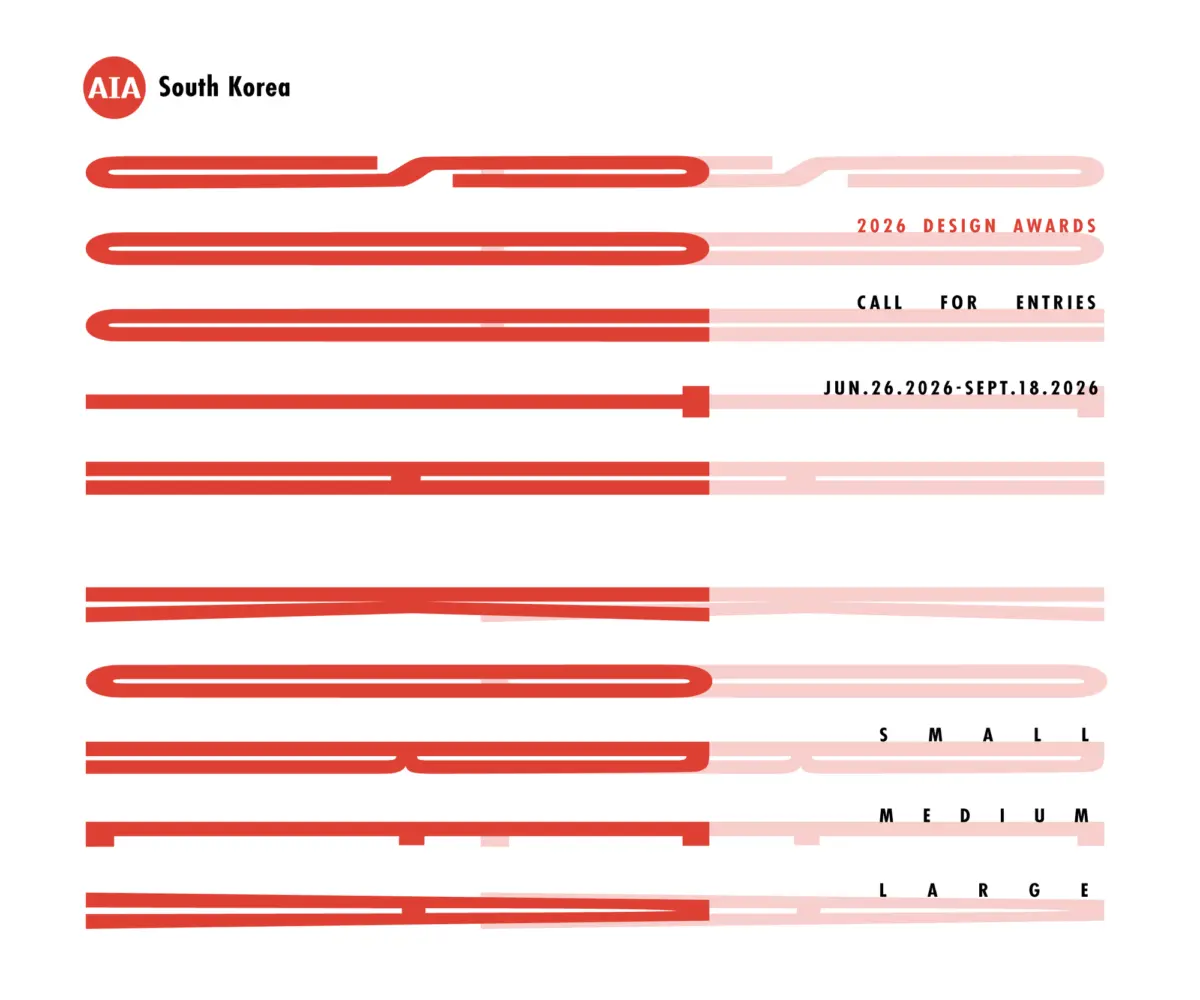
SEOUL, SOUTH KOREA — In an ongoing effort to bridge the gap between regional brilliance and the global architectural community, AIA South Korea—one of the premier regional sections operating under the umbrella of AIA International—has officially announced the launch of its second annual Design Awards program.
The announcement, made public in September 2026, marks a significant milestone for the organization as it continues to cement its role as a vital conduit connecting local practitioners to the vast, worldwide network of the American Institute of Architects (AIA). By highlighting built works that showcase exceptional design innovation, rigorous contextual sensitivity, and a profound respect for environmental and cultural surroundings, the program seeks to propel contemporary Korean architecture into global conversations.
Main Facts: The 2026 AIA South Korea Design Awards at a Glance
The AIA South Korea Design Awards program is structured to recognize built architectural achievements that push the boundaries of conventional practice. While many architectural accolades focus solely on aesthetic grandiosity, this program emphasizes a holistic approach to design—one that balances visionary innovation with a deep understanding of local and international contexts.
Core Objectives of the Program
- Celebrating Design Excellence: Honoring built projects that demonstrate the highest levels of architectural craftsmanship, technical execution, and conceptual clarity.
- Promoting Global Visibility: Amplifying the profiles of Korean architects and international firms operating within South Korea, showcasing their contributions to a worldwide audience.
- Fostering Contextual Sensitivity: Encouraging designs that harmonize with their physical, historical, and cultural surroundings while addressing modern spatial challenges.
- Contributing to Contemporary Discourse: Enriching ongoing dialogues within the architectural profession regarding sustainability, urbanization, and technological integration.
Category Structure and Evaluation
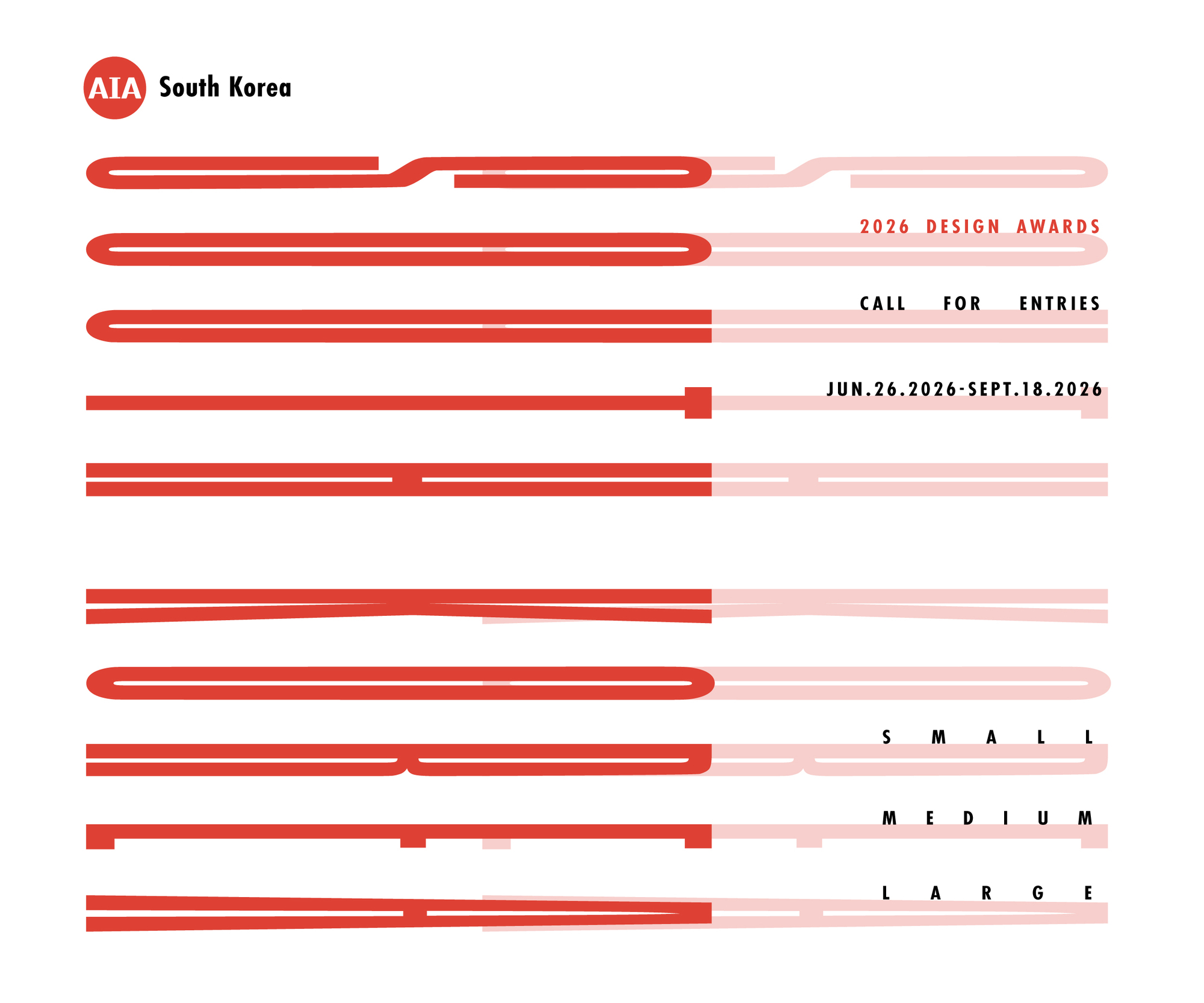
To ensure a fair and equitable playing field for projects of varying scales and typologies, the competition is organized into three distinct size-based categories:
- Small-Scale Category: Recognizing residential interventions, pavilions, interior renovations, and minor public installations that maximize spatial efficiency and conceptual depth.
- Medium-Scale Category: Highlighting mid-sized commercial buildings, community centers, boutique cultural spaces, and multi-family housing projects.
- Large-Scale Category: Focusing on major infrastructure, large corporate headquarters, expansive cultural institutions, and master-planned urban developments that fundamentally alter the urban fabric.
Unlike programs with rigid quotas, the designated jury holds the flexibility to select any number of winners across these categories. This open framework ensures that the awards remain a pure reflection of quality; if multiple entries meet the rigorous standards of excellence, they will be duly recognized, and conversely, no awards will be forced if entries fail to meet the high benchmark.
Chronology: The Evolution of AIA South Korea and the Path to the 2026 Awards
Understanding the significance of the 2026 Design Awards requires a look back at the institutional evolution of AIA South Korea and its integration into the broader international architecture scene.
The Foundation of AIA International and Regional Integration
For decades, the American Institute of Architects operated primarily within the United States, though its international footprint steadily grew through expatriate chapters and global members. To better serve architects practicing outside U.S. borders, AIA established AIA International, organizing global members into distinct regional sections.
AIA South Korea was founded to address the unique needs of the Korean peninsula’s vibrant design community. Korea has long been recognized as a global crucible of rapid modernization, architectural experimentation, and high-density urbanism. By establishing a formal local chapter, AIA provided Korean-based architects—both local nationals and international expats—with a direct bridge to U.S. professional standards, continuing education, and global networking platforms.
The Inaugural Program and the Road to Year Two
Following years of foundational community building, professional seminars, and advocacy, AIA South Korea launched its inaugural design awards program to immediate acclaim from the local design community. The success of that first iteration proved that there was an overwhelming appetite for a rigorous, internationally aligned awards program rooted specifically in the realities of South Korean practice.
Building upon the momentum of the launch, the planning committee spent the subsequent year refining the submission criteria, expanding outreach to universities and major practices, and assembling a multidisciplinary jury panel. The official call for entries for the 2026 cycle opened in mid-2026, culminating in the formal announcement and rollout in September 2026. This second edition represents a maturation of the program, moving from a proof-of-concept initiative into a firmly established fixture on the regional architectural calendar.
Supporting Data: The Landscape of Modern Korean Architecture
The launch of the 2026 AIA South Korea Design Awards occurs against a backdrop of remarkable dynamism within South Korea’s built environment. To understand why an international award program carries such weight here, one must examine the socio-economic and demographic trends shaping the country’s architecture.
Urban Density and Spatial Innovation
South Korea is one of the most densely populated nations in the world, with over 50% of its population concentrated in the Seoul Capital Area. This extreme density has historically forced architects to master the art of verticality, micro-spaces, and multi-functional zoning.
- The "Narrow Alley" Phenomenon: Korean architecture frequently grapples with the transformation of traditional urban fabrics, such as hanok-lined neighborhoods and high-density commercial districts (multiplex housing or dagagu).
- Adaptive Reuse: In recent years, South Korean cities have shifted away from wholesale demolition in favor of adaptive reuse, turning defunct industrial warehouses, bathhouses, and historical structures into vibrant cultural hubs.
Sustainability and Environmental Pressures
With South Korea committed to ambitious carbon-neutrality targets by 2050, the construction industry faces mounting pressure to innovate. Modern Korean architecture must contend with extreme seasonal temperature fluctuations—ranging from humid, monsoon-heavy summers to bitterly cold winters.
- Green Building Technologies: Award-contending projects in South Korea increasingly feature advanced facade systems, geothermal heating and cooling, integrated photovoltaic panels, and passive ventilation strategies tailored to the East Asian climate.
- Biophilic Design: As urbanization intensifies, integrating nature into the built environment has become a paramount concern. Projects that successfully weave pocket parks, green roofs, and indoor-outdoor thresholds into dense cityscapes are heavily favored by progressive juries.
Official Responses and Perspectives
The announcement of the 2026 Design Awards has generated considerable excitement among architectural practitioners, academics, and urban theorists across the region. Leadership within AIA South Korea and AIA International have emphasized the broader cultural implications of the program.
Strengthening the Global-Local Dialogue
Speaking on the launch of the second annual program, representatives of AIA South Korea noted that the awards serve as a two-way street for knowledge exchange.
"South Korea is currently producing some of the most daring, contextually astute architecture in the world. However, language barriers and localized publication channels have occasionally kept these achievements from entering the mainstream global architectural discourse," an AIA South Korea spokesperson remarked. "Through these awards, we are providing a platform where local genius is validated by international standards, while simultaneously bringing global best practices into sharper focus for our domestic community."
Jury Insights and Judging Philosophy
While specific jury members for the 2026 cycle are selected for their diverse expertise—spanning urban design, structural engineering, architectural theory, and historical preservation—organizers have outlined the core tenets that will guide their deliberations.
Rather than prioritizing pure formal extravagance, the jury has been instructed to look for resilience, adaptability, and human-centric design. In a post-pandemic era where the demands on domestic, workspace, and public environments have shifted dramatically, the 2026 awards place a heavy premium on buildings that enhance the psychological and physical well-being of their occupants.

Implications: What the 2026 Awards Mean for the Future of Korean Design
The establishment and maturation of the AIA South Korea Design Awards carry profound implications for the trajectory of architecture within the country and its standing abroad.
Elevating Domestic Practices to Global Prominence
For local firms—ranging from agile, avant-garde boutique practices to large-scale corporate entities—winning an AIA South Korea Design Award offers a distinct stamp of international credibility. Because the American Institute of Architects is recognized globally as a benchmark for professional rigor, local recognition under its banner opens doors to international commissions, academic partnerships, and cross-border collaborations.
Shaping the Next Generation of Architects
The awards program also plays an educational and mentoring role. By shining a spotlight on built projects that successfully navigate complex constraints—such as tight urban plots, strict zoning laws, and stringent environmental regulations—the awards provide a tangible textbook for emerging architects and architecture students across Korean universities. It demonstrates that world-class design does not require limitless budgets or sprawling suburban sites, but rather intellectual clarity, rigorous execution, and a deep respect for context.
A Catalyst for Urban Resilience
Finally, as South Korean cities face the dual challenges of an aging demographic shift and the escalating threats of climate change, architecture must act as a stabilizing, adaptive force. By rewarding projects that champion sustainability, community integration, and spatial flexibility, the 2026 AIA South Korea Design Awards help chart a course for how the built environment can evolve responsibly over the coming decades.
Conclusion
The 2026 AIA South Korea Design Awards represent far more than a simple ceremony for handing out trophies. They are a testament to the vitality, resilience, and forward-thinking nature of contemporary architecture on the Korean peninsula. By creating a rigorous framework to honor small-, medium-, and large-scale built works, AIA South Korea continues to elevate local talent to the global stage, ensuring that the country’s architectural voice resonates far beyond its borders.
As submissions for the 2026 program progress toward their final evaluation phases, the international architectural community watches with keen interest to see which built innovations will set the new benchmark for design excellence.
