

WASHINGTON — As homeowners continually seek innovative ways to combat rising utility expenses and maintain indoor comfort, energy experts are highlighting a simple, cost-free home maintenance practice that is frequently overlooked: reversing your ceiling fan’s direction.
While ceiling fans are universally recognized as staples of summer cooling, they are equally powerful tools for winter heating efficiency. According to home performance authorities, making a simple adjustment to a ceiling fan’s blade rotation can reduce seasonal heating and cooling bills by up to 15 percent. Despite this, millions of homeowners leave their fans running on a default year-round setting, missing out on substantial energy savings and optimal indoor climate control.
Main Facts: The Physics of Air Circulation
Ceiling fans do not actually change the ambient temperature of a room. Instead, they manipulate air molecules to alter how temperature feels to human skin. The secret to maximizing these energy-efficient fixtures lies in understanding how blade rotation interacts with thermodynamic principles.
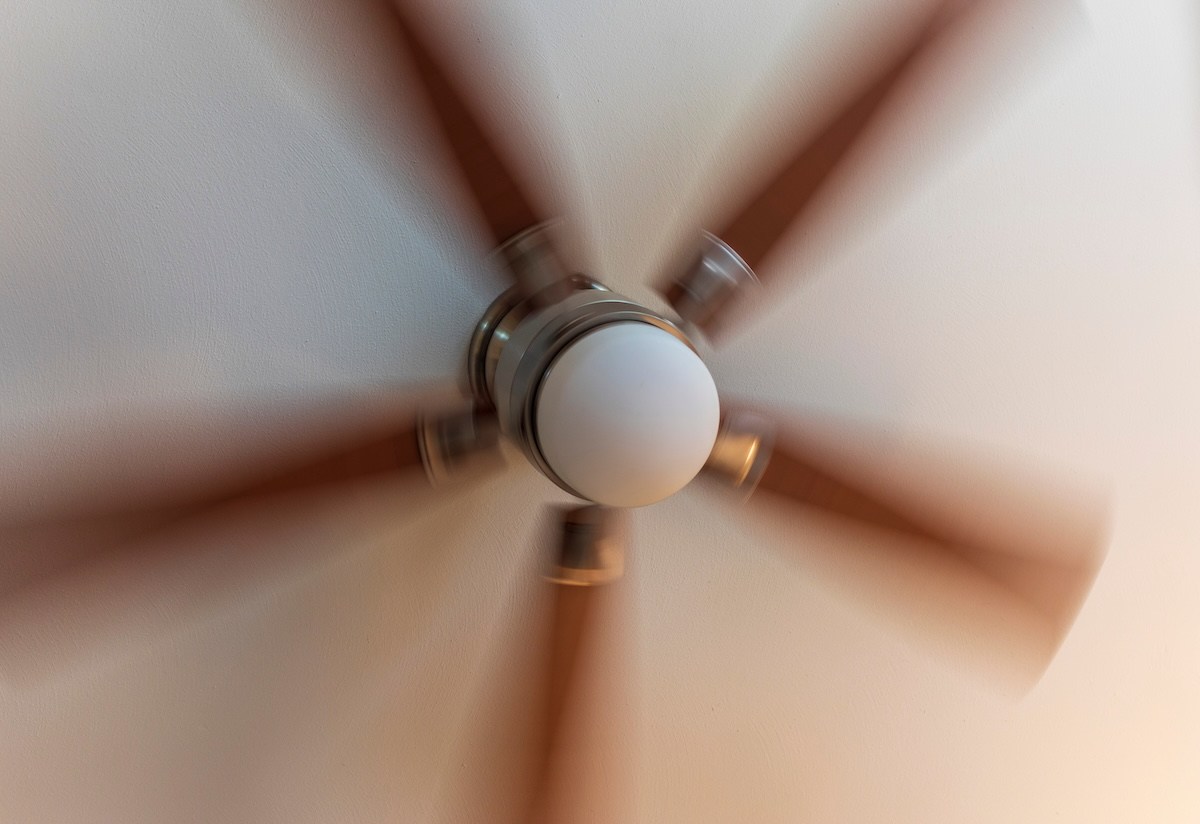
- Summer Operation: In warm weather, ceiling fans should rotate in a counterclockwise direction at a medium-to-high speed. This creates a direct downdraft, producing a localized "wind chill effect" that cools human skin without lowering the room’s actual thermostat reading.
- Winter Operation: In cold weather, fans should be reversed to rotate clockwise at a low speed. This generates an upward draft, drawing cool air toward the ceiling and displacing trapped warm air—which naturally rises—forcing it down along the walls and back into the living space.
- Energy Impact: The U.S. Department of Energy (DOE) notes that using a ceiling fan in the summer allows homeowners to raise their air conditioning thermostat by approximately 4°F without sacrificing comfort. Conversely, the winter updraft prevents heat stratification, cutting heating costs significantly.
Chronology: The Evolution of Modern Climate Control
The journey of the ceiling fan from a primitive mechanical device to a sophisticated, energy-saving smart home appliance spans more than a century.
- The Late 19th Century: The world’s first ceiling fan was invented in 1882 by Philip Diehl. Powered by a sewing machine motor, the two-paddle device was designed to bring relief to sweltering factories and homes before widespread electricity.
- The Mid-20th Century: As central air conditioning and residential HVAC systems surged in popularity following World War II, ceiling fans experienced a temporary decline, often viewed as outdated relics of the past.
- The Energy Crises of the 1970s: Surging electricity costs and fuel shortages forced architects and homeowners to re-evaluate passive cooling and low-energy appliances, sparking a massive resurgence in the popularity of ceiling fans.
- The Late 20th to Early 21st Century: Manufacturers introduced reversing switches, variable speed controls, and engineered blade pitches, transforming ceiling fans from purely aesthetic pieces into precise climate-regulation instruments.
- The Modern Era: Today, smart-home integration allows homeowners to control fan direction, speed, and scheduling via remote controls, wall panels, or smartphone applications, streamlining year-round energy optimization.
Supporting Data and Efficiency Metrics
To extract maximum performance from a ceiling fan, consumers must look beyond aesthetics and examine industry efficiency metrics, blade mechanics, and installation standards.
Airflow Efficiency (CFM/W)
A ceiling fan’s efficiency is measured by its airflow rating in cubic feet per minute (CFM) generated per one watt (W) of electrical power while operating at high speed.
- Low Efficiency: Roughly 75 CFM per watt.
- Standard Efficiency: Between 4,000 and 5,000 CFM.
- High Efficiency: Models exceeding 6,000 CFM offer superior performance, ensuring maximum air movement with minimal electrical consumption.
Blade Span and Pitch
The physical dimensions of the fan blades dictate how effectively air is captured and redirected.
- Blade Span: Larger rooms require wider spans. For medium-sized rooms ranging from 144 to 225 square feet, a blade span between 44 and 50 inches is recommended.
- Blade Pitch: This refers to the angle of the blade relative to the horizontal plane. The optimum pitch for circulating air efficiently is between 12 and 14 degrees. Blades pitched lower than 12 degrees merely slice through the air without moving it, while blades pitched too high create excessive aerodynamic drag, straining the motor and risking burnout.
Installation Guidelines
For safety and maximum efficiency, the U.S. Department of Energy and architectural safety codes recommend that ceiling fans be installed in rooms with ceilings at least 8 feet high. Ideally, the blades should hang 10 to 12 inches from the ceiling and 7 to 9 feet above the floor.
Official Recommendations and Expert Guidance
Industry organizations and regulatory bodies have established clear protocols for operating and maintaining ceiling fans to ensure longevity and peak energy savings.
How to Change Ceiling Fan Direction
Depending on the model, reversing the airflow requires one of three methods:
- Wall Panel Control: Modern integrated wall switches often feature a dedicated reverse button. Pressing this once successfully toggles the blade rotation.
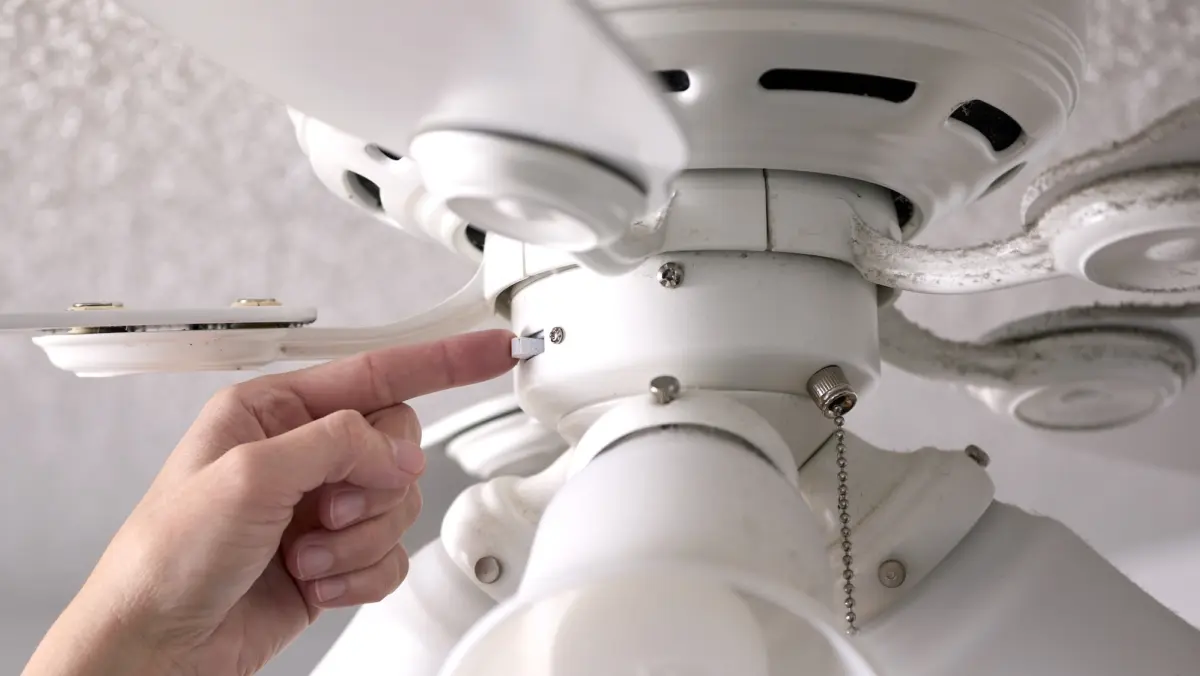
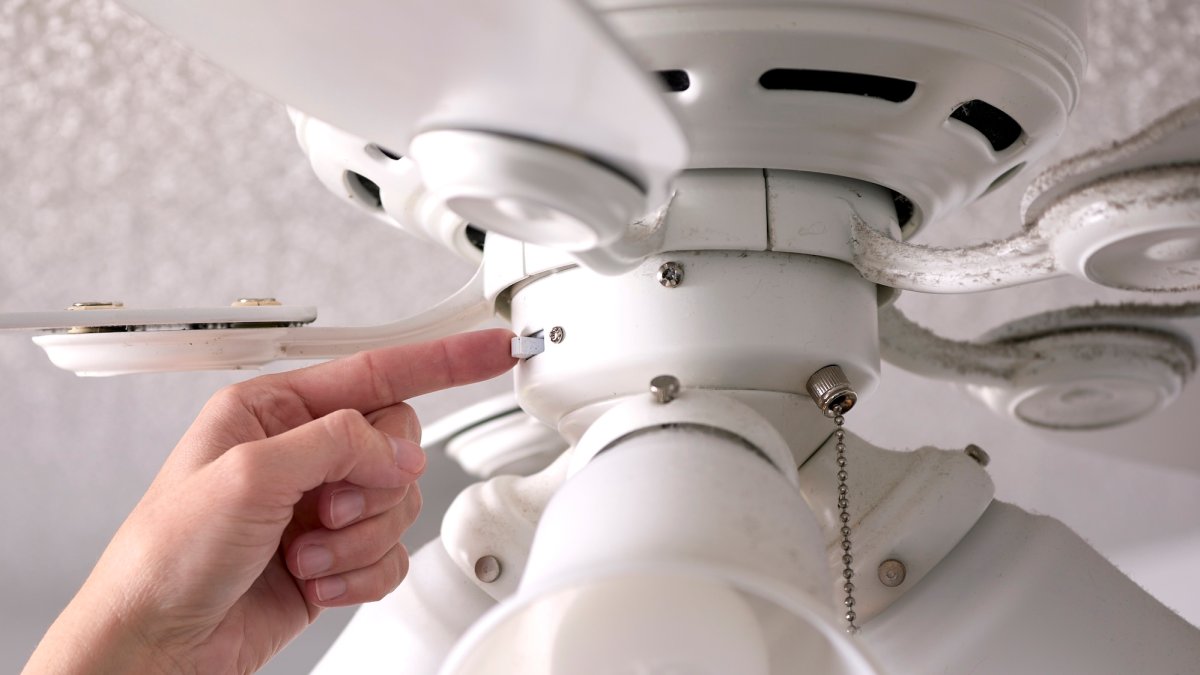
- Motor Housing Switch: Traditional fans feature a physical toggle switch located directly on the motor housing. Homeowners must turn off the fan, wait for the blades to come to a complete stop, use a secure ladder, and manually flip the switch.
- Smart Remotes: For fans without visible housing switches, the reversal sequence typically involves holding down specific combinations of remote control buttons while toggling the wall light switch.
Maintenance Schedules
Energy experts recommend a semi-annual maintenance check every spring and fall. Because ceiling fans accumulate dust, pollen, and airborne debris, these seasonal transitions serve as the ideal time to clean the blades.
- Standard Cleaning: A simple method involves sliding individual blades into a clean pillowcase and wiping backward to trap dust inside.
- Deep Cleaning: Kitchen fans exposed to cooking grease may require removing the blades entirely and washing them with mild soap and water.
Implications: Economic and Environmental Impact
The broader implications of utilizing ceiling fans correctly extend far beyond individual household budgets, offering significant macroeconomic and environmental benefits.
Household Financial Relief
With global energy markets experiencing recurring volatility, utility bills remain a major household expense. By strategically pairing ceiling fans with HVAC systems, households can reduce their reliance on compressor-heavy air conditioning units and high-output furnaces. Manufacturers estimate that optimized fan usage combined with adjusted thermostat settings can shave up to 15 percent off winter heating costs and dramatically lower peak-summer electrical loads.
Environmental Sustainability
Lowering energy consumption directly translates to a reduction in greenhouse gas emissions. When millions of households scale back their runtime on central heating and cooling systems—even by a few degrees—regional power grids experience decreased strain during peak demand hours. This diminishes the need for fossil-fuel-peaker plants to spin up, contributing to a smaller residential carbon footprint.
Practical Behavioral Shifts
Ultimately, the practice underscores a broader movement toward passive and low-impact home management. As smart home technology continues to evolve, automated climate sensors will likely make manual seasonal switching obsolete. Until then, consumer awareness remains the primary catalyst for achieving these widespread energy efficiencies.
Frequently Asked Questions (FAQ)
Q: How can I tell if a fan is spinning clockwise or counterclockwise?
A: Stand directly underneath the fan and run it on a low setting. If the leading edge of the blades moves to the left (standard summer setting), the fan is rotating counterclockwise. If the leading edge moves to the right, the fan is rotating clockwise (ideal for winter).
Q: Should ceiling fans be left running continuously?
A: No. Ceiling fans cool or warm people, not rooms. Because they do not alter the actual ambient temperature, running an empty room’s fan wastes electricity. Fans should be turned off the moment occupants leave the space.
Q: Can any ceiling fan be used in the winter?
A: Virtually all reversible ceiling fans can be used in the winter. However, homeowners must verify that their specific model features a directional switch or remote setting that allows for clockwise rotation at low speeds.
