

Main Facts
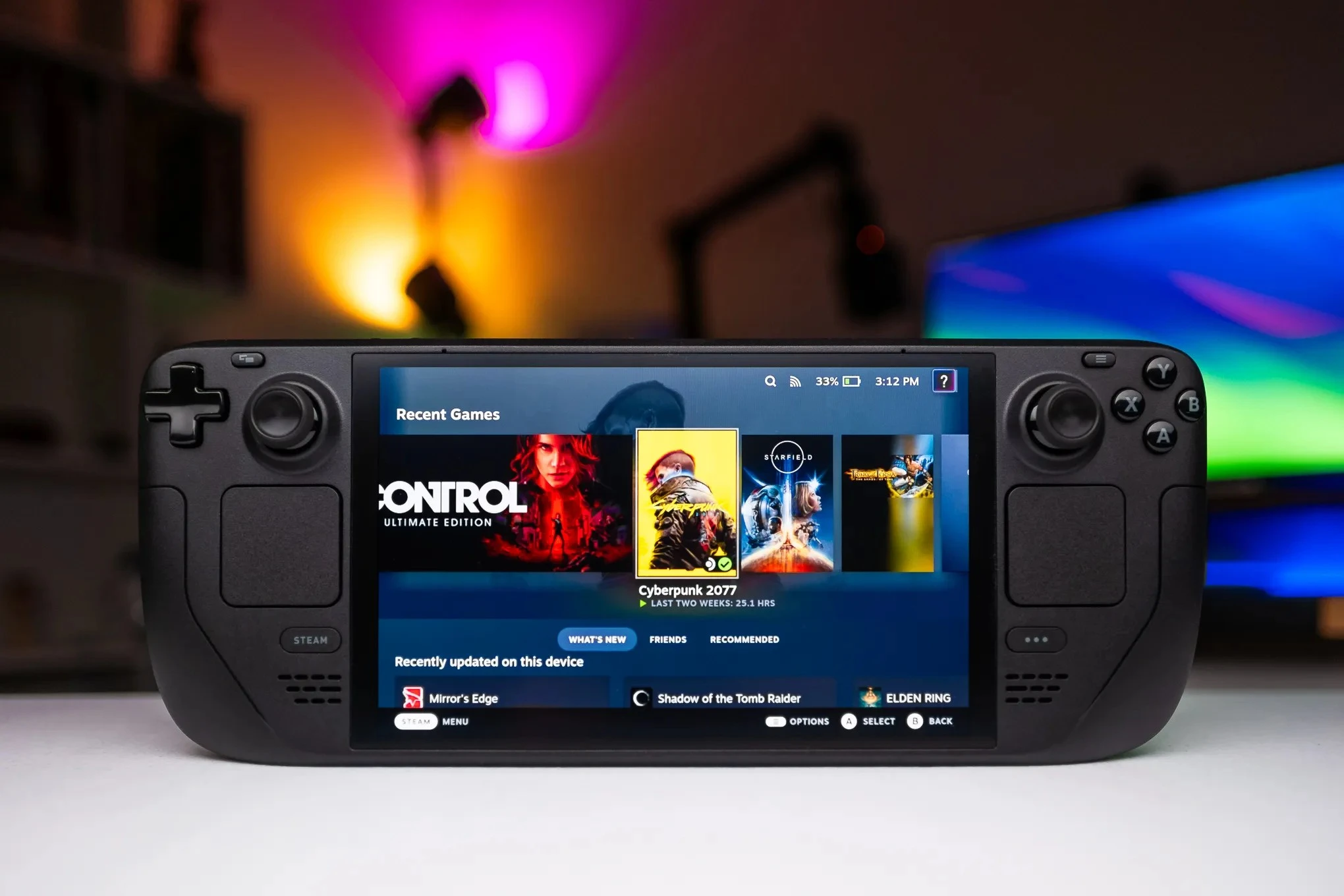
With the rollout of Valve’s complete 2026 hardware ecosystem now finalized—comprising the newly launched Steam Controller, the reimagined Steam Machine, and the enterprise-leaning Steam Frame VR headset—attention across the PC gaming community has inevitably turned back to the company’s most successful piece of modern hardware: the Steam Deck.
Yet, despite the completion of Valve’s current hardware generation push, a successor to the beloved handheld remains conspicuously absent from immediate production schedules. In a recent interview with IGN, Valve designer Pierre-Loup Griffais clarified that the company is still actively evaluating "how and when we can deliver something like that," pouring cold water on hopes for an imminent announcement.
Valve’s official stance on the Steam Deck 2 remains consistent with its messaging over the past three years:
- A true generational successor is definitively in the pipeline.
- The device will not enter mass production until silicon technology achieves the specific performance-per-watt thresholds Valve demands.
The original Steam Deck succeeded by striking a delicate balance between price, performance, and battery life. Valve has repeatedly stressed that it will not compromise on power efficiency simply to chase higher raw performance metrics in a sequel. However, the path to finding that elusive next-generation chip has been complicated heavily by macroeconomic conditions, widespread supply chain volatility, and the component pricing crisis colloquially known in the industry as "RAMageddon."
While industry competitors are already deploying early next-generation silicon—such as Intel’s Panther Lake architecture found in devices like the MSI Claw 8 EX AI Plus—high costs and thermal trade-offs mean that a true generational leap for a sub-$500 handheld device remains a moving target.
Chronology of the Steam Deck 2 Development
To understand why Valve is exercising such extreme caution regarding the Steam Deck 2, it is necessary to examine the timeline of statements, technological hurdles, and industry disruptions that have shaped the project since the original handheld’s 2022 launch.
2022–2023: The Foundation and the "Generational Leap" Mandate
Shortly after the launch of the original Steam Deck, Valve made it clear that the device was not a one-off experiment, but rather the beginning of a brand-new product category. However, leadership tempered expectations early. In September 2023, Pierre-Loup Griffais explicitly told reporters that a true "Steam Deck 2" would require a generational leap in computing efficiency that simply wasn’t physically possible with existing mobile silicon architectures. Griffais emphasized that Valve wanted to avoid incremental performance bumps if they came at the expense of battery life, suggesting players would have to wait several years.
Early 2025: The Shift to "Hard Work"
Hopes were briefly reignited in early 2025 when Griffais revealed in an interview that Valve’s engineering teams were "hard at work" on the next-generation handheld. While no release window was attached to the statement, it signaled an internal pivot from conceptual research to active device prototyping. At the time, consumers assumed the prolonged silence was merely a matter of prudent corporate communication. In hindsight, however, Valve’s engineering teams were already grappling with tightening global component supplies.
Late 2025 – Early 2026: The "RAMageddon" Shockwaves
The hardware landscape shifted dramatically as the memory crisis—dubbed "RAMageddon"—sent shockwaves through the consumer electronics market. The crisis severely disrupted pricing and component availability for phones, laptops, and specialized gaming hardware. Valve felt the impact directly: the company was forced to delay and drastically reprice its Steam Machine and Steam Frame headset. Originally envisioned as a competitively priced entry into the spatial computing market, the Steam Frame ultimately launched with a daunting $1,059 price tag following brutal negotiations in the RAM supply chain.
Mid-2026: Ecosystem Completion and Current Stance
With the Steam Controller, Steam Machine, and Steam Frame now fully deployed, Valve’s hardware slate for 2026 is clear. Addressing whether the ongoing memory crisis has permanently altered the trajectory of the Steam Deck 2, Griffais offered a reassuringly calm "Not really." Nevertheless, industry analysts suspect Valve is deliberately waiting out the peak of the silicon and memory price inflation before attempting to secure long-term contracts for a high-volume, low-margin device like a portable console.
Supporting Data and Technological Realities
The core engineering challenge facing the Steam Deck 2 boils down to a fundamental law of mobile hardware physics: squeezing desktop-class performance into a handheld form factor while maintaining an acceptable thermal envelope and multi-hour battery life.
The Power-Efficiency Paradox
When the original Steam Deck launched, it utilized a custom AMD APU built on the Zen 2 and RDNA 2 architectures, running at a constrained 4W to 15W TDP (Thermal Design Power). This allowed the device to run modern 3D games while drawing minimal power from a 40Wh battery.
Valve’s engineering philosophy dictates that a Steam Deck 2 must be able to play the library of the future without requiring users to sit tethered to a wall outlet or carry a power brick heavier than the console itself. According to Griffais, achieving a noticeable architectural leap—such as doubling graphical throughput without doubling power draw—requires semiconductor nodes (such as sub-2nm manufacturing processes) to mature past their initial, high-cost rollout phases.
The Impact of "RAMageddon" on Handheld Economics
The economic viability of the original Steam Deck relied heavily on aggressive pricing strategies. By entering the market at $399 for the base model, Valve successfully established PC handheld gaming as a mainstream consumer category.
However, the 2025–2026 memory crisis has thrown standard component costing out the window. High-bandwidth memory (HBM) and next-generation LPDDRX RAM modules have experienced severe supply crunches and steep price inflation. Evidence of this disruption is clearly visible in Valve’s recent pricing adjustments for the Steam Frame headset. If the company were forced to absorb similar component premiums for a Steam Deck 2, the retail price would inevitably creep upward, threatening the affordability that drove the original’s success.
Comparative Silicon Landscape: Where is the Chip?
Valve does not manufacture its own silicon; instead, it partners primarily with AMD (and evaluates competitors like Intel and Qualcomm) to design bespoke chips tailored to its specific needs.
Recent industry developments show that chip designers are moving in the right direction. For instance, Intel’s Panther Lake architecture—featured in handhelds like the MSI Claw 8 EX AI Plus—has demonstrated impressive efficiency gains that approach the "generational leap" Valve has demanded. Yet, these early implementations remain prohibitively expensive and are primarily targeted at the ultra-premium tier of portable gaming PCs. Valve is waiting for the manufacturing yields of these advanced nodes to stabilize, ensuring that a future AMD or Intel APU can be mass-produced at a cost that aligns with a consumer-friendly retail target.
Official Responses and Industry Insights
Valve’s transparency regarding the Steam Deck 2 is unique in an industry typically driven by aggressive marketing hype cycles and early pre-order campaigns. By openly admitting that they are waiting for the right technology, Valve manages consumer expectations while protecting its brand equity.
In his interview with IGN, Pierre-Loup Griffais addressed the intersection of current supply chain realities and long-term hardware planning. When directly asked whether the broader industry hardware shortage has altered Valve’s approach to greenlighting the Steam Deck 2, Griffais’s succinct reply—"Not really"—suggests that the company’s internal roadmap is guided more by technological readiness than temporary market fluctuations.
However, industry observers interpret this calm exterior with cautious pragmatism. "Not really" may indicate that Valve’s long-term product vision is locked in, and that the company always anticipated a multi-year gap between generations. Conversely, it could also mean that because a concrete production window has not yet been finalized, temporary supply shocks have not yet forced a cancellation of active timelines—simply because those timelines were already designed with flexibility in mind.
Third-party developers and industry analysts have weighed in on Valve’s patient strategy. While competitors such as ASUS (with the ROG Ally series), Lenovo (Legion Go), and various PC-handheld startups race to release annual hardware refreshes with incremental chip upgrades, Valve is playing a longer game. By refusing to ship a Steam Deck 2 until a massive architectural leap is possible, Valve aims to prevent market fragmentation, ensuring that developers can continue to target a stable, standardized baseline for handheld PC optimization.
Implications for the Handheld Gaming Market
The deliberate pacing of Valve’s hardware strategy carries profound implications for the future of portable PC gaming, touching upon consumer economics, developer workflows, and the broader competitive landscape.
1. The Risk of Pricing Out the Mainstream Consumer
The most pressing concern surrounding a future Steam Deck 2 is its eventual price point. The original Steam Deck proved that millions of gamers are willing to adopt a dedicated Linux-based handheld PC—provided the cost is competitive with traditional home consoles.
If component pricing pressures driven by memory crises and advanced node manufacturing costs persist, Valve may face an impossible choice: either absorb massive financial losses per unit sold or launch the Steam Deck 2 at a significantly higher price tier (similar to the trajectory seen with the Steam Frame). A luxury-priced handheld risks alienating the very demographic that turned the original Deck into a cultural phenomenon.
2. Standardizing the Handheld PC Ecosystem
For software developers, the original Steam Deck has served as the de facto target specification for portable PC gaming. Optimization guides, proton compatibility layers, and game patches are routinely tested against the Deck’s specific hardware constraints.
Because Valve is waiting for a true "generational leap" rather than rolling out yearly iterative upgrades, the lifespan of the original Steam Deck is effectively extended. This stability prevents developer fatigue and ensures that the vast library of verified Steam Deck titles will remain playable for years to come without requiring immediate, costly remasters or demanding hardware patches.
3. Will It Spark or Stifle a Golden Age?
The overarching question facing the industry is whether the eventual arrival of the Steam Deck 2 will successfully kickstart a new golden age of handheld gaming, or if rising hardware costs will signal the plateau of the category’s mainstream growth.
If Valve can successfully time the market—launching a powerful, highly efficient device just as advanced manufacturing nodes become affordable—the Steam Deck 2 could redefine mobile gaming performance once again. If, however, the wait is too prolonged, competitors may capture the mindshare of mobile gamers hungry for higher frame rates and ray-tracing capabilities on the go.
For now, Valve’s message to its millions of users is clear: patience is required. The Steam Deck 2 is coming, but Valve will not sacrifice its founding principles of efficiency, accessibility, and value just to win a race against the calendar.
