

Published: September 29, 2026
Author: Daniela Andino (Adapted and Expanded)
Source/Platform: ArchDaily
Main Facts
Volcanic landscapes offer a rare, vivid display of geological metamorphosis. Across these volatile terrains, molten lava cools and solidifies into fresh ground, while volcanic ash blankets the soil, leaving traces of subterranean activity that can endure for years. Pioneer plants slowly colonize the hardened basalt, staging a delicate ecological succession. In regions defined by active or dormant volcanoes, these profound natural processes are not merely historical footnotes; they are ongoing realities that fundamentally dictate where and how humans build.
Despite the inherent risks, volcanic topographies possess an undeniable magnetism. Architects, urban planners, and adventurous homeowners are continually drawn to these environments. The stark isolation, breathtaking topography, and raw beauty of volcanic fields serve as powerful catalysts for design.
However, constructing habitable spaces in these regions requires a paradigm shift in architectural philosophy. Building on volcanic ground means inserting everyday life—homes, retreats, and cultural spaces—into a living, dynamic landscape that retains the capacity for sudden and radical transformation.
Chronology of Volcanic Architecture and Landscape Adaptation
To understand how modern architects approach volcanic ground, it is essential to trace the historical and contemporary evolution of habitation in these volatile regions:
- Pre-Modern Adaptation (Centuries Past): Early human settlements in volcanic zones—such as those around Mount Vesuvius, the Canary Islands, and parts of Iceland—relied heavily on vernacular architecture. Builders utilized local materials, predominantly cut basalt and volcanic tuff, creating thick-walled structures designed to withstand seismic shifts, heavy ashfall, and extreme weather.
- Late 20th Century (The Rise of Structural Resilience): As geotechnical engineering advanced, architecture began to move beyond simple vernacular replication. Engineers developed foundation systems capable of mitigating ground fissures and unstable lava fields, allowing for more expressive contemporary designs without entirely sacrificing safety.
- Early 21st Century (Contextual Integration): Projects like the Lava House (Paul Weiner | DesignBuild Collaborative) and Stöng Ruins stabilization projects began to blur the line between geological context and human intervention. Architecture ceased trying to "conquer" the volcano and instead learned to dialogue with it.
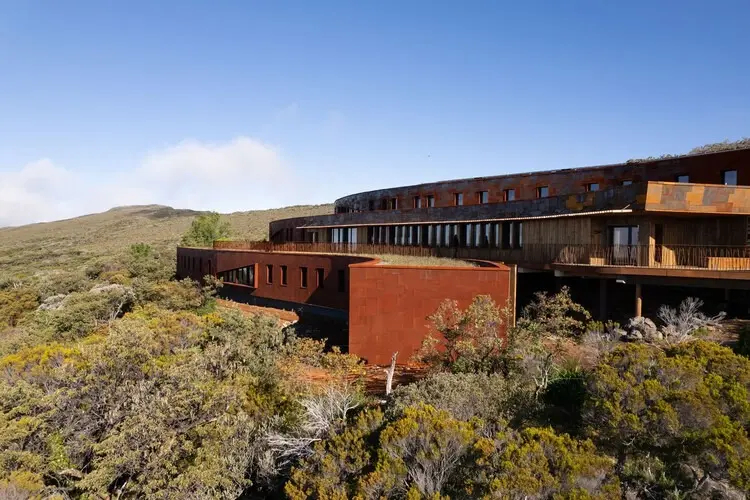
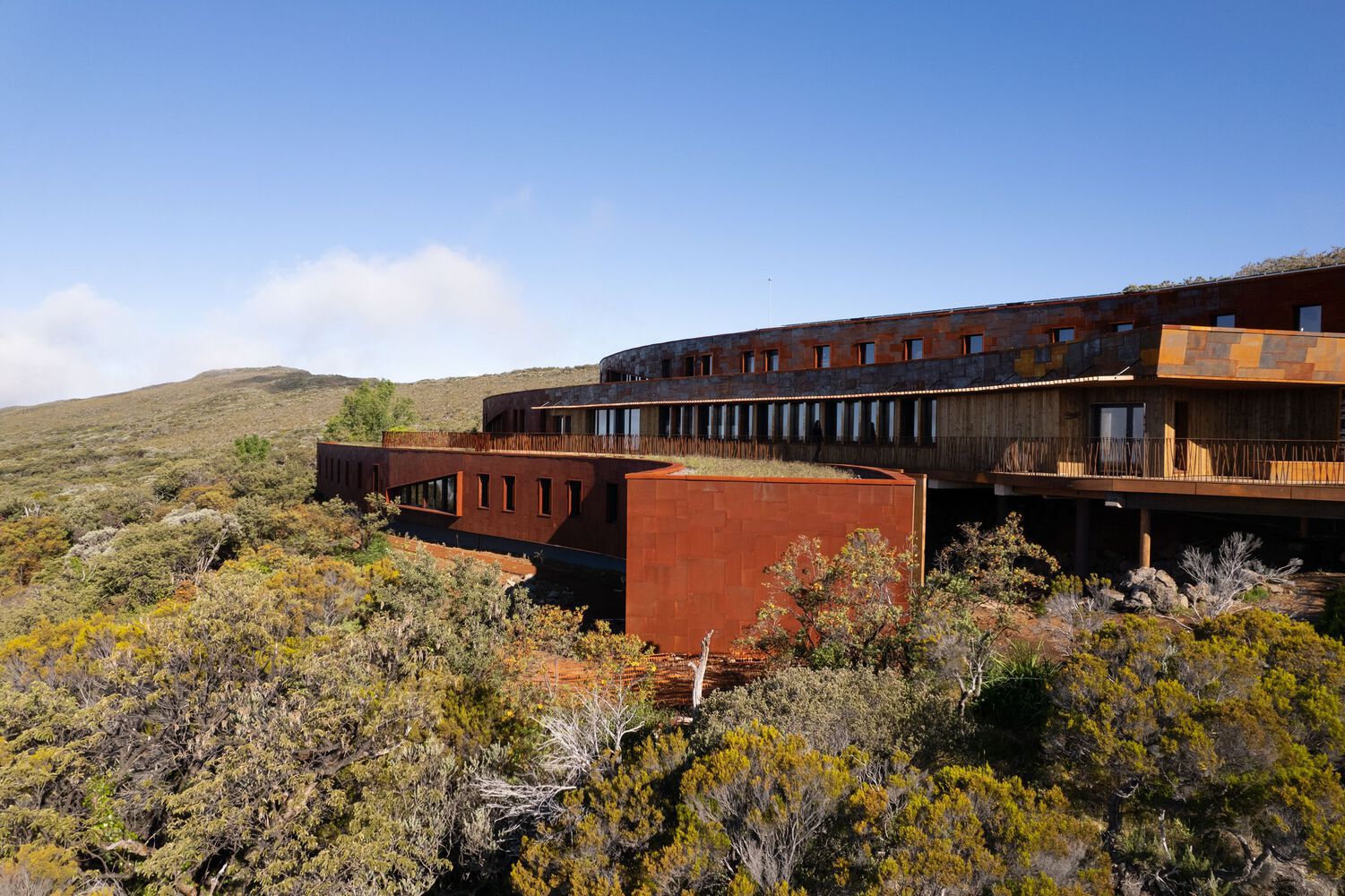
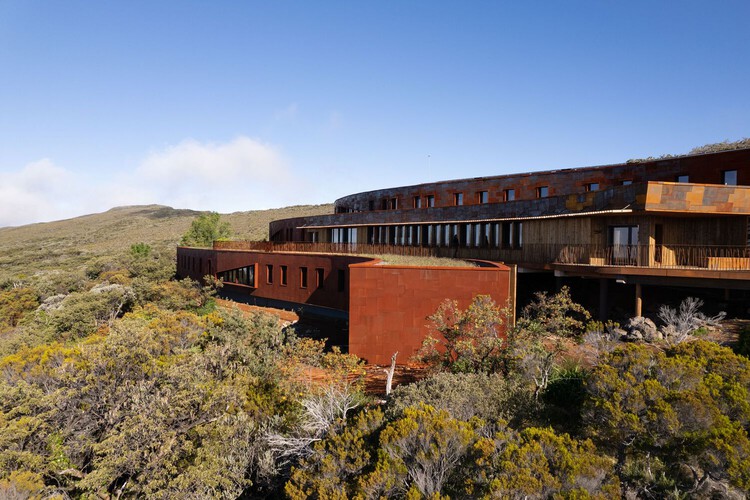
- Present Day (September 2026): Contemporary practices—exemplified by works such as Gîte du Volcan (Altitude 80 Architecture + Atelier Épicéa) and Volcano House (Pilar Beltrán + Br-arquitectos)—showcase a sophisticated synthesis of sustainability, resilience, and site-specific responsiveness. Designers now treat volcanic earth not as a hostile void, but as an active participant in the architectural narrative.
Supporting Data and Notable Projects
Constructing on volcanic terrain demands specialized materials and structural typologies. The ArchDaily project archive highlights several pioneering interventions that redefine the relationship between shelter and raw geology:
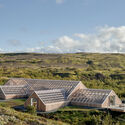
- Gîte du Volcan (Altitude 80 Architecture + Atelier Épicéa): Set against dramatic, windswept volcanic highlands, this project demonstrates how public and recreational architecture can integrate into high-altitude, shifting topographies while respecting fragile ecological ecosystems.
- Lava House (Paul Weiner | DesignBuild Collaborative): A masterclass in material honesty, this dwelling directly engages jagged, cooled lava flows, utilizing the dark stone as both a visual anchor and a structural datum.
- Stóng Ruins (SP(R)INT STUDIO): An exploration of historical preservation and modern intervention, highlighting how architecture can frame the remnants of past volcanic destruction.
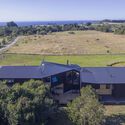
- Volcano House (Pilar Beltrán + Br-arquitectos): A residential endeavor that navigates the nuances of building on unstable, highly porous volcanic soils, balancing transparency (views of the stark landscape) with structural fortification.
Geological and Material Breakdown
- Basalt Masonry: High compressive strength and thermal mass, though vulnerable to sudden thermal shock if exposed to extreme heat gradients.
- Pumice and Scoria Concretes: Lightweight aggregates derived from volcanic ejecta, frequently utilized to reduce dead loads on unstable ground.
- Geotechnical Monitoring Systems: Modern builds in active zones increasingly incorporate real-time seismic and gas-emission sensors to provide early warning metrics for inhabitants.
Official Responses and Regulatory Frameworks
Building on or near active volcanic zones is rarely a matter of individual architectural whim; it is governed by rigorous municipal planning, environmental protection laws, and civil protection agencies.
Zoning and Hazard Mapping
Geological surveys—conducted by institutions such as the United States Geological Survey (USGS), the Instituto Volcanológico de Canarias (INVOLCAN), and global counterpart agencies—continually map lava-flow hazard zones. Municipalities use these zones to classify land into:
- Prohibited Build Zones: Areas historically prone to frequent, high-velocity pyroclastic flows or primary lava channels.
- Conditional Development Zones: Areas where building is permitted only if structures adhere to strict engineering codes, such as elevated foundations, reinforced concrete frames, and flexible utility connections.
Environmental Stewardship
Volcanic landscapes are often protected ecological reserves due to their unique endemic flora and fauna. Consequently, official architectural approvals require extensive Environmental Impact Assessments (EIAs). Architects must prove that their foundations—whether they use point-load stilts to preserve the underlying lava crust or minimal-excavation footings—do not permanently scar or disrupt the fragile post-volcanic ecosystem.
Implications for the Future of Architecture
The trend of building on volcanic ground carries profound implications for architectural theory, risk management, and sustainable design on a warming and geologically active planet.
1. Moving from Defense to Coexistence
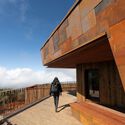
Historically, civil engineering sought to wall off nature or dominate hazardous landscapes. Volcanic architecture challenges this anthropocentric hubris. Because a volcano cannot be permanently subdued, architecture here must embrace impermanence. Structures are increasingly designed with adaptable lifespans, utilizing modular components or recyclable local materials that can be repaired, replaced, or naturally reclaimed by the earth if geological activity resumes.
2. Material Innovation and Circular Economy
The study of volcanic construction fosters innovations in sustainable material science. Utilizing local volcanic byproducts—such as ash in geopolymers or vesicular basalt in thermal insulation—reduces the carbon footprint associated with transporting heavy construction materials to remote, rugged sites. This localized sourcing points toward a broader architectural future where buildings are generated directly from the immediate geology.
3. Psychological and Philosophical Resonance
Beyond technical resilience, living in volcanic architecture reshapes human perception. By placing inhabitants directly inside landscapes marked by creation and destruction, these designs foster a deep humility regarding planetary forces. They transform architecture from a mere enclosure into an observatory of Earth’s vital signs—reminding us that human habitat is always a temporary guest on a moving, living crust.
