

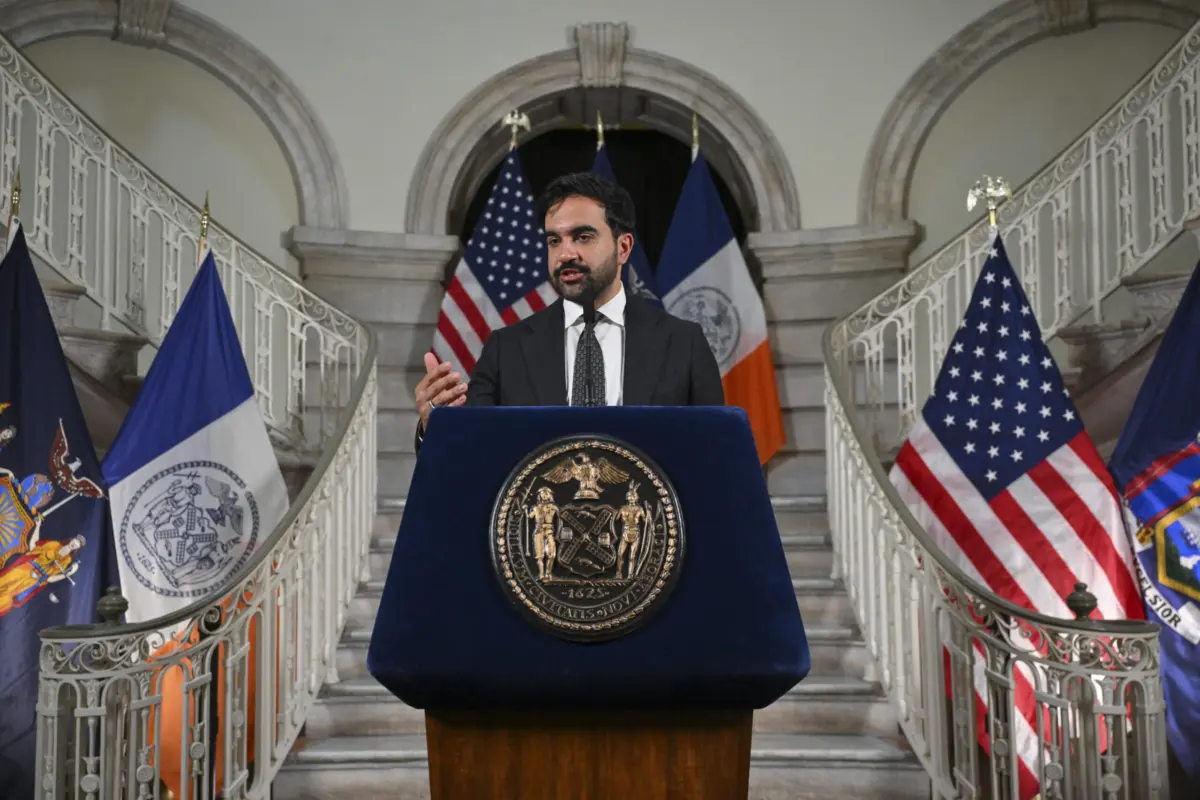
NEW YORK — In a major victory for frustrated consumers trapped in the labyrinth of modern recurring billing, New York City has officially enacted a stringent "click-to-cancel" rule. The regulation, which took effect Thursday, fundamentally changes how businesses handle subscription services within the five boroughs, requiring companies to make canceling a subscription as frictionless as signing up for one in the first place.
The policy arrives as a direct counterpunch to federal regulatory setbacks. Following an appeals court decision that struck down a nationwide version of the rule over procedural technicalities, New York City has stepped into the regulatory vacuum. Municipal leaders expect the local mandate to return tens—if not hundreds—of millions of dollars to the pockets of everyday New Yorkers while establishing a new blueprint for municipal-level consumer protection in the United States.
Main Facts
The core of New York City’s new click-to-cancel regulation is simple: symmetry in digital commerce. Under the policy enforced by the NYC Department of Consumer and Worker Protection (DCWP), if a business allows a consumer to enroll in a subscription, trial, or recurring membership online with a few simple clicks, that same business must provide a similarly straightforward, digital mechanism to terminate the service.
Gone are the days of digital sign-ups paired with labyrinthine exit strategies. Businesses can no longer force customers to navigate phone trees, listen to aggressive retention pitches from customer service representatives, send certified letters, or visit brick-and-mortar storefronts to cancel a digital subscription. A gym that lets users sign up on a smartphone app must now let them cancel directly through that same app or website with comparable ease.
To give teeth to the regulation, the city has launched a dedicated public portal—accessible at nyc.gov/click-to-cancel—where residents can formally lodge grievances. Consumers can report companies that:
- Use unclear or deceptive subscription terms.
- Deliberately delay or complicate the cancellation process.
- Fail to provide clear, timely notifications before auto-renewing annual or monthly subscriptions.
Once a complaint is submitted, DCWP investigators review the case, contact the offending business, and actively work to secure refunds for the consumer while assisting them in severing the unwanted ties. Businesses found in violation of the ordinance face escalating financial penalties, starting at $525 per infraction. Furthermore, if the DCWP identifies systemic, chronic noncompliance at a particular enterprise, the agency is fully empowered to launch broader investigations and pursue aggressive legal action.
Chronology: From Federal Ambition to Local Action
The journey toward click-to-cancel protections has been marked by high-stakes bureaucratic battles, judicial roadblocks, and a rapid pivot from federal ambition to municipal agility.
- The Federal Push (2020–2024): Samuel Levine, currently the Commissioner of the NYC Department of Consumer and Worker Protection, previously served as the consumer protection chief at the Federal Trade Commission (FTC) under the leadership of Lina Khan. During his tenure, Levine spearheaded the multi-year effort to institute a federal click-to-cancel rule designed to protect consumers nationwide from deceptive "dark patterns" used by subscription companies.
- The Federal Roadblock: Despite extensive public comments and years of investigative groundwork, the ambitious federal rule hit a devastating wall. A federal appeals court ultimately struck down the FTC’s version, citing procedural issues that short-circuited the nationwide implementation of the policy.
- The Municipal Pivot (2025–2026): Recognizing that consumers could not afford to wait years for federal courts and agencies to untangle procedural knots, Levine and local NYC policymakers decided to take matters into their own hands. The city proposed its own localized click-to-cancel rule earlier this year.
- Rapid Prototyping (Early 2026): Proving that local government can operate with tech-sector speed, the Mayor’s Public Interest Technology (PIT) Crew designed, tested, and deployed the dedicated consumer complaint portal in a mere 10 weeks.
- Implementation (Present Day): The rule officially takes effect on Thursday, making New York City the first major municipality in the nation to successfully implement a comprehensive, localized click-to-cancel framework, with enforcement and complaint intake going live simultaneously.
Supporting Data and Economic Impact
The financial toll of "subscription trap" business models is staggering, heavily impacting households already strained by inflation and rising living costs. According to rigorous economic projections compiled by the city, New York City’s click-to-cancel rule is expected to yield monumental savings for local residents.
- Estimated Annual Savings: City economists project that the rule will save New Yorkers anywhere from $21.5 million to $162.5 million annually. These figures represent money previously drained from household budgets through forgotten memberships, unwanted software licenses, streaming services, and fitness club dues that consumers struggled for months to terminate.
- Penalty Structures: To ensure compliance, the financial penalties for violating the local ordinance are designed to sting. Fines begin at $525 per individual violation, escalating based on the severity and frequency of the corporate infractions.
- Development Timeline: The infrastructure backing this massive consumer defense initiative—the DCWP complaint portal—was engineered by the Mayor’s PIT Crew in just 10 weeks, showcasing an unprecedented turnaround time for municipal software deployment.
Official Responses and Perspectives
In an exclusive interview with The Verge, DCWP Commissioner Samuel Levine offered a candid assessment of the stark contrast between federal paralysis and municipal efficacy. Reflecting on his years at the FTC, Levine described the experience of enacting New York City’s rule as "night and day."
"We proposed this rule this year. We finalized it this year. It’s taking effect this year. This is the speed of government as it should be," Levine told The Verge.
While expressing pride in the foundational work laid at the federal level—which he views as a vital "model" for other state and local governments looking to bypass federal gridlock—Levine did not mince words regarding the limitations of the federal apparatus.
"At the end of the day, it took more than four years. And then after all of that, it never actually gave Americans the relief they needed."
While the FTC under current Chair Andrew Ferguson has initiated preliminary steps toward potentially reestablishing a national negative-option rule, Levine is betting that aggressive municipalities will lead the charge. Even if localized rules mean that fewer Americans are comprehensively protected right out of the gate, the existence of strict municipal frameworks creates an immediate, tangible deterrent for national corporations engaging in predatory billing practices.
Levine was also eager to distinguish New York City’s technological infrastructure from bureaucratic tropes or poorly executed federal tech initiatives. He explicitly distanced the new portal from the White House’s recently launched America.gov initiative, which critics have characterized as a superficial artificial intelligence chatbot layered on top of legacy government databases.
"When consumers submit a complaint to our click-to-cancel portal, they’re not going to be diverted into a chatbot doom loop," Levine assured. "We’re going to have actual people whose full-time job is to help them."
Furthermore, Levine emphasized the importance of modernizing the citizen experience to combat deep-seated public skepticism toward administrative agencies. He noted that the process of seeking municipal help should bear no resemblance to the often-dreaded experience of visiting a Department of Motor Vehicles (DMV) office.
"If we want to restore people’s faith in government and the ability of government to deliver, we need to show that government can create excellent products. We need to show that every experience is not going to the DMV. And I mean, no offense to our colleagues at the DMV," Levine quipped.
"People have really bad associations with interacting with the government, and sometimes that deters them from filing complaints. You can have the best laws in the world, but at the end of the day, if your eyes and ears, the people you’re working to protect, don’t want to actually deal with the government and tell us what happened, those laws are not going to be effective."
Implications for Businesses and Consumers
The immediate rollout of New York City’s click-to-cancel rule sends a shockwave through the subscription economy, carrying profound implications for both commercial enterprises and everyday citizens.
For Businesses: A Mandate for System Overhauls
Companies operating within New York City—or offering digital subscription services accessible to city residents—must rapidly audit their user experience (UX) and customer journey designs. Practices that rely on "friction-by-design" (making onboarding instantaneous while routing cancellations through convoluted phone queues or hidden web menus) are now explicitly illegal under municipal law.
Legal experts advise national brands to adopt the NYC standard across all operations nationwide. Maintaining separate, customer-hostile cancellation funnels just for New York residents is technically difficult and exposes brands to compounding liability, steep fines, and reputational damage. Compliance departments are now rushing to integrate one-click cancellation buttons directly into account dashboard settings.
For Consumers: Empowerment and a New Normal
For New York City residents, the rule marks the end of an era of helpless financial bleeding. Consumers no longer have to resort to extreme measures—such as canceling credit cards or issuing chargebacks—just to escape predatory recurring charges.
By streamlining the complaint process and staffing the backend with dedicated human caseworkers rather than automated loops, the DCWP is lowering the barrier to entry for consumer justice. If a company stalls, obfuscates, or ignores a cancellation request, the city’s regulatory weight now stands firmly behind the individual.
As other municipalities and state legislatures watch New York’s rollout closely, this local ordinance could well serve as the catalyst for a nationwide cultural and regulatory shift—proving that when federal consumer protections stall out, local governments can step up to restore fairness to the digital marketplace.
