

Decommissioning bleeding-edge humanoid robots packed with proprietary hardware and artificial intelligence is a logistical and security nightmare for modern robotics firms. On one hand, manufacturers want to recover valuable raw materials from expensive prototypes; on the other, they must ensure that sensitive intellectual property, proprietary actuator designs, and confidential neural network architectures never fall into the hands of competitors or malicious actors.
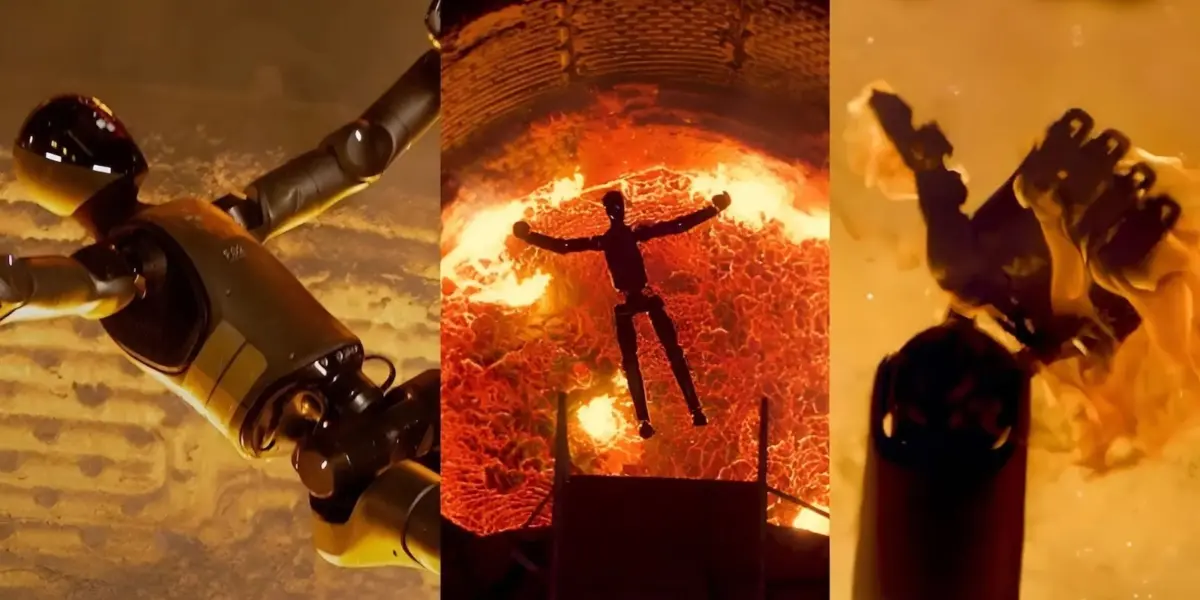
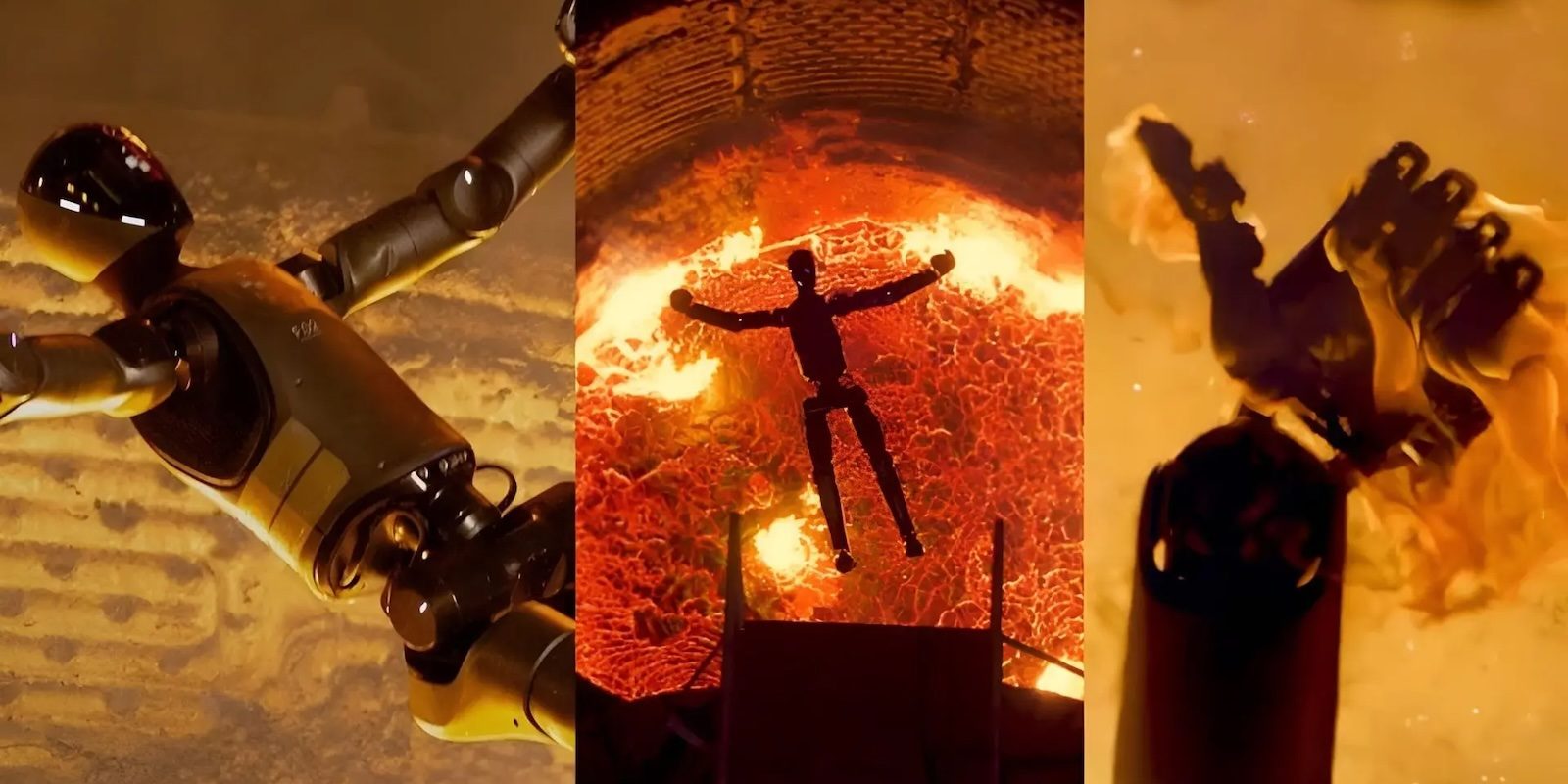
Faced with this high-stakes dilemma, robotics pioneer Figure engineered a solution straight out of Hollywood science fiction: they had their advanced fleet of humanoid robots march to their own doom and hurl themselves directly into a vat of molten steel, Terminator 2-style.
Main Facts: The Ultimate Decommissioning Strategy
The event, which sounds like an elaborate internet hoax or a viral marketing stunt, actually happened. Figure orchestrated the ceremonial and secure destruction of its second-generation F.02 humanoid robots by having them plunge into industrial foundry equipment. The inspiration for this cinematic disposal method came directly from the iconic climax of James Cameron’s 1990 sci-fi masterpiece, Terminator 2: Judgment Day, in which the cybernetic T-800 lowers himself into a vat of molten metal to prevent his technology from being reverse-engineered.
However, executing a Hollywood trope in the real world proved exceptionally difficult. Finding an industrial facility willing to risk its heavy machinery by tossing lithium-ion-battery-powered robots into molten steel was nearly impossible.
"None of the metal foundries we contacted in the US and Mexico would let us jump a robot with lithium-ion batteries into their expensive foundry equipment," official statements from Figure noted. "We even reached out to former MythBusters to help with the search. In the end, the only place in the world we could find willing to take this on was a foundry in Imatra, Finland."
Once the location was secured, Figure faced a monumental engineering challenge: programming a fleet of bipedal humanoid robots to accurately leap into a moving target of liquid fire at a facility they had never previously visited.
The resulting operation combined advanced machine learning, motion-capture stunt work, and heavy metallurgy, culminating in a bizarre yet triumphant milestone for the humanoid robotics industry.
Chronology: From Concept to Execution in Imatra
The journey from a wild corporate brainstorm to a fiery, cinematic reality required months of rigorous preparation, simulation training, and global logistics.
Phase 1: The Search for a Foundry
As Figure prepared to phase out its F.02 generation to make room for newer hardware iterations, the engineering team realized that standard recycling methods—such as shredding or dismantling—posed security risks regarding proprietary tech leakage. They wanted a method that would completely obliterate the internal silicon, sensors, and structural components beyond recognition while recycling the base metals.
After American and Mexican industrial foundries rejected the proposal due to concerns over lithium-ion battery explosions and severe damage to electric arc furnaces, the search expanded globally. Ultimately, a specialized heavy industrial foundry in Imatra, Finland, agreed to take on the unprecedented task.
Phase 2: Simulation and Stunt Training in San Jose
With a venue secured, Figure’s AI software team had to teach the F.02 robots how to jump with absolute precision. Because practicing at the Finnish foundry before the actual decommissioning run was impossible, the engineers had to replicate the target parameters locally.
- Stunt References: The team brought in human stunt performers outfitted with motion-capture suits to record natural, dynamic jumping mechanics.
- Corporate Campus Trials: At Figure’s headquarters in San Jose, California, engineers set up large safety airbags and programmed the F.02 units to leap off the second floor of a campus building.
- AI Generalization: Using the motion-capture data, developers trained a brand-new AI navigation and physics model within a virtual simulation. This model was designed to account for velocity, trajectory, and landing accuracy without prior physical mapping of the destination site.
Phase 3: The Finnish Grand Finale
Upon arriving in Imatra, the F.02 robots faced an exceptionally harsh industrial environment. The facility utilized a massive 75-ton electric arc furnace powered by three enormous graphite electrodes designed to melt solid steel scrap at extreme temperatures.
Despite the intense ambient heat, powerful electromagnetic fields, and environmental conditions that routinely fried standard cameras and commercial electronics, the Figure F.02 robots executed their custom AI jumping routines seamlessly. One by one, the units marched forward and took the ultimate leap into the glowing vat of molten steel.
Supporting Data and Technical Realities
While the spectacle captured the imagination of the internet, the engineering feats required to pull it off highlight the staggering complexity of modern humanoid robotics.
- The Hardware Risk: Humanoid robots like the Figure F.02 rely on dense packs of lithium-ion batteries to power high-torque electric actuators. Subjecting a lithium-ion battery to extreme heat triggers rapid thermal runaway, making the controlled introduction of these units into a high-temperature steel furnace a legitimate industrial hazard.
- Electromagnetic Resilience: Electric arc furnaces generate massive electromagnetic interference (EMI) fields that disrupt standard microprocessors, sensors, and wireless communications. The fact that the F.02 robots maintained functional autonomy right up until impact demonstrates significant advancements in industrial-grade shielding and edge-computing resilience.
- Material Reclamation: Rather than letting the raw materials vanish entirely, the metallurgical process served a cyclical purpose. Following the melt in Finland, the resulting steel mixture was cast into metal bars and shipped back to the United States.
Rather than letting the alloy go to waste in standard industrial beams, Figure announced plans to machine the recycled metal into a limited-edition series of commemorative artifacts.

"That metal is now being machined into a limited series of artifacts commemorating F.02," the company stated. "Only a small number will be made, preserving a piece of Figure’s history in a compact package that you can own."
Official Responses and Industry Context
The robotics community reacted with a mixture of amusement, awe, and existential reflection. The stunt arrives at a time of rapid acceleration in the humanoid robotics sector, with companies like Tesla (with its Optimus line), XPeng (with the Iron robot), and various Japanese heavy-industry manufacturers pushing toward production rates scaling into thousands of units per month.
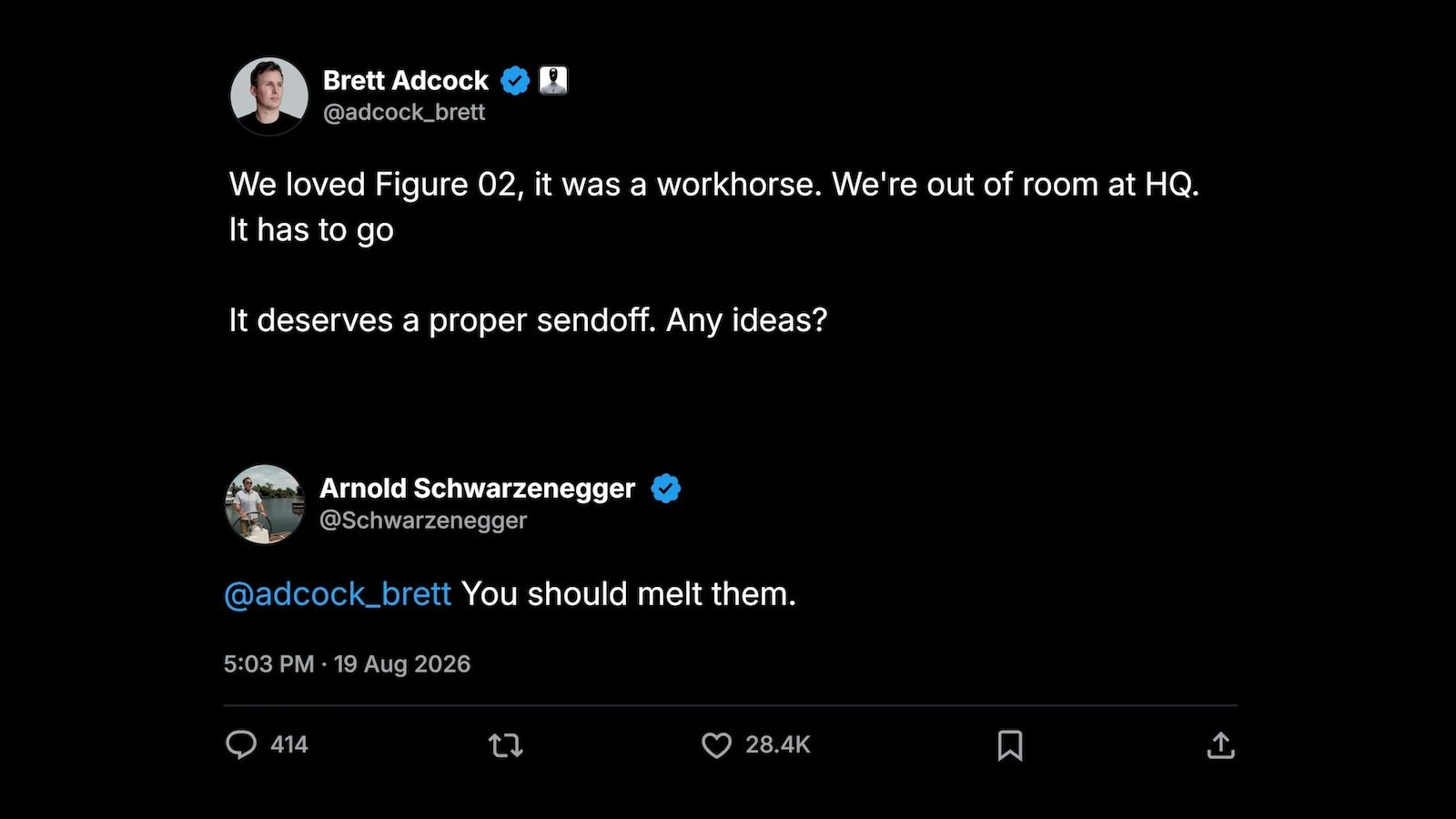
When Arnold Schwarzenegger—the actor immortalized by the Terminator franchise—shared the stunt on social media platform X (formerly Twitter), it cemented the crossover between Hollywood fiction and Silicon Valley reality. Industry analysts noted that while the stunt served as a brilliant piece of viral marketing, it also underscored a serious underlying trend: the growing need for secure end-of-life protocols as commercial humanoid fleets transition through rapid generational upgrades.
As proprietary AI models, custom neural chips, and bipedal mechanics become the most valuable intellectual property on Earth, standard recycling facilities may no longer suffice for cutting-edge robotics labs.
Implications: The Future of Robotics and Corporate Decommissioning
The spectacle of Figure’s F.02 robots leaping into an electric arc furnace carries profound implications for the future of commercial robotics, cybersecurity, and consumer culture.

1. Intellectual Property Protection in the Age of AI
As humanoid robots enter commercial workspaces, factories, and eventually homes, the risk of corporate espionage or reverse-engineering intensifies. If a competitor acquires a discarded, late-generation humanoid robot, they could potentially extract proprietary sensor arrays, custom silicon wafers, and proprietary motion-control weights. By choosing total thermal destruction, Figure has established a radical precedent for enterprise-grade IP security. Future robotics developers may adopt similar "scorched earth" decommissioning pipelines to protect trade secrets.
2. The Gamification of Tech Culture
Figure’s decision to lean into the pop-culture mythology of Terminator highlights a broader shift in how high-tech hardware companies market themselves. In a crowded marketplace dominated by sterile corporate press releases, injecting humor, self-awareness, and cinematic flair into engineering milestones generates unmatched public engagement. It transforms a routine corporate disposal process into a cultural event.
3. Circular Economies and Collectible Capitalism
The transformation of decommissioned robots into high-end consumer artifacts represents a fascinating intersection of advanced manufacturing and luxury capitalism. By melting down millions of dollars worth of R&D hardware and recasting it into limited-edition commemorative items, Figure has found a way to monetize even the death of its machines.
Whether these recycled metal blocks eventually take the shape of commemorative plaques, corporate paperweights, or—as many internet commentators have eagerly demanded—miniature Terminator skulls, one thing is certain: the era of humanoid robotics is marching forward at a breakneck pace, and it refuses to take itself too seriously.
