

By Anthony Capkun
Published: October 1, 2026
Main Facts: The October 2026 Release at a Glance
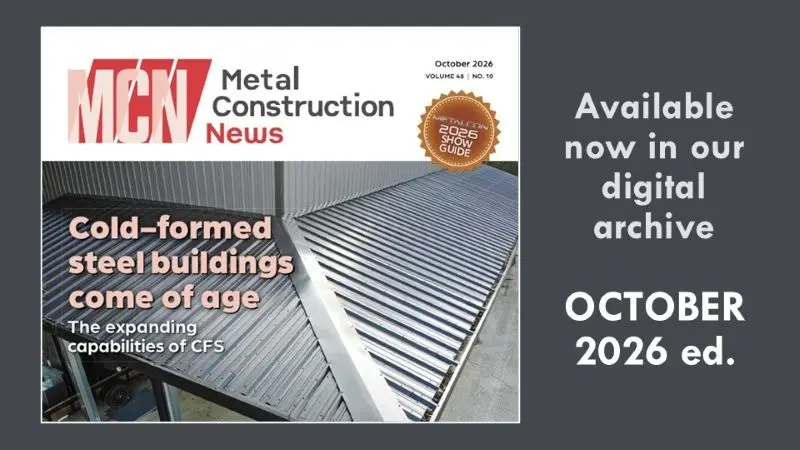
The metal construction and architectural engineering sectors are experiencing a period of intense technological transformation, regulatory shifts, and logistical challenges. Addressing these dynamic industry currents, Metal Construction News (MCN) has officially released its highly anticipated October 2026 digital and print edition. Spearheaded by a comprehensive lineup of industry-focused features, this month’s publication serves as both a tactical manual for field operations and a strategic roadmap for executive decision-makers.
At the core of the October 2026 issue is an exhaustive review of modern construction practices. Key topics tackled in this edition include:
- The evolution of cold-formed steel (CFS) structures, signaling a new era of engineering versatility and architectural ambition.
- The comprehensive METALCON 2026 Show Guide, providing attendees with maps, exhibitor directories, workshop schedules, and masterclass itineraries.
- Thermal envelope failures and ice damming, reframing a common winter maintenance issue as a critical structural and thermodynamic flaw in large-scale facilities.
- Multisite labor tracking complexities, highlighting the hidden financial drains of unoptimized field-crew hour allocations.
- Next-generation personal protective equipment (PPE), addressing the expanding chasm between bare-minimum OSHA compliance and cutting-edge safety ergonomics.
- High-wind building envelopes, emphasizing the absolute necessity of AMCA 550-certified louvers in hurricane-prone zones along the Atlantic and Gulf coasts.
As material costs fluctuate, labor shortages persist, and environmental regulations tighten, the October 2026 issue of Metal Construction News captures the resilience and ingenuity defining the modern metal building industry.
Chronology: Industry Milestones Leading to the October 2026 Edition
To fully appreciate the gravity of the topics featured in the October 2026 issue, it is vital to trace the technological and economic milestones that have shaped the metal construction landscape over recent years.
Q1–Q2 2024: The Post-Pandemic Pivot and Supply Chain Stabilization
Following years of volatile steel pricing and unpredictable supply chains, the first half of 2024 saw structural steel and CFS manufacturers pivot toward localized sourcing, predictive manufacturing, and lean fabrication. Engineering firms began heavily investing in Building Information Modeling (BIM) software that integrated directly with automated roll-forming machinery, laying the groundwork for the complex CFS geometries seen in contemporary architecture.
Late 2024–2025: The Regulatory Tightening on Workplace Safety and Building Envelopes
As climate anomalies intensified—highlighted by severe hurricane seasons impacting the Gulf and Atlantic coasts—building codes underwent rapid revisions. Simultaneously, federal safety agencies increased enforcement regarding worker ergonomics and fall protection. Contractors found that legacy safety gear was no longer sufficient to protect workers or mitigate rising liability insurance costs.
Early 2026: The Rise of Multi-Location Operations and Labor Pressures
By 2026, the industry faced an unprecedented boom in commercial distribution centers and industrial parks. Contractors expanded operations across multiple state lines and geographic regions. This geographic sprawl exposed a critical flaw in traditional business administration: outdated, manual labor-tracking methods. Miscalculated travel times and inaccurate hours began eating into profit margins, prompting an industry-wide demand for digital transformation in administrative workflows.
October 2026: Synthesis and Publication
Culminating these multi-year trends, Metal Construction News compiled field data, engineering case studies, and regulatory updates into the October 2026 edition. The release coincides precisely with the ramp-up to METALCON 2026, positioning the magazine as a central educational resource for the thousands of contractors, architects, and suppliers gathering for the annual trade event.
Supporting Data: Deep-Dive Analysis of October’s Core Features
The features highlighted in the October 2026 edition of MCN are backed by significant industry metrics, engineering realities, and operational challenges.
1. Cold-Formed Steel (CFS) Comes of Age
For decades, cold-formed steel was largely relegated to interior partition framing, secondary structural members, or low-rise commercial projects. However, recent advancements in steel metallurgy, higher yield strengths (such as 50 ksi and 80 ksi steels), and sophisticated finite element modeling (FEM) software have allowed CFS to break structural barriers.
- Design Flexibility: Modern engineering allows CFS to span greater distances and support heavier gravity and lateral loads than ever before.
- Sustainable Footprint: With scrap recycling rates nearing 90% across the steel industry, CFS offers developers significant LEED and green-building credits.
- Speed of Erection: Pre-paneled and modular CFS systems reduce on-site labor requirements by up to 35%, directly combating the ongoing skilled labor shortage.
2. Ice Damming as a Thermal Failure in Distribution Centers
Property managers of massive metal distribution centers often view winter roof leaks as simple maintenance annoyances caused by snow accumulation. MCN’s October feature challenges this superficial diagnosis, categorizing ice damming as a catastrophic thermal envelope failure.
- The Thermodynamic Mechanism: When interior heat escapes through poorly detailed insulation or thermal bridges in metal roof assemblies, it melts the bottom layer of roof snow. This water runs down to the colder eaves, refreezes, and creates a dam that forces subsequent meltwater back under roof panels.
- The Financial Toll: Beyond structural corrosion and interior water damage to stored goods, severe ice damming compromises the long-term R-value of the building’s insulation system, driving up lifelong heating and cooling expenditures.
3. The Hidden Costs of Multisite Labor Tracking
With commercial contractors managing projects across sprawling geographic footprints, administrative overhead has skyrocketed. According to operational analyses featured in the October issue, inefficient labor tracking manifests in several ways:
- Uncompensated Transit Time: Crew members traveling between multiple job sites in a single day often misallocate driving hours, distorting true project labor costs.
- Bid Inaccuracies: When historical labor data is skewed by poor time-tracking, future bids are either underpriced (leading to project losses) or overpriced (resulting in lost contracts).
- Payroll Discrepancies: Manual entry errors across regional sites increase the risk of compliance violations regarding prevailing wage laws and overtime calculations.
4. Safety Gear: OSHA Compliance vs. Modern Ergonomics
There is a dangerous misconception among purchasing managers that any equipment stamped with an OSHA-compliant label is optimal for the modern job site. The October 2026 issue underscores a growing gap between minimum legal compliance and advanced technological safety design.
- Weight Reduction: Newer personal fall arrest systems (PFAS) utilize advanced synthetic webbing and aerospace-grade aluminum alloys, reducing harness weights by up to 20% and significantly decreasing worker fatigue.
- Smart PPE: Integration of wearable sensors in hard hats and safety vests now monitors core body temperatures and alerts supervisors to potential heat exhaustion risks before they result in medical emergencies.
5. Hurricane-Prone Engineering: AMCA 550-Certified Louvers
As extreme weather events become more frequent along the Atlantic and Gulf coasts, building envelope protection has become a matter of structural survival. Standard louvers often fail under the combined assault of high-velocity winds and wind-driven rain, leading to internal pressurization that can blow out a building’s roof or curtain wall.
- The AMCA 550 Standard: The Air Movement and Control Association (AMCA) Standard 550 tests louvers for high-velocity wind-driven rain. Certified louvers must successfully prevent the penetration of water under simulated hurricane conditions.
- Architectural Mandate: The October MCN issue serves as a vital reminder to architects and specifiers that choosing non-certified louvers in hurricane zones invites catastrophic failure, steep insurance penalties, and potential building code violations.
Official Responses and Industry Perspectives
Industry leaders, association executives, and technical experts have weighed in on the themes explored in the October 2026 edition of Metal Construction News. Their perspectives illuminate the practical urgency driving these editorial features.
"We are witnessing a paradigm shift in how cold-formed steel is perceived by structural engineers," notes a leading structural consultant featured in the October issue. "No longer viewed as a lightweight alternative, CFS is now a primary structural driver capable of supporting multi-story mid-rises with a fraction of the carbon footprint associated with traditional carbon-heavy materials."
Addressing the operational headaches of multi-location construction, a prominent national general contractor remarked on the labor-tracking challenges highlighted by MCN:
"When you’re running five or six steel erection crews across three different states, a discrepancy of just ten minutes per worker per day equates to thousands of dollars wasted annually. The industry can no longer rely on paper timesheets or fragmented mobile apps. We need integrated, real-time labor analytics to protect our margins."
Furthermore, building envelope specialists have praised MCN’s spotlight on AMCA 550-certified louvers and thermal envelope integrity:
"Too many developers treat weatherproofing as an afterthought," states an architectural safety liaison based in the Gulf Coast region. "Ice damming in northern distribution centers and water infiltration in southern hurricane zones are two sides of the same coin: a failure to respect building physics. Articles like those in the October MCN edition force the industry to elevate its standards."
Implications: What the October 2026 Edition Means for the Future of Metal Construction
The release of the October 2026 issue of Metal Construction News arrives at a pivotal juncture. The implications of the trends, technologies, and warnings outlined in this month’s features will reverberate across the industry for years to come.
1. Technological Integration Becomes Mandatory
The days of manual estimating, passive safety compliance, and intuition-based design are rapidly fading. As CFS takes on more complex structural loads and multisite labor tracking becomes more intricate, firms that fail to adopt digital tools, BIM integrations, and advanced data analytics will find themselves priced out of competitive bids.
2. A Higher Standard of Resilience
Climate volatility and stringent building codes mean that durability is no longer optional. Whether it is preventing thermodynamic failures like ice damming in distribution facilities or installing AMCA 550-certified louvers against coastal hurricanes, the tolerance for building envelope failure is shrinking to zero. Architects, engineers, and contractors must adopt a holistic view of structural health—one that accounts for long-term thermal performance alongside immediate structural integrity.
3. Workforce Retention Through Safety and Efficiency
With skilled labor remaining scarce, companies that invest in ergonomic, state-of-the-art PPE and streamlined administrative processes (such as automated labor tracking) will enjoy a distinct advantage in talent retention. Workers are increasingly gravitating toward employers who prioritize both physical safety and accurate compensation.
Conclusion
As the industry prepares for METALCON 2026 and looks toward the close of the year, the October 2026 edition of Metal Construction News stands as an indispensable compass. By bridging the gap between high-level engineering theory and on-the-ground operational realities, MCN continues to guide metal construction professionals toward a safer, more profitable, and structurally resilient future.
To explore these features in detail, access back issues, or read the digital edition, visit the official Metal Construction News Digital Edition Archive.
