

By Anthony Capkun
Published: October 1, 2026
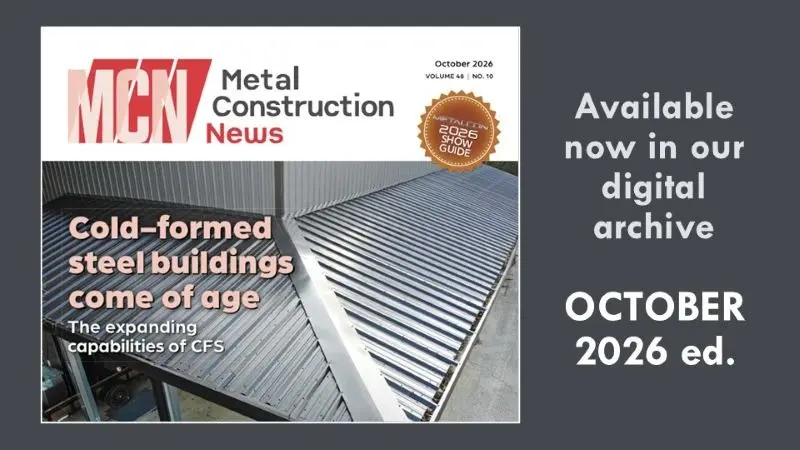
NEW YORK — The architectural metal and metal building industries stand at a pivotal crossroad marked by rapid technological maturation, shifting labor dynamics, and escalating climate-induced design challenges. Addressing these profound industry transformations head-on, Metal Construction News (MCN) officially released its highly anticipated October 2026 print and digital edition today.
Curated to serve as a comprehensive operational roadmap for general contractors, structural engineers, architects, and metal fabricators, this month’s publication delves deep into the innovations redefining the built environment. From the mainstream commercial breakthroughs of cold-formed steel (CFS) to critical updates on hurricane-resistant architecture, the October issue tackles the most pressing operational, technical, and regulatory hurdles facing construction professionals today.
Main Facts: What’s Inside the October 2026 Issue
The October 2026 edition delivers a dynamic mix of investigative technical features, strategic management guides, and industry event previews. The primary stories featured in this month’s lineup include:
- The Evolution of Cold-Formed Steel (CFS): Highlighting how breakthroughs in engineering software, prefabrication accuracy, and structural optimization are empowering CFS systems to capture larger market shares in mid-rise commercial and industrial sectors.
- The Official METALCON 2026 Show Guide: Serving as the definitive handbook for the industry’s premier annual conference, this section outlines exhibition floor plans, keynote presentations, masterclasses, and specialized educational tracks.
- Thermal Dynamics of Ice Damming: Shifting the narrative from a simple seasonal nuisance to an insidious thermal failure that threatens the structural integrity of large-scale distribution centers and industrial metal roofs.
- Labor Tracking in Multisite Operations: Examining the administrative and financial pitfalls of modern construction logistics, specifically how untracked transit times and misallocated labor hours distort project budgets.
- The 2026 Safety Gear Paradigm: A critical evaluation of workplace safety gear, exposing the widening gap between baseline OSHA compliance and the latest ergonomic and technological PPE innovations.
- Wind-Driven Rain and Hurricane Resilience: A deep dive into AMCA 550-certified louvers, establishing why these components are now mandatory architectural considerations for coastal developments along the Atlantic and Gulf corridors.
Chronology: The Journey to the October 2026 Release
The release of the October edition is the culmination of a rigorous, months-long editorial process that mirrors the accelerated pace of the metal construction sector itself.
Q1–Q2 2026: Identifying Emerging Industry Trends
Planning for the October issue commenced in early 2026, as MCN editors tracked macroeconomic trends affecting the construction sector. Rising material costs, persistent labor shortages across multiple trades, and increasingly erratic weather patterns emerged as the dominant themes. Editorial boards identified a critical need for actionable content that could bridge the gap between theoretical engineering and daily field execution.
Summer 2026: Field Research and Technical Collaborations
Throughout the summer months, MCN contributors fanned out across North America to interview structural engineers, software developers, and building envelope consultants. This period involved close collaboration with organizations such as the Cold-Formed Steel Engineers Institute (CFSEI) and the Air Movement and Control Association (AMCA) International to ensure technical accuracy regarding structural capabilities and environmental testing standards.
September 2026: METALCON Coordination and Final Assembly
By September, the editorial team finalized the comprehensive METALCON 2026 Show Guide, coordinating with event organizers to secure up-to-date floor plans, speaker rosters, and workshop schedules. Simultaneously, graphic designers and digital technicians integrated high-resolution imagery and interactive elements for the digital edition archive.
October 1, 2026: Official Launch
The digital edition went live across global platforms this morning, alongside the distribution of physical print copies to subscribers worldwide, marking the official opening of Q4 industry planning.
Supporting Data and Technical Analysis
The articles featured in the October 2026 issue are underpinned by robust industry data, reflecting the quantitative realities of modern construction management.
Cold-Formed Steel Market Expansion
According to structural engineering data cited in MCN’s lead feature, the adoption rate of cold-formed steel in multi-family residential and commercial projects has accelerated by over 14% year-over-year. Driven by automation in roll-forming technology and Building Information Modeling (BIM) integration, waste rates on CFS job sites have plummeted to under 2%, compared to historical benchmarks in traditional framing.
The True Cost of Ice Damming
Thermal imaging studies highlighted in the building envelope analysis reveal that localized heat loss in large-scale distribution centers—often exceeding 500,000 square feet—accounts for millions of dollars in premature roof membrane degradation. While facility managers historically treated ice dams as surface water leaks, thermodynamic evaluations prove they are symptomatic of severe insulation gaps and thermal bridging within metal roof assemblies.
Labor Logistics and Multi-Site Tracking Inefficiencies
Operational audits within the commercial construction sector indicate that mid-sized contractors lose an estimated 4.5% of billable hours annually due to decentralized labor tracking. As firms increasingly take on concurrent projects across multiple municipal jurisdictions, administrative blind spots regarding travel time, tool allocation, and task-switching continue to erode profit margins on fixed-price bids.
Official Responses and Industry Stakeholder Perspectives
Industry leaders and association executives have praised the October issue for addressing the nuanced realities of contemporary construction.
Dr. Aris Thorne, a structural engineering consultant specializing in lightweight steel framing, noted the timeliness of the CFS feature:
"For years, cold-formed steel was viewed primarily as an interior framing material or a niche exterior solution. What we are seeing in 2026 is a complete paradigm shift. Engineers are utilizing advanced composite designs and smarter bracing geometries to push CFS into primary structural load-bearing applications for multi-story commercial spaces. MCN’s coverage accurately captures this technical leap forward."
Regarding building envelope performance and climate adaptation, Sarah Jenkins, chair of the coastal construction safety committee, emphasized the importance of rigorous product certification:
"Climate volatility is no longer a distant projection; it is our current operating environment. Architects designing along the hurricane belts can no longer rely on standard building envelope assumptions. The focus on AMCA 550-certified louvers in this month’s issue highlights the exact kind of rigorous, performance-based specification required to protect vital infrastructure from wind-driven rain intrusion."
Furthermore, technology integration specialists have welcomed the candid assessment of labor tracking complexities. Thomas Vance, a construction software strategist, remarked:
"As project footprints expand and subcontractors move fluidly between regional job sites, traditional paper timesheets are financial poison. MCN’s spotlight on multi-site labor tracking strikes at the heart of why so many competitive bids fail to yield projected returns. Real-time data capture is no longer a luxury; it’s a survival mechanism."
Implications for the Metal Construction Industry
The insights compiled in the October 2026 edition of Metal Construction News carry significant strategic implications for professionals across the supply chain.
1. Shifts in Architectural Specification
With climate resilience moving to the forefront of building codes and insurance requirements, architects and specifiers must adopt a zero-tolerance approach to thermal bridging and water infiltration. Articles focusing on ice damming and hurricane-rated louvers signal that building longevity will increasingly depend on holistic thermodynamic and hydrodynamic engineering rather than isolated component selection.
2. Operational Modernization and Profit Protection
The challenges highlighted in multisite labor tracking and safety gear compliance point toward an industry-wide imperative for digital transformation. Contractors who fail to adopt automated geofencing, digital asset tracking, and next-generation PPE standards risk pricing themselves out of competitive markets through inflated overhead and preventable safety liabilities.
3. The Maturation of Sustainable Structural Systems
As embodied carbon metrics become standard evaluation criteria for commercial developments, the widespread commercial adoption of cold-formed steel positions lightweight metal construction as a cornerstone of sustainable infrastructure. By demystifying the engineering advances behind CFS, MCN’s October edition equips builders with the knowledge needed to pitch sustainable, cost-effective alternatives to skeptical project stakeholders.
Looking Ahead: METALCON 2026 and Beyond
As the industry prepares to gather for METALCON 2026, the October issue serves as both an educational primer and a strategic compass. Attendees are encouraged to utilize the published Show Guide to navigate the expansive exhibition floor, participate in specialized masterclasses, and engage with industry pioneers driving the next era of metal construction technology.
Industry professionals, engineers, and contractors can access the full October 2026 edition, along with a comprehensive archive of historical publications, by visiting the official Metal Construction News Digital Edition Archive.
Metal Construction News extends its sincere gratitude to all contributing authors, technical experts, and industry partners whose collaborative insights made this landmark edition possible.
