

By Anthony Capkun
Published: October 1, 2026
Introduction: The Evolving Landscape of Metal Construction
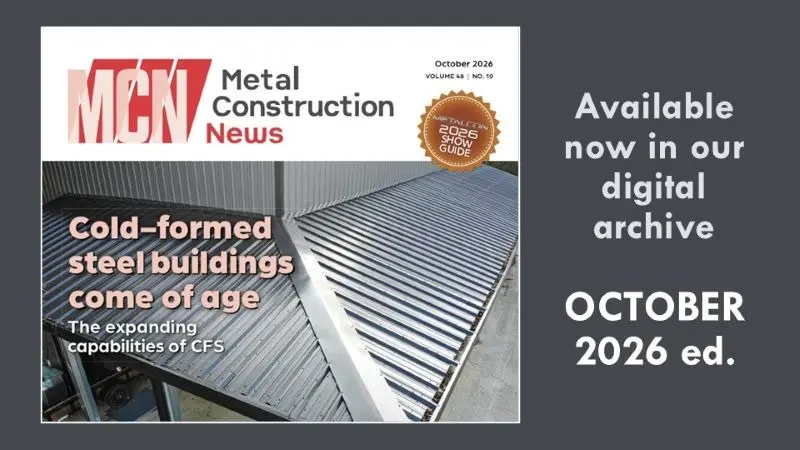
The metal construction industry stands at a critical juncture in the final quarter of 2026. Driven by rapid advancements in digital project management, an intensified focus on building envelope thermal performance, and stricter environmental resilience requirements, the sector is experiencing unprecedented transformation. Capturing this dynamic environment, Metal Construction News (MCN) has officially released its highly anticipated October 2026 edition.
Available both in print and through the publication’s comprehensive digital portals, the October issue addresses the most pressing challenges and emerging opportunities confronting architects, general contractors, structural engineers, and metal building manufacturers today. From the maturation of cold-formed steel (CFS) engineering to the complexities of multisite labor tracking and hurricane-resistant architectural detailing, this month’s publication serves as an essential roadmap for industry professionals navigating a competitive and technologically sophisticated marketplace.
Main Facts: What’s Inside the October 2026 Edition
The October 2026 issue of Metal Construction News curates a balanced mix of technical deep-dives, regulatory updates, event previews, and operational strategies. Below are the primary thematic pillars featured in this month’s lineup:
- The Maturation of Cold-Formed Steel (CFS): A detailed exploration of how modern engineering software and advanced manufacturing techniques are pushing CFS structures into larger, more complex building typologies.
- The Official METALCON 2026 Show Guide: Complete logistical and educational coverage for the industry’s premier annual event, including floorplans, exhibitor directories, masterclass schedules, and speaker lineups.
- Building Envelope Thermal Performance: An analytical look at ice damming in large-scale metal distribution centers, reframing the issue from a simple maintenance nuisance to a critical thermal envelope failure.
- Operational Logistics and Labor Efficiency: Practical solutions for contractors grappling with multisite labor tracking, field-to-office communication gaps, and accurate job-cost accounting.
- Evolution of Jobsite Safety Gear: An evaluation of how modern personal protective equipment (PPE) is surpassing baseline OSHA standards through ergonomic design and smart-tech integration.
- Coastal Resilience and Code Compliance: A technical breakdown of AMCA 550-certified louvers and their mandatory application in hurricane-prone regions along the Atlantic and Gulf coasts.
Chronology: The Road to the October 2026 Release
To understand the significance of the content featured in the October 2026 issue, it is helpful to examine the timeline of technological integration and regulatory shifts that have shaped the industry over the preceding twenty-four months:
- Late 2024 to Early 2025: Structural engineers increasingly begin utilizing parametric design tools for cold-formed steel, allowing for higher load-bearing capacities and wider spans. Simultaneously, supply chain stabilization post-pandemic allows contractors to refocus on long-term capital investments in safety equipment and digital tracking tools.
- Mid-2025: Extreme weather events along the Gulf and Atlantic coasts prompt building code authorities to re-evaluate wind-driven rain defense systems. Architects and manufacturers place a renewed emphasis on AMCA-certified building envelope components, setting the stage for stricter enforcement heading into 2026.
- Late 2025: As commercial real estate demand shifts heavily toward massive regional distribution centers, maintenance engineers and building science experts begin publishing alarming findings regarding hidden thermal bridging and ice damming failures in large-span metal roofs.
- Spring and Summer 2026: General contractors report mounting profit erosion due to inefficient multisite labor tracking. The industry demands more sophisticated software solutions to handle unbilled travel time and misallocated project hours.
- October 1, 2026: Metal Construction News publishes its comprehensive October edition, consolidating these major technological, operational, and regulatory milestones into a single, cohesive resource just weeks ahead of the annual METALCON convention.
Supporting Data and Technical Insights
Each feature in the October 2026 issue is underpinned by rigorous industry data, building science principles, and operational metrics.
1. Cold-Formed Steel Comes of Age
Historically limited to low-rise partitions and light commercial framing, cold-formed steel has undergone a structural renaissance. Driven by advanced computer-aided engineering (CAE) and roll-forming precision, CFS can now support multi-story mid-rise structures, industrial mezzanines, and complex architectural curves. The October feature highlights how hybrid framing systems—combining structural steel framing with load-bearing CFS panels—are reducing construction timelines by up to 15% while cutting material waste significantly.
2. The Thermal Reality of Ice Damming
In large-scale metal distribution centers, maintenance teams have traditionally viewed winter snow accumulation and subsequent roof leaks as localized drainage issues. However, MCN’s thermal analysis reveals that ice damming is fundamentally a thermal failure.
- The Mechanism: Heat loss through continuous insulation gaps or poorly detailed thermal breaks melts lower layers of roof snow. This water runs down the slope until it reaches the unheated eaves, where it refreezes, forming a dam that traps subsequent water pools.
- The Impact: Beyond interior water damage, repeated freeze-thaw cycles compromise fastener integrity, accelerate sealant degradation, and degrade the overall insulation $R$-value of the roof assembly.
3. Multisite Labor Tracking and Cost Distortion
With contractors frequently managing multiple job sites simultaneously, labor tracking has emerged as one of the greatest threats to project profitability. Industry data cited in the issue indicates that traditional paper-based or disjointed digital timesheets lead to an average error rate of 4% to 7% in labor cost allocation.
- Travel Time Blind Spots: Unvouched driving time between scattered job sites is frequently misassigned to primary project codes, artificially inflating the apparent labor cost of specific phases.
- Bid Accuracy: Distorted historical job data directly undermines future bidding accuracy, often resulting in either underpriced bids that squeeze contractor margins or overpriced bids that lose out to competitors.
4. Safety Gear: Compliance vs. Performance
The 2026 safety landscape is defined by a widening delta between "minimum legal compliance" and "optimal workforce protection." While legacy PPE met baseline Occupational Safety and Health Administration (OSHA) standards, modern ironworkers, erectors, and fabricators face complex ergonomic and environmental hazards. The October issue reviews next-generation fall protection harnesses, lightweight breathable headwear, and integrated communication wearables that reduce fatigue and drastically lower accident rates on active steel-erection sites.
5. Hurricane-Prone Engineering: AMCA 550
With coastal weather patterns growing increasingly volatile, building envelope specifications in hurricane zones face intense scrutiny. Architects working along the Atlantic and Gulf coasts are directed toward AMCA 550-certified louvers (Air Movement and Control Association). Unlike standard louvers, AMCA 550-rated units undergo rigorous high-velocity wind-driven rain resistance testing, proving their ability to prevent water penetration into mechanical intake and exhaust systems during severe tropical storms and hurricanes.
Official Responses and Industry Reactions
The release of the October 2026 issue has already sparked widespread dialogue among industry associations, manufacturers, and field professionals.
"The convergence of digital tracking tools, advanced manufacturing for cold-formed steel, and strict building codes means that our industry is no longer operating on ‘business as usual’ terms," noted a leading structural engineering consultant familiar with the MCN October features. "Contractors who fail to adapt their thermal detailing or labor management strategies will find themselves priced out of major commercial contracts."
Event organizers for METALCON 2026 have also praised the inclusion of the official Show Guide, noting that the comprehensive preview will help attendees maximize their time on the exhibition floor.
"METALCON is where innovation meets application," remarked a representative from the event’s planning committee. "Having MCN previewing the masterclasses, educational sessions, and specific exhibitor layouts allows participants to arrive with a targeted game plan, driving higher ROI for both attendees and vendors."
Furthermore, safety advocates have welcomed the publication’s candid look at personal protective equipment. By highlighting the gap between compliance and true performance, the article encourages general contractors to view safety gear not as an administrative checkbox, but as a core investment in workforce retention and productivity.
Implications for the Future of Metal Construction
The trends analyzed in the Metal Construction News October 2026 edition carry profound long-term implications for every sector of the metal construction ecosystem:
- For Structural Engineers and Designers: The expansion of cold-formed steel capabilities demands continuous professional development. Engineers must become fluent in advanced modeling software to safely exploit the structural potential of lighter, more versatile steel components.
- For General Contractors and Project Managers: The operational vulnerabilities exposed in multisite labor tracking necessitate an immediate transition toward unified, real-time digital project management platforms. Eliminating cost distortions is essential for maintaining healthy profit margins in an inflationary economic environment.
- For Building Owners and Maintenance Teams: The reframing of ice damming as a thermal failure rather than a simple leak changes how large distribution centers must be audited. Proactive thermal imaging and envelope remediation will become standard preventive practices to protect capital assets.
- For Coastal Architects and Specifiers: Adhering strictly to AMCA 550 standards and other high-performance resilience codes is no longer optional for projects in hurricane zones; it is a fundamental baseline for insurance eligibility and legal liability mitigation.
Conclusion
As the industry converges for the remainder of 2026, the October 2026 edition of Metal Construction News serves as an indispensable compendium of knowledge, operational strategies, and technical insights. By addressing both the macro-level shifts—such as the evolution of cold-formed steel and coastal resilience codes—and the micro-level operational challenges of labor tracking and jobsite safety, MCN continues to be the premier authoritative voice in the metal construction community.
Industry professionals are encouraged to read the full features in the print edition, explore the complete interactive layout through the official digital publications portal, and reference the MCN Digital Edition Archive to access past back issues.
To explore the October 2026 digital issue in full detail, visit the official Metal Construction News Digital Editions archive.
