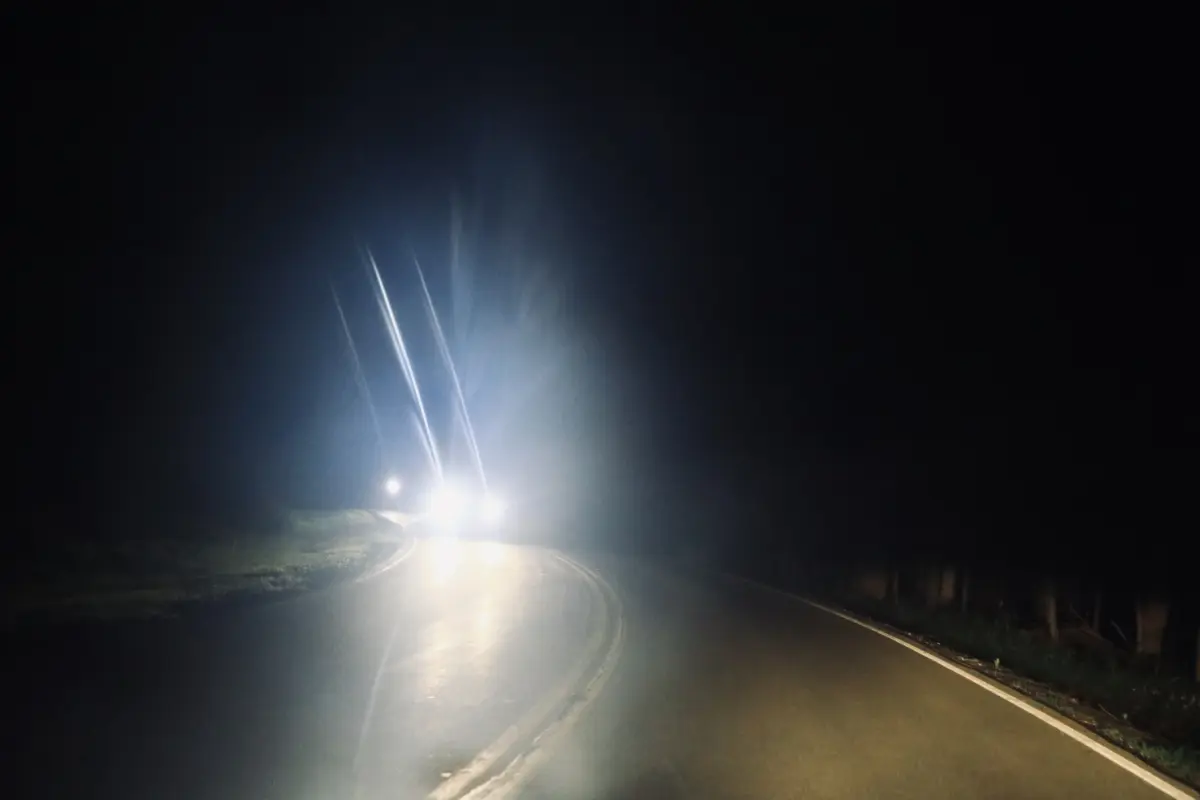
For anyone who has ever squinted, cursed, or felt like their retinas were being scorched during a routine nocturnal drive, relief may finally be on the horizon. The blinding glare of high-intensity LED headlights from oncoming traffic—a ubiquitous modern driving hazard that has driven countless motorists to distraction—could soon become a thing of the past.
The National Highway Traffic Safety Administration (NHTSA) announced a sweeping regulatory initiative aimed at overhauling federal vehicle lighting standards. Under the newly unveiled plan, the agency intends to modernize Federal Motor Vehicle Safety Standard No. 108, paving the way for smarter, safer, and far less blinding automotive illumination across American roadways.
This long-overdue regulatory shift addresses a quarter-century-old policy vacuum that has allowed American roads to become testing grounds for exceptionally bright, uncalibrated headlights rarely permitted in regions like Europe or Japan. With transportation authorities now stepping in to foster innovation and harmonize U.S. rules with global standards, the era of the "radioactive" headlight may finally be drawing to a close.
Main Facts: What the NHTSA Overhaul Entails
At its core, the NHTSA’s announcement signals a complete modernization of the rules governing how automakers illuminate the road. Federal Motor Vehicle Safety Standard No. 108 dictates the legal parameters for every lightbulb, reflector, and housing on vehicles sold in the United States.
The upcoming regulatory rewrite touches upon several critical components of automotive lighting:
LED Headlamp Intensities: Re-evaluating allowable lumens, beam patterns, and sharpness to curb blinding glare for oncoming and preceding motorists.
Dusk Sensors: Updating sensitivity thresholds to ensure automatic headlights engage appropriately in twilight, heavy rain, and fog.
Automatic High Beams: Refining how systems toggle between high and low settings to prevent blinding flashes during sudden elevation changes or turns.
Replaceable Light Sources: Standardizing modern bulb architectures to balance longevity, energy efficiency, and safety.
Furthermore, Transportation Secretary Sean Duffy is slated to appoint an expert advisory panel comprising up to 18 industry stakeholders, safety advocates, and technical specialists. This committee will evaluate complex variables such as headlamp mounting height and precise aiming angles to optimize driver visibility without compromising the safety of other road users.
Chronology: A 25-Year Gap in U.S. Lighting Regulation
To understand why American roads are flooded with exceptionally glaring headlights, one must look backward at the glacial pace of federal regulatory updates.
The Turn of the Millennium (2000): The last major comprehensive update to Federal Motor Vehicle Safety Standard No. 108 occurred 25 years ago. At the turn of the 21st century, automotive lighting relied almost exclusively on sealed-beam incandescent and early halogen technologies.
The LED Revolution (2010s): As the automotive industry rapidly transitioned to Light Emitting Diodes (LEDs) and high-intensity discharge (HID) lamps for their superior energy efficiency and longevity—qualities especially vital for extending the range of electric vehicles—regulations failed to keep pace. While European and Japanese regulators adapted their codes to control beam focus and introduce dynamic shielding, U.S. standards remained anchored to 20th-century paradigms.
February 2022: A glimmer of hope emerged when the NHTSA finally authorized the use of "adaptive driving beams" (ADB)—dynamic, matrix-style lighting systems that keep high beams active while automatically dimming specific pixels of light to shield oncoming drivers. However, rigid federal performance metrics stifled widespread, effective implementation, leaving U.S. adaptive headlights lagging far behind their European counterparts.
The Present Day: Recognizing that outdated rules actively prevent automakers from deploying cutting-edge safety technology, the NHTSA has initiated a formal rewrite of Standard No. 108, setting the stage for modernized rules expected to take full effect over the next few years.
Supporting Data and the Cultural Phenomenon of Glare
The frustration surrounding modern headlights is more than just a minor inconvenience; it is a documented cultural phenomenon and a tangible safety concern.
Online communities have flourished around the shared grievance of aggressive automotive lighting. A prominent Reddit community, aptly titled r/fuckyourheadlights, boasts over 12,000 members who regularly upload photographic evidence of blinding truck and SUV illumination, often comparing the glare to welder’s flashes or diagnostic medical equipment.
“They often feel like the headlights are radioactive and can X-ray and skeletonize oncoming drivers,” lamented one weary commuter in a local group chat—a sentiment echoed by millions of nocturnal drivers navigating poorly lit suburban and rural byways.
Statistical data, while nuanced, highlights the multifaceted nature of night-driving risks. According to research cited by Reuters from the Insurance Institute for Highway Safety (IIHS), headlight glare was recorded as a contributing factor in roughly one to two out of every 1,000 nighttime crashes across 11 U.S. states between 2015 and 2023.
While researchers note that crashes stemming from insufficient visibility still outnumber those caused purely by glare, safety advocates emphasize that blinding an oncoming motorist effectively creates temporary, rolling blind spots. In those critical seconds of impaired vision, a driver’s ability to react to pedestrians, cyclists, or road debris drops precipitously.
Official Responses and Industry Reception
The NHTSA’s move to modernize lighting regulations has been met with cautious optimism from safety organizations, transportation analysts, and the automotive sector alike.
In an official press statement, NHTSA Administrator Jonathan Morrison underscored the necessity of bridging the gap between outdated bureaucratic rules and modern technological capabilities.
"Today’s standards do not allow automakers to deploy the latest safety-improving lighting technologies, so we are bringing key experts and stakeholders together to modernize our standards and address potential causes of glare," Morrison stated. "This collaborative approach will allow us to update outdated regulations, foster innovation, and keep everyone on our roads safer."
Automakers, too, are positioning themselves to capitalize on the impending regulatory evolution. Forward-thinking companies have already integrated advanced lighting hardware into their global lineups, awaiting the green light from U.S. regulators to unlock their full software capabilities.
For instance, Rivian’s Gen 2 R1T truck and R1S SUV models feature cutting-edge hardware capable of advanced light manipulation. Similarly, Audi has confirmed that its upcoming flagship 2027 Q9 SUV will debut with state-of-the-art intelligent lighting matrices designed to maximize road illumination while actively sculpting light away from surrounding traffic.
Implications: What This Means for Drivers and Automakers
The impending overhaul of Federal Motor Vehicle Safety Standard No. 108 carries profound implications for everyone who shares America’s asphalt arteries.
1. For Everyday Drivers
Nighttime commutes are poised to become significantly less fatiguing. By re-evaluating the allowable output and harsh color temperatures (such as piercing blue-white light) of aftermarket and OEM LEDs, regulatory changes should drastically reduce eye strain. Furthermore, the proper integration of true adaptive driving beams will mean drivers can safely utilize high beams continuously on unlit roads without constantly toggling them down manually or blinding fellow motorists.
2. For the Automotive Industry
Automakers will be granted much-needed regulatory clarity. Instead of being forced to engineer separate, fragmented lighting assemblies for North American export models versus European markets, manufacturers can streamline production around unified, high-tech matrix systems. This harmonization is expected to accelerate innovation, reduce compliance costs, and speed up the deployment of active safety features.
3. For Electric Vehicle Efficiency
While the primary driver of this regulatory shift is safety and glare reduction, the underlying technology—LEDs—remains vital for the electric vehicle (EV) revolution. LEDs draw minimal electrical power compared to traditional halogen or incandescent filaments, preserving precious battery range. Ensuring that these efficient systems are properly calibrated means EV owners can enjoy optimal visibility without sacrificing driving range.
Looking Ahead
As the NHTSA moves forward with its stakeholder evaluations and rule-rewriting process, American motorists are finally seeing a light at the end of the tunnel. While the transition will take time as advisory panels deliberate and automakers adjust production lines, the cultural consensus is clear: the era of blinding, unregulated headlights’ reign of terror over nighttime drivers is drawing to a close.