

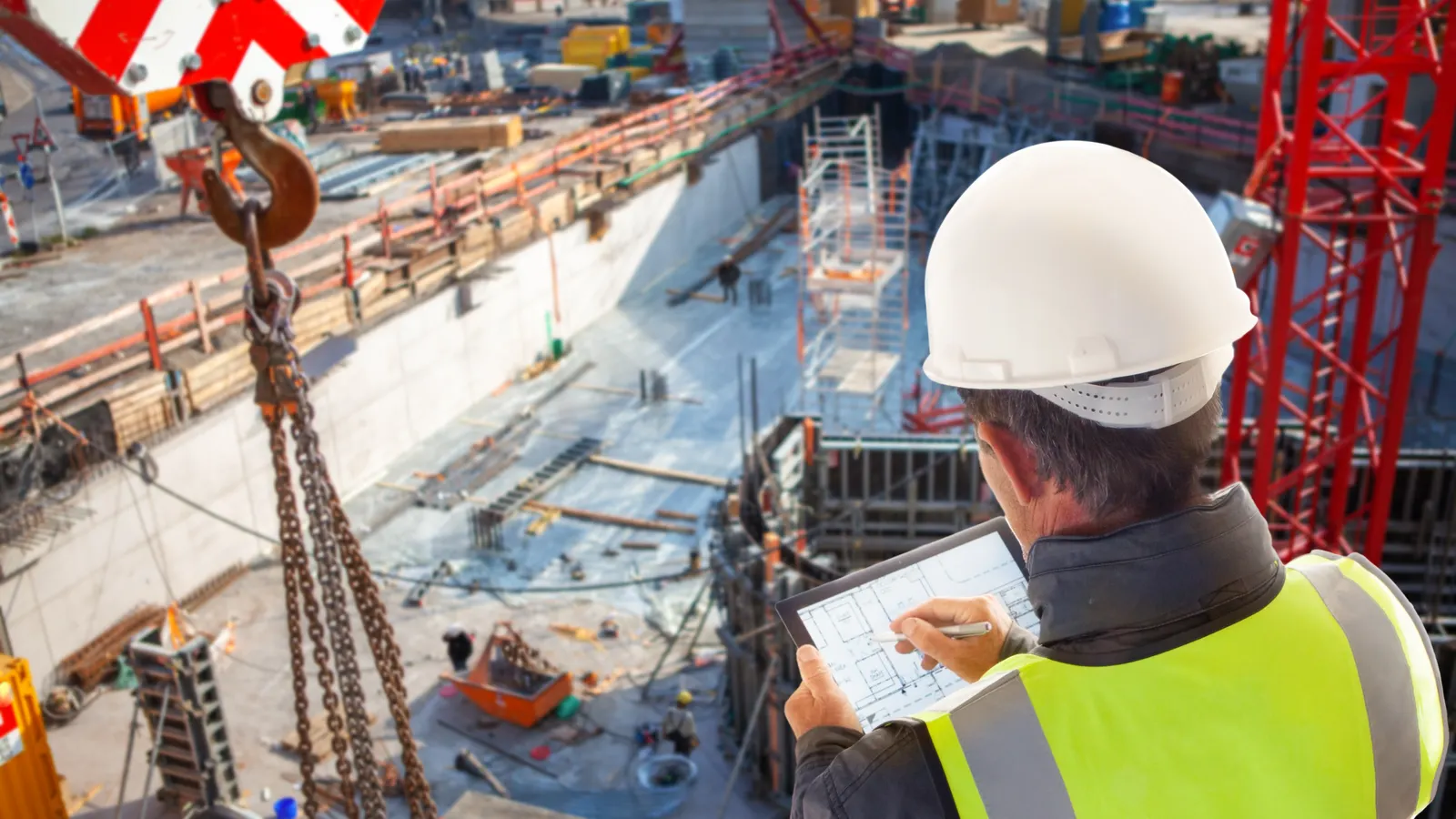
Artificial intelligence and robotics are no longer peripheral experiments in the construction industry; they are rapidly becoming the bedrock of modern project delivery. Across the construction spectrum, venture capitalists and institutional investors are pouring hundreds of millions of dollars into construction technology (contech) startups. This capital influx is driven by an urgent industry-wide need to combat chronic labor shortages, compress project timelines, optimize supply chains, and improve worksite safety.
Recent funding announcements underscore this high-stakes race for technological dominance. From autonomous heavy machinery and robotic bricklayers to AI-powered workforce staffing platforms and intelligent procurement systems, six standout contech companies have collectively captured over $230 million in fresh capital.
Main Facts: A Landmark Wave of Contech Investment
The recent capital injections highlight a decisive shift toward physical AI and automation in construction. Venture capital firms are heavily backing companies that integrate software intelligence with heavy machinery, supply chain logistics, and specialized labor management.
At the forefront of this wave is TerraFirma, a construction robotics firm founded by former SpaceX engineers, which announced a massive $115 million capital raise, including $100 million in Series A funding led by Kleiner Perkins. Close behind is Arrakis, an industrial AI platform coming out of stealth with $37.5 million, and Gritt, which launched with $32.4 million to retrofit robotic arms onto existing equipment.
Meanwhile, hardware-software robotics developer Monumental secured $32 million in Series B funding led by Khosla Ventures to expand its bricklaying robotic fleet. On the human capital and logistics side, Buildforce raised $10 million in Series A funding to scale its electrician-focused staffing platform, while SubBase secured $7 million to fuel its material procurement software.
Chronology of Recent Contech Funding Rounds
The rapid succession of funding announcements over the summer underscores an aggressive investment climate. The timeline of capital allocation unfolds as follows:
- June 17: Fort Lauderdale-based SubBase kicks off the summer wave by announcing a $7 million Series A funding round led by FINTOP to scale its construction materials procurement platform and develop AI-driven workflow layers.
- July 14: TerraFirma makes headlines with its staggering $115 million total raise ($100 million Series A led by Kleiner Perkins), aiming to deploy its remote command-and-control heavy machinery platform globally.
- July 15: Amsterdam-based Monumental announces a $32 million Series B round led by Khosla Ventures, positioning its robotic bricklayers for expansion into the United States.
- July 21: Gritt launches into the physical AI space with $32.4 million across pre-Seed and Series A rounds, with its $26 million Series A led by Obvious Ventures.
- July 22: London- and Paris-based Arrakis emerges from stealth mode, revealing $37.5 million in combined funding ($30 million Series A led by Blossom Capital and a $7.5 million Seed round led by Accel).
- July 28: Buildforce rounds out the month by securing $10 million in a Series A funding round led by Saepio Capital to expand its electrician staffing operations nationally across the United States.
Supporting Data and Technological Breakdown
To understand why investors are deploying such massive sums, one must examine the specific technological mechanisms and metrics powering these six market entrants.
1. TerraFirma: $115 Million
- Core Technology: A full-stack robotic infrastructure platform combining AI-enabled preconstruction software with a remote command-and-control center.
- Hardware Capabilities: Semi-autonomous heavy machinery, including excavators, dozers, loaders, rollers, and skid steers, all operable from a single remote screen.
- Use of Funds: Expanding engineering, manufacturing, operations, and construction teams, alongside ongoing research and development for semi-autonomous heavy equipment systems.
2. Arrakis: $37.5 Million
- Core Technology: A model-agnostic enterprise AI platform paired with forward-deployed AI engineers and applied AI research tuned to industrial operations.
- Deployment Speed: Allows prospective industrial companies to train AI agents in weeks and integrate them seamlessly into existing enterprise technology stacks.
- Use of Funds: Tripling company headcount, strengthening platform security capabilities, and fueling geographic expansion into the U.S., Europe, and the Middle East.
3. Gritt: $32.4 Million
- Core Technology: Retrofittable robotic arms and AI systems designed to be mounted onto existing jobsite equipment, such as skid steers and forklifts.
- Operational Precision: Enables machinery to pick, place, assemble, and transport materials with millimeter precision in fluid, dynamic environments. The system learns continuously from deployments, shrinking task timelines from months to days.
- Data Processing: Captures and processes jobsite data in real time to provide actionable insights for project supervisors.
4. Monumental: $32 Million
- Core Technology: An AI software platform named "Atrium" that controls a coordinated fleet of small robots utilizing advanced sensors, computer vision, and compact cranes.
- Proven Track Record: Successfully constructed walls for schools, community centers, hotels, canal stretches, and over 100 residential homes across the Netherlands and the U.K.
- Business Model: Operates as an independent subcontractor, billing customers strictly for finished walls. This transfers the operational risk of robot ownership away from the general contractor.
- Use of Funds: Growing engineering teams, increasing European fleet size, and executing a planned 2026 U.S. market launch.
5. Buildforce: $10 Million
- Core Technology: A proprietary tech-enabled staffing ecosystem featuring a mobile application for electricians seeking work and a web-based dashboard for builders looking to hire.
- Operational Scale: Surpassed 2 million hours logged across more than 2,000 commercial construction projects.
- Use of Funds: Accelerating national market expansion across the United States and further enhancing its core matching technology.
6. SubBase: $7 Million
- Core Technology: An online procurement platform that unifies the entire material purchasing lifecycle for specialty builders and self-performing general contractors.
- Platform Features: Enables users to request pricing, issue purchase orders, communicate directly with suppliers, track deliveries, reconcile invoices, and integrate with construction accounting systems.
- Use of Funds: Product and engineering growth, expanding the supplier network, and launching an AI-driven intelligence layer trained on historical pricing, supplier performance, and delivery logistics data.
Official Responses and Strategic Vision
Industry leaders and venture capitalists behind these funding rounds emphasize that the construction sector is reaching a critical inflection point where technology is no longer optional for survival.
"The construction industry is grappling with unprecedented labor deficits and escalating project complexities," noted representatives close to the Kleiner Perkins-led investment in TerraFirma. By shifting heavy equipment operation into safe, centralized command centers, firms can attract a tech-savvy demographic that historically overlooked traditional construction trades.
Similarly, the leadership at Arrakis emphasizes that industrial enterprises can no longer afford to treat artificial intelligence as an afterthought. "Industrial operations like construction require specialized, model-agnostic AI agents that integrate directly into the operational fabric of a business," company executives noted during their stealth-mode unveiling. By enabling companies to train custom AI agents in weeks rather than years, Arrakis bridges the gap between theoretical machine learning and practical jobsite execution.
Monumental’s unique subcontractor business model addresses one of the greatest hesitations traditional contractors have regarding automation: capital expenditure risk. By taking on the physical execution and billing solely for the finished product, Monumental removes the friction of technology adoption, allowing general contractors to benefit from robotics without managing the underlying hardware.
Industry Implications: What This Means for the Future of Construction
The rapid acceleration of contech funding carries profound implications for the global construction landscape over the next decade.
1. Mitigation of the Labor Shortage
With millions of skilled tradespeople nearing retirement age and an insufficient influx of younger workers, automation and AI are transitioning from efficiency tools to existential necessities. Robotics companies like Monumental and TerraFirma are not necessarily looking to replace human workers entirely; rather, they aim to multiply human output, allowing fewer workers to oversee vast fleets of autonomous or semi-autonomous machinery.
2. Shift Toward "Physical AI" and Retrofitting
While buying brand-new, purpose-built robotic fleets is an option for well-funded enterprises, startups like Gritt are proving that the existing fleet of heavy machinery can be modernized. By retrofitting AI and robotic arms onto legacy equipment like skid steers and forklifts, contractors can upgrade their capabilities incrementally without writing off millions of dollars in existing capital assets.
3. Streamlined Supply Chains and Procurement
Labor and equipment are only part of the equation; supply chain delays and material miscalculations routinely blow past construction budgets. Platforms like SubBase and Buildforce demonstrate that software solutions targeting procurement and specialized labor deployment are just as crucial to project profitability as robotic bricklayers. By infusing these administrative workflows with AI-driven intelligence, firms can drastically reduce waste and prevent costly project bottlenecks.
4. Geographic Expansion and Globalization
Contech is no longer confined to Silicon Valley or localized tech hubs. Startups originating in Europe (such as Monumental in Amsterdam and Arrakis in London and Paris) are aggressively expanding into the United States and the Middle East, while American firms are scaling nationwide. As these technologies mature, cross-border deployment will become the norm, standardizing high-tech construction practices worldwide.
Ultimately, the unprecedented capital flowing into construction technology signals that the industry is shedding its reputation as a slow-adopter of innovation. As artificial intelligence and robotics mature from proof-of-concept projects into standard jobsite fixtures, the built environment is poised for its most radical transformation since the industrial revolution.
