

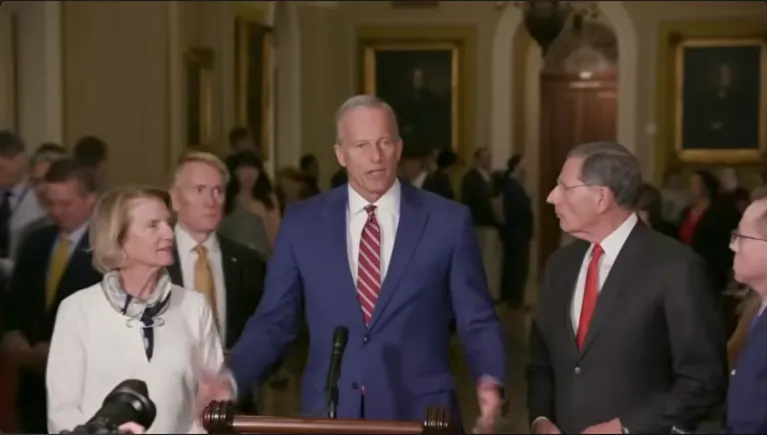
WASHINGTON — As the legislative clock ticks toward a pivotal autumn deadline, Capitol Hill is bracing for a high-stakes legislative battle. Senate leadership has signaled an aggressive push to secure a federal funding package before the end of the week, a move designed to avert a looming government shutdown ahead of the expiration of the fiscal year 2026 budget.
However, the path forward is fraught with political peril. At the center of the debate is a sweeping reconciliation package that has galvanized both fierce criticism and cautious support from industry stakeholders, transit advocates, and lawmakers across the aisle. With the legislative calendar compressed and partisan divisions running deep, the coming days will test the institutional resolve of both the Senate and the House of Representatives as they navigate one of the most critical governance hurdles of the year.
Main Facts
The core legislative objective centers on passing a stopgap funding measure and associated reconciliation provisions before lawmakers depart for upcoming recess periods. Senate Majority Leader John Thune, R-S.D., addressed reporters during a Tuesday press conference, confirming the chamber’s intention to finalize government funding negotiations.
"We intend to accomplish this between now and the end of this week, or however long we’re here," Thune stated, emphasizing the urgency of the matter.
The primary factual parameters of the unfolding legislative scenario include:
- The Deadline: Federal funding is tied to the expiration of the fiscal year 2026 budget on September 30. A failure to pass appropriations or a continuing resolution by this date will trigger a federal government shutdown.
- The Reconciliation Hurdle: According to legislative analysts and reports from The Hill, the current reconciliation package faces steep opposition. The inclusion of contentious amendments has drawn skepticism from both conservative Republicans and moderate Democrats, threatening to stall the measure on the Senate floor.
- Transportation Impacts: The funding and reconciliation discussions directly impact surface transportation programs, pitting transit advocates concerned about long-term planning against roadway safety organizations that view short-term extensions as a vital, albeit temporary, lifeline.
- The House Schedule: Should the Senate successfully navigate its procedural hurdles and pass the funding package, the legislation will immediately shift to the House of Representatives, which is scheduled to take up the matter upon its return on August 31.
Chronology of Events
The road to the current legislative bottleneck has been marked by escalating tensions, shifting deadlines, and intense behind-the-scenes negotiations among congressional leaders, committee chairs, and executive branch officials.
Late Spring to Early Summer: Budget Frameworks Take Shape
As the subcommittees of the House and Senate Appropriations Committees began drafting fiscal year 2026 spending bills, foundational disagreements emerged regarding top-line spending caps, defense versus non-defense allocations, and policy riders. Fiscal conservatives pushed for deep spending cuts and strict regulatory rollbacks, while Democrats insisted on maintaining parity between defense and domestic investments.
Mid-Summer: The Reconciliation Debate Intensifies
By mid-summer, leadership discussions pivoted toward a broader reconciliation vehicle. This legislative mechanism allows certain tax, spending, and debt limit bills to pass the Senate with a simple majority, bypassing the traditional 60-vote filibuster threshold. While intended to streamline the legislative process, the reconciliation package became a magnet for controversial policy amendments, particularly concerning energy policy, environmental grants, and federal infrastructure funding.
The Recent Press Briefings and Statements
- Monday: The American Traffic Safety Services Association (ATSSA) released an official statement addressing the surface transportation extension, labeling it a necessary stopgap to prevent the lapse of critical highway safety initiatives.
- Tuesday Morning: Senate Majority Leader John Thune held a press conference outlining the Senate’s aggressive timeline, committing the chamber to work through the end of the week—or longer if necessary—to secure a funding agreement.
- Tuesday Afternoon: Clean transportation advocates, led by the Union of Concerned Scientists, issued a sharply worded critique warning that the cuts codified in the reconciliation bill would inflict lasting damage on local transit planning.
Supporting Data and Legislative Context
To fully understand the gravity of the current negotiations, it is necessary to examine the fiscal and logistical parameters governing federal appropriations and surface transportation policy.
The federal surface transportation framework—historically governed by landmark legislation such as the Infrastructure Investment and Jobs Act (IIJA)—serves as the financial backbone for state departments of transportation, metropolitan planning organizations, and local transit authorities. These entities rely on multi-year funding certainty to engineer, finance, and construct complex capital projects that span decades.
+-----------------------------------------------------------------+
|                       FISCAL TIMELINE                           |
+-----------------------------------------------------------------+
|  August 31      | House returns to consider Senate legislation  |
+-----------------+-----------------------------------------------+
|  September 30   | FY 2026 budget expires (Government Shutdown   |
|                 | Deadline)                                     |
+-----------------------------------------------------------------+
Key data points influencing the current debate include:
- Project Lead Times: Major highway and bridge construction projects require an average planning and environmental review cycle of 3 to 7 years, making funding stability a paramount concern for state and local planners.
- Grant Dependency: According to federal transit data, local communities rely on federal formula and discretionary grants for roughly 40% to 80% of their capital improvement budgets, leaving them uniquely vulnerable to federal budget disruptions and administrative grant delays.
- The Legislative Margin: In a narrowly divided Senate, leadership cannot afford more than a handful of defections from within their own caucus, elevating the influence of individual senators holding out for specific policy concessions or spending adjustments.
Official Responses and Stakeholder Reactions
The intersection of government funding and transportation policy has elicited strong, polarized reactions from industry groups, advocacy organizations, and policy experts. The debate highlights a fundamental tension between the immediate need to keep government doors open and the long-term imperative of strategic infrastructure investment.
Criticism from Clean Transportation and Transit Advocates
Opponents of the current reconciliation package argue that the proposed legislative language compounds existing administrative instability. Steven Higashide, Clean Transportation Program Director at the Union of Concerned Scientists, did not mince words in his Tuesday statement regarding the impact of the White House and congressional actions on local transit agencies.
"States, transit agencies, and local communities are already suffering from instability caused by the White House’s politically motivated grant cancellations and delays," Higashide said via an emailed statement. He warned that the structural cuts embedded within the current iteration of the bill would deal a severe blow to regional mobility and decarbonization efforts. "The cuts codified in this bill would further reduce their ability to plan and build long-term."
Transit advocates contend that scaling back federal commitments undermines local investments in zero-emission bus fleets, rail expansion, and multimodal urban planning, creating a cascading effect that ultimately harms regional economies and commuter reliability.
Qualified Support from Highway Safety Organizations
Conversely, organizations representing the roadway construction and safety sectors have adopted a more pragmatic stance, acknowledging the necessity of a short-term extension while pushing for a more permanent legislative solution.
The American Traffic Safety Services Association (ATSSA) voiced cautious approval for the stopgap mechanism designed to protect critical highway safety programs from immediate expiration. However, ATSSA leadership stressed that temporary fixes are insufficient for addressing the nation’s long-term infrastructure needs.
"An extension is a bridge, not a destination," said ATSSA President and CEO Stacy Tetschner in an emailed statement on Monday. Tetschner underscored the vital role that federal programs play in reducing roadway fatalities and modernizing traffic control infrastructure. "We hope the Senate and the House can use this window to finish the job and pass a robust, long-term reauthorization that sustains and builds on the nation’s investment in roadway safety."
Implications for the Economy, Congress, and the Traveling Public
The resolution—or failure—of this week’s legislative push carries profound implications across multiple sectors of American society and governance.
1. Fiscal Stability and Government Operations
The most immediate implication is the avoidance of a federal government shutdown. A funding lapse would disrupt essential federal services, furlough hundreds of thousands of federal employees, and introduce severe friction into financial markets. Even if a short-term continuing resolution is successfully enacted, it merely defers the underlying budgetary disagreements to a later date, setting up another potential legislative showdown in the fall or winter.
2. Infrastructure Planning and State Budgets
For state departments of transportation and local transit agencies, the legislative uncertainty translates directly into postponed projects and deferred maintenance. Without the predictability of a long-term reauthorization bill, engineers and project managers cannot reliably commit state matching funds or execute multi-year procurement contracts. This friction risks driving up construction costs and delaying vital safety upgrades on the nation’s highways and mass transit networks.
3. Congressional Dynamics and Leadership Precedent
For Senate Majority Leader John Thune and congressional leadership, successfully managing this week’s floor proceedings will serve as a critical test of legislative control. Navigating a reconciliation package laden with contentious amendments—while holding a fragile coalition together—requires deft parliamentary maneuvering. Conversely, a failure to pass the package this week would empower critics, disrupt the scheduled August recess plans for lawmakers, and cast doubt on Congress’s capacity to handle routine appropriations responsibilities efficiently.
4. Outlook for the House Return
As the legislative focus inevitably shifts toward the House of Representatives, lawmakers there will inherit whatever framework emerges from the Senate floor. When the House reconvenes on August 31, members will face immense pressure to either ratify the Senate’s compromise or risk an immediate legislative impasse as the September 30 shutdown deadline looms ominously on the horizon.
As negotiations continue behind closed doors on Capitol Hill, stakeholders nationwide will be watching closely to see whether leadership can forge a sustainable consensus or if the federal government is headed toward another avoidable fiscal crisis.
