

By Diogo Borges Ferreira
Published: August 06, 2026
Main Facts
In the contemporary architectural discourse, the dichotomous debate of "hand versus machine" often misses the nuanced philosophy of physical production. Drawing from furniture designer and Royal College of Art professor David Pye’s seminal 1968 text, The Nature and Art of Workmanship, architecture is increasingly evaluated through two distinct operational frameworks: the "workmanship of risk" and the "workmanship of certainty."
While digital fabrication tools like CNC routers, robotic arms, and additive 3D printers push the limits of mathematical precision and certainty, a parallel movement in architecture embraces human fallibility, material resistance, and physical tolerances. Across the globe, visionary architects are renegotiating the space between the drawing board and the building site. Ten prominent architectural projects—ranging from centuries-old masonry techniques to avant-garde computational and biological fabrication—exemplify how imperfection, human dexterity, and digital algorithms intersect to redefine architectural value.
Chronology and Evolution of Craft: From Pye to the Digital Age
The Philosophical Foundations (1968)
When David Pye published The Nature and Art of Workmanship, his thesis dismantled simplistic assumptions about tools and labor. Pye defined the workmanship of risk as any production process where the final outcome is not entirely fixed in advance; instead, it relies entirely on the continuous judgment, dexterity, and immediate attention exercised by the maker while the work is underway.
Conversely, the workmanship of certainty describes processes where the result is predetermined before production begins—locked permanently into a jig, mold, or digital code—leaving downstream execution purely mechanical. Crucially, Pye argued that neither mode is inherently superior. A mechanical printing press requires human judgment to monitor ink and alignment, while a numerically controlled machine can be intentionally programmed with high tolerances to introduce calibrated drift, positioning it closer to the realm of "risk."
Architectural Evolution and the Digital Shift
For centuries, architecture has balanced these two philosophies out of structural necessity. Traditional practices like Mediterranean and British dry-stone walling rely on zero fixed dimensions; every single stone must be field-tested, chipped, and repositioned until the collective geometry holds under gravity. Similarly, hand-cut Japanese timber joinery often incorporates deliberate hairline gaps, anticipating that the wood will naturally expand with humidity over years to lock the joint tight.
In the 21st century, the proliferation of CNC milling, robotic fabrication, and algorithmic design has inverted this relationship. Tolerances are now routinely measured in fractions of a millimeter. Yet, rather than eliminating human touch, contemporary architects are leveraging these technologies to simulate, manage, or deliberately subvert certainty, creating a new architectural vernacular of controlled imperfection.
Supporting Data: 10 Defining Projects Between Hand and Machine
To understand how this philosophy materializes physically, one must look at ten projects that occupy different points along the spectrum between human intuition and machine programming.
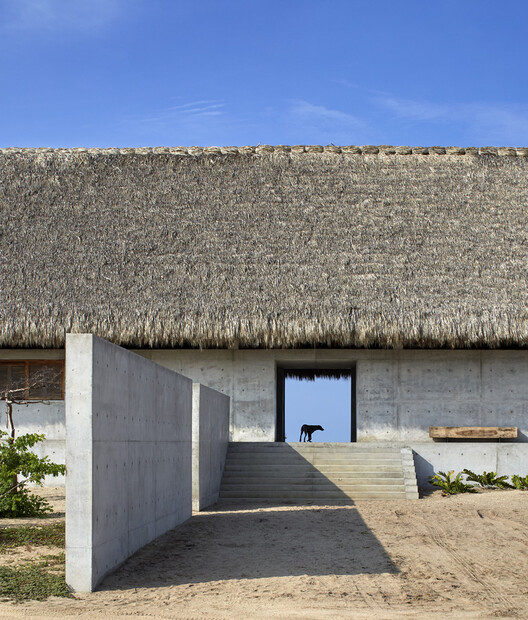
1. Casa Wabi Chapel / Tadao Ando Architect and Associates
Renowned for his mastery of board-formed concrete, Tadao Ando utilizes a material traditionally governed by industrial uniformity and transforms it into a canvas of tactile, human-scale imperfection. The subtle variations in the texture, color variations, and tie-rod holes of Ando’s concrete speak directly to the physical labor of shuttering and pouring on-site.
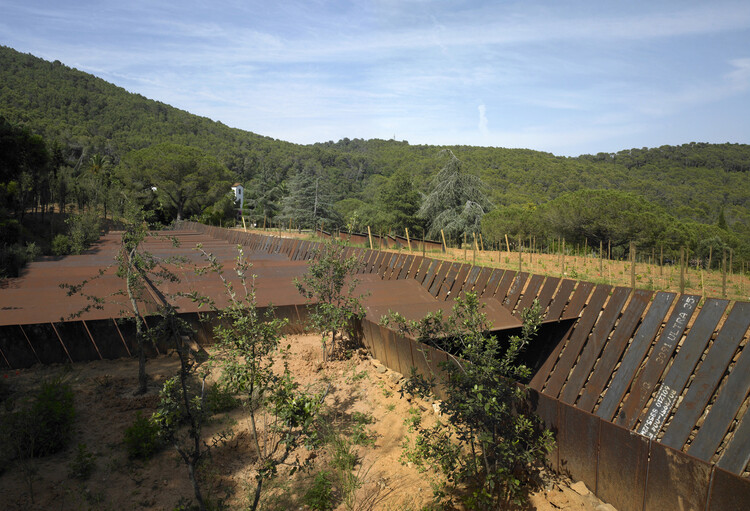
2. Bell-Lloc Winery / RCR Arquitectes
Designed by Pritzker Prize laureates RCR Arquitectes, this subterranean winery in Spain constructs its spatial narrative through dense walls of recycled steel. The weathering, oxidation, and minor irregularities of the stacked steel plates create a shifting play of light and shadow that changes dynamically with human presence and environmental moisture.

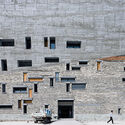
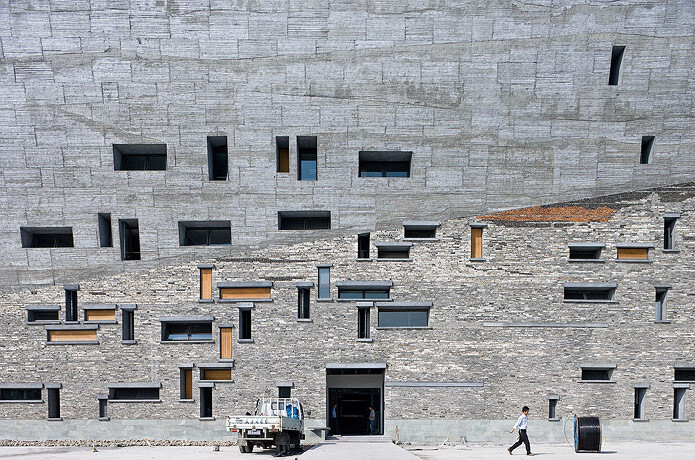
3. Ningbo History Museum / Wang Shu, Amateur Architecture Studio
Wang Shu famously rescued millions of bricks, tiles, and stones from demolished traditional villages across China to construct the Ningbo History Museum. Employing a local construction technique known as "tile-wafer-walling," masons used fragments of varying ages, shapes, and patinas, forcing a continuous, improvised negotiation between structural integrity and historical debris.
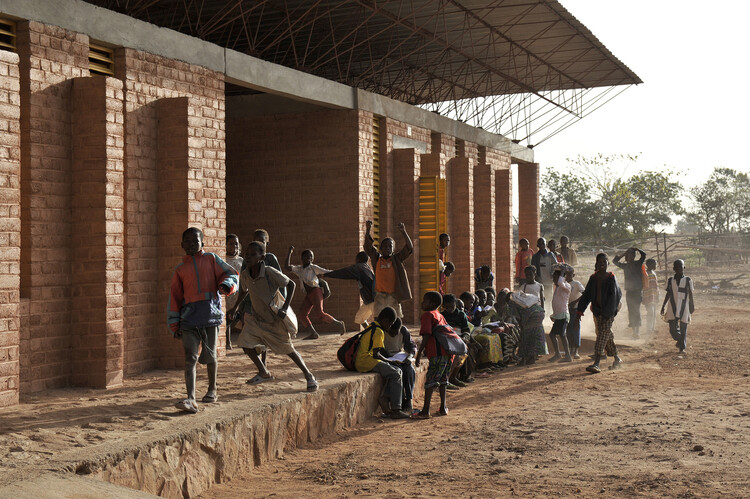
4. Gando Primary School / Kéré Architecture
Francis Kéré revolutionized community-centric building by utilizing local clay and earth in Gando, Burkina Faso. By integrating local villagers—men, women, and children—into the manufacturing of compressed earth blocks and the casting of corrugated metal roofs, the architecture becomes an extension of communal handcraft and localized labor dynamics.
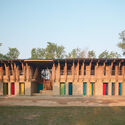
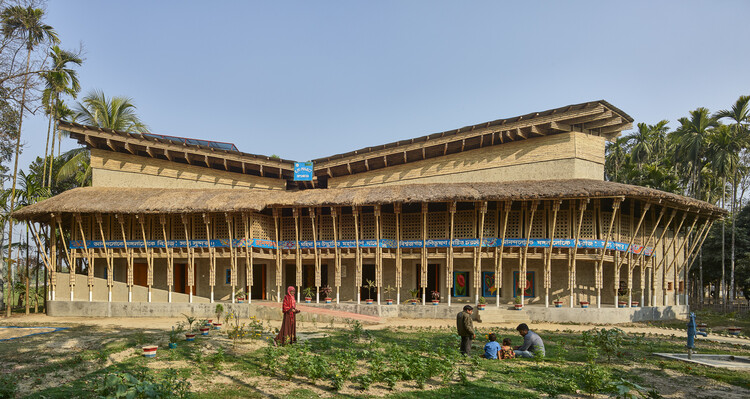
5. Anandaloy Center / Studio Anna Heringer
Located in Rudrapur, Bangladesh, the Anandaloy building pushes the boundaries of mud architecture. Built entirely out of locally sourced mud and bamboo by local craftspeople, the structure features free-flowing, organic curves that resist Cartesian geometry, proving that raw earth can house complex, expressive community functions.
6. Therme Vals / Peter Zumthor
Peter Zumthor’s masterpiece in the Swiss Alps is an architectural symphony of precision-cut local Valser quartz. Despite the advanced stone-cutting machinery used to slice the gneiss, the dry-stacking method and the minute variations in stone stratification mean that the building requires constant, human-driven adaptation on site to achieve its monolithic, geological presence.
7. Palmyra House / Studio Mumbai
Led by Bijoy Jain, Studio Mumbai operates as an interdisciplinary collective where master builders, carpenters, and architects work side-by-side. Palmyra House utilizes locally harvested coconut wood and traditional joinery, blending architectural drawings with the intuitive knowledge of generational craftspeople.
8. Handmade School / Anna Heringer + Eike Roswag
Preceding the Anandaloy Center, the Handmade School in Rudrapur established a blueprint for utilizing mud and bamboo through localized education and labor. The project demonstrated how traditional techniques could be structurally optimized without losing the unique, hand-formed aesthetic of vernacular building.
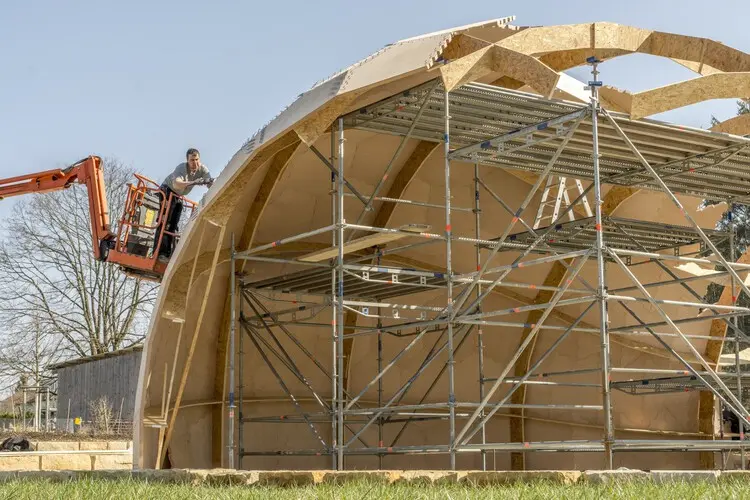
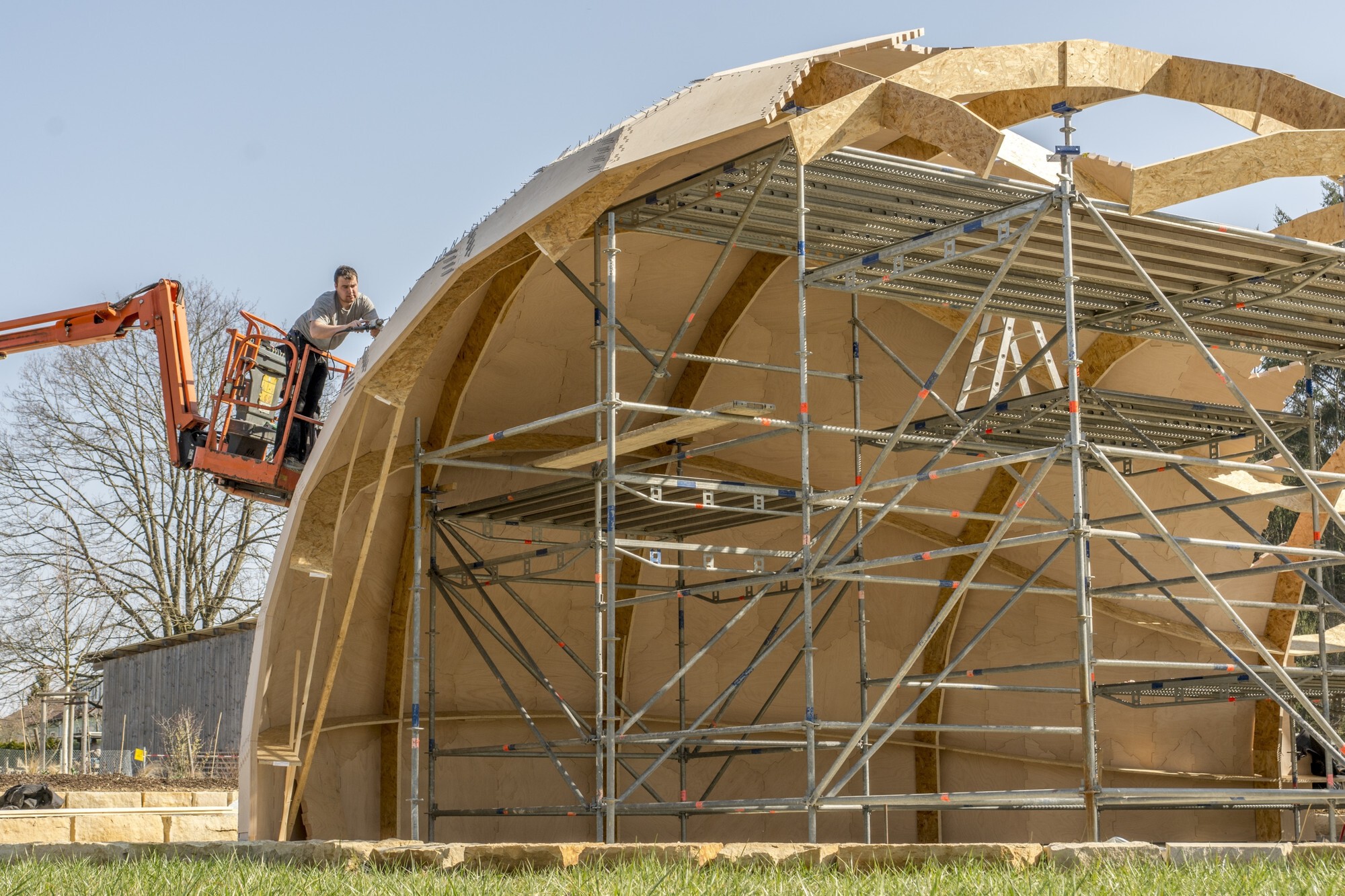
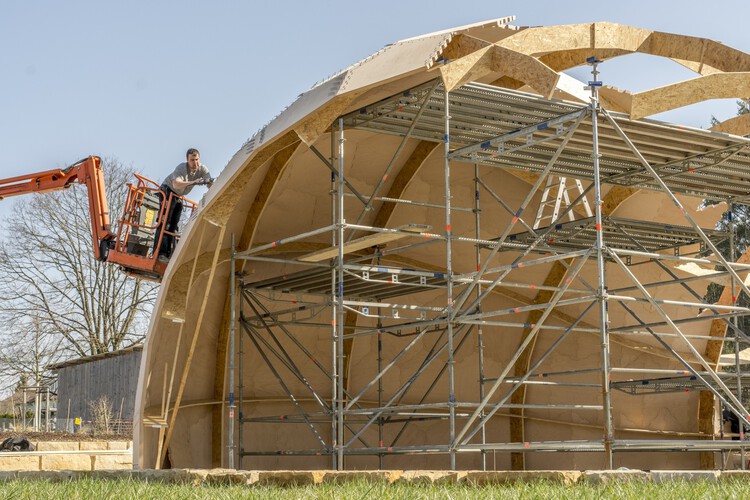
9. Landesgartenschau Exhibition Hall / ICD/ITKE, University of Stuttgart
At the cutting edge of computational design, the University of Stuttgart’s Institute for Computational Design and Construction (ICD) and Institute of Building Structures and Structural Design (ITKE) use robotic fabrication to produce complex, lightweight wooden segmented shells. Here, industrial robots execute high-certainty digital algorithms, yet the wood itself retains natural material behaviors that require structural monitoring.
10. Silk Pavilion / MIT Media Lab
Exploring the intersection of biology, computation, and digital fabrication, the MIT Media Lab’s Silk Pavilion used a robotic arm to lay down a primary scaffolding thread, which was then completed by thousands of live silkworms. The resulting structure showcases the ultimate collaboration between high-precision machine programming and the biological autonomy of living organisms.
Official Responses and Theoretical Commentary
Architectural theorists and institutional leaders emphasize that the integration of digital tools should not spell the end of architectural craft, but rather its evolution.
In statements accompanying the ongoing discourse on craft in the digital age, academic researchers note that the greatest risk facing modern architecture is not automation itself, but the erosion of a critical vocabulary to discuss material value. As David Pye warned decades ago, if society loses the language to articulate the "workmanship of risk," we risk living in a built environment devoid of character, nuance, and human investment.
Institutions such as the University of Stuttgart’s ICD argue that robotic fabrication can actually liberate craft rather than destroy it. By offloading repetitive, high-precision tasks to machines, human fabricators are freed to engage more deeply with material performance, bespoke detailing, and responsive site adaptations.
Implications for the Future of Architecture
The tension between hand and machine carries profound implications for the future of the built environment, particularly in an era dominated by climate change, artificial intelligence, and automated construction.
- Sustainable Materiality: Projects like those by Kéré Architecture and Studio Anna Heringer prove that low-carbon, earth-based materials require high-touch craftsmanship. As the construction industry seeks sustainable alternatives to concrete and steel, the revival of traditional handcraft is no longer a nostalgic aesthetic choice, but an ecological necessity.
- Redefining Authorship: The traditional boundary between the architect-designer and the manual-builder is blurring. When algorithms write code that silkworms or industrial robots execute, authorship is distributed across software developers, biological agents, and human masons alike.
- Valuing Imperfection: In a hyper-sanitized digital rendering world, physical architecture that exhibits the marks of human labor, material aging, and structural tolerance offers psychological resonance. Buildings that welcome weathering and human touch cultivate a deeper emotional bond with their users.
Ultimately, architecture does not have to choose between the cold certainty of the machine file and the romanticized vulnerability of the human hand. As these ten projects demonstrate, the most compelling spaces emerge precisely in the narrow, productive friction between the two.
