

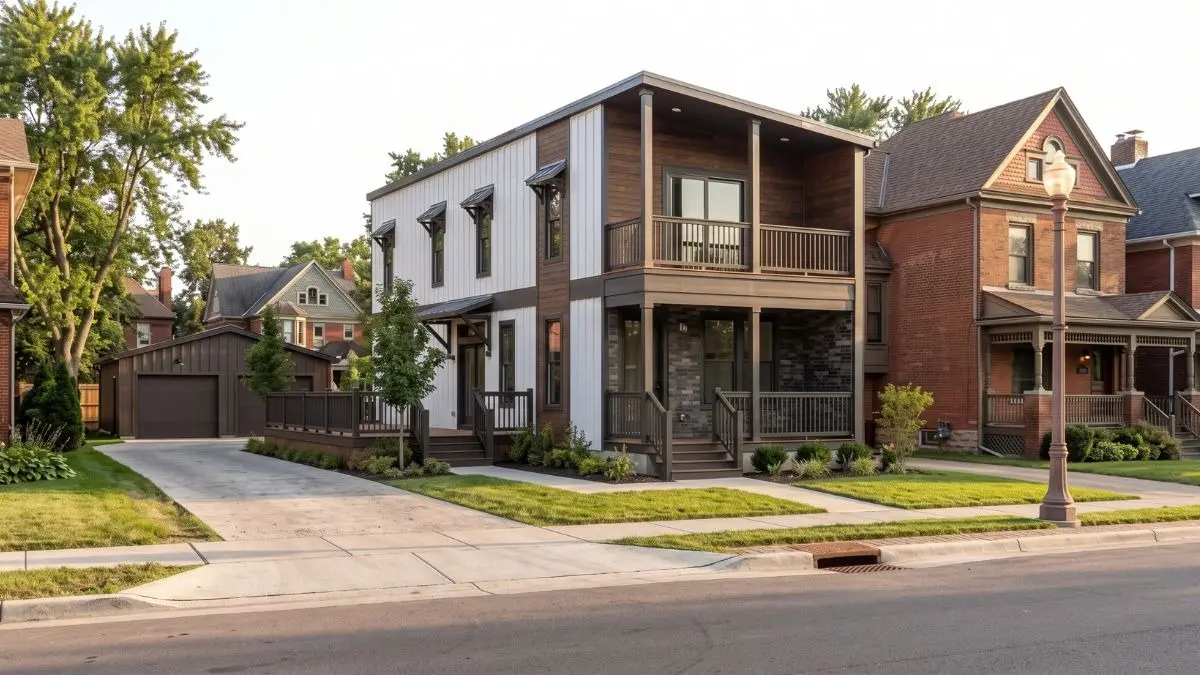
WASHINGTON — Following a monumental legislative victory over the summer, the U.S. Department of Housing and Urban Development (HUD) has officially taken its first major step toward reshaping the future of American housing. With the release of its comprehensive "Next Generation Manufactured Housing Action Plan," the federal agency has initiated the complex regulatory overhaul required to execute the 21st Century ROAD to Housing Act.
The legislation, passed in July, fundamentally altered the trajectory of the manufactured housing sector by eliminating the long-standing federal mandate requiring a permanent steel chassis underneath factory-built homes. Industry leaders have hailed the policy shift as a long-overdue modernization that will dismantle regulatory hurdles, reduce construction costs, and integrate factory-built housing into higher-density suburban, urban, and infill markets.
However, translating legislative intent into regulatory reality is a meticulous process. While the policy win was secured in mid-summer, industry executives and federal officials alike acknowledge that a full market rollout will take considerable time. HUD’s newly published action plan offers the first concrete roadmap of how the agency intends to rewrite the federal manufactured housing code to accommodate this structural evolution.
Main Facts: The Core of HUD’s Action Plan
At its core, the Next Generation Manufactured Housing Action Plan outlines seven distinct initiatives designed to modernize federal safety and construction codes. These steps are engineered to ensure compliance with the 21st Century ROAD to Housing Act while preserving the foundational strengths that have made manufactured housing a vital source of affordable homeownership in the United States.
"The overarching goal is straightforward: preserve the strengths of the federal manufactured housing system while ensuring that it can support innovation and the next generation of factory-built housing," the agency stated in the official document.
The strategic blueprint focuses heavily on rewriting federal design standards, establishing pathways for multi-module and multifamily structures, crafting performance-based codes for larger buildings, and easing the transition for traditional modular builders into the HUD regulatory ecosystem.
Although HUD has not committed to a definitive timeline for the completion of the rulemaking and implementation phases, the publication of the action plan signals that the regulatory machinery is officially in motion.
Chronology: From Legislative Victory to Regulatory Execution
The journey toward a chassis-free manufactured housing market has been years in the making, driven by sustained advocacy from industry stakeholders, trade groups, and forward-thinking builders.
- July: The manufactured housing industry secured a major policy win with the passage of the 21st Century ROAD to Housing Act. The legislation officially removed the permanent chassis requirement, opening the door for multi-story, urban, and higher-density factory-built housing developments.
- Late July: During a Q1 earnings call, Cavco Industries CEO William Boor addressed the long-term outlook of the legislation, emphasizing that while the policy is a massive directional positive, commercial deployment will require patience as regulatory frameworks catch up. Concurrently, industry experts like Manufactured Housing Institute (MHI) CEO Lesli Gooch outlined the multi-step process required post-legislation.
- September (Second Half): Major players in the factory-built housing sector wasted no time demonstrating what was possible. At the 2026 Innovative Housing Showcase in Washington, D.C., industry giants unveiled tangible prototypes. Champion Homes showcased a pair of innovative, chassis-free, two-story home models engineered specifically for urban infill lots. Meanwhile, Cavco Industries debuted the "Grande Arbor," its very first manufactured home model built entirely without a permanent steel chassis frame.
- Late Fall / Recent: HUD released its "Next Generation Manufactured Housing Action Plan," marking the official federal commencement of the implementation process and providing the industry with its first structured look at how the HUD code will adapt.
The Seven Pillars of HUD’s Modernization Strategy
HUD’s action plan is divided into seven core actions aimed at overhauling federal construction, safety, and installation standards.
1. Updating Energy Efficiency Standards
HUD will formally conduct rulemaking to update the energy efficiency standards codified under 24 CFR Part 3280. This update directly aligns with the mandates set forth in the 21st Century ROAD to Housing Act, ensuring that modern, chassis-free, and factory-built homes meet contemporary sustainability, climate, and energy-performance benchmarks.
2. Revising the HUD Code for Chassis-Free Construction
Perhaps the most critical regulatory shift involves revising the Manufactured Home Construction and Safety Standards in 24 CFR Part 3280. HUD will establish a dual framework that accommodates homes built both with and without a permanent chassis. This includes developing precise technical requirements for structural design, safe transportation, lifting mechanisms, and modular connections, giving manufacturers the flexibility to design innovative floor plans.
3. Modernizing Foundations and Installation Standards (24 CFR Part 3285)
Eliminating the chassis necessitates a complete rethink of how homes are anchored to the earth. HUD will update the Model Manufactured Home Installation Standards to address foundation systems and ground attachments for chassis-free structures. Working alongside the Manufactured Housing Consensus Committee, HUD will formulate guidelines covering structural connections, setting procedures, and anchoring systems to guarantee structural integrity and safety across diverse geographic terrains.
4. Establishing a Multi-Module Construction Pathway
To support larger, more complex living spaces, HUD is creating flexible regulatory pathways for multi-module construction. When a home is fabricated in multiple factory-made sections without a chassis, new engineering challenges arise regarding how these transportable components are designed, shipped, assembled, and finished on-site. The goal of this pathway is to expand the variety of housing types manufacturers can deliver while maximizing factory completion rates.
5. Developing a Performance-Based Code for Five-Plus Unit Buildings
Addressing the missing middle in American housing, HUD plans to draft a performance-based federal construction and safety code—modeled after Part 3280—specifically for residential structures containing five or more units. Multifamily developments introduce complex engineering hurdles, including common corridors, stairwells, multi-story egress, fire separation, accessibility requirements, and shared mechanical systems. To accelerate this initiative, HUD has already selected the National Institute of Building Sciences (NIBS) to support factory-built multifamily housing expansion, building upon 2024 updates that permitted duplexes, triplexes, and quadplexes.
6. Executing Chassis-Free Case Studies and Disseminating Lessons Learned
To smooth market adoption, HUD will document early pilot projects utilizing chassis-free manufactured homes. These case studies will transparently evaluate design, transportation logistics, foundation engineering, installation efficiency, local zoning hurdles, property appraisals, mortgage lending, insurance underwriting, and consumer market acceptance. The findings will be shared publicly to guide municipalities, lenders, and developers.
7. Creating a Manufacturer "On-Ramp" to the HUD Regulatory System
To expand manufacturing capacity, HUD will develop specialized guidance and resources designed to help traditional modular and off-site construction companies transition into the HUD regulatory framework. This support will streamline factory certifications, design approvals, quality assurance protocols, state and third-party inspection processes, certification labeling, and installation compliance, effectively lowering barriers to entry for new market participants.
Official Responses and Industry Outlook
Industry leaders have responded to HUD’s action plan with a mixture of pragmatic patience and deep optimism. While the regulatory roadmap is complex and time-consuming, the consensus is that the long-term outlook for the sector has fundamentally changed.
Lesli Gooch, CEO of the Manufactured Housing Institute, previously noted that the legislative victory in July was only the starting line. Once HUD successfully finalizes its rulemaking and codifies the updated standards, manufacturers must still submit their innovative, chassis-free designs to HUD-approved third-party inspection agencies for rigorous evaluation. Only after receiving formal agency approval can these revolutionary homes be commercially manufactured and retailed to the public.
Despite the regulatory lag, major housing manufacturers are already positioning themselves at the cutting edge of the movement. The debut of Champion Homes’ two-story urban infill models and Cavco Industries’ introduction of the Grande Arbor at the Innovative Housing Showcase demonstrated that the industry’s engineering talent is ready to deploy chassis-free designs the moment the federal green light is flashed.
Speaking during Cavco’s Q1 fiscal earnings call, CEO William Boor emphasized a grounded, long-term perspective regarding commercial timelines and volume projections.
"We’re not sitting on this end, sitting here doing projections about how much incremental volume this stuff will add over what time period, but directionally, I know it’s going to be helpful," Boor told investors. "The benefits of this law will show themselves over time."
Implications: A "Blue Sky Era" for Manufactured Housing?
The convergence of the 21st Century ROAD to Housing Act and HUD’s newly unveiled action plan carries profound implications for the broader American real estate and construction markets.
For decades, manufactured housing has faced structural stigma and zoning restrictions largely tied to its traditional aesthetic—specifically, the visible steel chassis and single-story suburban footprint. By enabling chassis-free construction, multi-story capabilities, and multi-family configurations, federal policy is effectively dismantling these barriers.
Market analysts suggest that this regulatory pivot could ignite a "blue sky era" for manufactured housing, allowing factory-built builders to compete directly with site-built developers in high-cost urban and suburban infill markets where land scarcity and housing affordability have reached crisis levels. By shifting a greater percentage of home construction into controlled factory environments, the industry can slash construction timelines, reduce labor overhead, and curb material waste.
Nevertheless, significant hurdles remain. Beyond HUD’s internal rulemaking timeline, stakeholders must navigate local municipal zoning boards, building code harmonizations, insurance underwriting norms, and mortgage financing adaptations. Local zoning laws that historically banned traditional manufactured housing will need to evolve to embrace these new architectural forms.
As HUD pushes forward with its seven-action plan, the foundational architecture of American housing is undergoing its most radical transformation in half a century. While the transformation will not happen overnight, the path toward a flexible, innovative, and highly scalable factory-built housing market is finally clear.
