

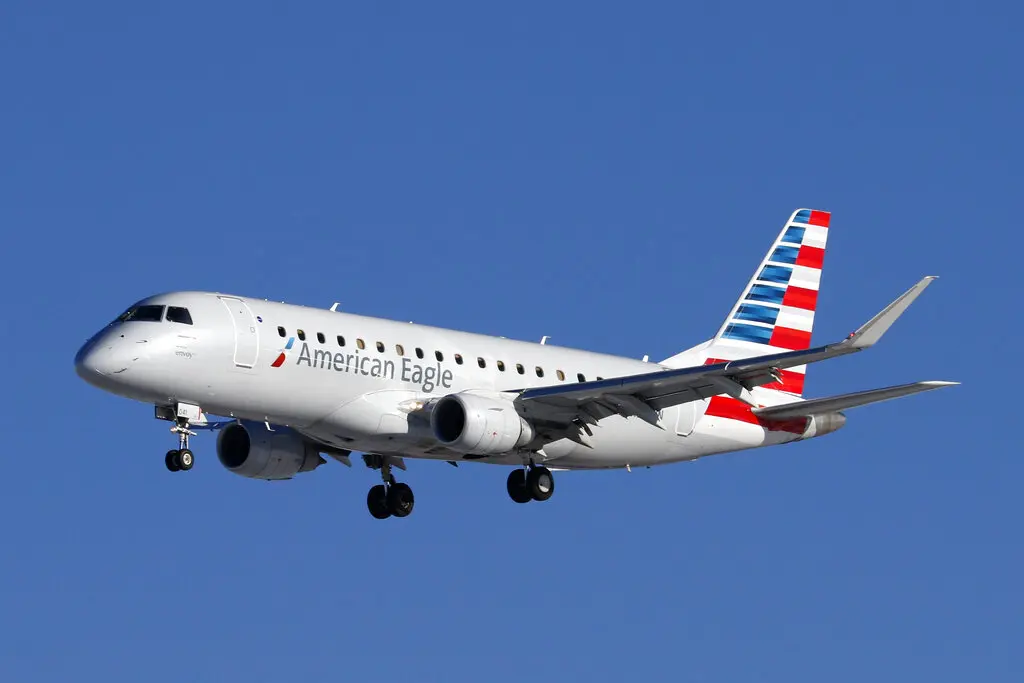
FORT WORTH, Texas — In a resolution highlighting the ongoing legal and ethical obligations of corporate employers under federal civil rights law, American Airlines has agreed to pay $200,000 to settle a disability discrimination lawsuit brought by the U.S. Equal Employment Opportunity Commission (EEOC). The federal enforcement agency announced the agreement following a protracted legal battle centered on the airline’s failure to accommodate an employee who developed cortical blindness while working at the company’s Fort Worth headquarters.
The case, designated as U.S. EEOC v. American Airlines, Inc. (Case No. 4:25-cv-01056-P) and filed in the U.S. District Court for the Northern District of Texas, Fort Worth Division, underscores critical issues surrounding workplace accessibility, the interactive process mandated by the Americans with Disabilities Act (ADA), and the severe consequences companies face when they fail to engage meaningfully with workers experiencing sudden or progressive disabilities.
Beyond the monetary payout to the affected employee, the two-year consent decree resolving the litigation features significant forward-looking provisions. Notably, American Airlines has committed to integrating rigorous Web Content Accessibility Guidelines (WCAG) into the development of new, accessible reservation software slated for rollout in 2027. This broad compliance measure transforms an individual employment dispute into an institutional pivot toward digital inclusivity within the major carrier’s technological infrastructure.
Main Facts of the Case
The core of the EEOC’s lawsuit focused on American Airlines’ handling of an employee at its Fort Worth facility who experienced a profound medical transition after developing cortical blindness—a form of blindness caused by damage to the occipital lobe of the brain rather than the eyes themselves. As her vision deteriorated, the worker sought to maintain her employment through standard, legally protected administrative pathways, but found herself stonewalled by management and human resources personnel.
According to the federal complaint, the employee made straightforward, practical requests to continue performing her job duties. Primarily, she asked for authorization and support to use screen reader software—assistive technology designed to convert on-screen text and graphical information into synthesized speech or refreshable Braille. Implementing this software would have granted her independent access to the airline’s internal computer systems, enabling her to fulfill her responsibilities effectively.
When it became clear that the integration of screen reader technology was being met with administrative hesitation and delay, the employee offered a pragmatic alternative: she requested a lateral transfer to an open position within the company that she could perform with her evolving visual capabilities, or with minimal additional adjustments.
Rather than engaging in the cooperative, good-faith interactive process required by federal law, American Airlines allegedly failed to take any substantive, legally required steps to evaluate the screen reader software or assist the worker in securing an alternative placement. Instead, the company placed the employee on involuntary, unpaid leave for nearly four years.
The culmination of this administrative neglect occurred when American Airlines terminated the worker’s employment. The federal lawsuit asserted that the termination was a direct consequence of the company’s failure to facilitate her return to work, effectively punishing an employee for a disability while simultaneously refusing to provide the legally mandated tools that would have allowed her to remain a productive member of the workforce.
Chronology of Events and Legal Proceedings
The timeline of the dispute reveals a multi-year breakdown in corporate accommodation protocols, culminating in federal intervention:
- Onset of Disability: An employee at American Airlines’ Fort Worth location develops cortical blindness, a condition that severely impairs visual processing and necessitates the use of assistive technology to interact with digital interfaces.
- Initial Requests for Accommodation: The employee formally requests that American Airlines provide or permit the use of screen reader software to convert computer text into synthesized speech. Alternatively, anticipating potential technological roadblocks, she requests a transfer to an alternate position within the company.
- The Breakdown in the Interactive Process: According to EEOC findings, American Airlines fails to meaningfully test or integrate the screen reader software and neglects to assist the worker in finding a suitable reassignment.
- Involuntary Leave: Rather than resolving the accommodation request, the airline places the employee on an involuntary, unpaid leave of absence. This status persists for nearly four years, effectively freezing her career and isolating her from the workplace.
- Termination of Employment: Following the protracted period of unpaid leave, American Airlines officially fires the employee, citing an inability to return to work—a circumstance manufactured by the company’s own refusal to implement reasonable accommodations.
- EEOC Administrative Conciliation: Following her termination, the employee files a charge of discrimination with the EEOC. The federal agency investigates the matter and attempts to resolve the dispute through its mandatory pre-litigation administrative conciliation process. When American Airlines and the EEOC fail to reach a voluntary settlement during conciliation, the agency prepares to take legal action.
- Filing of the Federal Lawsuit: The EEOC formally files suit against American Airlines, Inc. (Case No. 4:25-cv-01056-P) in the U.S. District Court for the Northern District of Texas, Fort Worth Division.
- Settlement and Consent Decree: The parties reach a negotiated resolution formalized in a two-year consent decree. American Airlines agrees to pay $200,000 in monetary relief to the affected employee and commits to overhauling its digital accessibility standards for upcoming software developments.
Supporting Data and Legal Framework
The legal bedrock of the EEOC’s action rests firmly upon Title I of the Americans with Disabilities Act (ADA) of 1990, alongside subsequent amendments designed to ensure broad protection for workers with physical and mental impairments.
Under the ADA, covered employers are legally obligated to provide "reasonable accommodations" to the known physical or mental limitations of otherwise qualified individuals with disabilities, unless the employer can demonstrate that the accommodation would impose an "undue hardship"—defined as significant difficulty or expense relative to the company’s overall resources. Reasonable accommodations can include job restructuring, modified work schedules, the acquisition or modification of equipment or devices, and the reassignment to a vacant position.
Furthermore, the ADA strictly prohibits employers from terminating employees on the basis of their disabilities. This protection extends to situations where an employee’s termination is the direct result of the employer’s failure or refusal to fulfill its legal duty to provide a reasonable accommodation. When an employer relegates a worker to unpaid leave for years and subsequently fires them without exploring viable technological or structural solutions, it violates both the letter and the spirit of federal disability law.
The resolution of U.S. EEOC v. American Airlines carries specific financial and structural parameters:
- Monetary Relief: $200,000 paid directly to the affected former employee to compensate for lost wages, emotional distress, and other damages incurred during her four-year ordeal.
- Injunctive Relief and Monitoring: A two-year consent decree during which American Airlines’ compliance will be monitored by the federal court and the EEOC.
- Technological Compliance: A binding commitment to integrate the internationally recognized Web Content Accessibility Guidelines (WCAG) into the creation of new proprietary reservation software projected for launch in 2027.
Official Responses and Perspectives
While the EEOC’s announcement of the settlement serves as a public reminder of corporate responsibilities, it also reflects the agency’s ongoing strategic enforcement priorities regarding systemic discrimination and technological barriers in the modern workplace.
"Federal law is clear: employers cannot simply sideline workers who develop disabilities by forcing them onto indefinite, unpaid leave and then terminating them when straightforward technological solutions are available," said an EEOC spokesperson familiar with the litigation. "Screen reader software is a standard, highly effective accommodation that enables blind and visually impaired individuals to perform complex computer-based tasks. Denying such tools—and refusing to engage in a genuine interactive process—violates the foundational principles of the Americans with Disabilities Act."
Advocacy groups focusing on employment rights for individuals with visual impairments have similarly pointed to the case as a cautionary tale for human resources departments across the corporate landscape. Experts emphasize that the rapid evolution of workplace technology makes it increasingly inexcusable for major employers to claim that screen readers or other digital assistive tools are too burdensome to implement.
For its part, American Airlines, by agreeing to the consent decree, avoids the prolonged expense, uncertainty, and potential reputational damage of a full trial in federal court. Beyond resolving the individual claims of the Fort Worth employee, the airline’s forward-looking agreement to incorporate WCAG standards into its 2027 reservation software rollout signals an acknowledgment that digital accessibility must be baked into corporate infrastructure from the ground up, rather than treated as an afterthought.
Implications for Corporate America and the Aviation Sector
The resolution of U.S. EEOC v. American Airlines carries profound implications that extend well beyond the aviation industry, offering critical lessons for human resources professionals, corporate legal teams, and technology developers.
1. The Critical Importance of the Interactive Process
The case reinforces that the ADA’s "interactive process" is not a mere procedural formality to be checked off a list, but a substantive legal obligation. When an employee requests an accommodation—whether it is specialized software like a screen reader or a transfer to a vacant role—employers must actively, transparently, and expeditiously explore those options. Leaving an employee in administrative limbo on unpaid leave for years is treated by federal regulators as a constructive denial of rights.
2. The Intersection of Employment Law and Digital Accessibility
As the modern workplace becomes increasingly digitized, the legal definition of a "reasonable accommodation" frequently intersects with software and digital infrastructure. Employers can no longer claim ignorance regarding assistive technologies. Companies that fail to ensure their internal software systems are compatible with screen readers, voice recognition, and other accessibility tools expose themselves to significant liability under the ADA.
3. Proactive Tech Integration as Risk Mitigation
The requirement within the American Airlines consent decree to adopt Web Content Accessibility Guidelines (WCAG) for its 2027 reservation software highlights a growing trend: federal regulators and courts are increasingly utilizing technological benchmarks to prevent future discrimination. By embedding accessibility into software development phases years in advance, companies can mitigate legal risks while simultaneously expanding their talent pools to include skilled workers with disabilities.
4. EEOC Enforcement Trends
The filing and subsequent settlement of this lawsuit signal that the EEOC remains vigilant in prosecuting cases where large corporations fail to accommodate workers with sudden or progressive medical conditions. Employers with thousands of workers—particularly major enterprises in logistics, aviation, and corporate services—must ensure that their HR protocols are robustly aligned with federal non-discrimination mandates to avoid costly litigation and public scrutiny.
In summary, while the $200,000 payout closes the chapter on an unfortunate four-year battle for one Fort Worth employee, the broader ripples of U.S. EEOC v. American Airlines will likely influence how major corporations approach workplace accommodations and digital inclusion for years to come.
