

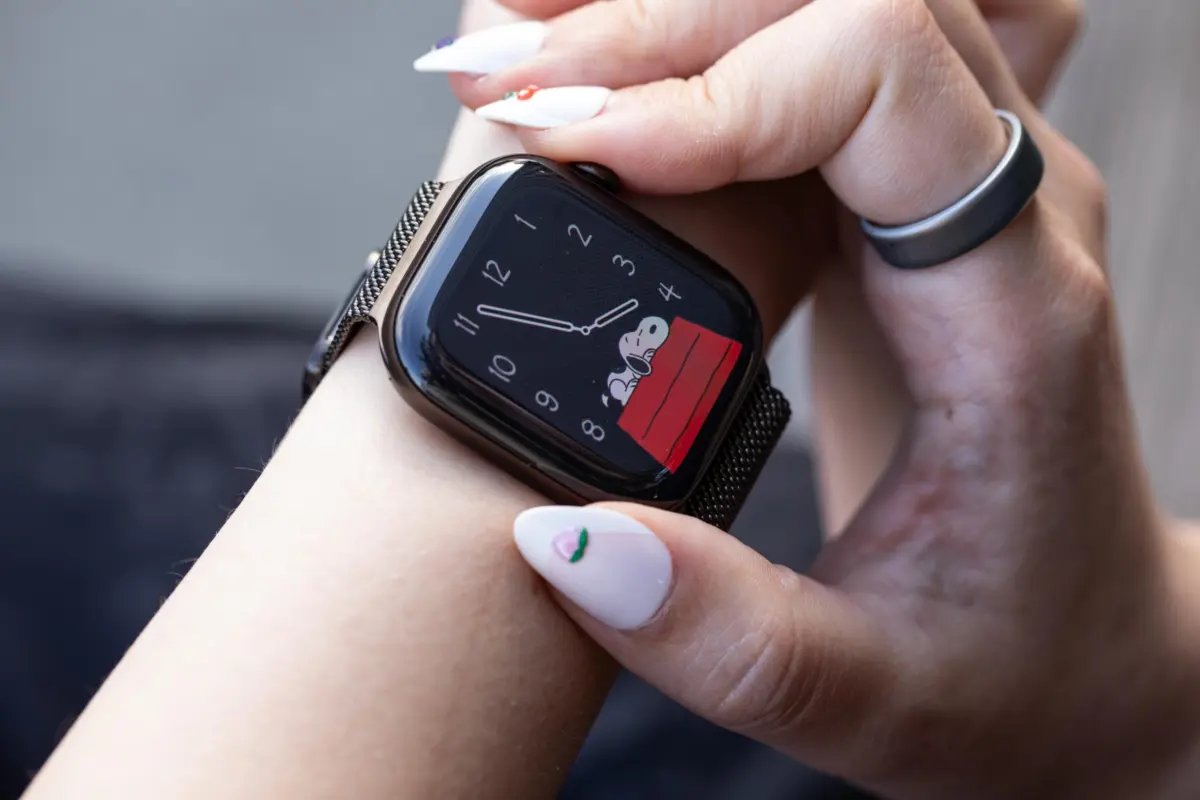
SAN DIEGO — In one of the most stunning intellectual property verdicts in recent tech industry history, a federal jury in San Diego has ordered Apple to pay more than $5.7 billion in damages to haptics technology firm Taction Technology. The verdict concludes a grueling legal battle centered on the sophisticated vibration-based tactile transducer technology that powers the physical feedback users feel on iPhones and Apple Watches.
The lawsuit, which initially commenced in 2021, accused the Cupertino-based tech giant of systematically infringing upon foundational patents related to linear resonance haptic feedback systems. While the jury ultimately ruled that Apple’s infringement was not willful—sparing the tech titan from even higher punitive damages—the multi-billion-dollar penalty stands as a severe rebuke of Apple’s hardware engineering practices and a landmark victory for a boutique technology developer.
Main Facts of the Case
At the heart of the litigation were two specific patents held by Taction: U.S. Patent Nos. 10,659,885 and 10,820,117. Both patents pertain to advanced vibration-based, tactile transducer technology designed to replicate the sensation of physical clicks, bumps, and resistance in consumer electronics. This technology allows digital screens and touch surfaces to mimic mechanical buttons, enhancing user interaction through precise localized feedback.
Taction’s legal team successfully argued before the U.S. District Court for the Southern District of California that Apple’s proprietary Taptic Engine—the specialized haptic feedback hardware integrated into millions of iPhones and Apple Watches—infringed upon these protected innovations. According to court filings, the disputed technology involves specialized internal mechanics that drive linear actuators to deliver crisp, immediate physical responses to user input without requiring traditional mechanical moving parts.
The federal jury evaluated the claims over the course of the trial, ultimately determining that Apple infringed upon two specific claims within the first patent and one claim within the second. Although Taction’s attorneys pressed hard to prove that Apple had willfully stolen and reverse-engineered the technology from two Kannon gaming headsets, the jury stopped short of finding willful infringement. This distinction prevented the court from tripling the damages, yet the base assessment of over $5.7 billion remains staggering, making it one of the largest patent infringement judgments ever recorded against a single technology company.
Chronology of the Legal Battle
The roots of this landmark legal confrontation stretch back well before the formal filing of the lawsuit, winding through years of technological development, corporate meetings, and pre-trial maneuvering.
2014–2020: The Genesis and Early Inquiries
During the trial, evidence and testimony highlighted the initial development cycles of Taction’s proprietary haptic tech. Taction engineers had spent years perfecting tactile transducers aimed primarily at improving immersion in gaming peripherals, such as the Kannon gaming headsets. As Apple worked to phase out traditional physical home buttons on its devices—beginning prominently with the iPhone 7 and the introduction of the Taptic Engine—the company was aggressively scouting external haptic innovations. Court documents alleged that technical briefings and product demonstrations took place between representatives of the two companies, laying the groundwork for Taction’s claims that Apple acquired intimate knowledge of their patented methods before allegedly bypassing licensing agreements.
2021: The Lawsuit is Filed
Frustrated by what it viewed as the unauthorized appropriation of its intellectual property, Taction officially filed a patent infringement lawsuit against Apple in the U.S. District Court for the Southern District of California. The complaint accused Apple of incorporating Taction’s patented transducer architecture directly into its flagship product lines—most notably the iPhone and Apple Watch series—without authorization or compensation.
2022–2025: Discovery, Markman Hearings, and Claim Construction
Like many high-stakes patent disputes involving global corporations, the case spent years mired in complex pre-trial proceedings. The legal teams engaged in exhaustive discovery processes, examining millions of pages of internal Apple engineering documents, source code, design schematics, and email communications between hardware designers and executives. Federal judges held crucial Markman hearings to establish the legal definitions and boundaries of the disputed patent claims, setting the stage for what would and would not be admissible before a jury.
September 2026: The Jury Verdict
Following weeks of intense courtroom arguments, expert witness testimonies, and demonstrations of micro-haptic physics, the San Diego federal jury reached its verdict. The panel found Apple liable for infringing upon three distinct patent claims across Taction’s two designated patents, culminating in the historic $5.7 billion financial penalty.
Supporting Data and Financial Metrics
To fully understand the gravity of the $5.7 billion judgment, it must be contextualized within the broader landscape of Apple’s financial ecosystem and historical patent litigation:

- The Quantum of Damages: At over $5.7 billion, the award represents a massive windfall for Taction Technology, a company with a significantly smaller operational footprint than Apple. To put the figure in perspective, $5.7 billion exceeds the annual gross domestic product of several small island nations and rivals the entire yearly research and development budgets of many mid-sized technology firms.
- Apple’s Quarterly Revenue: Apple routinely generates well over $100 billion in quarterly revenue, driven heavily by iPhone sales. While a $5.7 billion hit will not destabilize Apple’s staggering cash reserves, it represents a notable portion of a single quarter’s net income, making it a financial penalty that Wall Street analysts cannot easily ignore.
- Royalty and Licensing Precedents: Most patent disputes in the consumer electronics sector are settled out of court through cross-licensing agreements or significantly lower lump-sum payments. Damages scaling into the billions are typically reserved for foundational cellular standard-essential patents (SEPs) involving companies like Qualcomm or Ericsson, making a massive verdict centered on mechanical haptics and transducer design exceptionally rare.
- Scope of Affected Hardware: The Taptic Engine is not a niche component; it is a core architectural feature built into every modern iPhone (spanning multiple generations from the iPhone 7 onward) and nearly every iteration of the Apple Watch. Because the accused technology is tied to hundreds of millions of units sold globally, the damages calculation reflects a massive per-unit royalty assessment applied across a staggering volume of consumer hardware.
Official Responses and Corporate Stance
Predictably, the opposing parties reacted to the verdict with starkly contrasting tones, reflecting the high stakes involved in the litigation’s outcome.
Apple’s Response
Apple has categorically rejected the jury’s findings and made it clear that the legal battle is far from over. In a statement released shortly after the verdict was read, an Apple spokesperson confirmed the company’s intention to pursue a thorough appeal through the federal court system.
"We are disappointed with the jury’s decision, and we plan to appeal," an Apple representative stated. "Our teams spend years independently innovating and designing our products, creating industry-leading technologies like the Taptic Engine that our customers love. We look forward to presenting our case to the appellate court."
Apple’s legal strategy during the appeal is expected to focus heavily on invalidity arguments—attempting to prove that Taction’s patents should never have been granted in the first place—as well as challenging the methodology used by Taction’s financial experts to calculate the multi-billion-dollar damages award.
Taction Technology’s Position
Representatives for Taction Technology have praised the federal jury for its diligence and careful consideration of the complex technical evidence presented during the trial. For a smaller technology innovator, the verdict serves as a monumental validation of its intellectual property rights. While Taction’s executives have largely let their legal filings and courtroom victories speak for themselves, the outcome underscores the vital role that patent protections play in safeguarding independent research and development from being absorbed by dominant industry behemoths without fair compensation.
Broader Implications for the Tech Industry
The staggering $5.7 billion verdict carries profound ramifications that extend far beyond the immediate balance sheets of Apple and Taction Technology. Legal experts, intellectual property analysts, and hardware manufacturers across the globe are already analyzing the potential fallout of this case.
1. Increased Scrutiny on Big Tech’s Hardware Procurement
For years, smaller startups and component developers have voiced concerns about the asymmetric power dynamics of working with trillion-dollar corporations. Smaller firms often feel pressured to share preliminary designs, prototypes, or technical white papers during preliminary pitch meetings or supply-chain discussions, only to see proprietary concepts appear in commercial products without a licensing deal. This verdict serves as a stark warning to major tech companies that intellectual property theft or unauthorized design borrowing can carry catastrophic financial consequences.
2. The Mechanics of the Appeals Process
Because Apple has pledged to appeal, the $5.7 billion award will not change hands immediately. The case will now transition to the U.S. Court of Appeals for the Federal Circuit, the specialized appellate court that handles patent law cases nationwide. Historically, the Federal Circuit is known for closely scrutinizing jury instructions, claim constructions, and the mathematical models used by financial experts to calculate damages. It is not uncommon for massive jury verdicts to be partially or wholly overturned, or sent back down to the district court for a recalibration of damages, making the appellate phase the true critical frontier for this dispute.
3. Potential Ripple Effects on Future Hardware Design
If Apple’s appeal ultimately fails and the verdict is upheld, it could trigger a wave of similar litigation across the consumer electronics industry. Competitors utilizing linear actuators, advanced haptic feedback, and haptic-touch screen surfaces may find themselves emboldened to file infringement lawsuits, or conversely, forced to aggressively audit their own supply chains and component designs to ensure they are entirely free of third-party encumbrances. Furthermore, component suppliers may face stricter indemnification demands, altering how hardware contracts are negotiated between original equipment manufacturers (OEMs) and patent holders.
As the legal proceedings move to the appellate level, the tech world will be watching closely to see whether this historic multibillion-dollar judgment survives judicial scrutiny or gets dismantled in the higher courts. For now, the verdict stands as a historic milestone in patent law, proving that even the most powerful corporations on earth can be held accountable for the unauthorized use of patented technology.
