

Perched dramatically on a high-altitude plateau over 2,300 meters above sea level at the edge of the Great Rift Valley escarpment, Asmara stands as a living testament to an extraordinary architectural paradox. The capital of Eritrea, a nation rarely associated with mass tourism or large-scale international travel, has captured the global imagination for an unexpected reason: its breathtaking, impeccably preserved modernist architecture.
In July 2017, the international community officially recognized this architectural marvel when UNESCO inscribed Asmara as a World Heritage Site under the title "Asmara: A Modernist African City." This distinction marked a historic milestone, making it the first modernist urban site anywhere in the world to be inscribed in its entirety, as well as Africa’s first explicitly modernist World Heritage Site.
The city’s unique architectural identity is the product of a complex historical convergence. It is born from an intense period of colonial construction—driven by Italy’s aggressive imperial ambitions in the Horn of Africa during the early-to-mid 20th century—followed by decades of relative isolation that shielded the urban landscape from the waves of demolition and speculative redevelopment that transformed other global cities. Today, through initiatives like the Asmara Heritage Project, this controversial colonial legacy has been reclaimed, painstakingly documented, and transformed into a powerful symbol of Eritrean national identity.
Main Facts: The Architectural and Historical Significance of Asmara
To understand Asmara is to understand a city frozen in an avant-garde time warp. During the late 1930s, under the Fascist regime of Benito Mussolini, Asmara was transformed into Piccola Roma (Little Rome), a modernist showcase intended to demonstrate the supposed economic and civilizational prowess of the Italian Empire. Architects, engineers, and planners flooded the city, bringing with them the boldest design philosophies of the era.
- A Global Capital of Modernism: Asmara features one of the highest concentrations of Art Deco, Futurist, Rationalist, and modernist architecture anywhere in the world. From gas stations shaped like airplanes to sleek administrative offices and residential villas, the city serves as a built textbook of 1930s design.
- UNESCO Recognition: The 2017 UNESCO inscription covers the entire colonial-era master-planned city zone, acknowledging the integrity and authenticity of its urban layout, public spaces, and architectural stock.
- The Dual Legacy: The city forces a nuanced conversation about architectural heritage. Structures built to project foreign imperial dominance have, over time, been re-appropriated by the local population, shedding their original ideological baggage to become cherished components of modern Eritrean urban life.
- The Asmara Heritage Project (AHP): Established to safeguard, inventory, and conserve this fragile urban fabric, the AHP has served as the intellectual and administrative backbone for protecting the city against decay and unmanaged modernization.
Chronology: From Highland Settlement to World Heritage Capital
The evolution of Asmara spans centuries, transitioning from an indigenous agrarian community to a colonial stronghold and, finally, to the sovereign capital of an independent African nation.
Pre-Colonial Roots: The Four Clans
Before the arrival of European colonists, Asmara existed as a small, peaceful highland settlement rooted in indigenous traditions. According to local oral history, the city’s name derives from the Tigrinya phrase "Arbate Asmera," which translates roughly to "the four made them unite." This name commemorates four local clans—the Gheza Gasa, the Gheza Asmae, the Gheza Bene, and the Gheza Sere—who historically inhabited the plateau. Following a period of prolonged conflict and division, the leaders of these communities met and agreed to lay down their arms and live together in peace, giving birth to the settlement.
The earliest known written reference to Asmara appears in a late 14th-century Latin travel itinerary. Over the subsequent centuries, the settlement grew steadily in economic and strategic importance, functioning as a vital transit stop on trade routes connecting the fertile interior highlands down to the crucial Red Sea port city of Massawa.
Italian Colonization and the Building Boom (1889–1941)
Eritrea was officially claimed as an Italian colony in 1890. In 1897, the colonial administration relocated its capital from Massawa to the cooler, more temperate highlands of Asmara.
Initially, Italian intervention was modest, but the dynamic shifted dramatically in the 1930s. Spurred by Mussolini’s push to build a "New Roman Empire" and prepare for the brutal invasion of neighboring Ethiopia, Asmara experienced an unprecedented construction boom. Between 1935 and 1941, the population of the city swelled as thousands of Italian workers, architects, and entrepreneurs arrived. They laid out a strict, grid-based master plan that separated the European sector from the indigenous native quarters, constructing a sprawling playground for European architectural experimentation.
Isolation, Independence, and Preservation (1941–1991)
Italian rule in Asmara came to an abrupt end in 1941 during World War II, when British forces took control of the territory. Eritrea was subsequently federated with Ethiopia in 1952, a move that led to decades of armed conflict when Ethiopia annexed the territory in 1962, sparking a 30-year war for independence.
Paradoxically, this prolonged period of war, political instability, and subsequent international isolation acted as a preservation shield for Asmara. Lacking the capital for massive urban renewal, real estate speculation, or high-rise development, the city’s 1930s core remained largely untouched. When Eritrea finally achieved formal independence in 1993, Asmara emerged not as a modern metropolis of glass skyscrapers, but as a remarkably intact museum of interwar architecture.
The Modern Era and UNESCO Inscription (2000–Present)
Recognizing the vulnerability of this crumbling architectural treasure, local authorities and international experts launched concerted conservation efforts. The establishment of the Asmara Heritage Project marked a turning point, culminating in the historic UNESCO World Heritage listing in July 2017. Today, efforts continue to balance the demands of a growing urban population with the rigorous requirements of historical preservation.
Supporting Data: Architectural Masterpieces of Asmara
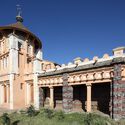
The urban landscape of Asmara is characterized by an astonishing variety of architectural styles that flourished during the interwar period. Some of the most notable structures documented by heritage experts include:
- The Fiat Tagliero Building (1938): Designed by Italian engineer Giuseppe Pettazzi, this iconic service station is a masterpiece of Futurism. Modeled explicitly to mimic an airplane in mid-flight, its dramatic, cantilevered concrete wings—measuring 15 meters on either side without any visible vertical support columns—defied structural engineering conventions of the era. Local legend holds that Pettazzi held a pistol to the head of the municipal building inspector to force him to witness the removal of the wooden support scaffolding, daring the structure to stand.
- The Cinema Impero (1938): Designed by Mario Messina, this Art Deco cinema is widely considered one of the finest surviving examples of the style worldwide. Its geometric facade features a striking pattern of backlit glass panels that spell out the cinema’s name, complemented by stylized sunbursts and sleek nautical motifs.
- The Asmara Opera House: Built in 1918 and later modified, this building blends neo-Romanesque and Art Nouveau elements, serving as a hub for cultural gatherings during the colonial era and continuing to host events today.
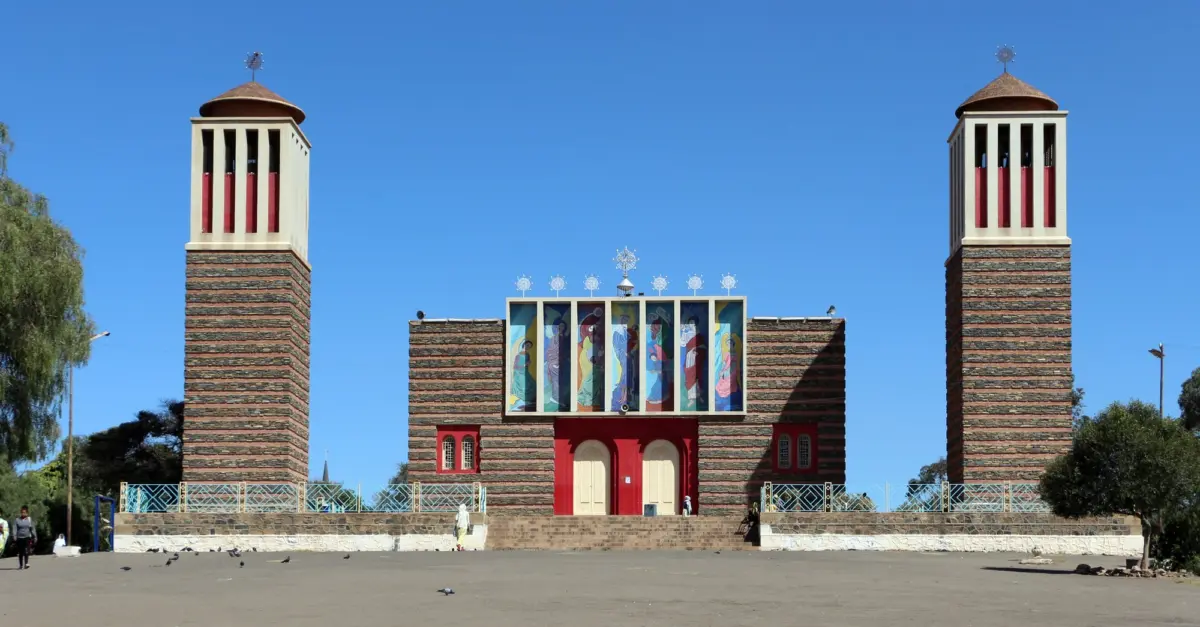
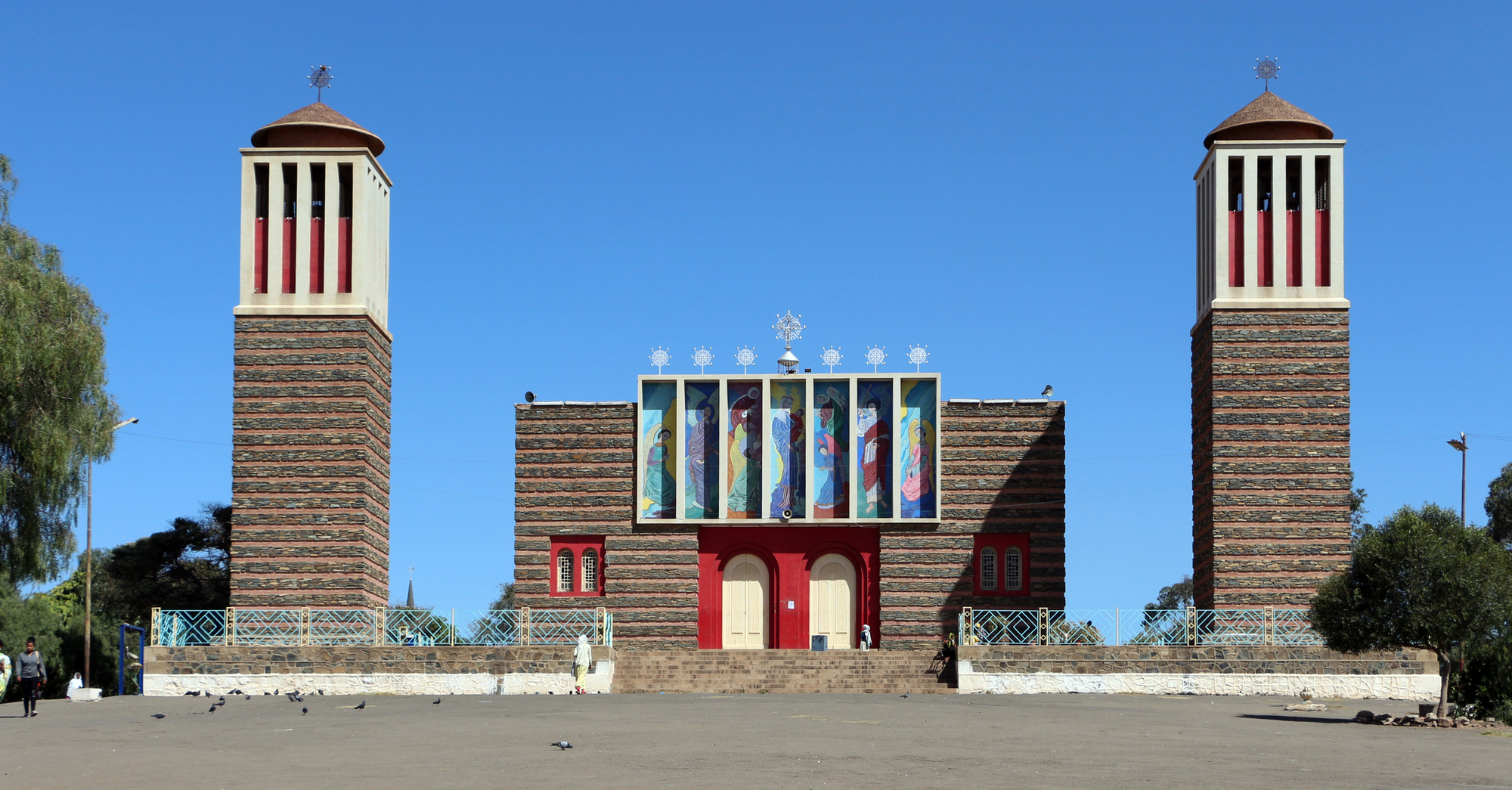
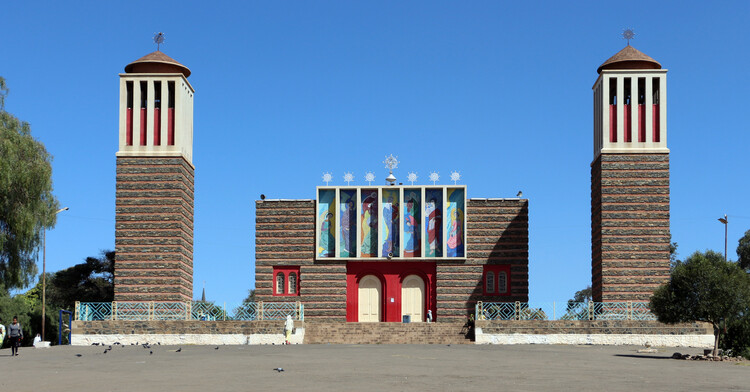
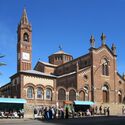
- Religious Landmarks: The city skyline is punctuated by diverse houses of worship that reflect its multicultural history, including the imposing Roman Catholic Cathedral (Our Lady of the Rosary), the neo-Gothic Enda Mariam Orthodox Cathedral, and the modernist Al Khulafa Al Rashiudin Mosque, which incorporates elements of Rationalist and Islamic architecture.
Official Responses: Balancing Heritage with Community Needs
The preservation of Asmara has required careful navigation between the desires of international conservation bodies and the practical realities of local governance.
When the Asmara Heritage Project (AHP) was initiated, its primary objective was to draft a comprehensive local management plan, inventory thousands of historical buildings, and train local architects and artisans in specialized conservation techniques. Eritrean officials have consistently emphasized that preserving Asmara is not about honoring the legacy of Italian fascism, but about safeguarding the physical labor and cultural resilience of the Eritrean people who actually built the city.
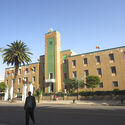
International bodies, including ICOMOS (the International Council on Monuments and Sites) and UNESCO, have praised the Eritrean government’s commitment to maintaining the architectural integrity of the zone. However, experts note that ongoing challenges remain. Many buildings suffer from decades of deferred maintenance, structural water damage, and a lack of specialized materials required for historic restorations. Furthermore, municipal authorities face the constant pressure of providing modern commercial and residential infrastructure for a growing urban population without compromising the historic grid.
Implications: A National Symbol and Future Outlook
The transformation of Asmara from a colonial administrative hub into a UNESCO World Heritage Site carries profound social and political implications for Eritrea.
For a young nation that fought a grueling, multi-decade war for self-determination, national identity is a fiercely guarded concept. By reclaiming Asmara’s modernist architecture and integrating it into the fabric of national pride, Eritreans have successfully detached these structures from their colonial origins. The buildings no longer symbolize Italian imperial aspirations; instead, they represent the endurance, cosmopolitanism, and aesthetic sophistication of Asmara itself.
Looking forward, the Asmara Heritage Project serves as a blueprint for post-colonial urban conservation across the Global South. It demonstrates that architectural heritage does not have to be indigenous to be valuable; rather, built environments can be re-contextualized by local populations to tell complex, multi-layered stories of survival and adaptation.
As Asmara looks to the future, its enduring legacy lies in its streets—a striking collection of geometric facades, tropical Art Deco curves, and futuristic concrete wings that stand proudly on the African plateau, whispering stories of a bygone era while firmly anchoring the identity of modern Eritrea.
