BEIJING — In a landmark decision that bridges millennia-old urban traditions with cutting-edge ecological innovation, the United Nations Educational, Scientific and Cultural Organization (UNESCO) and the International Union of Architects (UIA) have officially designated Beijing as the World Capital of Architecture for 2029.
Announced on August 5, 2026, the prestigious triennial designation positions the Chinese capital at the epicenter of global architectural discourse. Beijing will host a comprehensive year-long slate of exhibitions, international conferences, workshops, and cultural events leading up to and culminating in the prestigious UIA World Congress of Architects in 2029.
The selection was finalized upon the recommendation of the Joint Committee for the World Capital of Architecture, chaired by renowned architect Dominique Perrault. It marks a continuation of a high-profile global urban initiative, following in the footsteps of Rio de Janeiro (the inaugural host), Copenhagen (2023), and Barcelona (which recently concluded the 2026 UIA World Congress under the theme “Architectures for a Planet in Transition”).
1. Main Facts: The 2029 Designation and Core Vision
The UNESCO-UIA World Capital of Architecture title is far more than an honorary label; it is a rigorous international acknowledgment of a city’s active commitment to utilizing architecture, cultural heritage, and urban planning as fundamental catalysts for sustainable development.
The Host Year: 2029, featuring a packed calendar of global symposia, public forums, and architectural showcases.
The Core Theme:"Back to Balance"—a guiding framework championing architecture as a vital bridge connecting human culture, the natural environment, and communities.
The Steering Bodies: Jointly administered by UNESCO and the International Union of Architects (UIA), guided by the Joint Committee chaired by Dominique Perrault.
The Objective: To foster international, cross-disciplinary dialogue addressing pressing global challenges, including hyper-urbanization, climate resilience, heritage conservation, and inclusive, human-centric design.
According to UNESCO, Beijing was chosen for its rare ability to harmonize one of the planet’s richest architectural heritages—ranging from imperial palaces and traditional hutongs to ultra-modern megalithic structures—with a forward-thinking, sustainable vision of future urban growth. The city’s successful urban regeneration programs and contemporary architectural renaissance served as compelling proof of how historic preservation and cutting-edge innovation can reinforce one another.
2. Chronology: The Path to the World Capital Title
Beijing’s journey toward the 2029 designation reflects a multi-decade evolution in how the city manages its physical footprint, balancing explosive economic modernization with ecological awareness and heritage protection.
Early 2000s – The Modernization Boom: As China prepared for the 2008 Summer Olympic Games, Beijing transformed into a canvas for global starchitects. Iconic structures like the Bird’s Nest (National Stadium) by Herzog & de Meuron and the CCTV Headquarters by Rem Koolhaas redefined the city’s skyline, thrusting Beijing into the modern architectural conversation.
2010s – Shift Toward Heritage Preservation and Regeneration: Recognizing the rapid loss of traditional urban textures, city planners pivoted toward micro-renewal strategies. Neighborhood regeneration projects, such as the revitalization of old courtyard housing (siheyuan) and historic industrial zones, prioritized community-led preservation over wholesale demolition.
2023–2025 – Emergence of Civic and Cultural Megaprojects: Beijing completed a new wave of world-class cultural institutions, including the Snøhetta-designed Beijing City Library and the Beijing Performing Arts Centre by Perkins&Will alongside Schmidt Hammer Lassen. These projects set new benchmarks for environmental performance and public space integration.
August 5, 2026 – Official Designation: Following recommendations from Dominique Perrault’s Joint Committee, UNESCO and the UIA officially name Beijing the World Capital of Architecture for 2029, setting off a three-year preparatory runway for the city.
2029 (Upcoming) – The Capital Year and UIA Congress: Beijing will welcome architects, urban planners, policymakers, researchers, and students from across the globe for the UIA World Congress, cementing its status as a global laboratory for future urbanism.
3. Supporting Data and Architectural Landscape
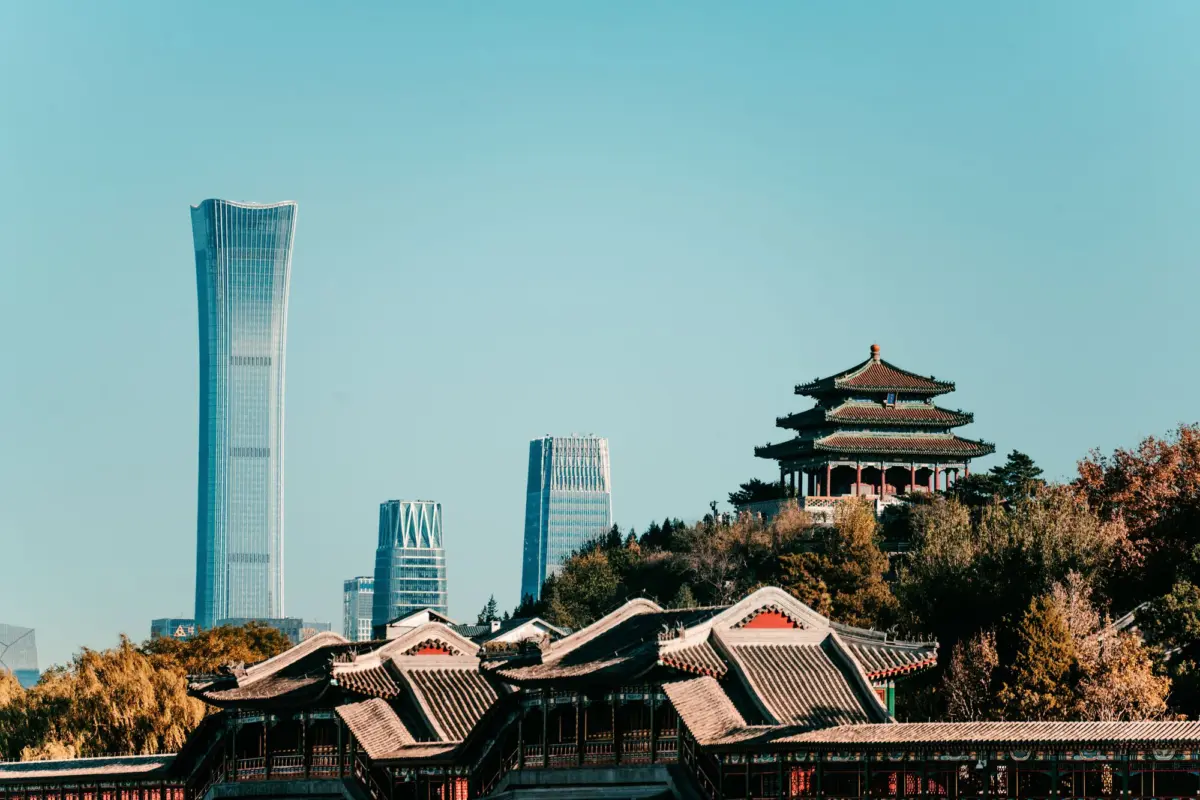
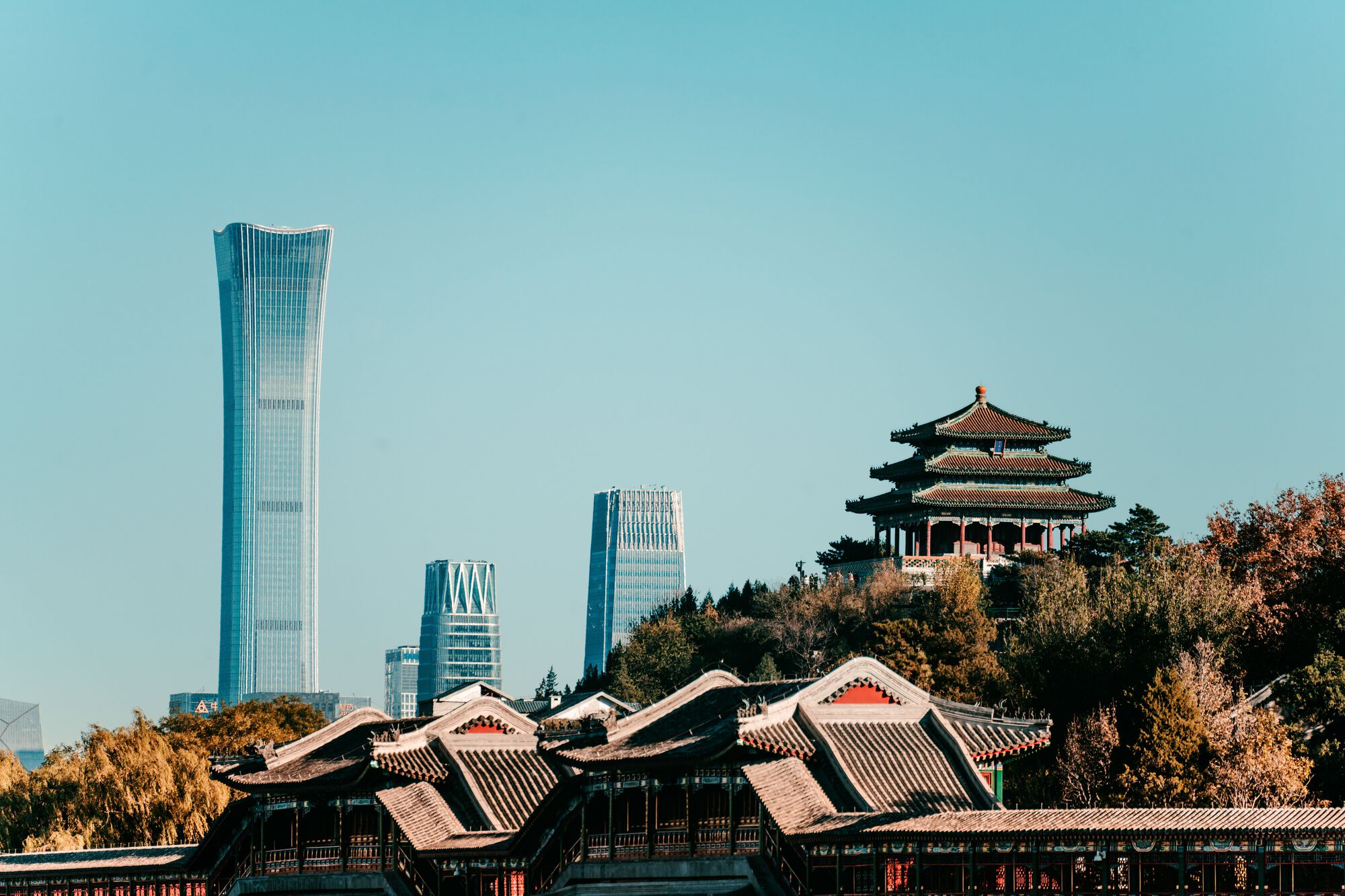
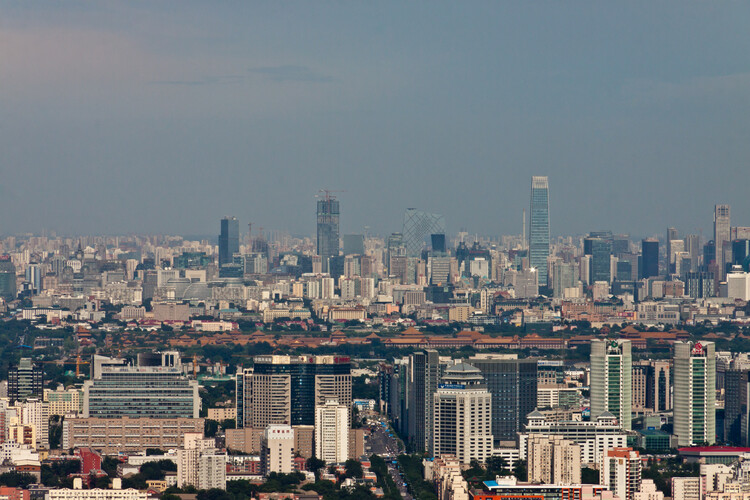
Beijing’s architectural landscape in the late 2020s offers a fascinating study in contrasts. The city seamlessly juxtaposes ancient dynastic layouts—such as the rigid, cosmic geometry of the Forbidden City and the Temple of Heaven—with hyper-advanced engineering feats.
Key Architectural Milestones in Beijing:
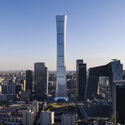
CITIC Tower (China Zun): Designed by Kohn Pedersen Fox (KPF), this 528-meter supertall skyscraper is Beijing’s tallest building. Its fluid, vase-inspired silhouette draws from traditional Chinese ritual vessels, combining structural innovation with cultural symbolism.
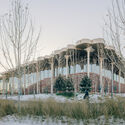
Beijing City Library (Snøhetta): Opened in recent years, this revolutionary library acts as a shaded, forest-like public sanctuary. Its terraced interior mimics the natural topography of a valley, while its integrated photovoltaic roof systems and advanced climate-control strategies achieve exceptional energy efficiency.
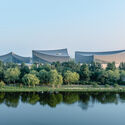
Beijing Performing Arts Centre (Perkins&Will + Schmidt Hammer Lassen): Inspired by the region’s historic granaries and canal boats, this cultural hub anchors the urban regeneration of the city’s eastern sub-center, emphasizing public accessibility and waterfront activation.
Micro-Urbanism and Heritage Interventions: Beyond mega-structures, firms like URBANUS have spearheaded localized environmental and architectural interventions—such as the Environmental Improvement for the Five Dragon Temple—proving that small-scale historic preservation is just as vital to urban health as massive developments.
The Broader Chinese Context
Beijing’s recognition arrives amid a nationwide architectural renaissance across China. Cities like Shenzhen have simultaneously emerged as global testing grounds for experimental civic architecture:
Shenzhen Natural History Museum: Designed by 3XN, B+H Architects, and Zhubo Design, it recently opened as South China’s largest natural history museum, integrating seamlessly into its surrounding parkland with a sweeping, green-roofed profile.
Shenzhen Bay Culture Square: Completed by MAD Architects, this coastal cultural complex serves as a fluid nexus for design exhibitions and public gathering.
Bihailou Art Village: MVRDV’s recent vertical village concept reimagines mixed-use urban density, stacking commercial, public, and cultural programs to minimize land consumption.
Ecological Megaprojects: On a national scale, China continues to spearhead massive ecological engineering feats, such as the Great Green Wall reforestation initiative designed to combat desertification along the Gobi Desert.
4. Official Responses and Leadership Perspectives
The announcement drew enthusiastic praise from international leaders in culture, governance, and design, underscoring the global significance of Beijing’s selection.
"As we look towards Beijing 2029, we are confident that the city’s extraordinary architectural heritage, dynamic urban transformation, and forward-looking vision will inspire new international dialogue on the power of architecture in improving people’s lives and in safeguarding shared heritage for future generations." — Khaled El-Enany, Director-General of UNESCO
Architectural leaders and municipal officials echoed these sentiments, emphasizing that the 2029 capital year will provide an unprecedented platform for multilateral cooperation. Representatives from the International Union of Architects noted that Beijing’s unique experience in managing explosive urban growth while simultaneously protecting ancient cultural assets offers invaluable lessons for rapidly urbanizing nations across the global South and North alike.
5. Implications for the Future of Global Urbanism
The designation of Beijing as the 2029 World Capital of Architecture carries profound implications for the architectural profession and the future management of global metropolises.
1. Redefining Heritage and Modernity
For decades, global architectural discourse often framed heritage preservation and rapid modernization as mutually exclusive forces. Beijing’s recent trajectory—and its validation by UNESCO—proves that historic preservation can serve as the very foundation of modern urban identity. By valuing ancient spatial structures like the hutongs alongside futuristic transport hubs and net-zero civic buildings, Beijing offers a holistic model for heritage-led urban resilience.
2. Confronting Climate Change Through "Back to Balance"
Under the theme "Back to Balance," the 2029 programming will challenge architects to rethink carbon footprints, material lifecycles, and ecological integration. As cities face accelerating climate instability, Beijing’s investments in green infrastructure, sponge-city water management, and energy-positive public architecture will be scrutinized, tested, and shared with a global audience.
3. Fostering Cross-Cultural Diplomacy
The UIA World Congress and its preceding three-year cultural calendar act as a vital diplomatic bridge. By bringing together architects, urban researchers, public officials, and grassroots community leaders from every continent, Beijing 2029 will facilitate vital conversations on housing affordability, equitable public space, and post-carbon urban futures.
As the countdown to 2029 begins, Beijing stands ready to welcome the world—not merely as a showcase of historical grandeur or hyper-modern engineering, but as a living laboratory testing how humanity can successfully inhabit the delicate intersection of past, present, and sustainable future.