

Main Facts: The Scope of Assembly Bill 1346
On January 1, 2024, a sweeping environmental mandate took effect in California, fundamentally altering the landscape for both residential property maintenance and heavy-duty commercial construction. Enacted under Assembly Bill 1346 (AB 1346) in 2021, the law prohibits the sale of new gas-powered equipment utilizing Small Off-Road Engines (SORE) rated under 25 gross horsepower (19 kilowatts).
While early public discourse and media coverage focused heavily on consumer lawn and garden tools—specifically leaf blowers and lawnmowers—the regulatory net cast by AB 1346 is far wider. The law bans the sale of any non-exempt spark-ignition engines under the 25-horsepower threshold. This includes chainsaws, weed trimmers, pressure washers, golf carts, and specialty utility vehicles.
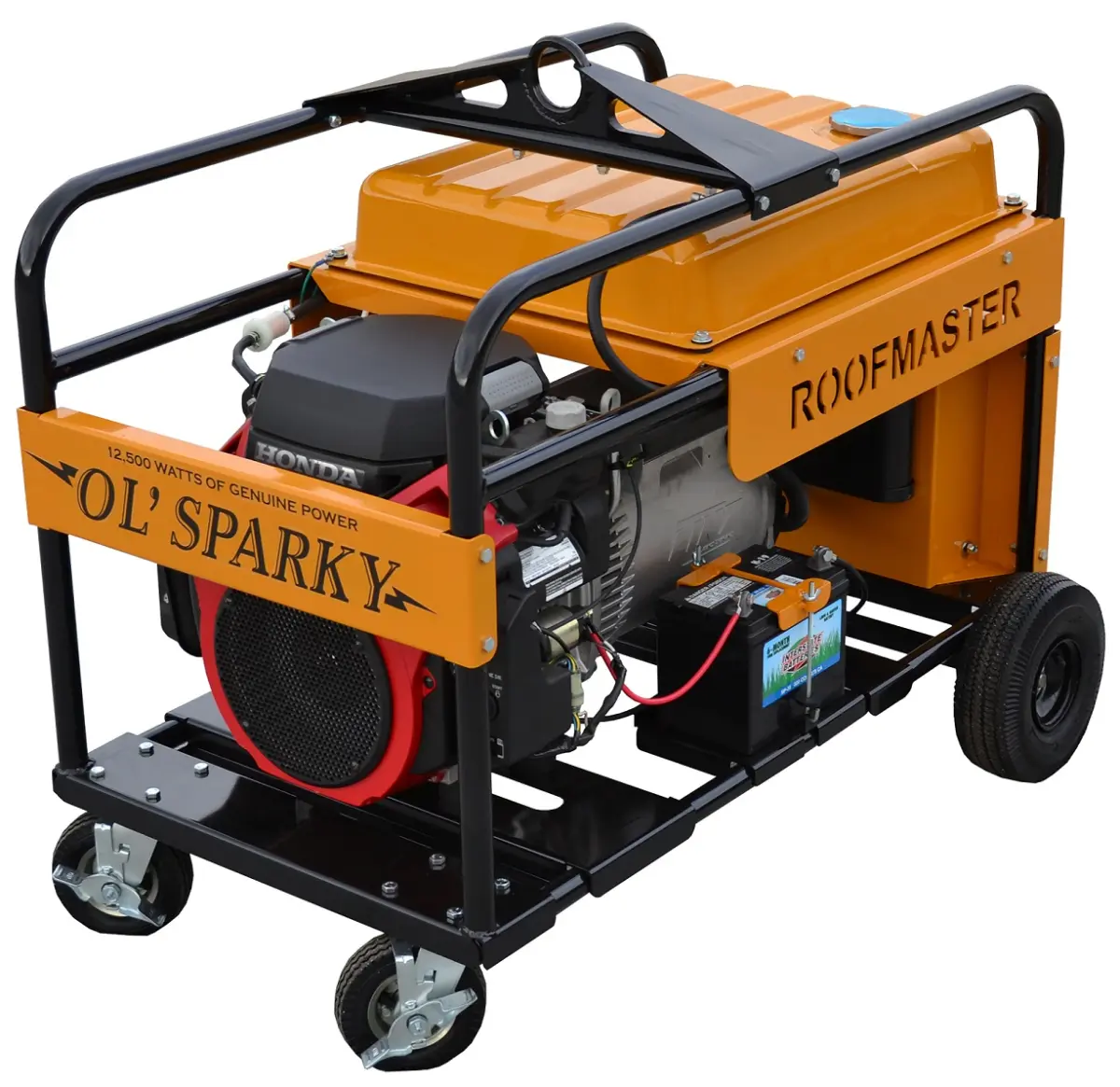
Crucially, the legislation has triggered significant unintended consequences for the commercial construction and roofing sectors. Despite initial industry expectations that industrial and agricultural tools would receive broad exemptions, the California Air Resources Board (CARB) regulations have applied the ban to a vast array of critical roofing and jobsite machinery. Prohibited equipment now includes:
- Portable gas-powered generators
- Roof tear-off machines
- Gravel spreaders and material handlers
- Asphalt and adhesive pumps
- Hot-air welding power units
Under the current framework, contractors and homeowners are legally permitted to continue operating existing, previously purchased gas-powered SORE equipment. However, they can no longer purchase new gasoline-powered models within the state of California once current retail inventories of pre-2024 manufactured engines are completely exhausted.
Chronology: The Road to the 2024 Ban
The transition from fossil-fuel-dependent small engines to zero-emission alternatives in California has been years in the making, guided by aggressive state-level climate goals.
[October 2021] --------> [December 2021] --------> [2022–2023] --------> [January 1, 2024] --------> [Present Day]
AB 1346 Signed           CARB Adopts             Manufacturers           Ban Takes Effect;         Depletion of
into Law                 Implementing            Stockpile Pre-2024      New Sales of Gas          Pre-2024 Retail
                         Regulations             Engines                 SORE Prohibited           Inventory
October 2021: Legislative Passage
Governor Gavin Newsom signed AB 1346 into law after it successfully passed through the California State Assembly and Senate. The bill directed CARB to write and adopt regulations to phase out SORE emissions by 2024, or as soon as CARB deemed technologically and commercially feasible.
December 2021: CARB Rulemaking
Following public hearings, CARB formally adopted the regulatory amendments. The agency established the January 1, 2024 deadline for the elimination of new evaporative and exhaust emissions from SORE, cementing the hard transition date for manufacturers.
2022–2023: Industry Preparation and Stockpiling
Equipment manufacturers and industrial distributors began adjusting supply chains. Recognizing that the transition to battery-powered heavy machinery was technically unfeasible for many commercial applications, manufacturers produced and distributed substantial volumes of equipment fitted with pre-2024 certified engines. These compliant, "legacy-engine" units were distributed to California suppliers to serve as a buffer.
January 1, 2024: Implementation
The ban officially went into effect. From this date forward, manufacturers are prohibited from selling or distributing new engines under 25 horsepower destined for California unless they are certified as zero-emission.
Present Day: The Inventory Depletion Phase
Distributors and retailers are currently permitted to sell through their remaining stock of pre-2024 manufactured equipment. Once these existing inventories are sold out, new gas-powered SORE machinery will be entirely unavailable for legal purchase within state lines.
Supporting Data: Emissions Metrics vs. Industrial Energy Demands
The driving force behind AB 1346 was CARB’s assessment of the disproportionate environmental impact of small, uncertified utility engines. Unlike passenger vehicles, which have undergone decades of stringent catalytic converter and exhaust system refinements, small gas engines have historically remained highly polluting.
The Environmental Baseline
According to CARB data published during the legislative push:
- Smog-Forming Emissions: In California, SORE equipment collectively produced more reactive organic gases (ROG) and oxides of nitrogen ($NO_x$) than the state’s 14.4 million light-duty passenger cars.
- Comparative Impact: Operating a standard, commercial-grade gas leaf blower for just one hour emits the same amount of smog-forming pollution as driving a 2017 Toyota Camry approximately 1,100 miles (the distance from Los Angeles to Denver).
- Daily Pollution Output: As of 2021, SORE emissions in California reached an estimated 16.8 tons per day of ROG and 25.1 tons per day of $NO_x$.
The Technical Divide: Energy Density and Power Demands
While the environmental benefits of reducing SORE emissions are clear, the transition presents severe engineering challenges for heavy-duty construction applications. The primary obstacle is the vast difference in energy density between gasoline and modern lithium-ion batteries.
| Metric / Parameter | Gasoline | Lithium-Ion Battery (Typical Commercial) |
|---|---|---|
| Energy Density | ~12,000 Wh/kg | ~250 Wh/kg |
| Refueling/Recharging Time | 2–5 minutes | 1–4 hours |
| Continuous Power Output | Consistent until fuel depletion | Declines as battery voltage drops |
| System Weight for 5 kWh Output | ~15 lbs (engine + fuel) | ~90–120 lbs (battery packs) |
For residential lawn care, battery-powered lawnmowers and string trimmers have reached commercial viability because their duty cycles are relatively short and intermittent. However, commercial roofing operations present a different set of power requirements:
- Continuous High-Load Demand: Commercial roofing projects frequently require heavy machinery, such as asphalt pumps and tear-off machines, to run continuously for 8 to 10 hours a day.
- Clean Power Requirements: Advanced roofing installations utilize single-ply thermoplastic membranes (such as TPO or PVC) that must be heat-welded together. These hot-air automatic welders operate at high temperatures (often exceeding 1,000°F) and require consistent, high-wattage electrical current. Fluctuations in power can ruin the weld, leading to roof leaks and structural failure.
- On-Site Electrical Limitations: Construction sites and multi-story commercial roofs rarely have access to pre-existing, stable electrical hookups during the initial phases of construction. Portable gas-powered generators under 25 horsepower have traditionally filled this gap, providing stable, three-phase power directly on the roof deck.
Official Responses and Industry Perspectives
The implementation of AB 1346 has drawn sharp contrasts between state regulatory bodies and the trade organizations representing the workers and businesses tasked with executing infrastructure projects.
The California Air Resources Board (CARB)
CARB maintains that the regulation is a vital step toward achieving California’s broader goal of carbon neutrality by 2045 and protecting public health, particularly for landscaping workers who are directly exposed to exhaust fumes. In regulatory filings, CARB emphasized:
"Transitioning to zero-emission SORE technologies will significantly reduce localized exposure to toxic air contaminants and ozone-forming pollutants. The state has allocated $30 million in funding through the Clean Off-Road Equipment Voucher Incentive Project (CORE) to help small businesses purchase zero-emission landscaping equipment."
However, industry critics point out that the CORE funding program is heavily geared toward professional landscapers, leaving the construction and roofing sectors with minimal financial support or viable technology transition pathways.
Roofing Industry Trade Associations
Trade groups, including the Western States Roofing Contractors Association (WSRCA), have raised serious concerns about the practical realities of the ban on active jobsites. Representatives argue that the regulatory framework failed to adequately distinguish between consumer-grade garden tools and specialized, low-volume industrial equipment.
An industry spokesperson highlighted the logistical disconnect:
"We fully support efforts to improve air quality, but the technology must exist before you mandate its adoption. A roofing contractor cannot run a 230-volt hot-air welder off a standard consumer battery pack. The weight of industrial-grade batteries required to run heavy-duty application equipment for a full shift would exceed the structural load limits of many roof decks during construction. Without portable, gas-powered generators under 25 horsepower, we face a major operational bottleneck."
Equipment Manufacturers and Distributors
Manufacturers of specialized roofing equipment, such as Roofmaster, are working to navigate the new regulatory environment while serving their customer base. Companies have had to carefully manage their transition strategies:
- Compliance via Stockpiling: Distributors have legally procured and stocked as many pre-2024 compliant engines as possible to ensure contractors can still buy replacement machinery in the near term.
- R&D Acceleration: Engineering departments are working to design hybrid systems or high-efficiency diesel alternatives that fall outside the SORE definition, though these alternatives are often heavier and more expensive.
Implications: The Road Ahead for Contractors
As the transition period progresses and pre-2024 inventory dwindles, the California construction and roofing sectors face immediate operational and financial adjustments.
1. The Immediate Run on Existing Stock
For contractors operating in California, the procurement strategy has shifted to immediate acquisition. Because pre-2024 compliant gas-powered equipment is still legal to purchase and use, a run on existing distributor inventory is currently underway. Contractors planning to update their fleets over the next three to five years are pulling those capital expenditures forward to secure gas-powered pumps, generators, and tear-off machines before the supply is completely depleted.
2. Rising Operational Costs and Logistical Complexity
As battery-powered alternatives are slowly introduced to meet the mandate, contractors will likely face increased capital costs. Transitioning to zero-emission equipment requires not just purchasing new tools, but also investing in:
- Multiple redundant battery packs per tool to ensure continuous operation throughout a shift.
- Heavy-duty mobile charging stations.
- Larger transport vehicles to handle the increased weight of industrial battery systems.
3. The Rise of Out-of-State Procurement and Enforcement Challenges
A major concern among regulators and industry analysts is the potential for cross-border equipment acquisition. Because neighboring states like Nevada, Arizona, and Oregon do not restrict the sale of gas-powered SORE equipment, California contractors may attempt to purchase machinery out-of-state and transport it across state lines for use. While CARB regulations target the sale of new equipment within California, monitoring and enforcing the ban on active jobsites—especially regarding portable generators and specialty construction tools—will present significant logistical challenges for state authorities.
4. Pressure on the Secondary and Used Market
The ban on new sales is expected to drive up the value of used gas-powered machinery. A robust secondary market is likely to emerge, with older, less efficient, and potentially higher-emitting engines being rebuilt and repaired repeatedly rather than being retired. This phenomenon, often referred to as the "regulatory backlog effect," could temporarily delay the net emissions reductions CARB aims to achieve.
5. A Catalyst for Technological Innovation
In the long term, the California mandate is forcing manufacturers to innovate. While current lithium-ion technology is limited, the regulatory pressure is driving research into alternative power delivery systems, including:
- Hydrogen Fuel Cell Generators: Providing clean, high-wattage power without the weight and recharge constraints of lithium-ion batteries.
- Solid-State Batteries: Offering higher energy densities and faster charging times, which could eventually close the gap between electric and gasoline-powered industrial tools.
- Advanced Micro-Diesel Engines: Transitioning equipment to small, clean-diesel engines that are not governed by the SORE spark-ignition regulations.
For California’s commercial roofing and construction professionals, the message from market analysts and equipment distributors is clear: the transition window is closing rapidly. Securing remaining compliant gas-powered equipment is an immediate priority for businesses looking to maintain operational continuity in a changing regulatory landscape.
