

Published: September 14, 2026
By: Ryan Barnes, CEO, STUDSON
Main Facts: The Hidden Vulnerability of Industrial Head Protection
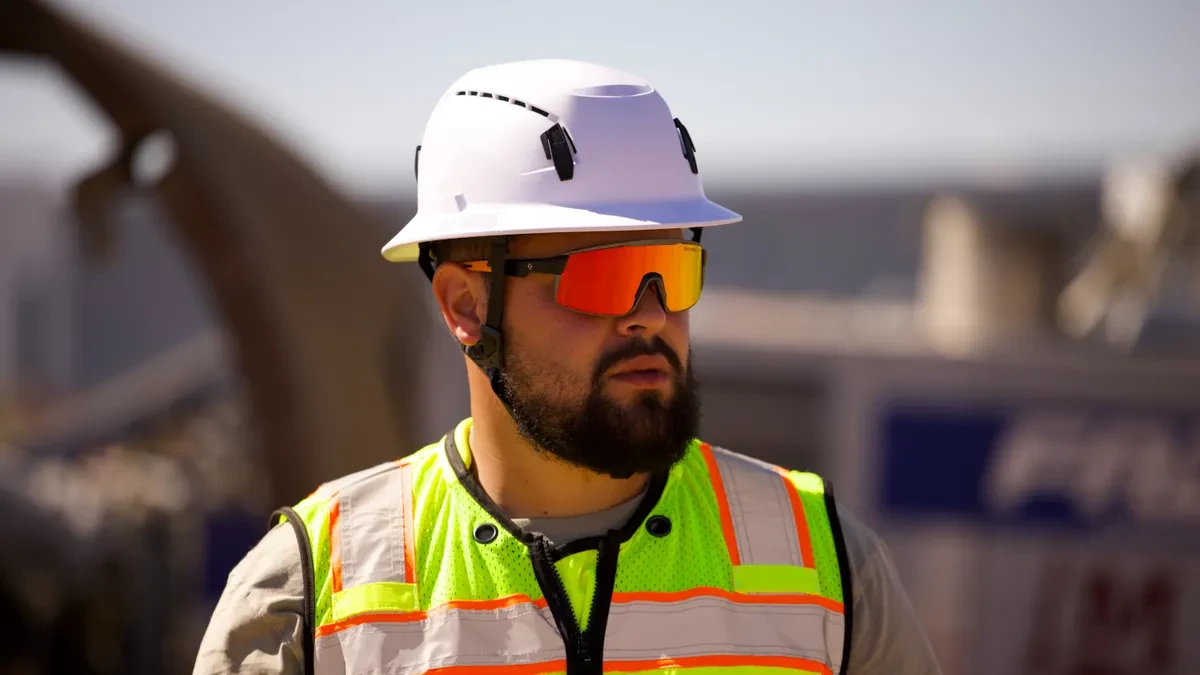
In the high-stakes environment of industrial construction and manufacturing, personal protective equipment (PPE) stands as the final line of defense between a worker and a catastrophic injury. Yet, a critical vulnerability persists across job sites nationwide: industrial head protection is frequently compromised not by manufacturing defects or substandard materials, but by poor fit.
A safety helmet that rocks precariously with every turn of the head, sits far too high on the crown, or exerts relentless pressure at the temples transforms what should be a lifesaving device into an active liability. According to industry safety experts, proper helmet fit must be treated with the same uncompromising rigor applied to hazard assessments, safety training protocols, and routine equipment maintenance.
The rationale is straightforward yet frequently overlooked: the human brain is arguably the most valuable tool on any job site, and a safety helmet can only protect it if it remains securely in place—and, crucially, if the worker actually chooses to wear it.
While laboratory certifications provide a baseline for equipment evaluation, they operate under ideal conditions that rarely mirror the chaotic, dynamic realities of an active construction site. Bridging the chasm between regulatory compliance and real-world ergonomics has thus become one of the most pressing safety challenges facing modern industry.
Chronology: The Evolution of Industrial Head Protection Standards
To understand the current state of industrial head safety, it is necessary to examine how standards have evolved alongside job site risks and manufacturing capabilities.
- Mid-20th Century (The Era of Basic Compliance): For decades, industrial head protection was dominated by traditional Type I hard hats designed primarily to mitigate the force of objects falling vertically onto the top of the head. Fit adjustments were rudimentary, often relying on simple pin-lock suspensions that offered little customization.
- The Shift Toward Comprehensive Protection (ANSI/ISEA Z89.1): As industrial safety science progressed, regulatory bodies recognized that job site hazards rarely came from a single direction. The ANSI/ISEA Z89.1 standard became the benchmark for industrial head protection, formalizing performance criteria that categorized helmets into distinct types based on impact vectors.
- The Rise of Type II Safety Helmets: In recent years, job sites have steadily transitioned toward Type II industrial safety helmets. While Type I addresses top-impact scenarios, Type II engineering introduces critical structural reinforcement to safeguard against lateral impacts coming from the front, back, and sides.
- The Modern Sizing Revolution (Present Day): Historically, helmet manufacturers relied on narrow, statistical averages to mass-produce safety gear, leaving a vast demographic of workers with sub-optimally fitted equipment. Today, forward-thinking manufacturers are rewriting design playbooks, introducing expanded sizing matrices—such as specialized extra-extra-large (XXL) configurations accommodating head circumferences up to 65 centimeters—to address long-standing gaps in workforce accommodation.
Supporting Data: The Mechanics of Fit and Compliance
Laboratory certifications such as ANSI/ISEA Z89.1 dictate how a helmet performs under rigorous, standardized drop tests and structural stress evaluations. However, these metrics reflect strictly controlled conditions and say nothing about how a helmet performs on an individual worker’s head during a grueling ten-hour shift.
When a safety helmet fails to fit correctly, a cascade of physiological and behavioral issues follows:
- Pressure and Fatigue: A helmet that is cinched too tightly to compensate for an improper shell size causes localized pressure points, triggering tension headaches and physical fatigue over long shifts.
- The Behavioral Risk: Workers experiencing physical discomfort or pain from an ill-fitting helmet face an invisible yet pervasive temptation: they remove the protection, adjust it improperly, or leave chin straps unbuckled.
- Suspension Mechanics: A suspension system that fails to match the unique contours of a worker’s head shape will inevitably ride incorrectly, sit too high, or shift dynamically under movement.
Data from safety audits consistently indicates that secondary features—such as intuitive adjustability mechanisms, advanced ventilation channels, and low-profile geometries—are too often dismissed as mere "comfort upgrades." In practice, however, these elements are inextricably linked to core safety performance. Better airflow encourages workers to keep their helmets secured through sweltering summer shifts. An intuitive ratchet or suspension system ensures the helmet is secured correctly every single time it is donned. A streamlined, low-profile design prevents the helmet from snagging on scaffolding, rebar, or tight structural spaces, eliminating the frustration that prompts workers to discard their PPE.
Official Responses and Industry Perspectives: Closing the Gap
As the industry grapples with the persistent divide between regulatory standards and job site realities, safety executives, manufacturers, and field personnel are calling for a collaborative approach to head protection.

Industry leaders emphasize that achieving an optimal fit cannot be left entirely to chance or individual worker resourcefulness.
"An industrial head protection device is only as good as its fit," notes Ryan Barnes, CEO of STUDSON. "When a helmet rocks with every turn of the head, sits too high on the crown, or presses hard at the temples, real protection turns into a liability. For safety professionals, fit deserves the same rigor applied to hazard assessments, training, and equipment maintenance."
Manufacturers are responding to direct feedback from the field, recognizing that historical sizing limitations represented a significant safety hazard rather than a minor inconvenience. Workers possessing larger head circumferences, unique cranial shapes, or voluminous hair types have historically been forced to choose between a dangerously loose helmet or a painfully tight one.
By expanding sizing options—exemplified by modern XXL Type II safety helmets engineered to comfortably accommodate head circumferences ranging from 60 to 65 centimeters—manufacturers are transforming worker and safety-manager feedback from an administrative afterthought into vital design input. This shift signals a broader cultural evolution within industrial manufacturing: listening to the end-user is no longer viewed as optional customer service, but as an essential engineering imperative.
Implications: A Shared Responsibility for the Future of Job Site Safety
The implications of the ongoing push for improved helmet fit extend far beyond individual comfort; they strike at the heart of industrial safety culture, regulatory compliance, and worker retention.
1. Redefining Safety Audits
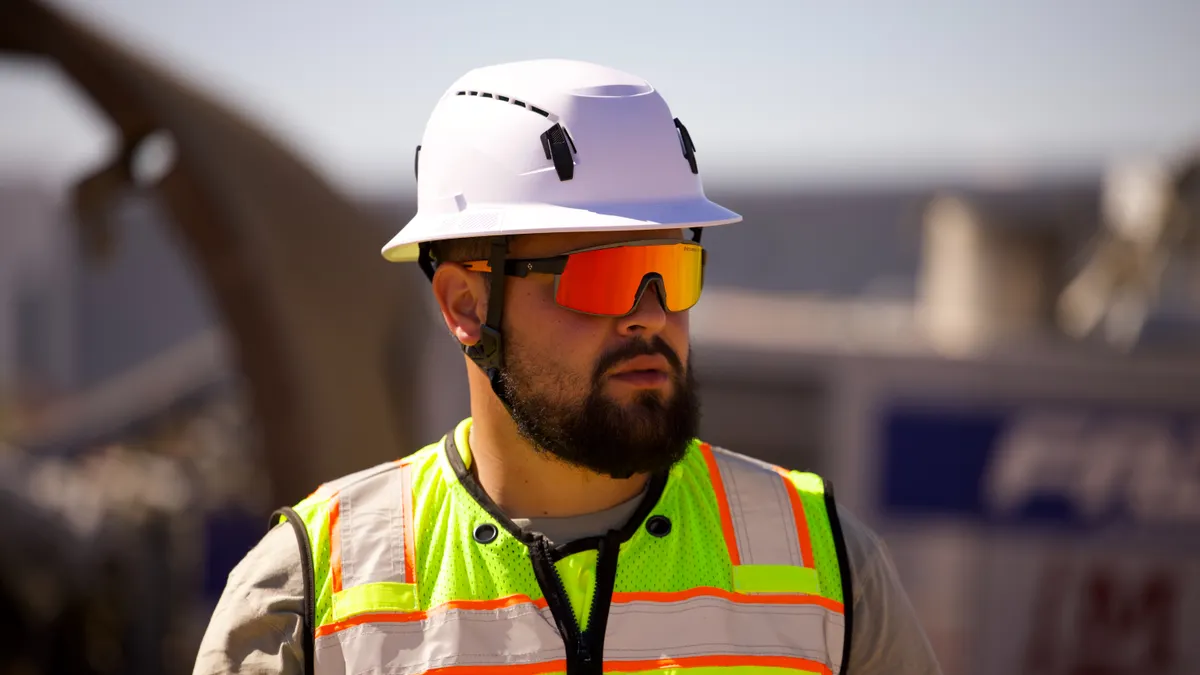
Employers and safety directors must evolve their compliance methodologies. Evaluating helmet fit cannot stop at the initial equipment distribution point. Routine safety audits must actively inspect how safety helmets fit in real-world conditions, checking for proper suspension adjustment, chin strap integrity, and overall stability during active physical movement.
2. Cultivating Open Communication Channels
A critical cultural barrier on many job sites is the hesitation of workers to report discomfort. When a worker expresses that a helmet causes pain or fails to sit securely, that feedback must never be dismissed as trivial preference or resistance to safety rules. Fostering an environment where workers can report fit issues without fear of reprisal is paramount to maintaining genuine job site safety.
3. Elevating Manufacturing Standards
The evolution of safety helmet design proves that compliance checkboxes are no longer sufficient. Moving forward, the industry must hold manufacturers accountable for delivering equipment that addresses the diverse physiological realities of the modern workforce.
A helmet that merely sits on a worker’s head to satisfy an OSHA inspector is not protective equipment—it is an illusion of safety. By closing the gap between lab-certified performance and real-world ergonomics, the construction and industrial sectors can secure a future where protective equipment delivers on its ultimate promise: safeguarding every worker, on every shift, all the way home.
