

By Tech & Gadgets Desk
Published: February 2026
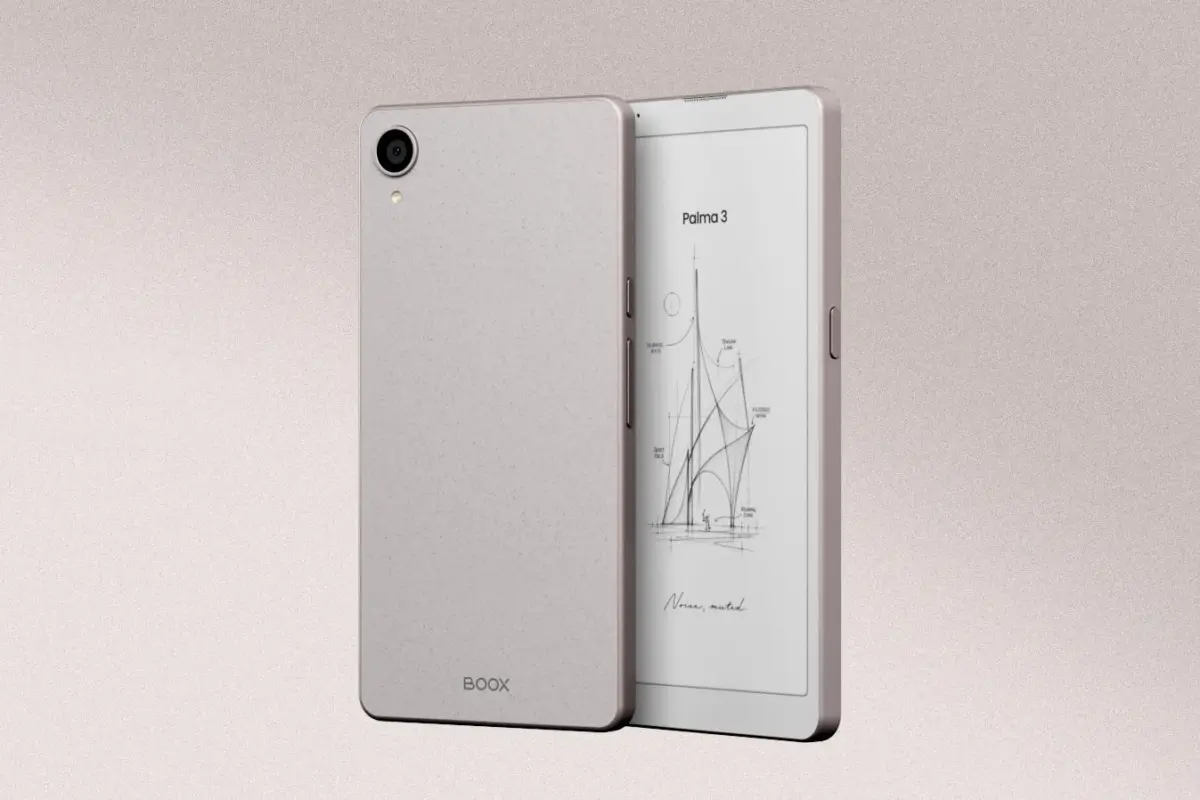
Nearly two years after the debut of its predecessor, Onyx Boox has officially announced the upcoming release of the Boox Palma 3. As the latest iteration in the company’s wildly popular smartphone-shaped, pocketable monochrome e-reader lineup, the Palma 3 arrives with a refined aesthetic, premium material upgrades, a major software leap, and stylus compatibility.
However, these enhancements come with a notable catch: a substantial price increase. While the Palma 2 launched at $279.99, the new Palma 3 will retail for $339.99 when it becomes available soon. For power users, minimalists, and digital detoxers, the device offers compelling upgrades. For casual readers, however, the nearly $340 starting price—which balloons further if you opt for proprietary accessories—demands a closer look at whether the hardware modifications justify the cost.
Main Facts: What’s New in the Boox Palma 3?
The Boox Palma series has carved out a unique niche in the consumer electronics market. Designed to mimic the form factor of a modern smartphone rather than a traditional book-like tablet, these devices allow users to access the Android app ecosystem without the distractions of a glowing, notification-heavy OLED or LCD screen.
The Palma 3 retains the much-loved 6.13-inch, 300-ppi E Ink Carta display of earlier generations, delivering crisp text reproduction ideal for reading books, browsing the web, or scrolling through text-heavy RSS feeds in direct sunlight. However, virtually everything surrounding that screen has received an overhaul.
Key Specifications at a Glance:
- Display: 6.13-inch E Ink Carta screen (300 ppi) with adjustable front light.
- Build: Premium anodized aluminum frame paired with a tactile, paperlike fiberglass backplate.
- Processor & Memory: Qualcomm Q-6690 octa-core processor backed by 6GB of RAM.
- Storage: 128GB of internal storage, expandable via a microSD card slot.
- Software: Ships out of the box with Android 16.
- Battery: 3,950mAh rechargeable battery.
- Camera & Security: 16-megapixel rear camera; integrated fingerprint reader embedded within the power button.
- Stylus Support: Full compatibility with the Boox InkSense Plus active stylus (sold separately).
- Price: $339.99 (Expected availability soon).
Chronology of the Palma Line: The Evolution of Pocket E-Readers
To understand the significance of the Palma 3, it is helpful to look back at how Onyx Boox refined this product category over the past few years.
The Original Boox Palma (2023)
When Onyx Boox launched the original Palma, it caught the tech world by surprise. Traditional e-readers from companies like Amazon (Kindle) and Kobo generally favor square or rectangular 6-to-8-inch proportions reminiscent of paperbacks. The original Palma, conversely, was unapologetically shaped like a smartphone. It ran on Android 11 and featured a snappy processor that allowed users to download apps like Kindle, Libby, Kobo, and even web browsers. It proved that consumers were hungry for an e-reader that could easily slip into a jeans pocket or small purse.
The Palma 2 and Palma 2 Pro (2024)
Building on the unexpected success of the first model, the Palma 2 arrived in late 2024 priced at $279.99. It brought incremental upgrades, including an update to Android 13 and subtle performance tuning. Around the same time, Boox also introduced color variants and related offshoots, such as the Palma 2 Pro, continuing to test the limits of what a pocket-sized electronic paper device could achieve.
The Palma 3 Announcement (Early 2026)
Now, skipping an intermediate year for a major hardware refresh, the Palma 3 positions itself as a mature, luxury version of the original concept. By migrating to an aluminum build and adopting Android 16, Boox is attempting to transition the device from a quirky gadget for enthusiasts into a mainstream productivity tool.
Supporting Data and Hardware Analysis
While the 6.13-inch E Ink Carta panel remains structurally identical to older models—meaning it still relies on black-and-white electronic paper without color filter arrays—the internal components have taken a massive leap forward.
Performance and Processing Power
Under the hood, the Palma 3 relies on a Qualcomm Q-6690 octa-core processor. Paired with 6GB of RAM, the device is more than capable of handling heavy multitasking, smooth scrolling through dense PDFs, and rapid page-turning within demanding reading applications. E Ink technology has historically suffered from sluggish refresh rates and ghosting artifacts, but Boox’s proprietary refresh algorithms, combined with modern Qualcomm silicon, help minimize these issues.

The inclusion of 128GB of onboard storage ensures users can store thousands of books, audiobooks, documents, and heavy applications without running out of space. For power users who hoard entire digital libraries locally, the preservation of the microSD card slot is a major victory.
Build Quality and Ergonomics
The most striking visual departure from previous generations is the exterior chassis. Previous Palma models relied heavily on plastics, which, while lightweight, occasionally felt utilitarian. The Palma 3 wraps its electronics in a sleek, anodized aluminum frame, giving it the cold, solid feel of a flagship smartphone. The rear panel is constructed from a textured, paperlike fiberglass backplate that improves grip and adds a tactile element that mimics the friction of real paper.
Despite the metal frame, the device retains a respectable weight profile, housing a robust 3,950mAh battery that should easily provide days—if not weeks—of continuous reading on a single charge, depending on front-light usage and Wi-Fi connectivity.
Official Responses and Ecosystem Integration
Onyx Boox has heavily emphasized the integration of modern software and accessory ecosystems with the Palma 3 rollout.
The Android 16 Advantage
One of the most persistent criticisms leveled against Android-based e-readers is software obsolescence. Many competing devices ship with older versions of the operating system, which eventually lose compatibility with modern apps from the Google Play Store. By launching with Android 16—putting it just one generation behind the bleeding edge of the Android ecosystem—Boox ensures long-term app support, enhanced security patches, and seamless integration with modern cloud services and password managers.
Stylus Support and the Ecosystem Upsell
A major functional addition to the Palma 3 is its support for the Boox InkSense Plus active stylus, a feature previously restricted to larger e-notes or specialized pro models. This transforms the pocket-sized device from a consumption tool into a micro-notepad. Users can jot down quick notes, sign documents, or sketch ideas on the go using their favorite note-taking applications.
However, this feature comes with a financial caveat. The InkSense Plus stylus is not included in the box. Purchasing it as an optional upgrade adds another $46 to the overall cost. When combined with the base price of $339.99, a fully equipped Palma 3 setup pushes past the $385 mark. This places the device directly in competition with dedicated, larger-format e-note systems like the Remarkable Paper Pure or Boox’s own mid-sized Note tablets.
Market Implications: Who is the Palma 3 For?
The release of the Boox Palma 3 forces consumers and industry analysts to re-evaluate the pricing ceiling for pocket-sized e-readers. At nearly $340 (and over $385 with a stylus), the Palma 3 is no longer an impulse purchase or a casual secondary gadget. It is priced similarly to mid-range Android smartphones.
Pros:
- Unmatched Portability: The smartphone form factor remains unmatched for pocketability.
- Premium Materials: Anodized aluminum and fiberglass elevate the tactile experience.
- Future-Proof Software: Android 16 guarantees long-term app compatibility from the Google Play Store.
- Versatility: microSD storage, a rear camera for document scanning, a fingerprint reader, and optional stylus support make it a Swiss Army knife for minimalists.
Cons:
- Steep Price Tag: A $60 jump from the Palma 2, compounded by the cost of the separate stylus, makes it a significant investment.
- Stagnant Screen Tech: Despite the redesign, the underlying black-and-white E Ink Carta panel has not seen a resolution or refresh-rate upgrade.
- Niche Appeal: For users who only want to read Kindle books, a traditional Amazon Paperwhite offers a fraction of the cost with a larger screen.
The Digital Detox Movement
Ultimately, the Palma 3 targets a very specific demographic: professionals, students, and digital minimalists who want access to productivity apps, email, and reading materials without the addictive doom-scrolling loops associated with traditional smartphones. Because E Ink screens lack the high refresh rates and vibrant colors that trigger dopamine loops, devices like the Palma 3 serve as effective tools for reducing screen addiction.
Whether consumers are willing to pay a premium for that peace of mind will dictate the success of Boox’s boldest pocket reader yet. As shipments begin and early reviews roll in, the tech community will soon discover if the luxury aluminum makeover and Android 16 foundation can justify the higher cost of entry.
