

Main Facts
For anyone who owns a backyard pizza oven—or has merely discussed one within earshot of a smartphone—the digital algorithm has likely become aggressively familiar. Alongside targeted ads for sizzler platters, infrared thermometers, and custom stands, a curious new gadget has surged across online marketplaces: the sliding pizza peel.
Retailing typically between $30 and $40 on platforms like Amazon, this accessory promises to solve the most dreaded moment in amateur pizza making: launching a raw, heavily dressed pie onto a searing, 900-degree pizza stone without accidentally folding it into a sad, misshapen calzone.
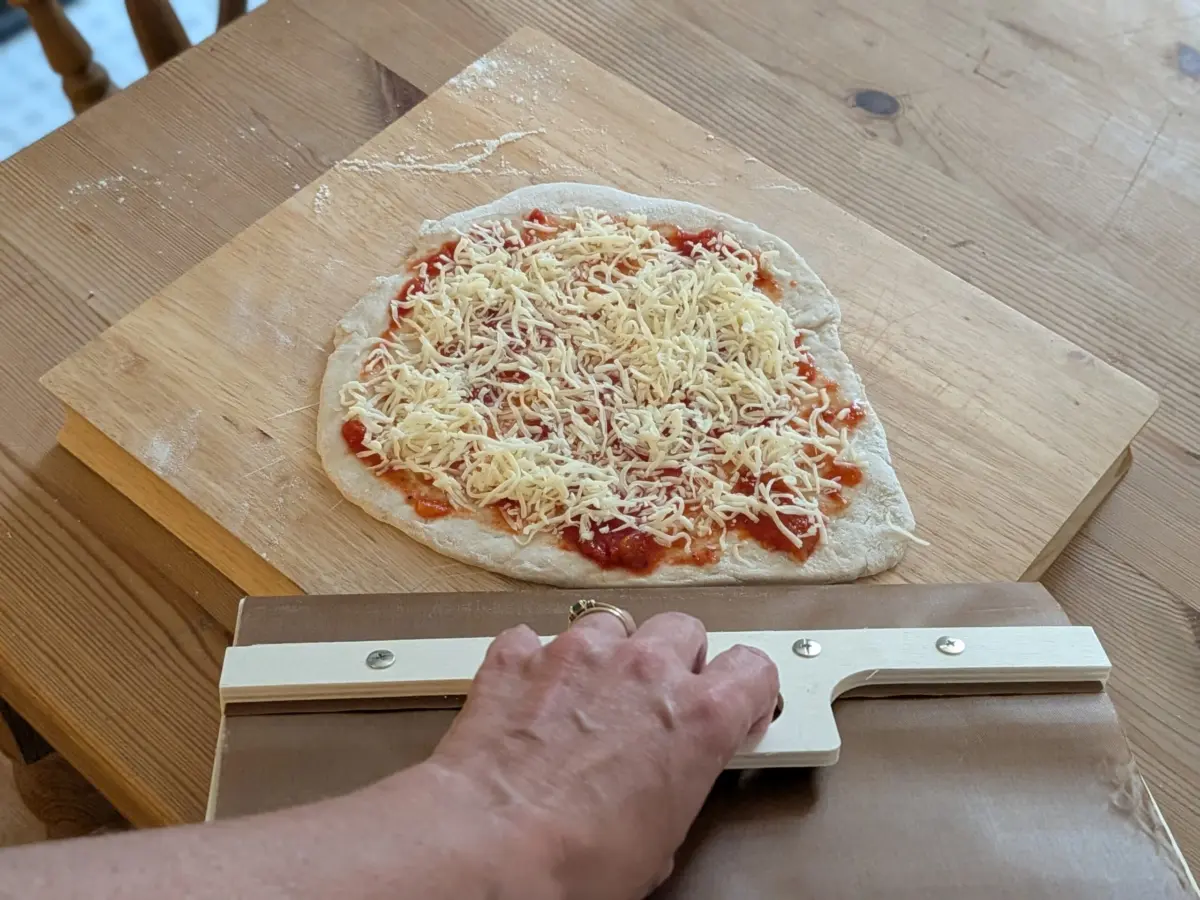
Constructed from lightweight bamboo and featuring a built-in fabric conveyor belt, the sliding peel operates on a mechanical push-and-pull principle. Rather than requiring the traditional, high-stakes jerk-of-the-wrist technique used with standard wooden or perforated metal peels, the sliding variant allows the user to catch the edge of the dough, pull a handle to draw the fabric conveyor inward, and push the board underneath.

However, despite glowing social media reviews hailing it as a revolution in backyard gastronomy, the tool has sparked debate across culinary forums. Skeptics question its safety, material composition, and durability when exposed to extreme heat, while seasoned pizzaiolos view it as a crutch that bypasses the fundamental mechanics of hand-crafted pizza making.
Chronology
The rise of the sliding pizza peel follows a distinct timeline that mirrors the boom-and-bust cycle of viral kitchen gadgets, accelerated by social media commerce and targeted digital advertising.
- The Backyard Pizza Boom (2020–2022): Driven by pandemic-era lockdowns and the widespread commercial availability of portable, high-temperature outdoor pizza ovens (such as those from Ooni and Roccbox), millions of consumers transformed into home-based artisan pizza makers.
- The Universal Learning Curve (2021–2023): As enthusiastic buyers unboxed their ovens, they quickly ran into the harsh reality of dough mechanics. Countless pies stuck to wooden peels, collapsed under heavy toppings, or turned into accidental calzones during the launch phase, flooding online forums with troubleshooting queries.
- The Algorithmic Infiltration (Late 2023–Present): Seizing on consumer frustration, manufacturers introduced the sliding pizza peel across global e-commerce channels. Short-form video platforms—TikTok, Instagram Reels, and YouTube Shorts—quickly filled with hypnotic, satisfying videos of the sliding mechanism effortlessly launching flawless pies into roaring flames.
- The Critical Backlash and Testing Phase (Mid-2024): As hundreds of thousands of units shipped to eager home cooks, early adopters and food journalists began publishing long-form reviews. Users reported mixed results, ranging from life-changing culinary success to melted fiberglass belts stuck fast to expensive pizza stones.
Supporting Data & Technical Breakdown
To understand how the sliding pizza peel functions, it helps to examine its mechanical anatomy and material science.

Unlike a traditional solid wood peel—which relies entirely on friction reduction via semolina flour, cornmeal, or rapid kinetic motion—the sliding peel introduces a manual conveyor system.
[ Traditional Peel ] ---> Relies on speed, flour, and physics (High failure rate for beginners)
[ Sliding Peel ]    ---> Relies on a fabric conveyor belt and mechanical transfer (Lower friction, requires practice)
Material Composition
- The Board: Typically crafted from raw, lightweight bamboo. While budget-friendly and easy to lift, it lacks the heavy-duty density of high-end traditional pizza peels.
- The Conveyor Surface: Often mistaken for simple cloth, the nonstick belt is typically constructed from woven fiberglass coated with polytetrafluoroethylene (PTFE). This material mimics the texture of a nonstick baking mat (such as a Silpat), providing just enough grip to catch raw dough while remaining slippery enough to release it smoothly.
Heat Tolerance Realities
While manufacturers market these tools as heat-resistant, the reality of wood-fired and gas-powered portable pizza ovens complicates matters. Most portable outdoor pizza ovens reach floor temperatures exceeding 800°F to 900°F (425°C to 482°C).
Consumer reports on forums such as Reddit’s r/ooni indicate that leaving a sliding peel inside the mouth of an extremely hot oven for even a few seconds too long can cause the PTFE-coated fiberglass belt to warp, degrade, or melt directly onto the cordierite pizza stone—creating a cleaning nightmare and a potential chemical hazard.

Official Responses and Industry Perspectives
Major, established pizza oven manufacturers—such as Ooni, Gozney, and Solo Stove—have remained notably silent regarding the sliding pizza peel trend. None of these industry giants produce, brand, or endorse the gadget.
Industry insiders suggest this absence is deliberate. Legacy brands focus on teaching consumers proper pizza-making techniques—mastering hydration ratios, managing dough stickiness, and perfecting the classic "shake test" to ensure a pie is loose on the peel before launching. By encouraging the use of traditional perforated metal or wooden peels, these companies promote a traditional culinary skill set rather than a temporary mechanical workaround.
Independent culinary reviewers and food media personalities offer a more nuanced view:

- The Pro-Accessory Camp: Supporters argue that for casual weekend cooks who only fire up their ovens once a month, the sliding peel removes the intimidating learning curve, making the hobby much more accessible and enjoyable without requiring hours of failed dough practice.
- The Traditionalist Camp: Critics argue that the tool encourages bad habits. It does nothing to fix underlying dough flaws, such as over-stretching, excessive moisture, or overloading heavy, wet ingredients. Furthermore, because the handle on many sliding peels is remarkably short, users are forced to place their hands uncomfortably close to the scorching mouth of the oven during the loading process.
Implications
The viral success of the sliding pizza peel highlights several broader trends in modern consumer behavior, culinary culture, and product manufacturing.
1. The Democratization vs. De-skilling of Cooking
The gadget represents a broader philosophical divide in modern home cooking. On one hand, tools that lower the barrier to entry allow more people to enjoy gourmet food at home without years of professional training. On the other hand, critics worry that hyper-specialized, single-use gadgets replace the satisfaction of mastering a physical skill with disposable plastic-and-fabric workarounds.
2. The Rise of "Temu-niverse" E-commerce
The widespread distribution of cheap, unbranded kitchen accessories through algorithmic marketplaces points to a shift in how kitchen tools are marketed. Capitalizing on micro-frustrations (like a ruined pizza), global manufacturers can rapidly prototype, produce, and market niche items directly to consumers via targeted social media ads, often prioritizing viral marketing appeal over long-term durability.

3. Safety and Health Considerations
As consumers become increasingly conscious of forever chemicals—specifically per- and polyfluoroalkyl substances (PFAS), which are chemically related to the PTFE coatings found on many nonstick belts—the introduction of synthetic fabrics into high-heat cooking environments invites scrutiny. While manufacturers maintain that the material is stable under normal use, the risk of thermal degradation at extreme pizza-oven temperatures underscores the need for cautious handling and adherence to safety guidelines.
The Bottom Line
For the home cook staring down a $30 investment to save their weekend pizza night from disaster, the sliding pizza peel is a low-stakes gamble. It successfully bridges the gap for those struggling to achieve an ultra-thin New York-style crust without folding the dough. However, it is not a magical cure-all; it demands its own learning curve, requires strict caution around open flames, and ultimately cannot replace the time-honored fundamentals of great pizza making.
