

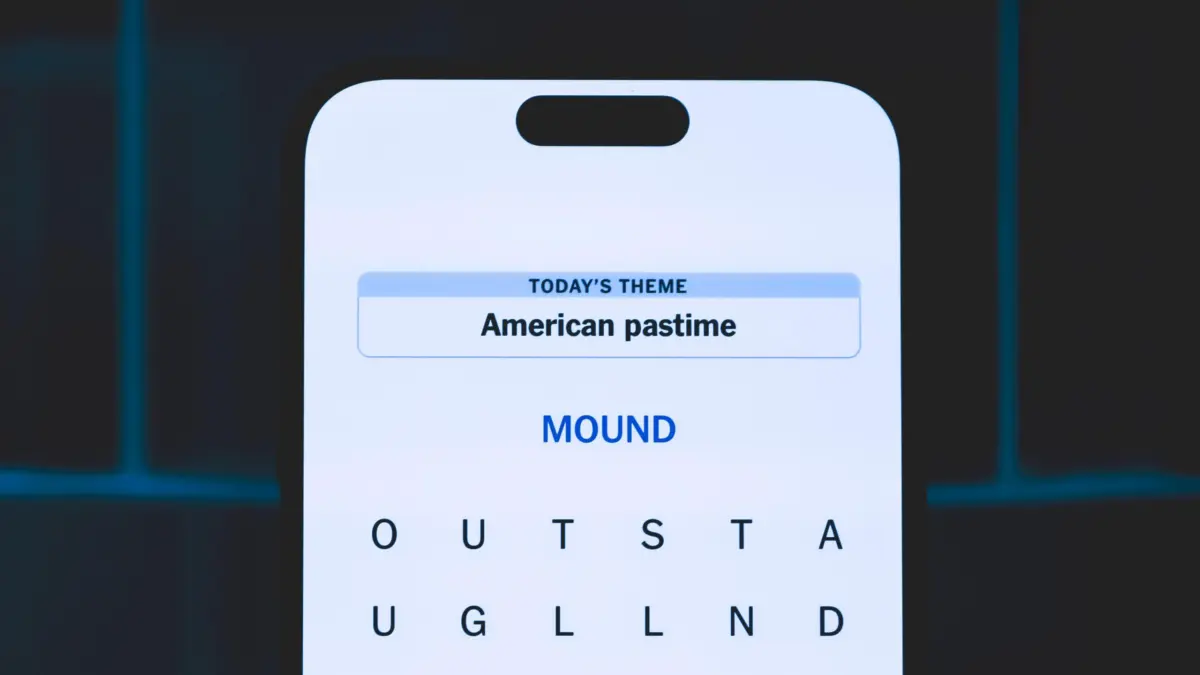
Introduction: The Evolution of Modern Word Games
In the digital age, daily word and logic puzzles have transformed from niche newspaper entertainment into a massive, global morning ritual. Millions of players tune in each day to test their wits against the New York Times’ stable of digital games, ranging from the classic Crossword and the fan-favorite Mini to newer sensations like Connections and Strands. Among these, Strands has carved out a unique space for itself since its launch, offering a fresh, modern twist on the classic word-search format.
Unlike traditional word searches that provide a neat, comprehensive list of terms to hunt down, Strands operates on a principle of mystery. Players are greeted by a grid filled with letters and a vague, often clever thematic clue. From there, they must deduce the underlying theme, uncover the answers, and piece together the entire board until not a single unused letter remains.
For puzzle enthusiasts who find themselves stuck on a particularly tricky grid, daily guides have become essential lifelines. Whether you are looking for gentle nudges, strategy tips, or direct solutions, understanding the mechanics of Strands can turn a frustrating impasse into a satisfying victory.
Main Facts: Cracking the Code of Today’s Strands Puzzle
For players tackling the Strands puzzle, understanding today’s specific parameters is the first step toward conquering the board. Every puzzle is built around a central concept, a defining spangram, and a set of themed vocabulary words that completely fill the grid.
Today’s Thematic Overview
- Puzzle Theme: Hard not to notice
- Alternative Clue: Showy or glitzy
- Spangram: EYECATCHING
The core of today’s puzzle revolves around descriptors for things that immediately command visual attention—elements that stand out in a crowd, demand a double-take, or possess an undeniable, flashy presence.

Unlike traditional word searches where words can be checked off a list, the challenge here lies in synthesizing the vague clue "Hard not to notice" with the physical letter layout on your screen. The spangram, EYECATCHING, serves as the ultimate anchor for this theme, stretching entirely across the grid from one side to the other and providing a massive structural clue for how the rest of the board fits together.
Chronology: How to Approach and Solve a Strands Puzzle
Approaching a Strands grid requires a systematic methodology. Because the game plays out differently than a standard crossword or a linear word jumble, developing a step-by-step strategy ensures a smoother puzzle-solving experience.
Phase 1: Assessment and Theme Comprehension
When you first open the daily Strands puzzle, resist the urge to immediately start dragging your finger or cursor across random letters.
- Analyze the Theme: Read the daily prompt carefully. Today’s theme, "Hard not to notice," is subjective yet points directly toward concepts of visibility and extravagance.
- Brainstorm Categories: Before looking at the board, list words that naturally associate with the clue. Think about synonyms for showy, bright, prominent, or loud.
- Scan the Board: Look for clusters of letters that might form common prefixes, suffixes, or short words related to your brainstormed list.
Phase 2: Utilizing the Clue Loophole
If the theme remains stubbornly opaque, Strands includes a built-in mechanic designed to assist players without outright ruining the challenge:
- The Non-Theme Word Rule: You do not need to exclusively find theme words. You can highlight any valid English word of four letters or more anywhere on the board.
- The Reward System: For every three non-theme four-letter (or longer) words you successfully uncover and submit, the game will reward you by automatically highlighting one of the official theme answers.
- The Catch: Even when the game highlights a theme word for you, the letters are typically scrambled along a winding path. You still face the intellectual challenge of tracing the correct sequence.
Phase 3: Uncovering the Spangram
The spangram is the holy grail of any Strands board. It is a multi-word or compound theme term that physically spans the grid from edge to edge (either left-to-right, top-to-bottom, or diagonally depending on the specific layout).
- For today’s puzzle, finding EYECATCHING acts as the definitive turning point. Starting with the "E" in the top row, tracing the path down, over, and down again reveals the backbone of the entire board.
- Once the spangram is locked in, the remaining white space on the grid shrinks dramatically, making it significantly easier to isolate and unscramble the remaining theme words.
Supporting Data and Game Mechanics
To truly master Strands, a player must understand the underlying math, design principles, and rule sets that govern the game. Developed by the New York Times puzzle team, Strands is engineered to test both vocabulary and spatial reasoning.
The Anatomy of a Strands Board
- Grid Dimensions: Typically structured as a grid of connected letters where words can bend in any direction—horizontally, vertically, or diagonally—as long as consecutive letters touch.
- Exclusivity: Every single letter on the board belongs to a word. By the time the puzzle is fully solved, there are zero leftover or "orphan" letters.
- The Spangram Rule: Always highlighted in a distinct color (usually yellow), the spangram categorizes the puzzle’s overarching thesis. While older iterations of the game often featured a predictable number of total theme words, data shows that the count can vary dynamically based on the daily design, keeping veteran players on their toes.
Pro-Tips for Maximizing Your Success
Experienced Strands players rely on specific tactics to consistently beat the clock and minimize frustration:
- Leverage Plurals and Suffixes: When hunting for the three extra words needed to trigger a hint, look for root words you already know and test variations. Can you add an "S" to the end? Can you turn a noun into a verb by adding "-ED" or "-ING"?
- Pattern Recognition: If you stumble upon a partial word like WILL, keep your eyes peeled for adjacent letters that can quickly form alternate terms like SILL, BILL, or PILL.
- Save Hints for Roadblocks: If you have successfully uncovered the letters for a theme word via the hint system but still cannot figure out how they connect, save your frustration. Fulfilling the requirement for three more non-theme words will force the game to light up the theme letters in their exact sequential order.
Official Insights and Developer Perspectives
The New York Times has continuously invested in expanding its digital gaming ecosystem, recognizing that games like Wordle, Connections, and Strands serve as vital digital community hubs. According to product teams within the Times’ games division, Strands was designed to bridge the gap between traditional word searches—which can sometimes feel monotonous—and modern, deductive puzzle games that require lateral thinking.
Editorial columns accompanying the daily puzzle releases frequently emphasize that the goal of Strands is not merely speed, but "satisfying discovery." The inclusion of the spangram was a deliberate design choice intended to give players an "aha!" moment that feels distinct from solving a standard crossword clue. By forcing every single letter on the board to be utilized, the designers ensure that completing a puzzle feels like finishing a jigsaw puzzle where the final piece locks everything into place with absolute perfection.
Implications: The Cultural and Cognitive Impact of Daily Word Games
The obsession with daily puzzle games extends far beyond simple entertainment. Cognitive scientists and educators have increasingly pointed to games like Strands as valuable tools for mental acuity, vocabulary expansion, and stress relief.

Mental Agility and Routine
For millions of adults, starting the day with a cup of coffee and a series of digital puzzles has replaced the traditional morning newspaper broadsheet. This routine offers several psychological benefits:
- Micro-Challenges: Providing bite-sized, achievable cognitive goals helps prime the brain for problem-solving throughout the workday.
- Language Retention: Exposure to thematic groupings, synonyms, and unusual vocabulary keeps linguistic pathways active.
- Social Connection: Games like Connections and Strands have become massive topics of discussion on social media platforms like X (formerly Twitter), Reddit, and TikTok. Players frequently share their struggles, celebrate finding the spangram without hints, and debate the cleverness of the day’s theme.
The Future of Digital Puzzling
As the New York Times continues to refine its gaming portfolio, the success of Strands proves that traditional pen-and-paper concepts can be successfully reimagined for touchscreens. The ability to dynamically alter grid shapes, introduce complex curving pathways, and integrate real-time hint mechanisms ensures that word games will remain a cornerstone of digital media for years to come.
Whether you breezed through today’s "Hard not to notice" theme by instantly spotting EYECATCHING or relied on the game’s built-in hint system to cross the finish line, the joy of Strands lies in the journey across the grid. As tomorrow brings a brand-new theme and a fresh set of scrambled letters, players worldwide will once again log on, ready to put their deduction skills to the test.
