

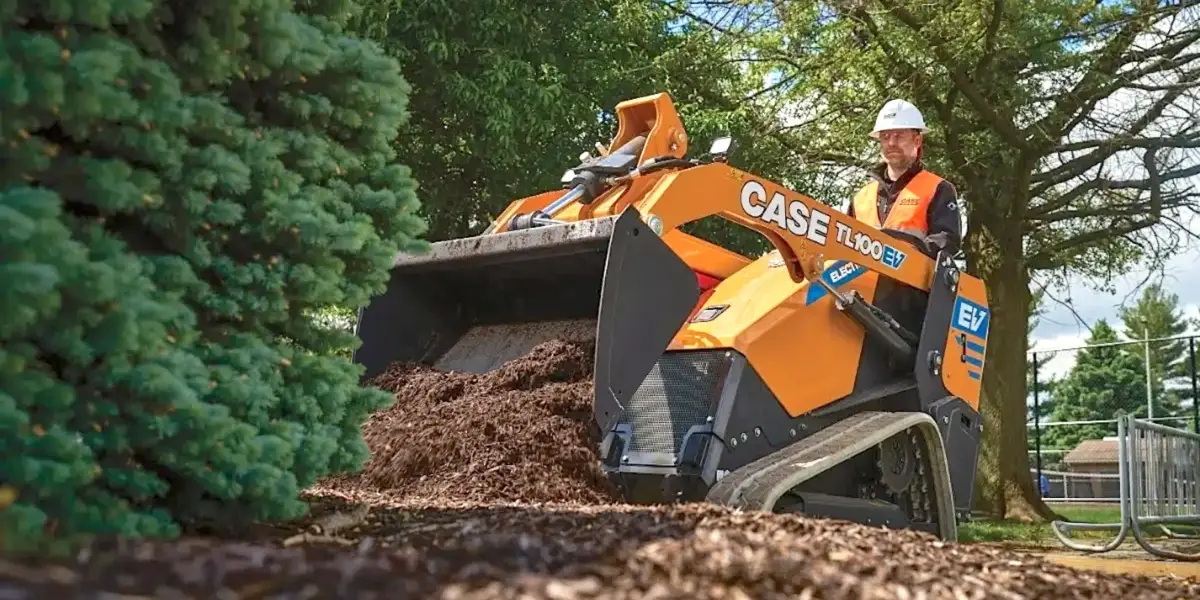
The heavy equipment industry is undergoing a quiet revolution—quite literally. As urban density increases, environmental regulations tighten, and indoor renovation projects demand cleaner air and lower noise levels, traditional internal combustion engines are finding themselves barred from an increasing number of job sites. Enter the all-electric compact equipment sector, a rapidly growing market where zero-emission capability no longer means sacrificing raw performance.
Leading this charge into previously inaccessible territory is CASE Construction Equipment, whose newly minted TL100EV electric mini track loader is officially reaching real-world customers. First unveiled to the public earlier this year at CONEXPO, the TL100EV has swiftly transitioned from a lauded trade show concept into a heavily relied-upon workhorse. Operating in low-emission zones, noise-sensitive residential neighborhoods, completely enclosed indoor spaces, and "no-drip" environmental zones, the TL100EV is proving that electric construction machinery is not just a sustainable alternative, but a superior one.
Main Facts: The TL100EV at a Glance
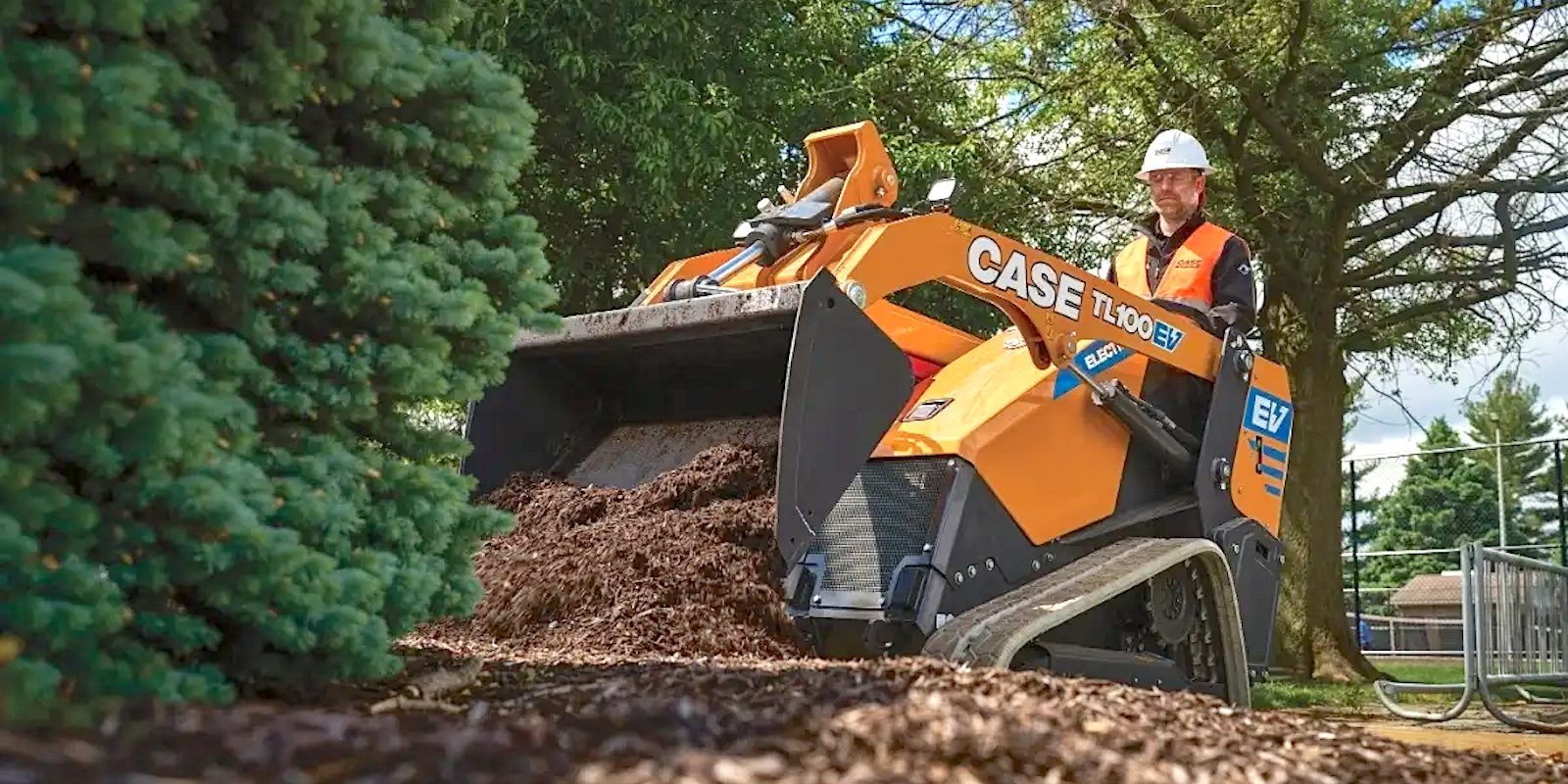
The CASE TL100EV is a compact, fully tracked mini loader designed to bridge the gap between traditional heavy machinery and the delicate demands of indoor and urban environments. Rather than attempting to force diesel-powered equipment into spaces requiring zero exhaust and minimal noise, CASE has engineered a machine that fits through standard doorways, navigates tight hallways, and can even be transported via commercial elevators.
Key specifications and features of the CASE TL100EV include:
- Power Source: A robust 21.2 kWh lithium-ion battery pack.
- Motor Architecture: Powered by three distinct electric motors—two 11-horsepower drive motors dedicated to the tracks, and a powerful 33-horsepower motor exclusively driving the hydraulics.
- Capacity: A combined 1,000-pound rated operating capacity, functioning seamlessly as a loader, lifter, and attachment carrier.
- Compatibility: Fully compatible with existing hydraulic attachments traditionally used on diesel-powered mini loaders, saving fleets from costly re-tooling.
- Performance Advantage: Delivers instant torque that surpasses equivalent diesel models, maintaining full performance even when driving, lifting, and running an attachment simultaneously.
Chronology of a Breakthrough: From Concept to Customer Fleet
The journey of the TL100EV highlights how quickly the heavy equipment sector is pivoting toward electrification, backed by industry recognition and swift market deployment.
Spring 2026: The CONEXPO Debut
The machinery made its high-profile debut at CONEXPO, North America’s largest construction trade show. Industry analysts and contractors immediately took notice of the compact footprint and the promise of zero-emission indoor operation. The machine stood out among a crowded field of alternative-fuel prototypes, signalling that CASE was ready to move beyond theoretical concepts and into commercial production.
Summer 2026: Rapid Industry Accolades
Before the machine even had a chance to log extensive hours in the field, it captured major industry validation. Within a matter of months, the TL100EV secured two prestigious accolades:
- Green Industry Pros 2026 Editor’s Choice Award
- OPE+Landscape Twenty for 2026 New Product Award
These awards underscored the growing demand for equipment capable of operating in green-certified building projects, municipal parks, and tightly packed urban developments where traditional diesel soot and engine roar are prohibited.
Fall 2026: Real-World Deployment and Promotional Showcase
By the autumn of 2026, the TL100EV began arriving in the hands of everyday contractors, landscapers, and demolition crews. To demonstrate the machine’s unprecedented mobility, CASE released a comprehensive video walkthrough. The footage highlighted the loader moving effortlessly through standard man doors, tight indoor hallways, and commercial elevators—performing heavy material handling without venting noxious fumes or disrupting building occupants.
Supporting Data & Engineering Mechanics: Beneath the Hood
To understand why the TL100EV is winning over skeptics, one must examine its powertrain and electrical architecture. Traditional diesel mini loaders rely on a single internal combustion engine to supply mechanical power to both the drivetrain and the hydraulic pumps. When a diesel machine attempts multiple tasks—such as driving forward while lifting a heavy bucket and spinning an auger—the engine can bog down, forcing the operator to manage hydraulic flow and travel speed carefully.

CASE’s electric approach completely eliminates this mechanical bottleneck.
The 21.2 kWh Battery and Tri-Motor Layout
The machine draws its energy from a high-density 21.2 kWh battery pack tailored for the rigorous demands of construction duty cycles. This energy is distributed independently across three dedicated electric motors:
- Twin Track Motors (11 hp each): Providing independent, responsive counter-rotation and precise tracking control.
- Hydraulic Motor (33 hp): Delivering continuous, high-pressure fluid flow to attachments without starving the drivetrain of power.
This separation of duties allows the TL100EV to achieve what CASE describes as "true simultaneous performance." An operator can travel across a delicate finished floor, lift a heavy load of demolition debris, and actively operate a hydraulic grapple all at the same time—without experiencing a drop in torque or system pressure.
Furthermore, the machine retains universal attachment compatibility. Contractors do not need to purchase proprietary electric attachments; the TL100EV works smoothly with the standard buckets, trenchers, sweepers, and breakers already sitting in their equipment yards.
Official Responses and Industry Reception
The commercial rollout of the TL100EV has sparked widespread commentary from equipment operators, environmental regulators, and industry trade publications.

Contractors transitioning from diesel to electric units have consistently highlighted the reduction in fatigue-inducing noise. In indoor environments, where diesel engines echo off concrete walls and create hazardous noise levels requiring hearing protection, electric loaders allow workers to communicate normally without shouting.
Industry editors evaluating the machine for awards pointed out that CASE successfully avoided the "messy middle" of transitional technology. By focusing on a dedicated electric architecture rather than a cobbled-together hybrid system, CASE delivered a machine that meets the strict operational requirements of modern urban job sites.
Municipalities and facility managers have also welcomed the technology. Hospitals, schools, and corporate office complexes undergoing midday renovations can now continue operations uninterrupted, as the TL100EV eliminates both the diesel exhaust that triggers building HVAC alarms and the disruptive rumble of traditional heavy machinery.
Broader Implications for Construction, Landscaping, and Demolition
The commercial success and rapid adoption of the CASE TL100EV point to a much larger shift across the entire heavy equipment ecosystem.
1. Expanding the Job Site Footprint
Historically, indoor demolition, basement excavation, and high-rise interior refits required manual labor, wheelbarrows, or highly specialized, corded electric demolition robots with limited utility. By packaging true loader capability into a compact, battery-powered, tracked chassis, CASE has unlocked entirely new revenue streams for general contractors and landscapers. Jobs that once required days of grueling hand-tool labor can now be mechanized.

2. Regulatory Compliance in Urban Centers
With global cities tightening low-emission zones (LEZs) and penalizing contractors for idling diesel engines on public streets, owning zero-emission equipment is transforming from a marketing preference into a legal and financial necessity. Fleets equipped with machines like the TL100EV can bid on municipal and downtown projects that automatically disqualify traditional diesel fleets.
3. Maintenance and Total Cost of Ownership
While the upfront capital expenditure for electric construction equipment remains higher than diesel equivalents, the long-term operational savings are significant. Electric motors feature a fraction of the moving parts found in internal combustion engines. There are no oil changes, fuel filters, spark plugs, emission control systems (like DEF pumps and diesel particulate filters), or transmission belts to maintain. Combined with lower refueling costs when plugged into site power or solar arrays, the total cost of ownership over the machine’s lifespan shifts heavily in favor of electrification.
Conclusion
The arrival of the CASE TL100EV on real-world job sites marks a defining milestone for compact construction equipment. By combining zero emissions, silent operation, zero-drip hydraulic safety, and uncompromising torque, CASE has provided contractors with a tool that defies traditional operational boundaries.
As more units make their way into commercial fleets, municipal projects, and indoor renovation sites, the TL100EV is helping to rewrite the rules of what a mini track loader can do—proving that the future of heavy construction is clean, quiet, and profoundly powerful.
