

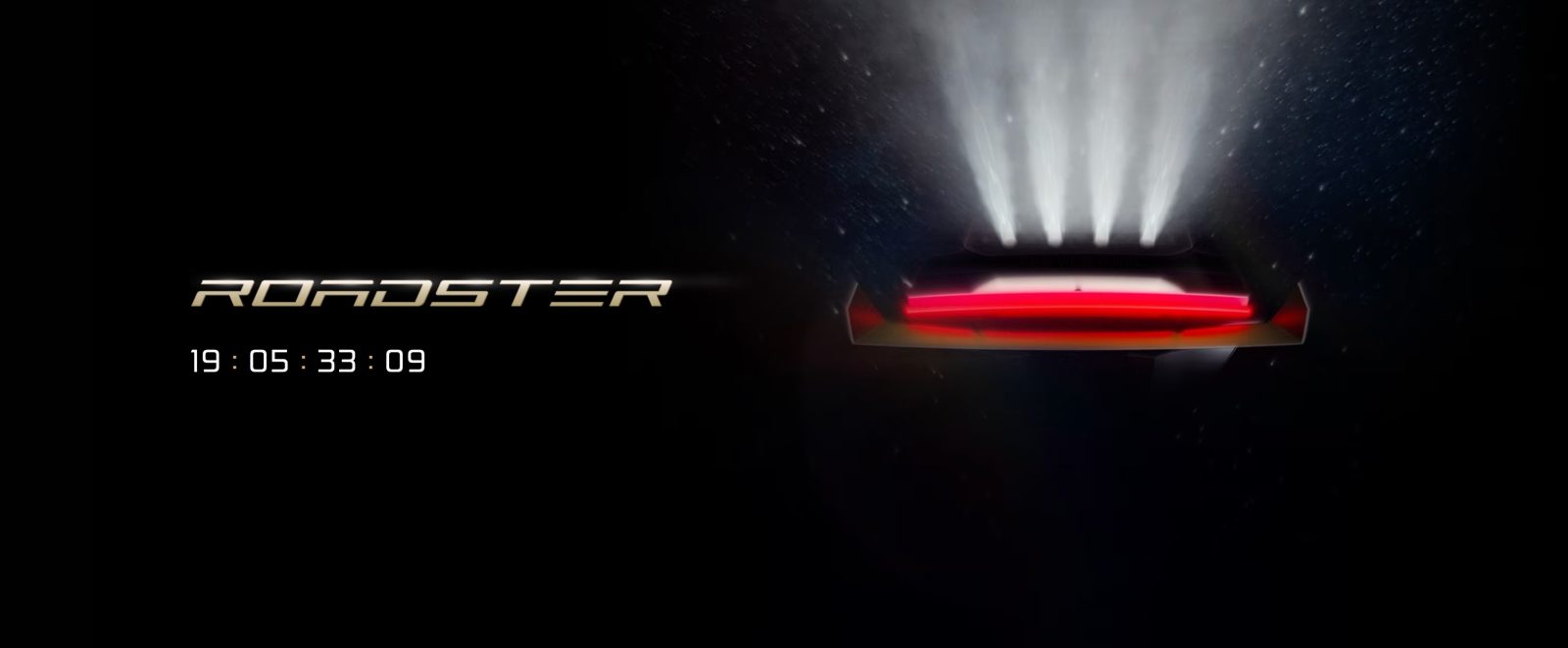
SAN FRANCISCO — Tesla has officially reignited one of the most protracted sagas in automotive history. Nearly a decade after first pulling the wraps off its next-generation electric hypercar, the automaker has posted a cryptic "Go for launch" teaser image, pointing squarely to an October 1 reveal date.
The promotional material, published late Friday, features a ruby-red Tesla Roadster bathed in dramatic rocket-pad lighting, complete with the date "10.01" stamped prominently across the frame. A synchronized countdown clock has simultaneously materialized on Tesla’s official website, confirming that something significant is slated to happen on the first Thursday of October.
Yet, for a public that has weathered nearly nine years of broken promises, shifting production timelines, and persistent delays, the upcoming event is met with a mixture of eager anticipation and deep skepticism. While Tesla is positioning the moment as a historic technological leap, industry analysts and long-suffering reservation holders are looking past the marketing gloss to examine the broader corporate strategy at play.
Main Facts: What Tesla Is Teasing for October 1
The core of Tesla’s October 1 announcement centers on the long-promised, highly experimental "flying" capability of the Roadster. The teaser’s "Go for launch" motif is not merely metaphorical; it directly nods to the integration of SpaceX-developed cold gas thrusters engineered to lift the electric vehicle off the ground.
According to recent insider reports, the upcoming demonstration will showcase the Roadster hovering above a test pad under remote operation. Because the SpaceX thrusters generate deafening noise levels capable of causing immediate hearing damage, spectators—and any potential media—will be kept hundreds of yards away from the vehicle.
However, automotive purists and prospective buyers should temper their expectations regarding what will actually be presented. The vehicle slated for the October 1 event is understood to be a non-street-legal prototype rather than a production-ready model. Sources indicate that Tesla plans to limit the distribution of this hyper-niche variant to a select group of superfans through an exclusive, Ferrari-style track program, carrying an astronomical price tag far exceeding standard automotive tiers.
Chronology of a Dream: Nine Years of Broken Timelines
To understand the weight of the October 1 teaser, one must look back at the arduous timeline of the Roadster project, which has suffered at least eight distinct postponements since its initial unveiling.
- November 2017: Tesla introduces the second-generation Roadster prototype to an astonished crowd. CEO Elon Musk boasts staggering specifications: a base price of $200,000 ($250,000 for the limited Founders Series), a jaw-dropping 0–60 mph time of under 2 seconds, a top speed exceeding 250 mph, and an unprecedented 620 miles of range per charge. Production is firmly promised for 2020.
- 2020–2021: As the promised production window arrives, the global supply chain crisis and shifting internal priorities at Tesla push the target back. Musk casually adjusts the timeline to 2022.
- 2022–2024: Goalposts continue to move. The timeline is successively bumped to 2023, then 2024, and eventually broadened to a vague "2025–2026" window.
- Late 2025: During an annual shareholder meeting, Musk drops production expectations further out to 2027 or 2028. He floats the idea of an April Fool’s Day "demo" in 2026, openly joking about having "deniability because I can say I was just kidding."
- Spring–Summer 2026: The rumored April demo comes and goes without incident. Subsequent promises of a May unveiling slip, and an anticipated August showcase featuring the SpaceX thrusters is quietly pushed to the late-summer or autumn window.
- October 2026: Tesla posts its "Go for launch" teaser, finally pinning a hard date to the calendar.
Throughout this nearly decade-long delay, early supporters who put down substantial capital in 2017—including $50,000 deposits for standard models and $250,000 upfront for the Founders Series—have been left in financial limbo. High-profile early adopters, such as tech entrepreneur Sam Altman and prominent YouTuber Marques Brownlee, have publicly confirmed canceling their reservations altogether.
Supporting Data: Specifications and the Shrinking Scope of the Demo
When the Roadster was first conceptualized in 2017, its metrics redefined the outer limits of electric vehicle performance.
| Metric | 2017 Promised Specs | Current Reality / Scale-Backs |
|---|---|---|
| 0–60 mph Time | Under 1.9 seconds | Unverified in production form |
| Top Speed | 250+ mph | Theoretical |
| Range | 620 miles (100 kWh+ battery) | Unconfirmed for production |
| Base Price | $200,000 | Expected significantly higher for track/thruster variants |
| Founders Series | $250,000 | Fully paid deposits tied up for nearly a decade |
| Flight Capability | Vague "flying package" teased | Scaled back to a remote-operated, ground-clearing hover |
The ambition behind the vehicle’s unique features has also faced severe practical downsizing. Initial internet lore suggested the Roadster might scale walls, drive upside down using magnetic ramps, or effortlessly leap over obstacles. Reports from The Information in August revealed that the demonstration has been significantly reined in. The vehicle will execute a controlled hover utilizing compressed air thrusters, devoid of a human driver inside, and isolated behind rigorous safety perimeters.

Official Responses and Stakeholder Perspectives
Tesla’s executive leadership has maintained an optimistic, albeit unorthodox, public narrative regarding the Roadster. Elon Musk has consistently framed the delays as a byproduct of engineering excellence, emphasizing that the integration of aerospace technology into a consumer vehicle chassis requires unprecedented innovation.
Conversely, the investment community and automotive analysts view the ongoing Roadster narrative through a pragmatic—and often cynical—lens. Wall Street has increasingly grown accustomed to Tesla utilizing high-profile product teases to redirect public and investor focus away from broader delivery stagnation or regulatory hurdles.
Prominent industry observers have noted a distinct pattern in Tesla’s corporate rhythm. The weeks leading up to the October 1 teaser saw the company lean heavily into nostalgia, spotlighting legacy products first introduced a decade ago—including updates on the Tesla Semi and long-gestating autonomous platforms.
Implications: A Car Program or a Corporate Strategy?
Beyond the surface-level excitement of a rocket-powered electric hypercar hovering a few feet off the asphalt, industry insiders argue that the Roadster has evolved past its original identity as a standalone vehicle program.
The Tesla-SpaceX Synergy
For years, skeptics and enthusiasts alike have debated the financial and operational relationship between Tesla and SpaceX. The inclusion of cold gas thrusters—hardware directly derived from aerospace engineering—serves as a tangible physical bridge between Musk’s two primary industrial juggernauts.

Market analysts suggest that the timing of the October 1 reveal is far from accidental. With persistent discussions on Wall Street regarding a potential closer alignment or structural merger between Tesla and SpaceX, the Roadster acts as the ultimate promotional vehicle. It functions less as a commercially viable product for the average driver and more as a high-budget commercial demonstrating cross-company technological synergy.
The Impact on Consumer Trust
While superfans will undoubtedly celebrate the spectacle of a hovering hypercar, the prolonged development cycle has taken a measurable toll on consumer confidence. For the everyday EV buyer, the Roadster represents a broken contract of trust—a vehicle designed to push boundaries that remains perpetually out of reach.
As October 1 approaches, the automotive world waits with bated breath. Whether the vehicle successfully hovers on a remote test pad or encounters yet another technical hurdle, one reality remains clear: the true metric of success for the Tesla Roadster will not be how high it can lift off the ground, but when—and if—a standard consumer can finally purchase one without a rocket attached to the back.
