

For years, the electric vehicle (EV) marketplace has forced consumers into a frustrating zero-sum game. If your primary concern was staying within a modest budget, you inevitably had to accept sub-par driving ranges, sluggish charging capabilities, and stripped-down interior technology. Conversely, if you desired a vehicle capable of swallowing hundreds of miles on a single charge without inducing range anxiety, you were expected to punch well above your financial weight class, shelling out luxury-tier prices for flagship platforms. Affordability and energy efficiency have long been mutually exclusive traits in the battery-electric ecosystem.
Now, defying conventional automotive wisdom, Audi has arrived to split the difference.
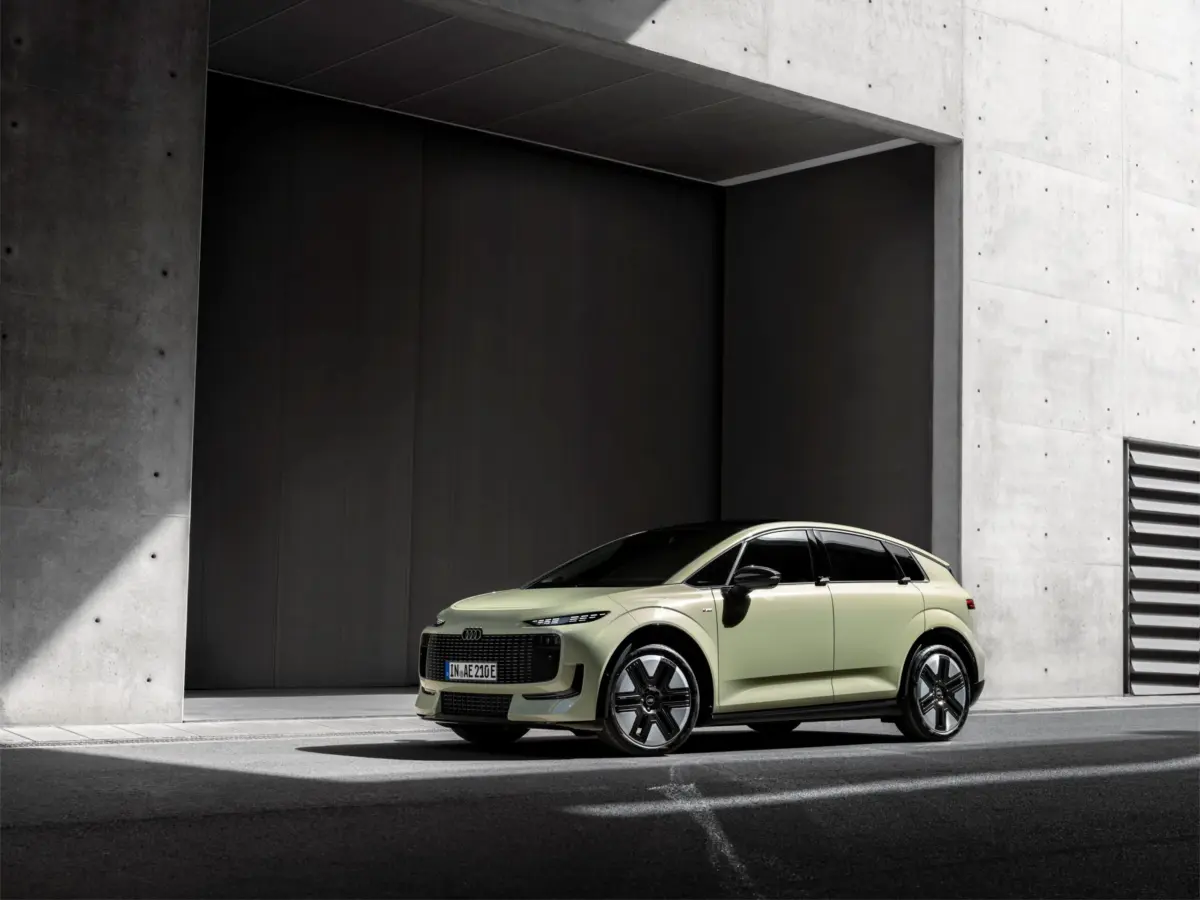
The German luxury automaker’s latest offering, the A2 E-tron compact crossover, challenges the status quo by delivering an attractive entry-level price point paired with engineering marvels traditionally reserved for six-figure halo cars. Starting at a remarkably accessible £32,200 (approximately $45,000 USD), the A2 E-tron impresses not just with its sticker price, but with an ultra-low drag coefficient and a modular battery and drivetrain matrix capable of achieving up to 401 miles of range on a single charge.
Yet, as is so often the case with compelling European hatchbacks and compacts, there is a catch: for the time being, this rear-wheel-drive marvel is destined exclusively for the European market.
Main Facts: Anatomy of a Game-Changer
The arrival of the Audi A2 E-tron marks a significant strategic shift for the Four Rings. Historically known for building heavy, feature-laden, and expensive battery-electric flagships, Audi is shifting its crosshairs downward to capture the everyday commuter and budget-conscious buyer without sacrificing the brand’s hallmark engineering pedigree.
At its core, the A2 E-tron is a compact crossover designed from the ground up to maximize aerodynamic efficiency and interior packaging. Measuring in at a footprint ideal for narrow European city streets, the vehicle bridges the gap between traditional hatchbacks and modern crossovers.
Key headline specifications for the A2 E-tron include:
- Base Pricing: Starting at roughly £32,200 ($45,000 USD).
- Maximum Range: Up to 401 miles (645 km) under the European WLTP testing cycle when configured with the long-range battery pack.
- Energy Consumption: As low as 12.8 kWh per 62 miles (100 km) with optimized motor and battery setups.
- Aerodynamics: A class-leading drag coefficient of just 0.24, setting a new benchmark for Audi production vehicles.
- Charging Technology: Standard bidirectional charging capabilities supporting both Vehicle-to-Load (V2L) and Vehicle-to-Home (V2H) applications.
- Interior Infotainment: A standard curved MMI panoramic display combining an 11.9-inch digital instrument cluster with a 12.8-inch central touchscreen.
Despite these impressive figures, the vehicle’s geographic restriction has sparked immediate disappointment among North American automotive enthusiasts. While American buyers have shown an appetite for larger electric SUVs and trucks, the absence of efficient, high-range compact options leaves a glaring hole in the domestic market—one that Audi’s current export strategy unfortunately ignores.
Chronology: The Evolution of Audi’s Electric Strategy
To understand how the A2 E-tron came to fruition, it is necessary to examine Audi’s recent turbulent trajectory within the broader electrification landscape.
The Early Ambitions and the "EVs-or-Bust" Pledge
Half a decade ago, traditional legacy automakers rushed to announce sweeping, aggressive timelines to phase out internal combustion engines (ICE) entirely. Audi was no exception. The brand made headlines with bold commitments to transition its entire lineup to pure electric propulsion by the early 2030s, pouring billions of euros into dedicated EV platforms like the PPE (Premium Platform Electric) shared with Porsche, and expanding its existing E-tron moniker across every vehicle segment.
The Market Realities of 2023–2024
However, the automotive market did not cooperate with corporate boardrooms as smoothly as anticipated. By late 2023 and early 2024, automakers across the globe encountered a cooling demand curve for high-priced electric vehicles. Inflationary pressures, sluggish infrastructure rollouts in key global regions, and lingering consumer hesitancy regarding charging times and residual values forced legacy manufacturers to hit the brakes on their all-electric ultimatums.
The Strategic Pivot: Flexibility Over Dogmatism
In a major course correction last year, Audi officially walked back its rigid "EVs-or-bust" pledge. Recognizing that consumer adoption rates would vary dramatically by region and economic climate, the automaker pivoted toward a flexible multi-energy strategy. Audi elected to leave the door open for a sustainable, parallel mix of advanced internal combustion engines, plug-in hybrids (PHEVs), and pure battery-electric vehicles (BEVs).
This strategic pivot created the internal breathing room necessary to greenlight projects like the A2 E-tron. Freed from the sole mandate of building ultra-expensive, high-margin luxury flagships to prove a point, Audi engineers were able to focus on scalable, highly efficient architectures that could democratize electric mobility without destroying profit margins. While the A2 E-tron does not sit directly on the showroom floor alongside heavy-hitting stablemates like the impressive S6 Sportback E-tron, it represents the flexible future of Audi’s product pipeline—proving that electrification and economic realism can coexist.
Supporting Data: Engineering Efficiency and Cabin Innovation
Efficiency in an electric vehicle is not a happy accident; it is the culmination of rigorous aerodynamic optimization, weight reduction, and advanced thermal management. The A2 E-tron is a masterclass in squeezing every last drop of energy out of a kilowatt-hour.
Aerodynamic Mastery
Achieving a drag coefficient of 0.24 is no small feat for a vehicle with a taller, crossover-inspired stance. Audi’s aerodynamicists deployed a suite of passive and active measures to cheat the wind:
- Flush Door Handles: Integrated seamlessly into the body panels to eliminate turbulent airflow along the vehicle’s flanks.
- Optimized Air Intakes: Active shutter systems that open only when powertrain or battery cooling is strictly necessary.
- Fully Enclosed Underbody: Smooth paneling beneath the vehicle prevents air from getting trapped and creating parasitic drag.
- Wheel Arch Gap Reducers: Clever baffling around the tires smooths out the aerodynamic wake generated by spinning wheels.
Powertrain and Energy Consumption
When equipped with the most efficient motor and battery pairing, the A2 E-tron consumes a meager 12.8 kWh per 62 miles (100 km). For context, this places the vehicle among the most energy-efficient production EVs on the market, rivaling even specialized eco-hatchbacks from rival brands.
For buyers prioritizing long-distance travel, the headline-grabbing WLTP range of 401 miles (645 km) transforms the A2 E-tron from a city-only runabout into a genuine road-trip contender. Even accounting for real-world driving degradation, weather variances, and highway speeds, the long-range variant offers a generous safety buffer against range anxiety.
Bidirectional Capabilities
Beyond moving down the road efficiently, the A2 E-tron serves as a mobile energy hub. Featuring bidirectional charging capabilities as a first for this vehicle class, owners can tap into the battery’s reserves in two primary ways:
- Vehicle-to-Load (V2L): Utilizing a dedicated power outlet housed conveniently in the trunk, users can power camping gear, electronic tools, or household appliances directly from the car.
- Vehicle-to-Home (V2H): When paired with a compatible DC wall box, the A2 E-tron can feed power back into a residential grid during peak pricing hours or emergency blackouts.
Interior Packaging and Storage Cleverness
Step inside the cabin, and the technological leap continues. The dashboard is anchored by Audi’s standard curved MMI panoramic display, which seamlessly blends an 11.9-inch digital gauge cluster with a vibrant 12.8-inch central touchscreen.
More impressive, however, is the vehicle’s interior storage ecosystem. Audi has integrated a Fidlock magnetic fastening system throughout the cabin and trunk. This clever technology—widely known among cyclists for keeping water bottles securely attached to bicycle frames without traditional cages—allows owners to snap accessories such as custom cupholders, cargo dividers, and charging cable bags directly into dedicated magnetic mounting points. It is a thoughtful, highly functional touch that maximizes the utility of a compact footprint.
Official Responses and Industry Outlook
The unveiling of the A2 E-tron has elicited strong reactions across the global automotive landscape, highlighting the stark cultural and regulatory differences between European and North American EV markets.
Industry analysts have praised Audi for cracking the code on affordable packaging. In official press statements, Audi executives emphasized that the A2 E-tron is proof that the brand refuses to abandon entry-level consumers in its pursuit of high-end electrification. "Efficiency is no longer a luxury tax; it is a fundamental design principle that must be made accessible to a broader audience," noted one corporate representative during the vehicle’s initial rollout.
However, the geographical restriction limiting the car to Europe has drawn sharp critique from consumer advocacy groups and automotive journalists abroad. When questioned about potential North American export plans, company insiders have remained noncommittal, citing differing regulatory crash-test standards, bumper height requirements, and consumer preferences that heavily skew toward larger vehicles in the United States and Canada.
Despite these hurdles, industry watchers suggest that Audi’s stance may evolve. As fuel economy standards tighten globally and the cost of living places renewed pressure on household budgets, the appeal of a highly efficient, premium-badged compact EV could prove irresistible to North American buyers willing to rethink their automotive needs.
Implications: What the A2 E-Tron Means for the Future of Mobility
The introduction of the Audi A2 E-tron carries profound implications for the trajectory of the electric vehicle market, offering lessons for both legacy manufacturers and consumers alike.
1. The Death of the Range-versus-Affordability Compromise
For years, automakers used expensive battery packs as a crutch to make up for inefficient vehicle design. By focusing intensely on aerodynamics, weight reduction, and powertrain optimization, Audi has demonstrated that you do not need a massive, heavy 100+ kWh battery pack to achieve a 400-mile range. This approach reduces manufacturing costs, lowers the vehicle’s overall carbon footprint during production, and results in a more dynamic, responsive driving experience.
2. The Micro-Mobility and Storage Revolution
The inclusion of the Fidlock magnetic fastening system signals a broader trend toward modular interior design. As vehicles become smaller to navigate crowded urban environments, maximizing every cubic inch of interior space becomes paramount. Expect to see competing manufacturers adopt similar modular, customizable storage solutions in upcoming compact segments.
3. The Democratization of Bidirectional Power
By bringing Vehicle-to-Load and Vehicle-to-Home capabilities down to a £32,200 entry-level price point, Audi is accelerating the integration of cars into the broader smart-grid ecosystem. EVs are rapidly transforming from passive modes of transportation into active energy storage units that can stabilize residential power grids and lower household energy costs. Making this technology standard rather than locking it behind expensive luxury trims is a crucial step toward mainstream adoption.
4. A Wake-Up Call for the North American Market
Finally, the A2 E-tron serves as a mirror reflecting North America’s blind spot regarding compact mobility. While American consumers continue to grapple with oversized, expensive electric trucks and SUVs that strain charging infrastructure and road maintenance budgets, Europe is proving that smaller, hyper-efficient EVs provide a superior economic and environmental return on investment.
Whether Audi eventually "sees the error of its ways" and brings the A2 E-tron across the Atlantic remains to be seen. But one thing is certain: the engineering benchmark has been set. The race to build the ultimate affordable, long-range, hyper-efficient electric vehicle is officially on, and the rest of the industry is scrambling to catch up.
