

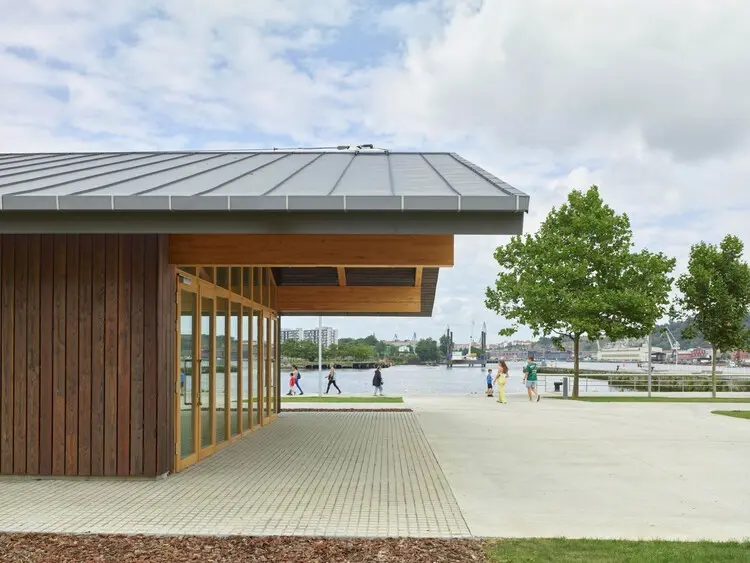
The post-industrial waterfront has long presented modern urban planners with a complex paradox: how to honor the gritty, hard-working heritage of a region while transforming neglected, barren brownfields into vibrant, ecologically sound public spaces for the community. Few places encapsulate this challenge quite like the Nervión River estuary in Northern Spain. For decades, the area surrounding the historic Portu Dock in Barakaldo stood as a vast, empty expanse—a silent witness to heavy industry, marked by concrete remnants, overgrown weeds, and the physical scars of extraction and manufacturing.
Today, that narrative is shifting dramatically. Captured brilliantly through the lens of architectural photographer Roland Halbe, Zamalanda Park (Parque Zamalanda) emerges as a triumph of landscape architecture. Designed by the renowned studio Burgos & Garrido Arquitectos and curated for the public eye by Valentina Díaz, this sprawling new park breathes fresh life into the Nervión riverbanks. By cleverly bridging the gap between historical industrial memory and contemporary ecological design, Zamalanda Park has transformed a once-forbidden wasteland into a dynamic, multi-layered civic destination.
Main Facts: Reclaiming the Nervión Riverbanks
Zamalanda Park represents a major milestone in urban renewal along the Greater Bilbao metropolitan area, specifically within the industrial heartland of Barakaldo.
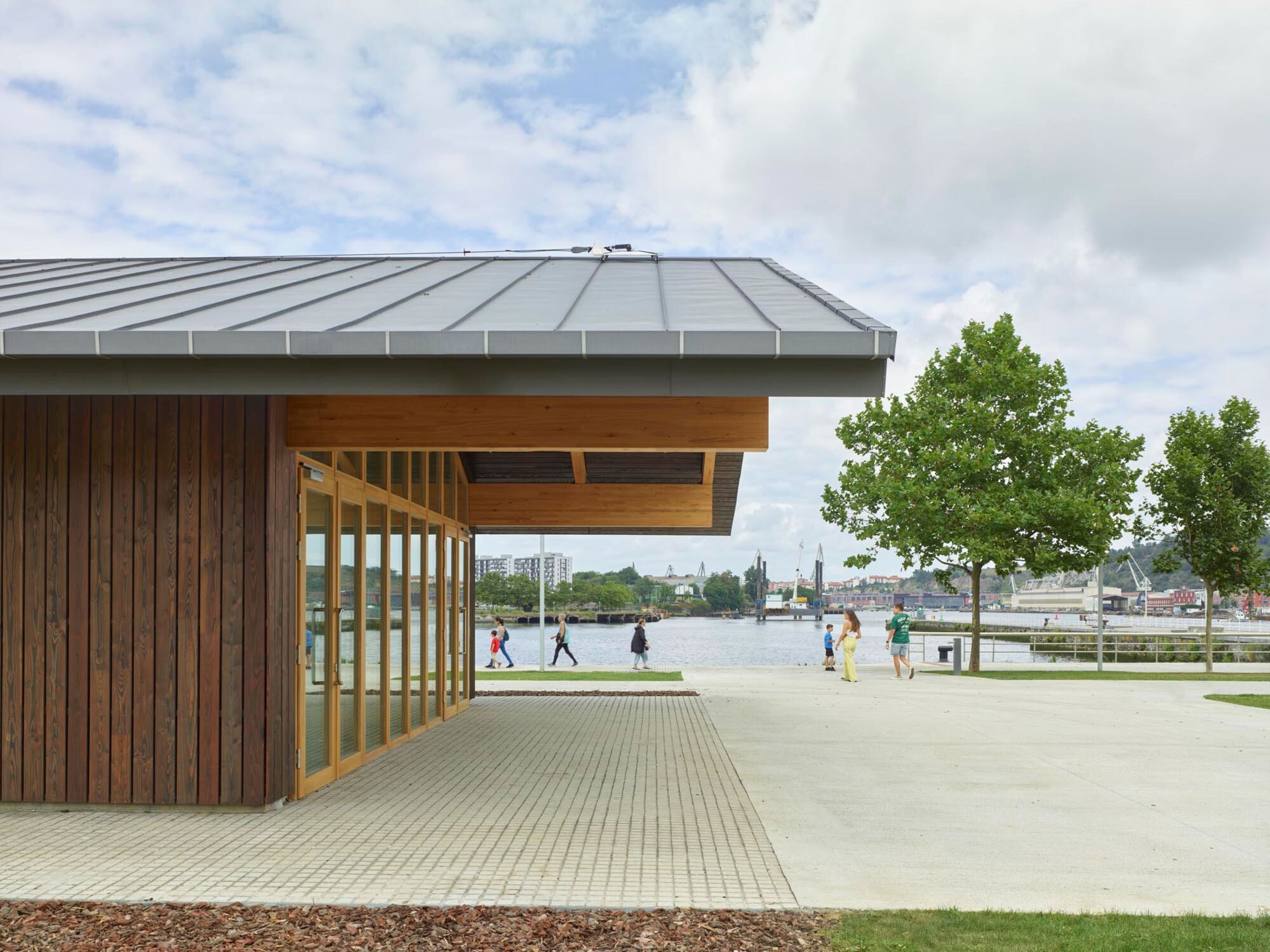
- Project Name: Zamalanda Park (Parque Zamalanda de la Ribera del Nervión)
- Architects: Burgos & Garrido Arquitectos
- Location: Portu Dock area, Barakaldo, Nervión Riverbanks, Spain
- Photographer: Roland Halbe
- Curator: Valentina Díaz
- Publication Date: August 23, 2026
- Core Concept: Landscape reclamation, industrial heritage preservation, dual-level topography, and ecological restoration of a brownfield site.
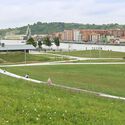
The design philosophy hinges on the site’s dramatic topography. The architects recognized that the land possessed an intrinsic, albeit rugged, duality. On the upper level, the site affords sweeping, dramatic vistas looking out over the wide expanse of the Nervión estuary, connecting visitors to the regional geography. Down below, the terrain drops into a horizontal, lush, and wild landscape that hugs the water’s edge, offering an intimate, immersive encounter with nature. Rather than erasing the marks of history, Burgos & Garrido chose to work with them, weaving the traces of the past into the modern recreational fabric.
Chronology of Transformation: From Industrial Void to Public Oasis
The realization of Zamalanda Park did not happen overnight; it is the product of years of strategic urban planning, environmental remediation, and architectural vision aimed at healing the waterfront of Barakaldo.
1. The Industrial Era and Subsequent Abandonment
For over a century, the banks of the Nervión River served as the economic engine of the Basque Country. Shipbuilding, steel production, and maritime commerce dominated the Portu Dock area. However, as global industrial shifts took hold toward the late 20th century, these heavy activities slowly wound down or relocated. What remained was a fragmented landscape of concrete aprons, rusted infrastructure, and contaminated soils—spaces cut off from the local population, functioning as urban dead zones that separated the city from its most vital natural asset: the river.
2. Masterplanning and Remediation
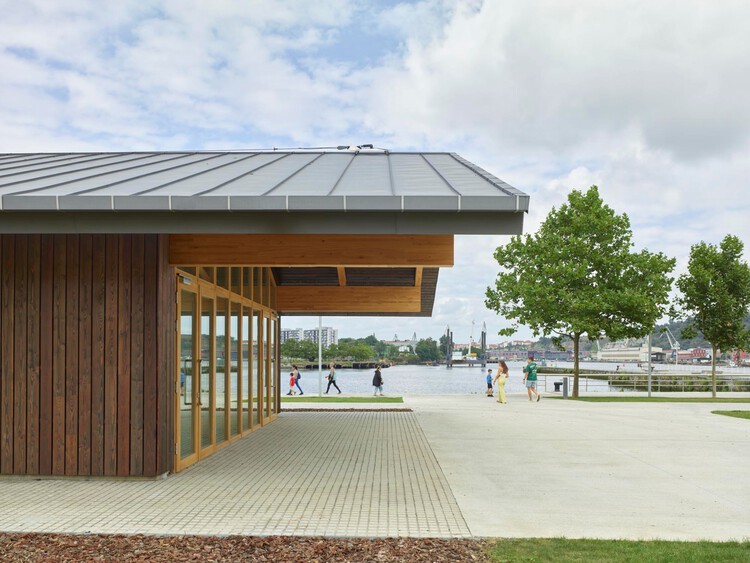
As part of the broader post-industrial regeneration of the Bilbao metropolitan corridor, municipal authorities targeted the Barakaldo waterfront for comprehensive revitalization. Environmental remediation crews spent years cleaning up industrial pollutants, stabilizing the shoreline, and clearing unsafe structures. Once the land was deemed safe for public use, an architectural competition invited visionaries to reimagine the neglected riverbanks. Burgos & Garrido Arquitectos secured the commission with a proposal that prioritized landscape healing over aggressive tabula rasa development.
3. Construction and Materialization
The construction phase focused heavily on preserving the rugged character of the site while introducing sophisticated public infrastructure. Retaining walls, pathways, native plantings, and viewing platforms were meticulously integrated into the existing topography. The upper promenade was engineered to maximize panoramic views, while the lower riverbank paths were constructed to withstand periodic tidal fluctuations and seasonal flooding, ensuring long-term resilience.
4. Opening and Public Reception
Officially unveiled and documented in international architectural circles by mid-2026, Zamalanda Park quickly captured the attention of urbanists and landscape architects worldwide. The project transitioned from a local municipal improvement to a textbook case study on how post-industrial waterfronts can be successfully returned to the public domain.
Supporting Data & Architectural Morphology
To fully appreciate the scope of Zamalanda Park, one must examine the specific data points and structural strategies employed by Burgos & Garrido Arquitectos:
- Topographical Stratification: The park is explicitly divided into two distinct experiential zones. The Upper Terrace serves as a high-speed transit and panoramic viewing promenade, utilizing hardscapes and strategic seating to frame the estuary. The Lower Riparian Zone functions as a softscape bio-filter, featuring dense clusters of native riparian vegetation, marsh grasses, and meandering footpaths that bring visitors down to the waterline.
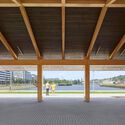
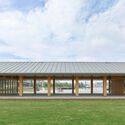
- Material Palette: In homage to the site’s industrial lineage, the design incorporates weathering steel, exposed architectural concrete, and sustainably sourced local timber. These materials weather gracefully over time, acquiring a patina that mirrors the industrial remnants left behind by the docks.
- Biodiversity Metrics: The landscaping strategy replaced sterile concrete surfaces with thousands of square meters of native flora. This botanical intervention has already begun attracting local fauna, effectively re-establishing a functional biological corridor along an estuary that was biologically compromised for decades.
- Accessibility: Universal design principles ensure that both levels are fully interconnected via gentle ramps, hidden lifts, and graded pathways, allowing citizens of all physical abilities to navigate the dramatic elevation changes between the city grid and the river.
Official Responses and Expert Perspectives
The unveiling of Zamalanda Park has elicited widespread praise from urban planners, environmentalists, and local government officials alike.
Municipal representatives in Barakaldo have hailed the project as a critical turning point in the city’s identity. In official statements following the project’s completion, city planners emphasized that Zamalanda is much more than just a park—it is a social equalizer. By reclaiming the waterfront for recreational use, the city has dismantled the invisible barrier that historically separated working-class neighborhoods from the natural beauty of the Nervión estuary.
Architectural critics have been equally enthusiastic. In curatorial notes and critical reviews, experts have commended Burgos & Garrido for their restraint. Rather than over-designing the space with flashy monuments or excessive commercial structures, the firm allowed the raw, poetic qualities of the landscape to take center stage. The interplay between the structured, elevated viewpoints and the wild, untamed horizontal plane below has been singled out as a masterclass in urban landscape design.
Roland Halbe’s photographic documentation has further amplified the project’s global footprint, capturing how morning light cuts across the concrete retaining walls and how evening shadows lengthen over the newly planted riverbanks, emphasizing the quiet dignity of the transformed site.
Broader Implications for Post-Industrial Cities
The success of Zamalanda Park extends far beyond the borders of Barakaldo, offering vital lessons for cities across the globe grappling with the legacy of industrial decline.
1. Reversing Waterfront Alienation
For generations, industrial cities turned their backs on their rivers, treating waterways merely as industrial sewers or logistics highways. Zamalanda Park demonstrates how cities can systematically heal this fracture. By opening up the Nervión riverbanks, the project restores a fundamental human right: visual and physical access to nature within the urban environment.
2. The Aesthetics of Memory
Urban renewal often falls into the trap of sterile gentrification, where all traces of the past are bulldozed in favor of generic glass-and-steel developments. Burgos & Garrido Arquitectos prove that industrial heritage can be a powerful asset. The traces of the Portu Dock are not hidden; they are framed, celebrated, and recontextualized. This approach preserves the collective memory of the local community, ensuring that the younger generations understand the labor and history upon which their modern city is built.
3. Climate Resilience and Ecological Urbanism
As coastal and riverine cities face the escalating threats of climate change, sea-level rise, and extreme weather events, parks like Zamalanda serve a dual purpose. Beyond providing recreational green space, the lower riparian zones act as natural sponges and ecological buffers. By allowing the landscape near the water to remain wild, flexible, and resilient to flooding, the design safeguards the urban hinterland while promoting local biodiversity.
Conclusion
Zamalanda Park stands as a shining testament to the power of thoughtful, landscape-driven architecture. By listening to the land, respecting its industrial scars, and opening its vistas to the public, Burgos & Garrido Arquitectos have not merely redesigned a park—they have rewritten the future of Barakaldo’s waterfront, turning a forgotten industrial void into an enduring civic sanctuary.
