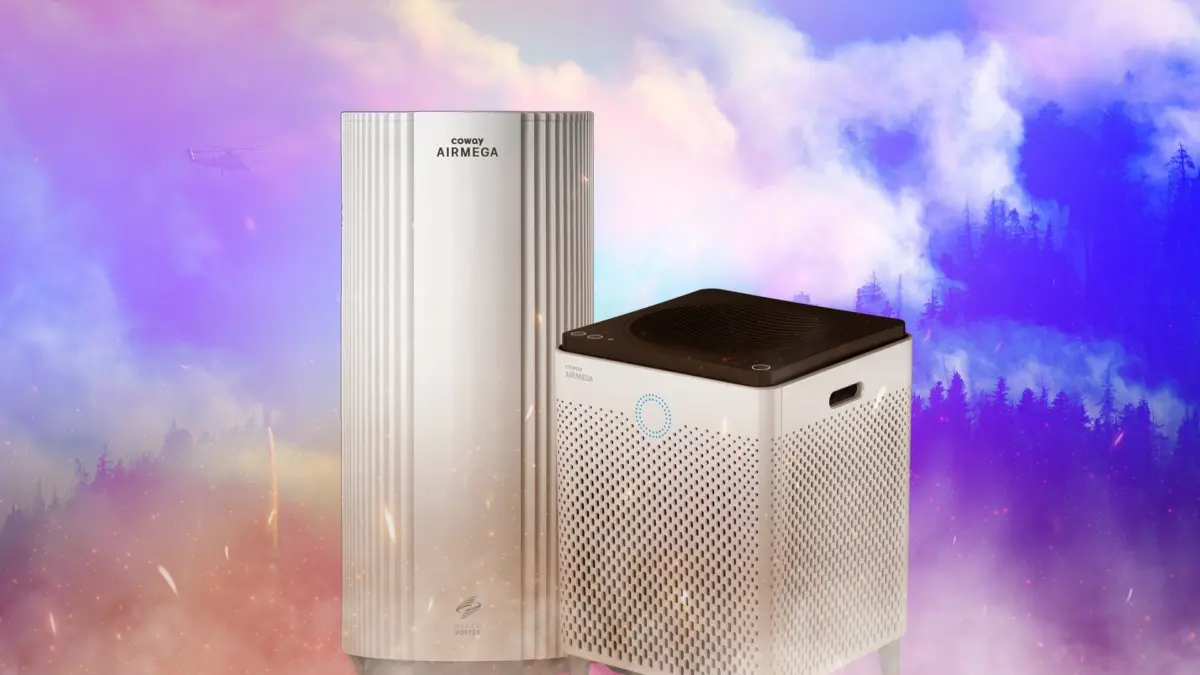
By Corin Cesaric-Epple Published by CNET / Environmental Health & Home Technology Desk
Main Facts: The New Normal of Transcontinental Smoke
On the morning of June 7, 2023, a strange, eerie twilight settled over the northeastern United States. What initially appeared to be a dense morning fog shrouding the Manhattan skyline was, in reality, a massive plume of toxic particulate matter drifting hundreds of miles south from unprecedented wildfires raging across Canada. By midday, the sky had morphed into an ominous, apocalyptic orange, forcing millions of urban residents indoors and sparking a nationwide conversation about air quality, climate change, and domestic preparedness.
While skies over New York City cleared after a couple of days, the event was far from an isolated anomaly. Driven by rising global temperatures, prolonged droughts, and shrinking snowpacks, wildfire seasons have grown longer, more erratic, and vastly more destructive. According to data from the National Interagency Fire Center and NASA, the frequency and scale of these disasters are escalating at an alarming rate, turning wildfire smoke from a regional western issue into a coast-to-coast public health crisis.
For urban and suburban residents alike, the immediate danger of a wildfire is rarely the flames themselves, but the invisible, microscopic threat carried on the wind: fine particulate matter. When outdoor air becomes hazardous, the home becomes the final line of defense. To understand how consumers can protect their indoor environments, technical experts at CNET’s Louisville, Kentucky laboratory conducted rigorous, controlled smoke-chamber evaluations of leading air purifiers to determine which devices offer the fastest and most reliable defense against wildfire pollution.
Chronology: A Day That Turned the Skies Orange
June 7, 2023: The New York Wake-Up Call
The crisis unfolded rapidly for millions of urban professionals on that early summer morning.
7:30 AM: Stepping out of a Brooklyn apartment, commuters noticed a hazy atmosphere, initially dismissing it as a routine weather shift.
9:00 AM: Upon arriving at Manhattan offices overlooking the Hudson River, the stark reality set in. The usual crisp view of New Jersey was entirely obscured by a thick, brownish-gray veil. Weather apps and mobile air quality monitors confirmed the source: Canadian wildfire smoke.
3:00 PM: The sun was effectively blotted out, replaced by a surreal, deep orange glow. Office buildings across the city began distributing dust masks as outdoor visibility plummeted.
6:30 PM: Commuters braved subway systems heavy with the distinct, acrid scent of burning timber. Upon returning home, residents scrambled to secure indoor filtration systems as air quality indices reached hazardous levels.
The Broader Timeline of Escalating Crises
2023: Canada experiences its worst wildfire season on record, driven by the country’s driest conditions since 1980.
2025: Destructive blazes, such as California’s Eaton Fire, force mass evacuations, leaving returning residents facing ash-covered interiors and lingering toxic odors.
2026: Comprehensive laboratory benchmarking establishes new performance metrics for home air purifiers, focusing heavily on fine-particle clearance speeds (T90 benchmarks).
Supporting Data: The Science of Smoke and Filtration
Wildfire smoke is a complex, toxic mixture of gases and fine microscopic particles produced when biomass burns. Understanding the composition of this smoke is vital to selecting the right tools for indoor remediation.
The Danger of PM2.5
According to guidelines from AirNow and the Environmental Protection Agency (EPA), approximately 90% of the total particle mass emitted by wildfires consists of fine particles known as PM2.5. These particles measure 2.5 microns in diameter or smaller—roughly 1/30th the width of a human hair.
Because they are so minuscule, PM2.5 particles bypass the body’s natural defense mechanisms in the nose and upper respiratory tract. When inhaled, they penetrate deep into the pulmonary alveoli, entering the bloodstream and triggering severe health consequences, including:
Acute asthma attacks and aggravated chronic bronchitis
Cardiovascular stress, increasing the risk of heart attacks and strokes
Reduced lung function and long-term systemic inflammation
CNET Laboratory Findings: How We Tested
To cut through marketing claims, CNET technicians in Louisville, Kentucky, constructed a custom, airtight smoke chamber. Inside this controlled environment, a standardized smoke bomb was detonated using a precise formula of potassium nitrate ($textKNO_3$), sucrose, and sodium bicarbonate ($textNaHCO_3$).
A high-precision particle counter measured the exact time it took for various air purifiers to achieve a T90 rating—the duration required to remove 90% of fine particulate matter from the air.
Top-Performing Air Purifiers (2026 Testing Results):
Coway 400S (Top Pick for High-Speed Performance): Cleared T90 fine particles on its highest fan speed in an astonishing 39 seconds, making it the ideal unit for sudden smoke intrusions.
Coway 450 (Best Overall Air Purifier): Nearly matched the high-fan speed of the 400S while outperforming it on low settings, achieving T90 clearance in 1 minute and 53 seconds on low. It provides the most consistent dual-speed performance.
Dreame Furcatch (Best Low-Fan Specialist): Captured the CNET Lab Test award for low-fan efficiency, clearing T90 fine particles in 1 minute and 24 seconds on its lowest setting, though it lagged behind the Coway models at maximum velocity.
Dyson HushJet (Quietest & Most Energy-Efficient): Earned dual laboratory awards for operating with minimal noise and drawing the least electrical power during continuous cycles.
Official Responses and Expert Insights
Public health agencies and wellness experts have increasingly emphasized that indoor air management is a critical component of disaster preparedness.
"Despite taping up our window seams before deciding to evacuate, we returned to an apartment that smelled of smoke, and everything was covered in a thin layer of ash," recalls CNET wellness editor Anna Gragert, reflecting on her experience during California’s 2025 Eaton Fire. "We relied entirely on two air purifiers to filter the air and remove the smoke smell. We simply wouldn’t have been able to comfortably live in our home without them after experiencing a wildfire so close to home."
Official Guidance from Environmental Authorities
The EPA and NASA stress that while climate mitigation policies are vital for the long term, short-term survival during wildfire events requires defensive domestic engineering.
Local Emergency Management Services continually advise residents in high-risk zones—ranging from the traditional West Coast and Texas drought corridors to the increasingly vulnerable Northeast—to monitor real-time Air Quality Indexes (AQI) and maintain tightly sealed indoor spaces equipped with HEPA-grade filtration.
Implications: Preparing for the Climate Future
The transformation of skies from clear blue to hazy orange across major metropolitan centers serves as a stark reminder that the impacts of climate change are no longer distant or hypothetical. Rising global temperatures, diminished annual rainfall, and earlier snowmelts have engineered an environment where wildfires are larger, more frequent, and capable of projecting toxic fallout across thousands of miles.
Key Takeaways for Households:
You Can’t Control the Outdoors, But You Can Control the Indoor Air: While municipal and federal authorities tackle emissions and forest management, the individual household remains the primary sanctuary against airborne toxins.
Match the Appliance to Your Lifestyle:
Choose units like the Coway 400S if you need rapid-response air scrubbing during sudden atmospheric pollution spikes.
Opt for quiet, energy-efficient models like the Dyson HushJet or low-fan specialists like the Dreame Furcatch if you prefer constant, unobtrusive background filtration.
Prioritize True HEPA and CADR Ratings: Always ensure that any purifier purchased for wildfire defense is rated specifically for high Clean Air Delivery Rates (CADR) regarding fine particulate matter (PM2.5).
Ultimately, air purifiers cannot prevent wildfires, nor can they replace evacuation orders when flames threaten a neighborhood. However, as transcontinental smoke events become an entrenched feature of the modern climate landscape, investing in reliable indoor air filtration is no longer a luxury—it is an essential safeguard for public health and daily survival.