By Camilla Ghisleni | Published on September 12, 2026
Main Facts
Architecture has long wrestled with a profound structural division: the chasm separating the act of drawing from the act of building. Since the Renaissance—crystallized historically by Filippo Brunelleschi and his engineering marvel, the dome of Santa Maria del Fiore completed in Florence in 1436—drawing transformed from a collaborative tool of invention into an instrument of top-down authority. The construction site shifted away from a dynamic floor for collective decision-making, relegating it instead to a mere site of execution.
Over the succeeding centuries, this division accelerated dramatically. The advent of modern construction, fueled by industrialization, extreme technical specialization, and corporate management, fragmented the building process into isolated silos. Those who design rarely build; those who build are typically excluded from design decisions; and those who finance, manage, and ultimately inhabit the spaces occupy worlds far removed from the physical reality of the structures. While this industrial model successfully scaled housing production across the globe, it concentrated knowledge, wealth, and systemic power exclusively in the hands of corporate and bureaucratic elites.
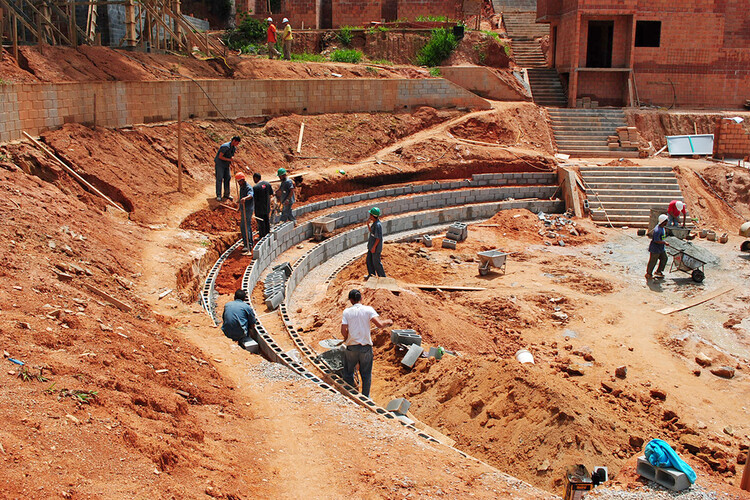
Enter USINA—Centro de Trabalhos para o Ambiente Habitado (USINA CTAH). Operating out of São Paulo, Brazil, for more than three decades, USINA represents a radical pushback against this fragmentation. Founded by a coalition of architects, engineers, and social scientists, USINA pioneers a model of social housing and self-management rooted in mutirões (collective self-build initiatives) and cooperative frameworks. Rather than treating construction as an assembly-line commodity, USINA turns the building site into a political, educational, and communal practice where future residents actively reclaim agency over their built environment.
Chronology of Collective Construction: A Historical Arc
To understand the weight of USINA’s work, one must trace the evolution of self-managed housing movements through a distinct historical timeline:
1436 (The Renaissance Shift): Filippo Brunelleschi finalizes the dome of Florence’s Santa Maria del Fiore. This milestone marks the historical divergence between the master builder/architect (who draws and commands) and the laborer (who executes), cementing a hierarchy of knowledge that persists in modern construction.
Early 1970s (Latin American Cooperativism): In Uruguay, housing movements give rise to the Federación Uruguaya de Cooperativas de Vivienda por Ayuda Mutua (FUCVAM) in 1970. Establishing a mutual-aid cooperative model that eventually encompasses over 750 cooperatives and 35,000 homes, FUCVAM lays regional groundwork for collective architecture.
Early 1990s (The Birth of USINA): Amid Brazil’s redemocratization and the resurgence of urban social movements, architects, engineers, and social scientists band together in São Paulo to establish USINA CTAH. Their goal is to inject professional technical assistance directly into popular social movements demanding land and housing reform.
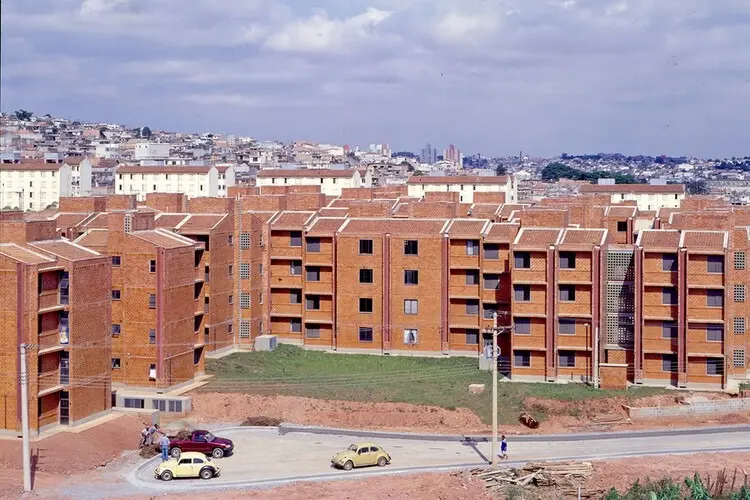
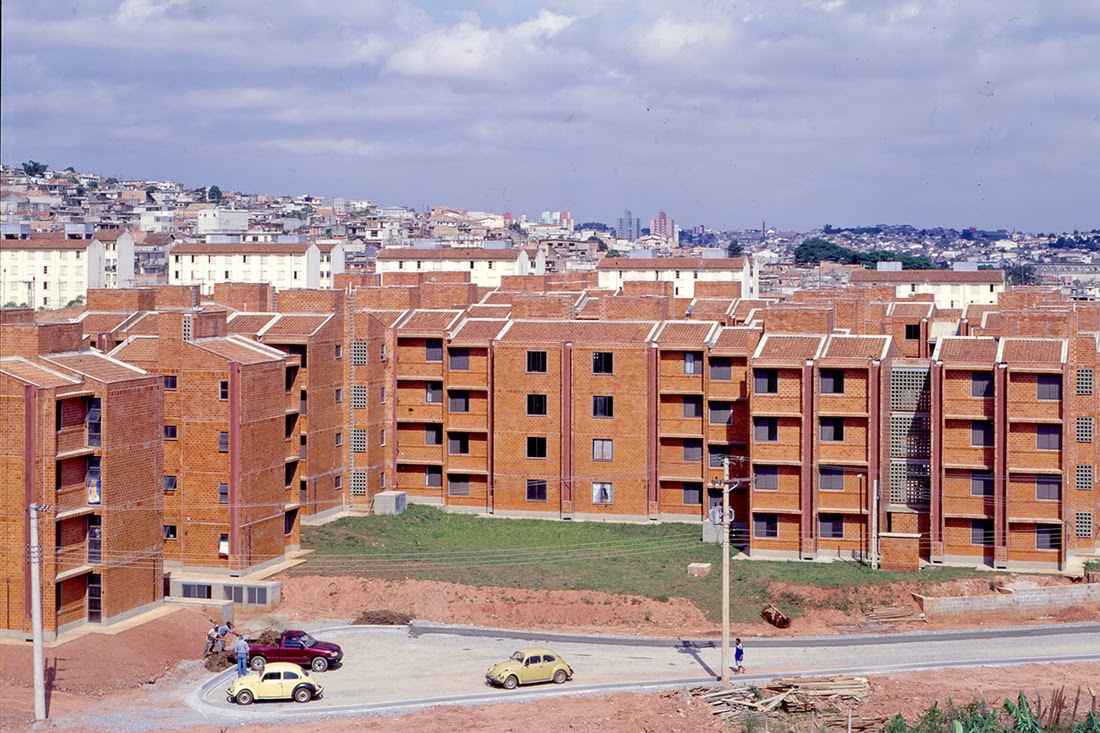
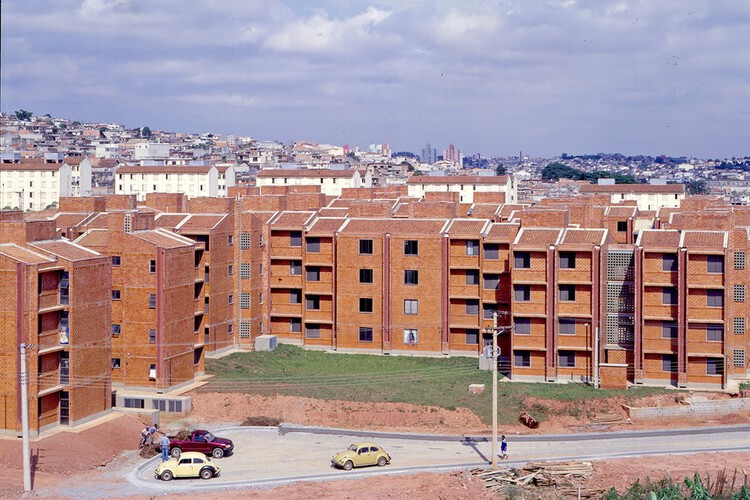
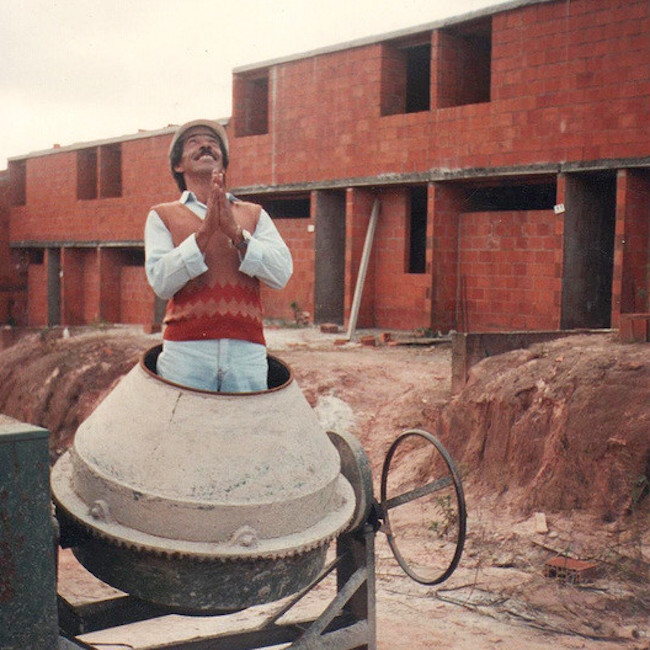
Mid-1990s to 2000s (Scaling Up at COPROMO): USINA undertakes massive projects like COPROMO in Osasco, São Paulo. Over eight years, residents build a complex of 1,000 apartments distributed across 50 buildings using self-supporting ceramic blocks and self-managed labor, shattering the myth that collective self-construction must be small-scale or technically primitive.
2012 (International Recognition): FUCVAM’s Uruguayan model receives the prestigious World Habitat Award, validating Latin America’s cooperative housing traditions on the global stage.
Present Day (Continuing the Legacy): USINA continues to challenge traditional real estate markets, having designed and constructed over 5,000 housing units, community centers, schools, and daycare facilities. The group’s philosophy remains a cornerstone of contemporary discussions on the architecture of craft and social equity.
Supporting Data & Technical Scope
A common prejudice surrounding self-built housing is that it lacks technical sophistication, relying on rudimentary, unsafe, or inefficient methods. USINA’s portfolio comprehensively dismantles this assumption.
Scale of Production: Over its 30-plus history, USINA has facilitated the design and realization of over 5,000 housing units, alongside critical social infrastructure including community centers, schools, and rural settlements.
The COPROMO Benchmark: Located in Osasco, COPROMO consists of 1,000 apartments across 50 buildings, executed over an eight-year timeline. By employing self-supporting ceramic blocks, the project bypassed the need for complex vertical structural frames, allowing participants with zero prior construction experience to build safely and effectively at scale.
Advanced Engineering Integration: In projects such as the Mutirã Paulo Freire, USINA successfully paired high-complexity engineering—such as multi-level steel structures—with collective labor.
Regional Precedent: In Uruguay, FUCVAM’s mutual-aid model has successfully integrated 750 affiliated cooperatives, delivering more than 35,000 homes through collective financing and labor.
Official Responses and Perspectives from the Field
The methodology practiced by USINA requires a complete inversion of conventional professional roles, demanding distinct approaches from both technical experts and community members.
Redefining the Role of the Architect
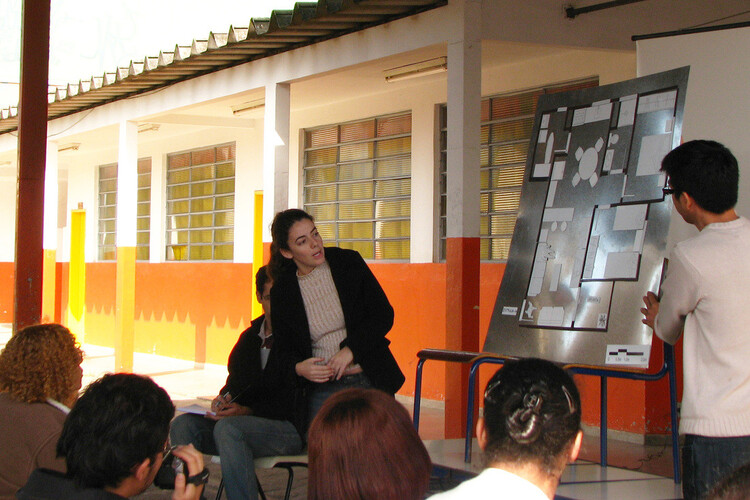
Within the USINA framework, architects and technical teams do not operate as distant authorities handing down finalized blueprints. Instead, they function as technical translators and facilitators. Information regarding structural loads, material costs, zoning laws, and construction alternatives is broken down and analyzed collectively in community assemblies.
An architect working with USINA remarks:
"The technical team no longer works exclusively on a finalized design, but instead operates within an ongoing process of negotiation. Information about materials, costs, and construction solutions is translated and discussed collectively, so that technical knowledge, while essential, does not remain restricted to specialists."
The Mutirante Perspective
For the families involved—who often work traditional jobs during the week and dedicate their weekends or scheduled collective days to the build—the mutirões are about much more than securing physical shelter. Labor is organized democratically: while some individuals work directly on masonry or framing, others manage site administration, food preparation, childcare, or materials logistics.
As noted by USINA researchers, this structure prevents the process from degenerating into mere cheap labor exploitation for the state or private developers. Participation is explicitly tied to political autonomy and education.
Implications: Beyond the Building
Evaluating a housing project strictly through conventional capitalist metrics—speed of delivery, construction schedule, and per-unit cost—obscures the deeper, transformative value of self-managed construction.
1. Retention and Democratization of Knowledge
In traditional construction, specialized knowledge enters the site with contracted laborers and leaves with them. In USINA projects, knowledge stays within the community. For instance, at COPROMO, mutirantes chose to establish an on-site metalworking workshop to manufacture the buildings’ steel staircases. This decision initially aimed to cut external costs, but its long-term impact was educational: participants acquired certified metalworking, plumbing, and electrical skills that transformed into viable channels for future employment.
2. Craft as a Relationship with Matter
The craft dimension within these collective sites is not a romanticized, pre-industrial return to historical nostalgia, nor is it an uncritical celebration of manual imperfection. Rather, craft is manifested in the intimate relationship between knowledge and matter. Workers directly experience the physical resistance of materials, navigate unexpected structural challenges, adapt procedures on the fly, and troubleshoot collaboratively.
3. The Creation of Social Fabric
The effects of a USINA project extend far beyond the moment the keys are handed over. At the Mutirão União da Juta, the inclusion of community spaces and public facilities expanded the scope of collective action, fundamentally upgrading the surrounding urban fabric. Residents forge durable support networks, master group administration, and learn how to conduct democratic assemblies.
4. A Direct Political Challenge to Neoliberal Housing
Ultimately, groups like USINA and Uruguay’s FUCVAM pose a fundamental question to contemporary urbanism: Who controls the knowledge necessary to build, and what can a building process produce beyond the physical structure itself?
By rejecting the monopoly of professional expertise, these movements demonstrate that architecture can be practiced as an emancipatory political act. The house ceases to be a mere commodity traded on the speculative real estate market; instead, it becomes a physical archive of collective struggle, mutual solidarity, and shared human dignity.