

Introduction: Reinforcing the Brickmaker’s Americas Supply Chain
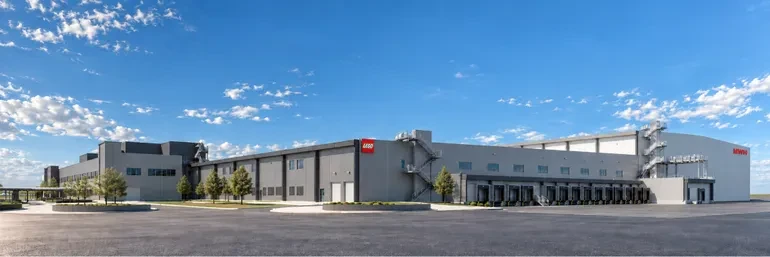
The toy industry is undergoing a profound transformation, characterized by shifting consumer demands, volatile global supply chains, and an urgent imperative for sustainable manufacturing practices. Amid these macroeconomic headwinds, the Lego Group continues to solidify its position as an industry titan by doubling down on its regional manufacturing strategy. At the heart of this strategy is the company’s sprawling production complex in Monterrey, Mexico—a facility that has quietly evolved into the Danish toy manufacturer’s largest manufacturing plant globally.
Serving as a critical nexus for Lego’s distribution across the entire Americas region, the Monterrey facility handles a comprehensive suite of production responsibilities. From precision element molding and sophisticated polymer processing to intricate box decoration and final packaging, the site is a masterclass in modern, vertically integrated manufacturing. Now, as the company embarks on a fresh wave of strategic investments in the plant, industry observers are taking a closer look at how this Mexican powerhouse anchors Lego’s broader operational blueprint.
Main Facts: The Scope and Scale of the Monterrey Operation
To understand the sheer magnitude of Lego’s Monterrey facility, one must examine the operational footprint that has made it the cornerstone of the company’s North and South American supply chains.
The facility is responsible for managing the complete lifecycle of numerous Lego products before they hit retail shelves. Key operations housed within the site include:
- Element Molding: Utilizing high-precision injection molding machinery to produce billions of iconic ABS plastic bricks annually with exacting tolerances.
- Processing and Decoration: Applying intricate pad printing, color treatments, and specialized finishes to individual elements.
- Packaging and Boxing: Organizing elements into kits and assembling final product boxes destined for toy stores and e-commerce fulfillment centers across the Americas.
Since its inception, the Monterrey plant has grown exponentially. What began as a strategic beachhead in North America has steadily expanded its physical boundaries, workforce, and technological capabilities. Today, it stands as the single largest production facility in the Lego Group’s global manufacturing network, outstripping its European and Asian counterparts in sheer volume and output capacity.
This immense physical scale is complemented by a deeply entrenched philosophy of regionalization. Rather than relying on a centralized manufacturing hub to supply the globe, Lego has spent the last decade and a half championing a localized supply chain model. By building products close to its major consumer markets, the company has insulated itself against many of the maritime freight bottlenecks, geopolitical trade tensions, and logistical shocks that have plagued international commerce in recent years.
Chronology: The Evolution of Lego in Mexico
The success story of Lego in Monterrey did not happen overnight; it is the result of a deliberate, multi-decade expansion plan that reflects the company’s long-term vision for the Americas.
2008: Planting the Flag
The Lego Group officially commenced operations in Monterrey, marking a pivotal milestone as the company’s first manufacturing footprint in North America. The initial establishment was designed to alleviate pressure on European production lines and establish a direct pipeline to the burgeoning U.S. and Latin American consumer markets.
The 2010s: Continuous Footprint Expansion
Throughout the decade following its opening, the Monterrey site underwent a series of continuous, phased expansions. As consumer demand for Lego products skyrocketed—bolstered by successful movie franchises, digital integrations, and a growing adult fan base (AFOLs)—the factory floor space was repeatedly widened. Concurrently, the local workforce scaled from a modest regional crew into an army of specialized manufacturing professionals.
The 2020s: Sustainability and Advanced Automation
Entering the current decade, the Monterrey facility shifted its focus toward advanced manufacturing technologies, robotics, and aggressive sustainability mandates. This era saw the large-scale integration of rooftop solar arrays, water conservation loops, and high-tech software training programs designed to transition the workforce into Industry 4.0 paradigms.
Furthermore, the site has served as a critical testing ground and adopter for Lego’s company-wide sustainability transitions, including the ongoing elimination of single-use plastic packaging in favor of paper-based alternatives.
Supporting Data: Infrastructure, Workforce, and Sustainability Metrics
Lego’s continuous capital injection into the Monterrey plant is supported by robust performance metrics and a clear operational framework. The plant is not merely a high-volume factory; it is a sophisticated ecosystem balancing output, employee welfare, and environmental stewardship.
Workforce Development and Technical Training
A factory is only as capable as the people operating its machinery. Recognizing this, the Lego Group has forged deep collaborative ties with technical schools, Mexico’s Ministry of Education, and various industry partners. These partnerships are designed to curate and deliver specialized workforce development courses tailored to the exact demands of modern manufacturing.
Current and future employees at the Monterrey facility receive specialized instruction covering:
- Software Literacy: Operating and troubleshooting sophisticated, automated manufacturing software.
- Problem-Solving & Continuous Improvement: Implementing Lean and Six Sigma methodologies to optimize assembly lines and reduce waste.
- Leadership and Safety: Cultivating behavioral leadership models that foster a safe, inclusive, and high-performing corporate culture.
Environmental Stewardship and Green Technologies
In alignment with the Lego Group’s ambitious global climate targets—which include reducing absolute Scope 1 and Scope 2 greenhouse gas emissions—the Monterrey facility has implemented numerous green infrastructure projects:
- Renewable Energy: A significant portion of the facility’s daily energy consumption is offset by extensive rooftop solar panel installations across multiple buildings on the campus.
- Water Conservation: Advanced water reuse systems have been engineered into the processing plants to minimize industrial wastewater discharge.
- Zero Waste to Landfill: Rigorous internal waste reduction programs are continuously refined as the site drives toward its ultimate goal of diverting 100% of its operational waste away from municipal landfills.
- Packaging Transformation: The facility has been instrumental in executing Lego’s global mandate to phase out single-use plastic bags inside product boxes. Transitioning rapidly to paper-based alternatives, the company remains squarely on track to complete this comprehensive packaging overhaul across all global lines by 2027.
Official Responses: Leadership Perspectives on the Monterrey Hub
The strategic importance of the Monterrey plant is frequently underscored by executive leadership within the Lego Group, who view the facility as a blueprint for resilient global manufacturing.
Nancy Sánchez, general manager of the Lego factory in Monterrey and senior vice president of Americas manufacturing at the Lego Group, emphasized the foundational nature of the site’s operational philosophy in an official statement:
"We have a flexible and resilient, regionally based global supply chain network that’s designed to make products close to Lego’s major markets. This approach has been a core part of our strategy for more than 15 years and helps us respond to changes in demand while supporting long-term growth."
Sánchez also highlighted the profound socio-economic impact the facility has on the local community, noting that ongoing capital expenditures create vital avenues for employee advancement:
"Current and future employees will have access to training that helps them operate sophisticated software, strengthen problem-solving and continuous improvement capabilities, develop leadership behaviors and build expertise in a modern manufacturing environment."
Echoing these sentiments, Lego Group COO Carsten Rasmussen underscored that the investments in Mexico are part of a broader, globally synchronized vision:
"This latest investment positions us for continued long-term growth and will help us meet demand for Lego play experiences for years to come. It reflects our longstanding commitment to Mexico and the important role the site plays in our global manufacturing network."
Implications: The Broader North American Manufacturing Strategy
While the Monterrey factory reigns supreme as the company’s largest production site, it does not exist in a vacuum. Lego’s long-term manufacturing roadmap for North America is currently undergoing a multi-pronged expansion that will see Monterrey sharing the load with a major new sibling facility.
For years, the Monterrey campus stood virtually alone as Lego’s solitary production foothold in North America. However, recognizing the relentless long-term appetite for its interlocking bricks across the United States and Canada, the Denmark-based toy giant initiated a massive investment project in Chesterfield, Virginia.
The Virginia project represents a capital expenditure exceeding $1.5 billion, encompassing both a state-of-the-art manufacturing facility and an adjacent regional distribution center warehouse. While the Chesterfield site has encountered minor timeline adjustments—with full production now slated to come online by 2027—Lego has ensured continuity by operating a temporary packing facility in the interim to service regional demands.
Balancing Mexico and the United States
The symbiotic relationship between the Monterrey, Mexico plant and the upcoming Chesterfield, Virginia complex illustrates the maturity of Lego’s regionalized supply chain strategy. Rather than shifting away from Mexico, Lego is using the Virginia investment to complement and fortify its existing North American capabilities.
By distributing production across multiple geographic nodes within the same continent, Lego achieves several critical strategic advantages:
- Risk Mitigation: Natural disasters, localized labor disputes, or cross-border logistical snarls are less likely to cripple the entire continental supply chain when production is decentralized.
- Reduced Carbon Footprint: Manufacturing and packing closer to end-users drastically cuts down on the fossil fuels expended during long-haul global shipping.
- Agility and Responsiveness: Dual production hubs allow the company to dynamically pivot output volumes in response to sudden retail trends, seasonal surges, and shifting demographic demands across the Americas.
Conclusion: Setting the Standard for Modern Toy Production
As the Lego Group looks toward the horizon, its massive manufacturing hub in Monterrey, Mexico, stands as a testament to the power of strategic foresight, regional supply chain design, and relentless operational execution. By combining physical scale with rigorous workforce upskilling and aggressive sustainability initiatives, the facility transcends the traditional definition of a toy factory.
Through continuous investments in solar energy, water reclamation, advanced automation, and plastic-free packaging transitions, Monterrey is helping lead the Lego Group toward its ambitious mid-century environmental and operational milestones. Supported by executive vision and paired with upcoming domestic U.S. investments in Virginia, the Monterrey site will undoubtedly remain the crown jewel of Lego’s Americas manufacturing network for generations of builders to come.
