

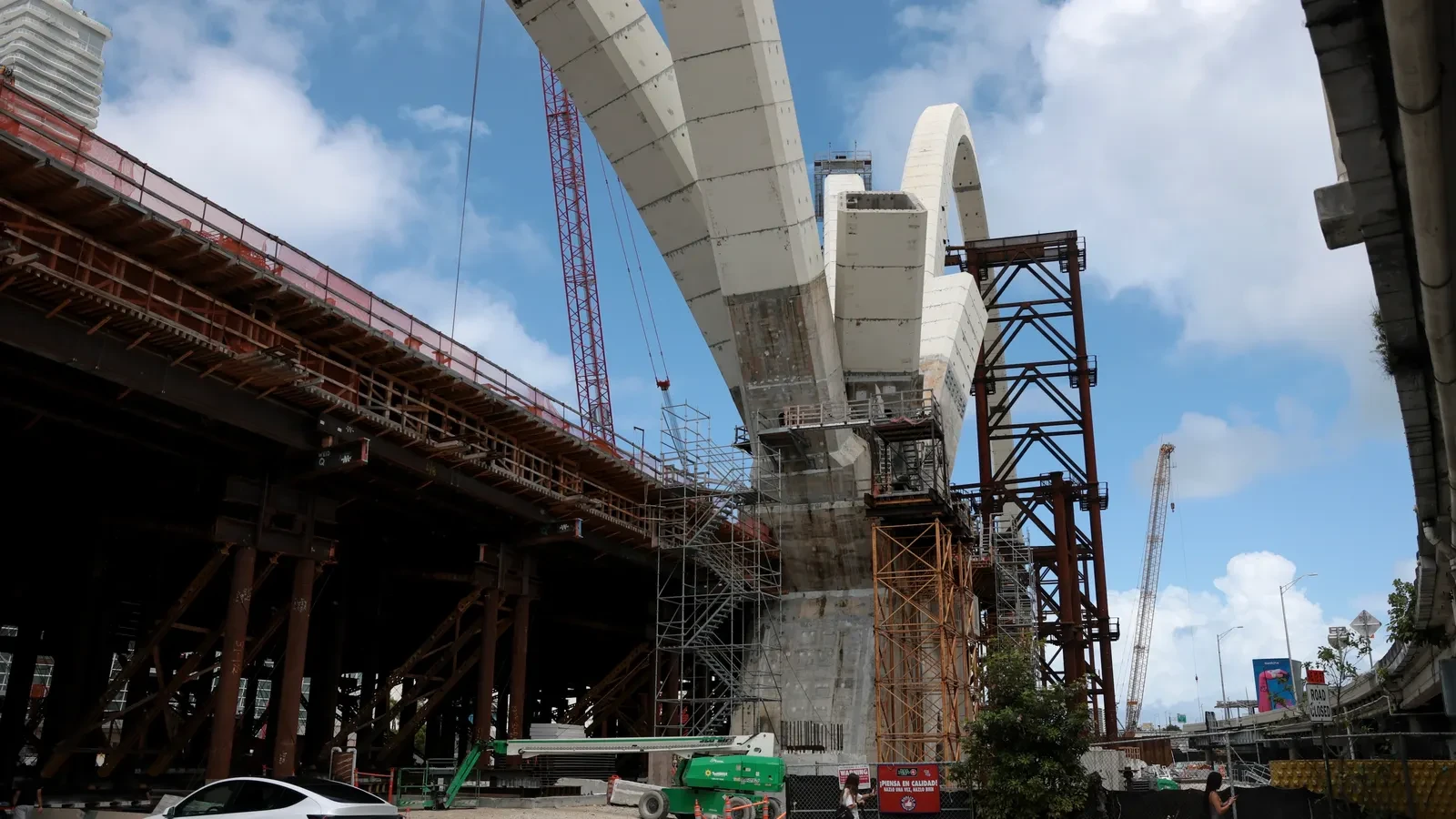
WASHINGTON — In early September, the United States Congress averted what could have been a catastrophic disruption to the nation’s civil works sector. By passing the Continuing Appropriations and Extensions Act—signed into law by President Donald Trump on September 2—lawmakers extended federal surface transportation programs originally established under the landmark Infrastructure Investment and Jobs Act (IIJA).
The legislative maneuver bought infrastructure contractors and state departments of transportation (DOTs) precious time, pushing a looming September 30 expiration date out to December 11. Yet, for an industry that anchors a massive portion of the domestic economy, the roughly 10-week reprieve has offered precious little in the way of peace of mind.
While the short-term measure successfully prevents an immediate cliff-edge drop in federal outlays, construction executives, legal experts, and trade association leaders warn that the band-aid solution is fundamentally inadequate. Infrastructure construction remains one of the few resilient pillars of commercial activity in a high-interest-rate environment, heavily buffering a market otherwise cooling outside of surging data center developments.
However, the lack of long-term funding certainty has already triggered a domino effect of delayed project bids, inflated administrative and legal costs, and severe anxieties regarding critical supply chains—particularly for bridge construction materials. As the industry looks toward a tense legislative landscape ahead of the December deadline, stakeholders are demanding that Congress move beyond temporary patches and enact a permanent surface transportation reauthorization.
Main Facts
The core legislative action centers on the short-term renewal of federal highway, bridge, and transit funding frameworks.
- The Extension: Signed on September 2, the Continuing Appropriations and Extensions Act extends the IIJA’s surface transportation programs through December 11.
- The Economic Stakes: Infrastructure work remains one of the primary drivers of heavy construction activity nationwide, shielding the sector from broader economic shifts.
- The Catch: The temporary measure is not a "clean" extension. It fails to include vital "advance appropriations" provisions that accompanied the original $1.2 trillion IIJA package, leaving specific funding streams—most notably for bridge rehabilitation—severely exposed.
- The Legislative Horizon: The construction industry’s long-term hopes now rest on the proposed multiyear reauthorization bill, BUILD America 250, which cleared the House Transportation and Infrastructure Committee in May with a resounding 62-2 bipartisan vote, though it still awaits a full floor vote and a Senate counterpart.
Chronology of Events
Understanding how the U.S. construction sector arrived at its current state of limbo requires examining the timeline of legislative negotiations, funding cliffs, and administrative adjustments that have defined the road to the December 11 deadline.
Spring to Early Summer: State DOTs Pull Back
As the original September 30 expiration date of the IIJA drew closer, uncertainty began to ripple through state capitals. Fearing that Congress would fail to deliver a timely multiyear reauthorization or even a short-term extension, several state departments of transportation quietly began scaling back their project "lettings"—the formal competitive bidding process where agencies solicit contractor proposals. State officials were hesitant to commit to multiyear construction obligations without guaranteed federal cost-sharing, creating an early-summer chill in the civil engineering pipeline.
May: Committee Approval of BUILD America 250
In a rare display of bipartisan consensus, the House Transportation and Infrastructure Committee overwhelmingly approved the BUILD America 250 bill by a 62-2 vote in May. The legislation was designed to serve as the long-term successor to the IIJA, establishing multiyear funding visibility and introducing novel revenue mechanisms for the Highway Trust Fund (HTF). Despite this momentum, the bill stalled as it awaited tax-title review from the House Ways and Means Committee and a broader floor schedule.
September 2: Presidential Signature on the Short-Term Fix
With the legislative calendar running out and the September 30 expiration looming, Congress drafted and passed the Continuing Appropriations and Extensions Act. President Donald Trump signed the legislation on September 2, successfully pushing the hard stop to December 11 and averting a complete freeze on federal transportation funding at the start of the new fiscal quarter.
September–December: The Lame-Duck Reality and the Path Forward
With the 10-week extension now active, the construction industry finds itself in a holding pattern. Stakeholders are shifting their lobbying efforts toward the upcoming lame-duck session of Congress, hoping lawmakers can resolve jurisdictional hurdles, secure necessary tax titles, and reconcile House and Senate differences to pass a comprehensive multiyear reauthorization before the December 11 deadline arrives.
Supporting Data and Financial Realities
The mechanics of federal infrastructure funding are notoriously complex, relying on a delicate interplay between traditional trust funds, federal tax revenues, and modern appropriations structures. The friction caused by the September 2 extension highlights structural vulnerabilities in how the U.S. finances its built environment.
Historically, the Highway Trust Fund (HTF) has served as the primary engine for road and bridge projects. Fed by traditional revenue streams—including the federal gas tax, diesel tax, and federal excise taxes on heavy commercial trucks—the HTF has nonetheless faced structural shortfalls for decades. To keep the fund solvent, Congress has routinely relied on general fund transfers.
When lawmakers passed the $1.2 trillion IIJA, they preserved these historic revenue mechanisms while layering on a new fiscal tool: "advance appropriations." These advance funds gave state agencies the confidence to plan massive, multi-phase civil engineering projects stretching over several years.
However, the recent Continuing Appropriations and Extensions Act omitted these advance appropriations. According to industry analysts, while the calendar deadline was successfully moved from September 30 to December 11, the money did not move with it.
The financial fallout is particularly pronounced in specialized sectors. For instance, the IIJA allocated $5.5 billion specifically for the Bridge Formula Program (BFP), a vital federal initiative targeting the rehabilitation of structurally deficient bridges nationwide. Without the inclusion of advance appropriations in the short-term extension, the pipeline for upcoming bridge projects faces immediate constraints, directly impacting precast concrete manufacturers, heavy civil contractors, and aggregate suppliers who rely on multi-year visibility to manage inventory and capital expenditures.
Official Responses and Industry Stakeholder Perspectives
Representatives from across the construction, legal, and manufacturing sectors have expressed a mixture of profound relief that a total funding shutdown was avoided, paired with deep frustration over the lack of long-term predictability.
Associated General Contractors of America (AGC)
Alex Etchen, vice president of construction advocacy and risk management at the AGC, emphasized that a 10-week extension is fundamentally misaligned with the planning horizons required by heavy civil contractors.
"One short-term extension, it’s not a long period of time," Etchen noted. "We heard from some of our chapters that their state DOTs were pulling back on lettings out of concerns of the IIJA expiring and having some doubts that Congress was going to be able to get a longer-term bill done in time."
Despite these challenges, Etchen acknowledged the pragmatic reality of the legislative calendar. "Ultimately we would have preferred that they get a long-term bill complete, but we are appreciative that they did pass a short-term extension to keep that funding going until December 11. We’re hopeful that they can get this wrapped up in the lame-duck session of Congress."
Associated Builders and Contractors (ABC)
Josh Leonard, senior manager of legislative affairs at the ABC, highlighted how federal funding stability cascades down through the entire contracting ecosystem—affecting workforce deployment, equipment acquisition, bonding capacity, and subcontractor agreements.
"A multiyear authorization gives state transportation departments more visibility into federal funding and helps them maintain more predictable schedules," Leonard explained. "A roughly 10-week extension preserves the current framework but does not provide the same planning horizon."
Leonard pointed out that construction firms make foundational business decisions months—and sometimes years—before a project ever goes out to advertisement. Without a long-term baseline, risk premiums inevitably rise across the market.
Smith Currie Oles
Michael Clark, a partner at Atlanta-headquartered construction law firm Smith Currie Oles, zeroed in on the legal and administrative complications triggered by short-term extensions and truncated funding streams.
"When that happens, costs increase," Clark warned. "From a legal perspective, contract clauses that are typically already in the contract documents, for instance involving contingencies, termination, suspension, conditional payment and delay or suspension are activated."
Clark described the September measure as an "unclean extension," noting that the legislative deadline was successfully shifted, but the vital funding mechanisms were left behind. This disconnect introduces legal ambiguities that can lead to costly disputes between project owners, state agencies, and general contractors.
National Precast Concrete Association (NPCA)
The manufacturing sector, particularly precast concrete producers who supply structural elements for bridge construction, voiced some of the most urgent alarms regarding the stripped-down extension. Nick Rhoad, president and CEO of the NPCA, warned that the omission of advance appropriations threatens to stall critical transport corridors.
"Without congressional action, bridge funding will cease immediately, limiting states’ ability to plan, bid and begin new projects," Rhoad stated. "They have failed to provide the multiyear certainty states need to plan and deliver critical transportation projects."
Rhoad stressed the long lead times inherent in heavy infrastructure development: "These projects take years to plan and bid, and without certainty that funding will be available, new work will come to a complete halt immediately. We need to lock in surface transportation reauthorization for the long-term, not just extensions."
Implications for the Future of U.S. Infrastructure
The ongoing debate over federal transportation funding highlights deep-seated structural challenges in how the United States finances, plans, and executes public works. As the December 11 deadline approaches, the construction industry faces several critical implications:
- Escalating Project Costs: The constant cycle of short-term extensions forces state agencies to break large, cohesive projects into smaller, bite-sized phases. This fragmentation inevitably drives up administrative overhead, material purchasing costs, and contractor contingency pricing.
- The Revenue Crisis and EV Adoption: Finding a sustainable funding mechanism for the Highway Trust Fund remains the ultimate hurdle for long-term bills like BUILD America 250. As fuel-efficient vehicles, hybrids, and electric vehicles (EVs) become increasingly dominant on American roadways, traditional gas tax revenues—the historic bedrock of the HTF—continue to erode. BUILD America 250 attempts to tackle this paradigm shift by introducing a dedicated fee on electric and hybrid vehicles, marking what would be the first new revenue stream introduced into the HTF in three decades.
- Political Roadblocks: Before BUILD America 250 can reach the floor for a full House vote, the House Ways and Means Committee must successfully finalize its complex tax titles. Furthermore, the Senate has yet to release its own highway reauthorization proposal, setting up a high-stakes legislative showdown during the upcoming lame-duck session.
- Market Confidence: The broader economic health of the domestic construction sector relies heavily on predictable public spending. While private investments—such as the massive wave of data center construction—have provided a vital secondary market, public infrastructure remains the bedrock employer for heavy civil contractors, union laborers, and materials manufacturers.
For now, the U.S. construction industry remains suspended between relief and anxiety. While September’s legislative extension bought the sector a temporary reprieve, the true test of Washington’s commitment to America’s roads, bridges, and tunnels will arrive when lawmakers return to Capitol Hill to face the December 11 reckoning. Until a comprehensive, multiyear reauthorization is signed into law, America’s infrastructure builders will continue to navigate a highway paved with uncertainty.
