

The global automotive landscape is bracing for a tectonic shift as BYD, the world’s leading electric vehicle (EV) manufacturer, stakes its claim at the forefront of solid-state battery technology. Executive Vice President Stella Li has confirmed that the Chinese industrial giant plans to introduce its first commercial electric vehicle powered by an all-solid-state battery by 2027.
For over a decade, automotive enthusiasts and industry insiders have heard whispers of solid-state batteries—frequently dubbed the "holy grail" of energy storage. Repeatedly promised and perpetually delayed by legacy automakers, the technology has occasionally bordered on industry folklore. However, with multi-billion-dollar investments and aggressive research and development pipelines now bearing fruit, the conversation has shifted from theoretical possibility to tangible manufacturing roadmaps.
BYD’s aggressive timeline positions the company to challenge established timelines not just in China, but globally, as the race to dominate the next generation of electric mobility intensifies.
Main Facts: BYD’s Breakthrough and Immediate Strategy
During an exclusive interview with Carwow.es detailing BYD’s European expansion and the introduction of its luxury Denza brand to the continent, executive vice president Stella Li offered a rare behind-the-scenes look at the company’s R&D priorities.
When asked about the myriad alternative battery chemistries being explored worldwide, Li was unequivocal: "You can name any battery technology, and I will guarantee you will find it in one corner of BYD R&D that we are studying."
Regarding solid-state technology specifically, Li asserted that BYD occupies the leading position in both technological maturity and commercialization strategy. The company plans to substantiate this claim by putting its first solid-state-equipped production vehicle on public roads in 2027.
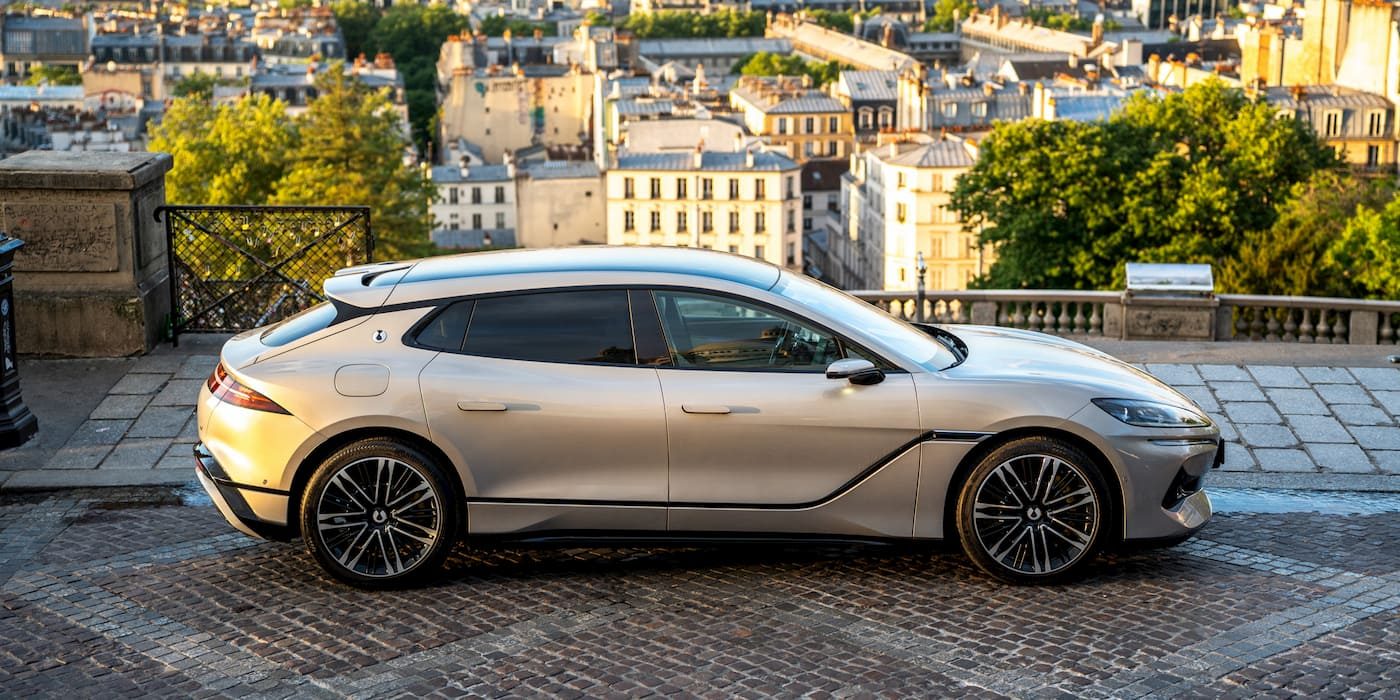
While waiting for 2027, BYD is far from resting on its laurels. The company is currently rolling out its advanced Blade Batteries 2.0 and proprietary "Flash Charging" technology. Highlighted by the newly launched Denza Z9 GT in Europe, this ultra-fast charging ecosystem allows vehicles to replenish from 10% to 70% in a mere 5 minutes, while a 20% to 97% charge takes just 9 minutes. To build brand awareness in the high-end European segment, BYD has introduced aggressive incentives, including six months of complimentary public charging for early Denza adopters.
Chronology of Next-Gen Battery Development
The path to BYD’s 2027 target has been meticulously mapped out through years of internal research, culminating in public disclosures by top-tier executives and technical chiefs:
- The Early R&D Phase (Early 2010s–2020): BYD began quietly pouring resources into fundamental solid-state material science, analyzing various solid electrolytes alongside liquid-electrolyte systems to understand degradation pathways and conductivity hurdles.
- Late 2024 / Early 2025: Sun Huajun, CTO of Shenzhen BYD Lithium Battery Co., publicly detailed the company’s focus on sulfide-based electrolytes, noting their superior thermal stability and longevity compared to traditional liquid lithium-ion cells.
- April 2026: At a major corporate conference, BYD Group Chief Scientist Lian Yubo announced that all-solid-state EV battery development had officially reached "a critical stage," while cautioning that manufacturing hurdles remained before full-scale commercialization.
- September 2026: Executive Vice President Stella Li formalizes the 2027 commercial introduction window during her Carwow.es interview, cementing the year as a watershed moment for the brand.
- 2027 (Projected): BYD’s dedicated battery manufacturing division, FinDreams, plans to initiate limited-batch production of sulfide-based all-solid-state batteries, debuting them in select luxury flagship models.
- 2030 (Projected): BYD targets the full-scale mass production of solid-state batteries, transitioning the technology from niche luxury vehicles to high-volume, mainstream EV segments.
Supporting Data and Technical Architecture
The enthusiasm surrounding solid-state batteries is rooted in fundamental physics. Conventional lithium-ion batteries rely on liquid organic electrolytes, which are susceptible to dendrite formation (microscopic metal fibers that can cause short circuits), thermal runaway (fires), and performance degradation in extreme temperatures.
BYD’s research—led by FinDreams and overseen by technical leadership—is heavily focused on sulfide-based solid electrolytes. According to technical disclosures from BYD’s R&D centers, sulfide electrolytes offer several distinct advantages over standard liquid cells:
- Enhanced Safety: The elimination of flammable liquid organic solvents drastically reduces the risk of fires, even under extreme physical damage or overcharging.
- Superior Energy Density: Solid-state cells allow for the integration of high-capacity lithium metal anodes, significantly increasing the energy packed into a given physical volume and weight. This directly translates to driving ranges well exceeding 700 miles (1,100+ km) on a single charge.
- Faster Ion Transport: Sulfide-based materials exhibit exceptional ionic conductivity at room temperature, enabling hyper-fast charging speeds that surpass even current liquid-based "Flash Charging" systems.
- Longevity and Stability: The chemical stability of solid-state interfaces minimizes capacity fade over thousands of charge-discharge cycles, promising multi-decade battery health.
However, bridging the gap between laboratory success and gigafactory-scale manufacturing remains a monumental engineering challenge. Li emphasized that BYD’s internal teams are studying not only the chemical compositions, but also the specialized industrial equipment and cleanroom environments required to mass-produce these delicate materials economically.
Official Responses and Industry Context
BYD is not operating in a vacuum. The global automotive industry recognizes that the first automaker to successfully scale solid-state batteries will likely capture an insurmountable competitive advantage.

During public briefings, BYD representatives have continually framed their approach as holistic. Rather than relying on third-party suppliers, BYD’s vertically integrated business model—spanning lithium mining partnerships, chip design, vehicle manufacturing, and FinDreams battery production—gives it unmatched control over its supply chain.
At the same time, competitors are racing down parallel tracks. Domestically in China, rival automotive groups such as Geely and Changan Auto, alongside battery titan CATL, have similarly anchored their solid-state commercialization targets to the 2027 timeframe.
Internationally, legacy giants including Toyota, Stellantis, and Mercedes-Benz are pushing hard toward the same milestone. Real-world testing is already underway; notably, Mercedes-Benz successfully piloted a modified EQS equipped with solid-state cells from startup Factorial Energy over 745 miles (1,200 km) on a single charge. Despite these impressive milestones, industry analysts project that widespread, cost-effective commercial availability across the broader global market will not fully materialize until the 2029 to 2030 window.

Strategic Implications for the Global EV Market
The introduction of BYD’s first solid-state EV in 2027 carries profound strategic implications for the global automotive market:
1. Luxury-First Deployment Strategy
Because early-generation solid-state batteries will inevitably carry high production costs, BYD plans to roll them out selectively. The initial wave of vehicles featuring this technology is expected to debut under BYD’s high-end, premium umbrella brands—such as Denza, Yangwang, and Fang Cheng Bao. This mirroring of historical automotive trends allows luxury buyers to subsidize the early manufacturing curve before economies of scale drive prices down for mass-market compacts and sedans.
2. Pressure on Legacy Automakers
For decades, legacy Western and Japanese automakers have pointed to long-term battery R&D as an area where they would eventually eclipse fast-moving Chinese manufacturers. BYD’s ability to operationalize sulfide-based solid-state batteries by 2027 undercuts that narrative, forcing traditional original equipment manufacturers (OEMs) to accelerate their own timelines or risk losing technological leadership in their home markets.

3. Redefining Range and Infrastructure Anxiety
The combination of hyper-fast charging (such as BYD’s current 5-minute flash charging) and the massive energy density of solid-state cells effectively neutralizes the two primary consumer hesitations regarding electric vehicles: range anxiety and refueling time. When a vehicle can travel 800+ miles and recharge in the time it takes to buy a cup of coffee—without safety compromises—the remaining arguments for internal combustion engines evaporate entirely.
4. Vertical Integration as a Moat
BYD’s success underscores the power of vertical integration. By developing the chemistry, the manufacturing equipment, the battery management software, and the vehicles under one corporate ecosystem, BYD can iterate faster and absorb initial production inefficiencies better than competitors reliant on fragmented supply chains.
As 2027 approaches, all eyes will be on FinDreams’ pilot production lines. If BYD successfully transitions its sulfide-based solid-state batteries from the laboratory to the showroom floor, it will not only cement its status as the world’s leading EV manufacturer—it will fundamentally rewrite the future of global transportation.
