

The global electric vehicle landscape is undergoing a profound paradigm shift. As legacy automakers and EV pioneers alike push the boundaries of battery chemistry, aerodynamics, and autonomous technology, the market is moving past early-adopter novelties into a fierce, high-stakes era of commercial utility and performance dominance.
In the latest episode of Quick Charge, the electric vehicle news landscape was upended by a wave of monumental announcements: record-setting sporty EVs from competing legacy and startup brands, a new chapter in Tesla’s long-delayed Roadster saga, the expanding footprint of Level 4 autonomous public transport, and a commercial freight breakthrough from China that threatens to outpace Western timelines.
This comprehensive report breaks down the core developments shaping the EV ecosystem today, evaluating the technological breakthroughs, chronological rollouts, supporting data, official perspectives, and the broader industry implications.
Main Facts: A Convergence of Range, Autonomy, and Heavy-Duty Power
The modern electric vehicle conversation is no longer purely about passenger car efficiency. It spans hypercar performance, public mass transit, and long-haul logistics.
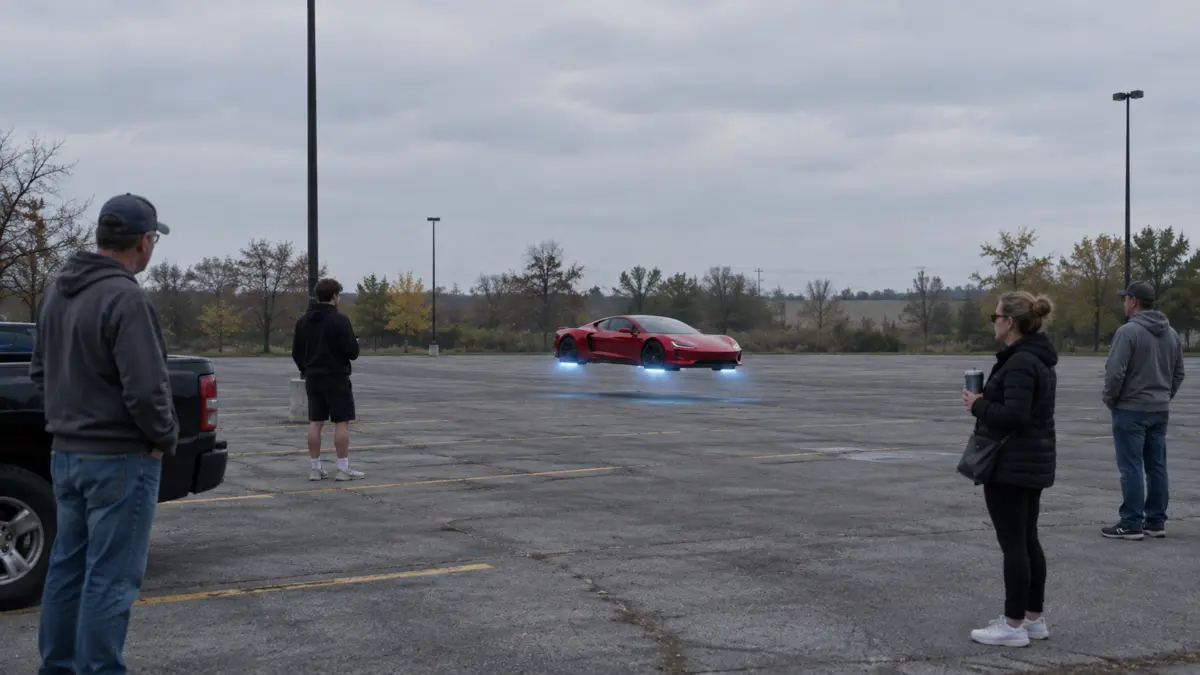
- Tesla Roadster Updates and Cybercab Detours: Tesla continues to court headlines with the long-awaited, repeatedly delayed Tesla Roadster—rumored to feature SpaceX-inspired cold-gas thruster technology capable of making the vehicle "hover" (allegedly) in a controlled demonstration this October. Concurrently, real-world testing of the Tesla Cybercab provides a glimpse into the company’s autonomous ride-hailing future.
- Global L4 Autonomy Expansion: Autonomous transportation is moving out of closed test tracks and into critical infrastructure. Zurich Airport has officially deployed Level 4 autonomous electric shuttles to manage passenger movement, signaling a major win for commercialized self-driving tech in controlled European hubs.
- Record-Setting Sporty EVs: Volkswagen has fired a major salvo into the high-performance EV sector, rolling out a record-setting sporty electric vehicle designed to challenge traditional supremacy in track capability and range. This arrives alongside new performance metrics from rival high-end electric platforms boasting over 1,000 miles of range and world-beating speed.
- BYD’s 600 km Electric Semi with "Flash Charging": In the commercial freight sector, Chinese automotive giant BYD has launched a commercially available electric semi-truck boasting a 600-kilometer (approx. 373 miles) range and jaw-dropping 1.5-megawatt (1,500 kW) "flash charging" capabilities, raising the bar for zero-emission logistics.
Chronology of Events: How the Latest EV Milestones Unfolded
The past several months have been marked by a frantic race toward commercialization across multiple automotive sectors. While consumer-facing announcements capture public imagination, behind-the-scenes deployment schedules are reshaping how cities and shipping routes operate.
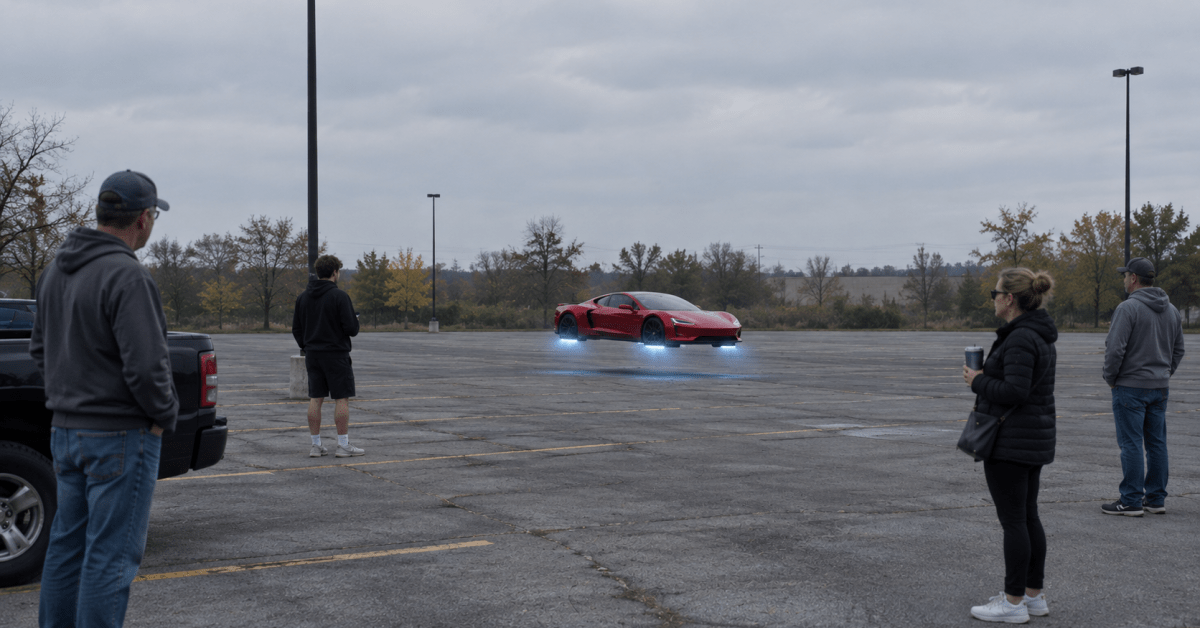
- Early 2024 – Mid 2026: The Long Wait for the Roadster: First unveiled as a concept nearly a decade prior, the second-generation Tesla Roadster has faced endless delays as Tesla prioritized scaling Model Y, Cybertruck, and autonomous driving architectures. Elon Musk’s periodic teases about "rocket tech" and hovering capabilities have kept enthusiasts on edge, culminating in the anticipated October showcase.
- Q3 2026: Zurich Airport’s Autonomous Integration: Setting a new benchmark for public-private partnerships in autonomy, Zurich Airport integrated Level 4 autonomous electric shuttles into its daily logistics. This milestone represents months of regulatory approvals and rigorous mapping of airport perimeter roads.
- September 2026: Volkswagen and Competitor Performance Reveal: Volkswagen unveiled its latest engineering marvel—a record-setting sporty EV engineered to prove that traditional European automotive giants can out-accelerate and out-endure upstart EV competitors on closed circuits. This coincided with industry buzz surrounding 1,000-mile range architectures.
- Immediate Availability: While Western announcements often rely on future-date promises, BYD shattered the vaporware narrative by immediately putting its 600 km range, 1.5 MW flash-charging electric semi-truck up for sale, challenging legacy diesel operators with plug-and-play heavy-duty infrastructure.
Supporting Data & Technical Specifications
To understand the weight of these industry announcements, one must examine the raw numbers driving the engineering behind these vehicles.
The Commercial Heavy-Duty Benchmark: BYD Electric Semi
- Range: Up to 600 km (373 miles) on a single charge under standardized test conditions.
- Charging Speed: 1.5 MW (1,500 kW) flash-charging architecture, capable of replenishing battery reserves from low percentages to near-capacity in the time it takes a driver to stretch and grab a coffee.
- Market Availability: Ready for immediate purchase, bypassing the multi-year waitlists typical of American and European electric truck rollouts.
Passenger Performance and Autonomy
- High-End Sporty EVs: Pushing past the 1,000-mile range threshold in specialized configurations, modern performance EVs are utilizing solid-state battery research, advanced silicon-anode chemistries, and drag coefficients dipping below 0.20 Cd.
- Level 4 Autonomy (Zurich Airport): Operating without safety drivers within defined operational design domains (ODD), utilizing a redundant sensor suite of LiDAR, radar, high-definition cameras, and real-time kinematic (RTK) GPS positioning.
- Tesla Cybercab & Roadster: While concrete production metrics for the Cybercab remain fluid, its rollout marks the transition toward dedicated autonomous hardware without traditional steering controls. The Roadster aims for sub-2-second 0–60 mph times, paired with controversial thruster-assisted maneuvering hardware.
Official Responses and Industry Perspectives
The juxtaposition of legacy automotive giants, agile Chinese manufacturers, and Silicon Valley disruptors has created a tense dialogue across corporate boardrooms.
Industry analysts have expressed mixed reactions to Tesla’s ongoing Roadster timelines. While the engineering ambition of incorporating aerospace technology into an automotive chassis is undeniable, critics frequently point out the widening gap between initial concept announcements and customer deliveries. However, supporters argue that the halo effect of such vehicles drives essential research and development down to affordable mass-market models like the upcoming "Next-Gen" compact EV platform.
Conversely, the commercial transport sector has reacted with genuine urgency to BYD’s heavy-duty truck rollout. European and North American logistics providers are increasingly vocal about the lack of megawatt-charging infrastructure along major freight corridors. BYD’s simultaneous offering of both the vehicle and the ultra-fast charging ecosystem puts immense pressure on domestic heavy-duty manufacturers like Tesla (Semi), Freightliner, and Volvo to accelerate their own charging infrastructure partnerships.
In the realm of public transport, Zurich Airport’s administration hailed the integration of L4 shuttles as a transformative step for passenger convenience and operational efficiency, noting that automated transit reduces human error and optimizes traffic flow around crowded terminal zones.

Implications for the Global EV Market
The convergence of these events highlights several critical trajectories for the global transition to sustainable transport:
1. The Death of Vaporware vs. The Power of Immediate Delivery
For years, the EV startup ecosystem thrived on futuristic concept art and distant production dates. BYD’s immediate commercialization of a 600 km semi-truck with 1.5 MW charging signals a shift toward pragmatism. Buyers—particularly commercial fleet managers—no longer want promises; they want ROI, uptime, and immediate availability.
2. High-Performance EVs as Rolling Laboratories
While vehicles like Volkswagen’s new sporty EV and the Tesla Roadster occupy niche luxury or halo segments, their underlying technologies—aerodynamic efficiency, thermal management systems, and high-discharge battery cells—will inevitably trickle down to everyday family crossovers. Performance serves as the ultimate stress test for component durability.
3. Autonomy Moves from Hyper-Hyped to Hyper-Localized
The deployment of L4 shuttles at Zurich Airport demonstrates that full autonomy will succeed first in bounded, predictable environments rather than completely unstructured urban centers. Airports, university campuses, and dedicated freight lanes will serve as the stepping stones for widespread autonomous adoption.
4. Global Competition Intensifies
The speed at which Chinese manufacturers are iterating on heavy-duty and passenger EV platforms presents a formidable challenge to Western industrial policies. As tariffs, trade negotiations, and local manufacturing mandates evolve, Western automakers must accelerate their software integration and battery supply chain independence to remain competitive.

Conclusion
The electric vehicle revolution is no longer a localized phenomenon or a niche technological experiment; it is the dominant global industrial narrative of the decade. From record-shattering hypercars and hovering roadsters to autonomous airport shuttles and megawatt-charging semi-trucks, the pace of innovation shows zero signs of slowing down.
As consumers and fleet operators weigh their options, the companies that succeed will be those that balance audacious engineering visions with reliable, scalable, and immediate commercial execution. Whether the future arrives via a flash-charging electric semi on a cargo highway or an autonomous shuttle terminal run, the high-voltage transformation of global mobility is officially moving into the fast lane.
