

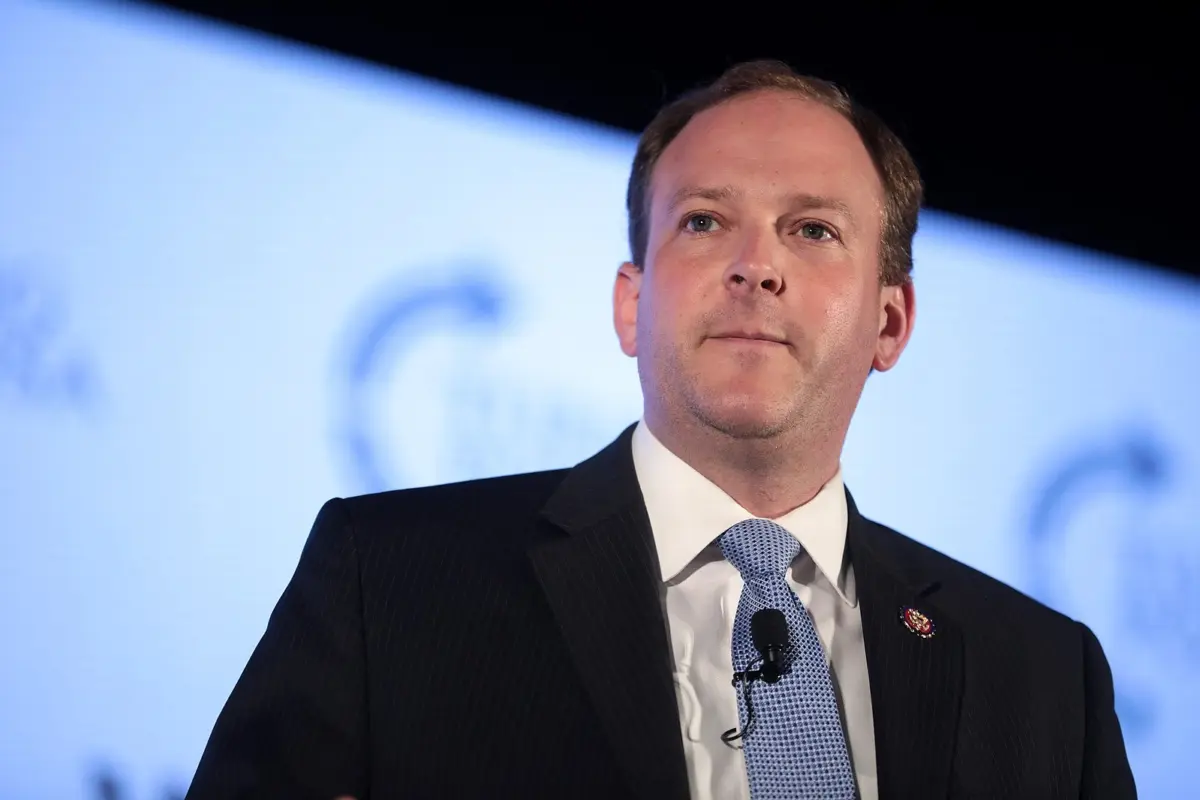
WASHINGTON — In what environmental advocates and public health experts are calling a devastating blow to national clean air protections, the Environmental Protection Agency (EPA) finalized a controversial policy on Monday to eliminate federal limits on greenhouse gas and toxic pollution from the nation’s power plants.
The sweeping regulatory rollback—spearheaded by EPA Administrator Lee Zeldin—strips away long-standing constraints on coal- and gas-fired power generation. According to preliminary analyses from organizations like the Environmental Defense Fund (EDF), the decision is projected to saddle American taxpayers and families with nearly $3 trillion in combined long-term healthcare costs and climate damages, alongside thousands of preventable premature deaths each year.
The move marks a dramatic escalation in the administration’s broader deregulatory agenda, setting the stage for high-stakes courtroom battles over the statutory limits of executive authority, the interpretation of the Clean Air Act, and the fundamental valuation of human life in federal policymaking.
Main Facts
The newly finalized rule dismantles federal boundaries on greenhouse gas emissions from stationary sources, a cornerstone of previous efforts to curb the progression of global climate change. Greenhouse gases, primarily carbon dioxide and methane, trap atmospheric heat and have been directly linked by international scientific bodies—including the Intergovernmental Panel on Climate Change (IPCC)—to intensifying heatwaves, prolonged droughts, and rapidly spreading wildfires across the globe.
Key elements and projected impacts of the finalized EPA policy include:
- Severe Economic and Health Toll: A preliminary analysis by the Environmental Defense Fund estimates that repealing these pollution standards will generate approximately $1 trillion in direct health costs and $1.8 trillion in climate-related damages.
- Human Cost: The rollback is expected to cause thousands of premature deaths annually, alongside hundreds of thousands of asthma attacks, hundreds of emergency room visits, and tens of thousands of missed school and workdays each year.
- A Future Prohibition on Regulation: Alongside Monday’s final rule, Administrator Zeldin announced a secondary proposal aimed at barring the EPA from ever setting limits on power plant pollution in the future—a measure that legal scholars note directly conflicts with the agency’s mandates under the Clean Air Act.
- The Elimination of Health Metrics: The policy rollout follows an earlier administrative shift in which the EPA stopped factoring human health impacts into its cost-benefit calculations for regulatory changes, effectively removing premature mortality and morbidity estimates from official agency evaluations.
Critics argue that these combined measures systematically ignore established scientific consensus regarding the toxicity of fossil fuel combustion products, transferring the financial and physical burden of pollution from energy producers onto everyday citizens.

Chronology
The path toward Monday’s finalization has been marked by a rapid series of policy shifts, executive actions, and preliminary leaks:
- The Obama and Biden Foundations: Previous administrations established stringent greenhouse gas and carbon pollution standards for power plants under the authority of the Clean Air Act, aiming to transition the grid toward cleaner energy sources and mitigate climate impacts.
- Early 2025: The political landscape shifted dramatically with a new administration taking office. Early in the year, the EPA instituted a controversial policy change halting the calculation of human health impacts in its regulatory reviews.
- Summer 2025: Industry lobbying intensified, highlighted by notable campaign contributions and political friction surrounding energy infrastructure projects, including private equity investments in fossil fuel terminals.
- Late 2025 to Early 2026: Legal skirmishes began to mount over administration policies. In February 2026, a coalition of states and environmental groups sued the EPA over sweeping attacks on air quality and science-based standards. Meanwhile, courts began weighing targeted rollbacks.
- September 2026: Media reports, citing internal sources, signaled the imminent arrival of the finalized power plant rule. Concurrently, a federal court ruled against a separate EPA effort to block California and 16 other states from enforcing their own independent clean air standards.
- Monday: The EPA officially finalized the rule eliminating power plant pollution limits, immediately triggering widespread condemnation and preparations for immediate legal challenges.
Supporting Data
To contextualize the scale of the EPA’s rollback, economists and public health researchers have pointed to a vast body of empirical data regarding energy markets, pollution costs, and grid dynamics.
Economic and Health Projections
The staggering estimates of $1 trillion in health-related expenses and $1.8 trillion in climate damages are derived from econometric models that track the spread of particulate matter ($PM_2.5$), sulfur dioxide, and nitrogen oxides emitted alongside carbon dioxide. When these pollutants enter the atmosphere, they exacerbate cardiovascular and respiratory conditions.
Previous administration rollbacks have shown similar trajectories; for instance, the EPA’s parallel efforts to weaken fuel efficiency standards were projected by the Department of Energy’s own figures to raise national gas prices by roughly $0.76 per gallon while imposing $1.4 trillion in systemic costs.
The Realities of the Energy Market
Ironically, energy analysts point out that market forces have already rendered the construction of new coal-fired power plants economically unviable. Coal is increasingly viewed as an expensive and dirty energy source, with renewable energy technologies—specifically wind and solar—capturing the vast majority of new power generation capacity. According to Federal Energy Regulatory Commission (FERC) data, renewables accounted for roughly 88% of all new U.S. power generating capacity additions.
However, the rapid expansion of artificial intelligence data centers has created a massive, near-term demand for continuous baseload power. To meet these demands quickly, tech companies and utilities have increasingly turned to natural gas turbines. By removing pollution limits on gas-fired plants, critics warn that the new EPA rule will disproportionately incentivize the rapid deployment of fossil-fuel backup generation for data centers, accelerating both electricity rate hikes and localized health crises.

Official Responses
Reactions to the finalization of the rule split sharply along political, industrial, and environmental lines.
Supporters of the administration—including prominent fossil fuel trade groups and political appointees—defend the actions as a necessary correction against regulatory overreach. Administrator Lee Zeldin has consistently defended the administration’s deregulatory path, arguing that previous climate science mandates placed an unfair burden on domestic energy producers and hindered economic growth. Proponents of the policy contend that loosening these constraints will secure a more reliable energy grid capable of supporting modern technological expansion without the artificial constraints of federal emissions caps.
Conversely, environmental defense organizations, public health coalitions, and state attorneys general have voiced uncompromising opposition.
"The EPA has abandoned its foundational mission to protect human health and the environment," said a spokesperson for a prominent national conservation coalition. "By wiping away these limits and attempting to tie the hands of future regulators, the agency is deliberately trading American lives for short-term corporate profits."
Public health advocates have expressed particular outrage over the agency’s decision to omit health impact assessments from its regulatory justifications, calling it a transparent attempt to evade accountability for the asthma attacks, emergency room visits, and premature deaths that will follow the policy’s implementation.
Implications
As the dust settles on the EPA’s announcement, the long-term implications for American public health, the legal framework of environmental law, and the transition of the national energy grid remain deeply uncertain.

Legal Challenges and Constitutional Questions
The most immediate battleground will be the federal court system. Under Massachusetts v. EPA, the Supreme Court previously affirmed that the Clean Air Act requires the EPA to regulate greenhouse gases if they endanger public health and welfare. Legal scholars argue that an explicit refusal to regulate these emissions—coupled with an ideological stance denying the well-documented harms of greenhouse gases—places the administration on a direct collision course with established statutory law.
While past legal challenges have met with mixed success—such as the 2016 judicial stay of the Obama-era Clean Power Plan—advocates are preparing comprehensive injunction requests to freeze the rule before its provisions can inflict widespread damage.
Grid Evolution vs. Fossil Fuel Reliance
While economic realities continue to favor renewable energy integration due to falling costs and consumer demand, the regulatory shield provided to gas-fired power plants could artificially prolong the lifespan of high-emission infrastructure. Communities hosting data centers and fossil fuel infrastructure face the dual threat of rising utility bills and degraded air quality.
Ultimately, whether the EPA’s final rule survives the upcoming barrage of litigation will determine not only the immediate trajectory of American air quality standards, but also whether federal environmental agencies retain the authority—and the obligation—to protect citizens from the quantifiable costs of pollution.
