


Main Facts
The intersection of sustainable agriculture and renewable energy has long promised a revolution in how humanity works the land, yet all-electric farm utility vehicles have struggled to secure a dominant foothold in commercial and hobby farming markets. High upfront costs, limited battery ranges, and the logistical nightmare of hauling heavy machinery back to a central charging station have historically relegated electric tractors to the sidelines.
Enter Ohio-based GoSun, a company renowned for its innovative consumer solar appliances, which is making a decisive push into heavy-duty utility equipment. In a strategic collaboration with Indian agricultural manufacturing brand Moonrider, GoSun has officially unveiled the Moonrider 27 All-Electric Solar Tractor.
Unlike conventional electric tractors that rely solely on grid-tied charging infrastructure, the Moonrider 27 features an integrated solar array built directly into the vehicle’s architecture. This capability allows the machine to harvest energy from the sun while sitting idle in the field or during operation, drastically cutting down reliance on fossil fuels and electrical grids.
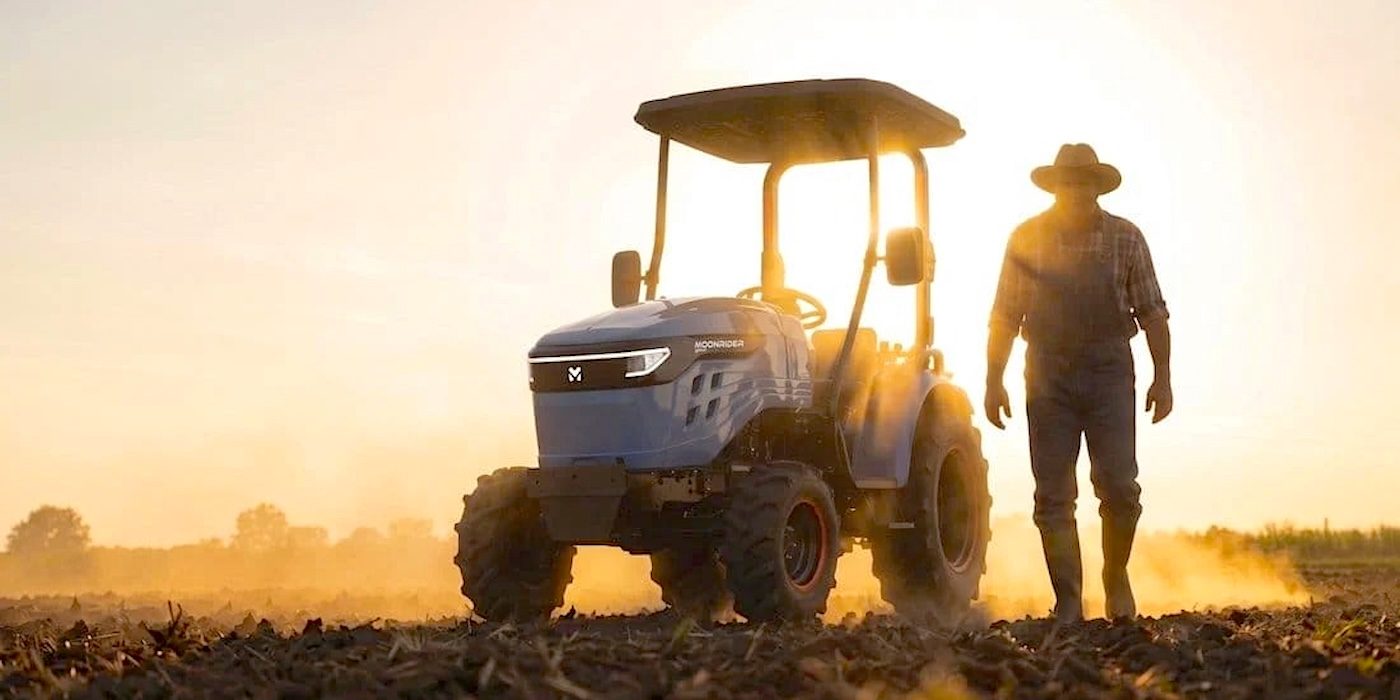
Under the hood—or rather, within its electric chassis—the tractor packs a 20 kW motor (roughly equivalent to 27 horsepower). This system delivers instantaneous torque to all four wheels, ensuring superior traction across muddy, uneven, or sloped terrain. Crucially, the machine features a traditional 540 rpm mechanical power take-off (PTO) located at the rear. This design choice ensures backward compatibility with a vast ecosystem of existing farm implements—such as mowers, tillers, and post-hole diggers—that are already sitting in barns across North America.
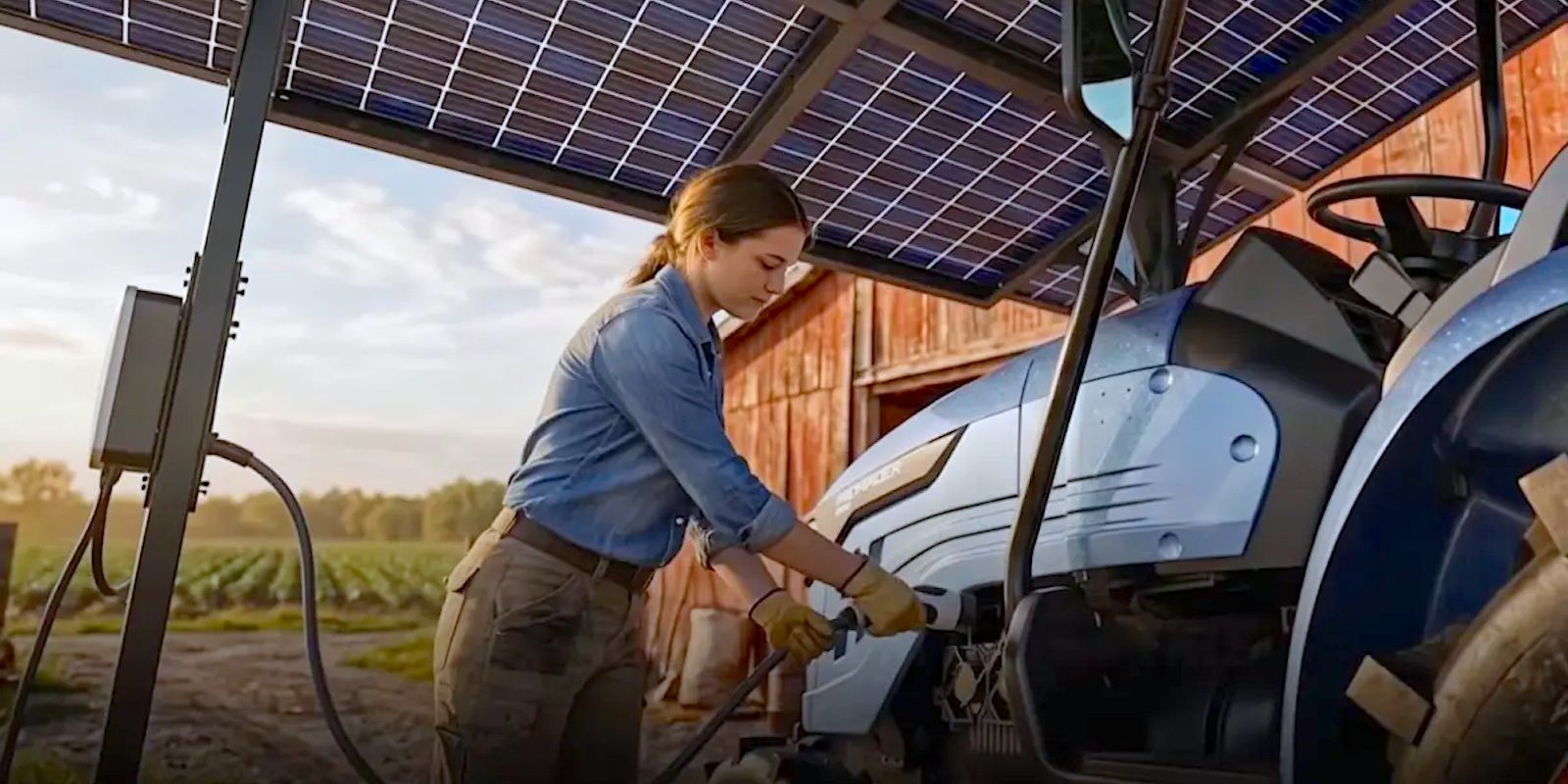
Powering the propulsion and PTO systems is a robust 24 kWh Lithium Iron Phosphate (LFP) battery pack. GoSun estimates that this capacity provides up to five hours of continuous operation under standard load conditions, which translates to a full day of light chores, property management, and small-scale farming tasks. When it is time to recharge, operators have the flexibility of plugging into a standard 220/240V Level 2 AC charger or letting the optional 1.1 kW onboard solar array replenish the battery autonomously.
Chronology
The journey toward the Moonrider 27 reflects a broader, accelerating trend of electrification within the agricultural and industrial sectors, moving from niche proof-of-concepts to commercially viable machinery.
- The Early Electric Experiments (2020–2023): Over the past several years, various startups and legacy agricultural brands introduced battery-powered tractors. While machines like the Monarch electric tractor proved that heavy electric torque was viable, adoption remained hampered by the lack of flexible charging options in remote fields.
- The GoSun-Moonrider Partnership (2024–2025): Recognizing a gap in the small-scale property management and hobby farm markets, GoSun began exploring ways to merge its proprietary solar technology with heavy utility equipment. Partnering with established tractor manufacturer Moonrider allowed GoSun to leverage proven mechanical engineering while integrating advanced solar charging frameworks.
- The Prototype and Testing Phase (Late 2025): Field tests began on small-scale farms to measure the efficacy of integrated photovoltaic arrays on tractors. Data showed that ambient sunlight during off-hours could significantly reduce the frequency of manual plug-in charging sessions.
- Official Launch (September 2026): GoSun officially unveiled the Moonrider 27 to the North American market, positioning it as a direct challenge to small diesel utility vehicles and highlighting its unique solar-replenishing capabilities.
Supporting Data
To understand the practical viability of the Moonrider 27, it is essential to examine the technical specifications and operational metrics provided by GoSun and industry benchmarks:
- Motor Output: 20 kW (~27 horsepower), providing all-wheel-drive (AWD) capability.
- Battery Capacity: 24 kWh LFP (Lithium Iron Phosphate) pack, prized for its thermal stability, safety profile, and longevity.
- Operational Runtime: Up to 5 hours of continuous utility work per full charge.
- Onboard Solar Array: Optional 1.1 kW photovoltaic configuration.
- Solar Yield: Generates approximately 1.5 hours of additional runtime equivalent per sunny day during peak seasons. Under intermittent use conditions, the tractor can theoretically go weeks or months between traditional plug-in sessions.
- PTO Compatibility: Standard rear-mounted 540 rpm mechanical power take-off, bridging the gap between legacy farm implements and modern electric powertrains.
- Charging Options: Dual-path recharging via standard 220/240V Level 2 AC infrastructure or direct solar harvesting.
Official Responses
The unveiling of the Moonrider 27 has sparked considerable discussion within both the clean tech and agricultural communities. Company executives emphasize that the vehicle is designed to solve real-world friction points for landowners.
"Small-scale farming and property management have relied on noisy, costly diesel utility vehicles for far too long," said Patrick Sherwin, founder and CEO of GoSun, during the product launch. "With our new All-Electric Tractor, we are empowering farmers and land managers to literally work in the sunshine—reducing operational costs while protecting the soil and air."

Sherwin and his engineering team have targeted hobby farmers, vineyard operators, orchard managers, and municipal park departments—sectors where traditional diesel tractors are often oversized, excessively loud, and prohibitively expensive to maintain, yet where pure electric alternatives have struggled due to charging logistics.
Industry analysts have similarly noted that by tackling the "charging desert" problem inherent in remote agricultural fields, GoSun’s integrated solar approach addresses the single biggest psychological and logistical barrier to EV adoption in rural communities: range anxiety.
Implications
The introduction of the GoSun Moonrider 27 carries wide-ranging implications for the future of agriculture, rural economics, and environmental sustainability.

1. Decentralization of Energy in Agriculture
Traditional farming relies heavily on centralized fuel supply chains. Diesel must be delivered, stored in bulk tanks, and pumped into machinery. An electric tractor that can harvest its own fuel directly from the sun shifts the paradigm toward energy independence. For remote properties or off-grid homesteads, the ability to generate motive power from sunlight eliminates fuel runs and buffers operations against volatile fossil fuel prices.
2. Lower Total Cost of Ownership (TCO)
While electric vehicles often carry a higher initial purchase price, their operational economics tell a different story. Internal combustion engines require frequent oil changes, filter replacements, spark plug maintenance, and exhaust system upkeep. Electric motors feature significantly fewer moving parts. When combined with zero-cost solar fueling, the Moonrider 27 promises a substantially lower total cost of ownership over its lifespan compared to its 25-to-30-horsepower diesel counterparts.
3. Noise and Air Quality Improvements
Diesel utility tractors are notoriously loud and emit particulate matter, carbon monoxide, and nitrogen oxides directly into the immediate work environment. For farmers working in enclosed spaces like greenhouses, or those managing livestock, the silence and zero-tailpipe-emissions profile of an electric tractor drastically improve working conditions, animal welfare, and local air quality.

4. Overcoming Market Resistance in North America
The ultimate question facing the Moonrider 27 is whether it can crack the notoriously conservative North American agricultural market. Farmers are notoriously pragmatic; new technology must prove its reliability before it replaces tried-and-true mechanical systems. By incorporating a standard 540 rpm mechanical PTO—ensuring that legacy tools like rototillers and mowers work seamlessly out of the box—GoSun has removed a major friction point.
If the Moonrider 27 successfully demonstrates that a tractor can sustain its operational needs largely through ambient sunlight, it could serve as a vital stepping stone toward the broader electrification of heavy agricultural machinery worldwide.
