

SACRAMENTO, Calif. — In a sweeping legislative package aimed at democratizing renewable energy, lowering soaring electricity bills, and fortifying the state’s electrical grid, California has officially unlocked a new frontier for clean energy adoption. On September 30, Governor Gavin Newsom signed a trio of landmark energy bills designed to reshape how residents generate, manage, and consume power.
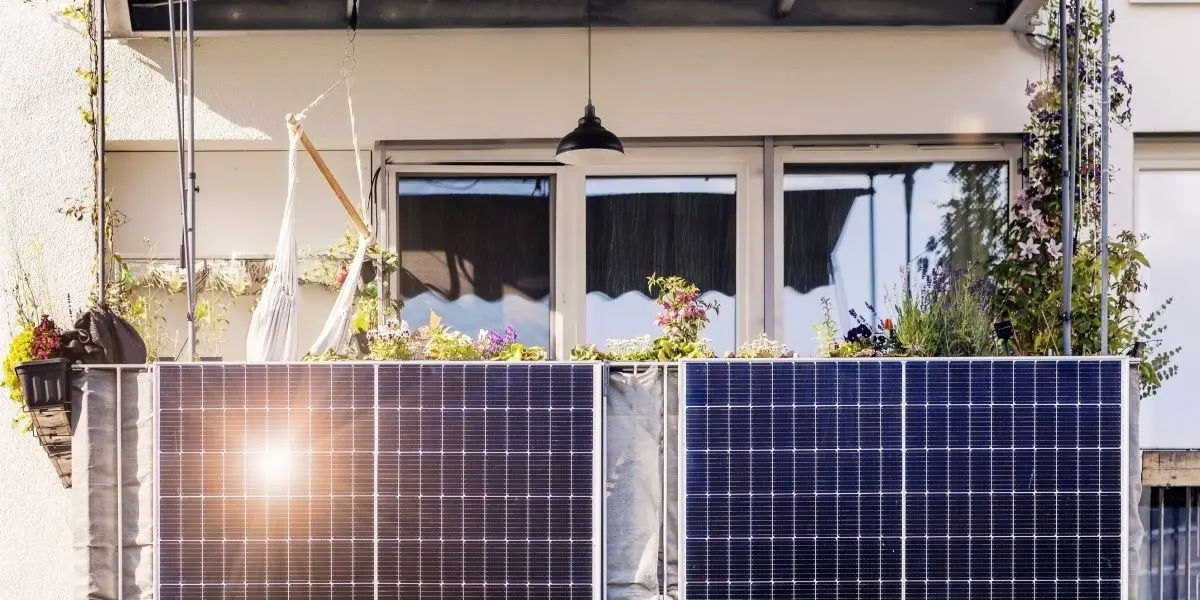
Among the newly minted laws is the much-anticipated Plug and Play Solar Act, which introduces "balcony solar" to the nation’s most populous state. Alongside legislation targeting virtual power plants and localized grid transparency, these policies represent a concerted effort by California lawmakers to extract maximum value from existing infrastructure while offering relief to millions of frustrated ratepayers.
Main Facts
The legislative package centers on three primary bills authored by key state lawmakers, each tackling a different facet of California’s complex energy landscape:
- SB 868 (The Plug and Play Solar Act): Authored by state Senator Scott Wiener, this law legalizes and streamlines the deployment of small-scale, plug-in solar systems—commonly referred to as balcony solar—for renters, apartment dwellers, and homeowners whose roofs are structurally unsuited for traditional solar arrays. Households can now install systems with a combined output of up to 1,200 watts AC that plug directly into a standard 120-volt household outlet, significantly reducing bureaucratic hurdles and utility interference.
- SB 913 (The Clean Local Power Act): Authored by state Senator Josh Becker, this legislation focuses on virtual power plants (VPPs). It directs state regulators to clear legal and operational pathways for coordinated networks of home batteries, electric vehicles (EVs), and smart thermostats to compete directly with traditional, fossil-fuel-burning power plants in meeting the grid’s reliability requirements.
- SB 905 (Grid Maximization and Transparency): Also authored by Senator Becker, this bill compels large investor-owned utilities (IOUs) to publish granular data regarding local grid capacity, peak-hour constraints, and off-peak availability. Furthermore, it pushes regulators to explore cheaper infrastructure financing alternatives and lower shareholder returns on certain capital-intensive utility projects to curb spiraling ratepayer costs.
Chronology: The Road to Reform
The journey toward these legislative victories reflects years of mounting public frustration over high utility rates, restrictive interconnection policies for rooftop solar, and the ongoing challenge of grid reliability amid extreme weather events.
- Early 2024–2025: As California utility rates continued to climb—sparking widespread public outcry—energy advocates and lawmakers increasingly looked toward decentralized solutions. While traditional rooftop solar adoption faced headwinds following contentious net-billing policy changes (NEM 3.0), European models of "plug-and-play" balcony solar began gaining viral attention online, proving that plug-in systems could safely and efficiently generate power for apartment dwellers.
- Spring 2025: State Senator Scott Wiener introduced SB 868, framing it as an equity issue that would finally allow renters and low-income families—who make up a massive percentage of California’s population—to directly benefit from clean energy generation and shave down their monthly electricity bills. Concurrently, Senator Josh Becker advanced SB 913 and SB 905 to address systemic inefficiencies within the state’s transmission and distribution grids.
- Summer 2025: The bills moved steadily through legislative committees, drawing intense debate from utility companies concerned about grid safety and overwhelming support from consumer advocacy groups, environmental organizations, and clean-tech entrepreneurs. Amendments were successfully negotiated to ensure stringent safety standards, including mandatory UL certifications and anti-islanding protections to safeguard utility line workers during grid outages.
- September 30, 2025: Governor Gavin Newsom signed all three bills into law, cementing California’s position at the bleeding edge of American energy policy. Under the timeline established by the legislation, state agencies and regulatory bodies now face strict deadlines—ranging from mid-2028 for virtual power plant integration to January 2030 for the expiration of specific utility exemptions on balcony solar paperwork.
Supporting Data: The Economics and Mechanics of Balcony Solar
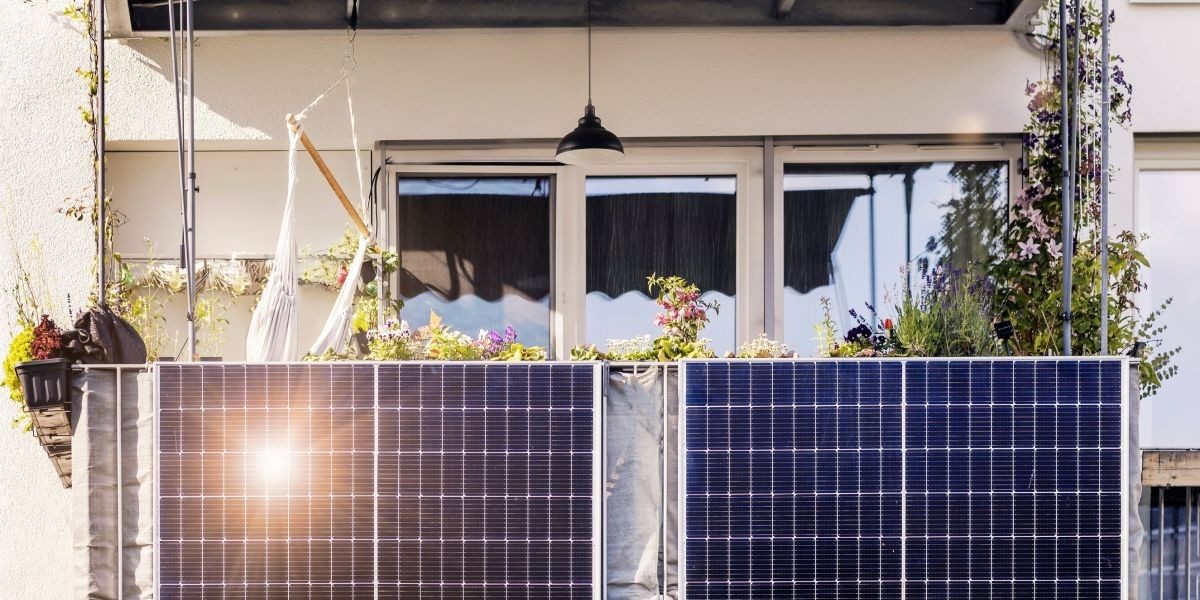
To understand the potential impact of SB 868, one must look at how balcony solar operates. Popularized in densely populated European nations like Germany, plug-in solar systems consist of one or two lightweight photovoltaic panels connected to a microinverter. The entire assembly can be mounted on a balcony railing, set up on a patio, or placed in a small backyard.
Key Technical and Regulatory Parameters of SB 868:
- Capacity Limit: Up to 1,200 watts AC of combined output per household.
- Connection: Plugs directly into a standard 120v indoor or outdoor household outlet.
- Safety Standards: Devices must comply with strict electrical codes and carry certification from Underwriters Laboratories (UL) or an equivalent nationally recognized testing laboratory.
- Grid Protection: Systems must feature built-in "anti-islanding" protection to instantly shut off electricity generation during a grid blackout, preventing back-feeding that could endanger utility repair crews.
- Paperwork Reduction: Investor-owned utilities are legally barred from demanding complex interconnection agreements, charging device-related fees, or demanding advance project approvals. Instead, consumers are only required to submit a basic online notification providing the system’s address, make, model, and size.
Beyond balcony solar, the broader economic logic of the package targets the massive underutilization of distributed energy resources (DERs). Millions of Californians already own home batteries (such as Tesla Powerwalls), electric vehicles with bidirectional charging capabilities, and smart appliances. Historically, utilities have treated these assets as isolated consumer goods rather than integrated components of the grid. SB 913 and SB 905 seek to leverage this distributed fleet, potentially saving billions of dollars in avoided transmission upgrades and expensive peaker-plant construction.
Official Responses and Stakeholder Perspectives
The legislative package has drawn widespread praise from environmental groups, consumer advocates, and clean energy developers, though it has also prompted cautious warnings from traditional utility stakeholders regarding grid management.
Kat Lockwood, CEO of The Climate Center, lauded the bills as a vital lifeline for everyday citizens. In a public statement following the signing, Lockwood noted:
"Not only do these laws provide relief for Californians struggling with high utility bills, but they also create a foundation for climate action and affordability that our next governor can build on."
Proponents of SB 868 have emphasized the social equity of the legislation. For decades, clean energy incentives disproportionately benefited single-family homeowners with high disposable incomes and suitable roof space. Renters—who statistically face higher cost burdens and lower average incomes—were largely locked out of direct solar ownership. By legalizing plug-and-play systems, California has opened the door for tenants to take control of their energy consumption, moving the needle on energy democracy.
Meanwhile, supporters of Senator Becker’s grid-modernization bills argue that maximizing virtual power plants is the only mathematically sound way to handle the ballooning costs of grid maintenance. By forcing utilities to disclose granular capacity data via SB 905, regulators can challenge unnecessary infrastructure proposals and hold monopolies accountable for overspending on capital projects that ultimately inflate customer bills.
Implications for the Future of California’s Grid
The signing of SB 868, SB 913, and SB 905 signals a fundamental philosophical shift in California’s energy strategy. Moving away from a purely centralized model—where massive, distant power plants push electricity across thousands of miles of high-voltage transmission lines—the state is leaning heavily into a decentralized, edge-of-the-network paradigm.

1. Empowerment of the Modern Consumer
The average Californian is no longer viewed merely as a passive ratepayer, but as an active participant in the energy market. Whether through a 1,200-watt balcony panel plugging into a living room outlet or an automated home battery dispatching power back to the neighborhood during a summer heatwave, consumers are becoming their own utility providers.
2. A Challenge to Utility Monopolies
By stripping away utility gatekeeping for balcony solar and demanding rigorous transparency regarding local grid capacity, the state is reining in the unchecked spending powers of large investor-owned utilities. The mandate to explore lower shareholder returns on infrastructure investments sends a clear message that utility profitability must be balanced against ratepayer affordability.
3. A Blueprint for Other States
As energy demands skyrocket—driven by the rapid adoption of electric vehicles, the electrification of home heating, and the proliferation of energy-hungry data centers—states across the U.S. are grappling with grid strain and rising costs. California’s aggressive embrace of plug-and-play solar and virtual power plant integration will likely serve as a test case for the rest of the nation. If successful, it could pave the way for a nationwide loosening of archaic regulatory red tape, proving that the fastest, cheapest kilowatt-hour is the one generated right outside your apartment window.
