

By Automotive Technology Desk
October 2026
Main Facts
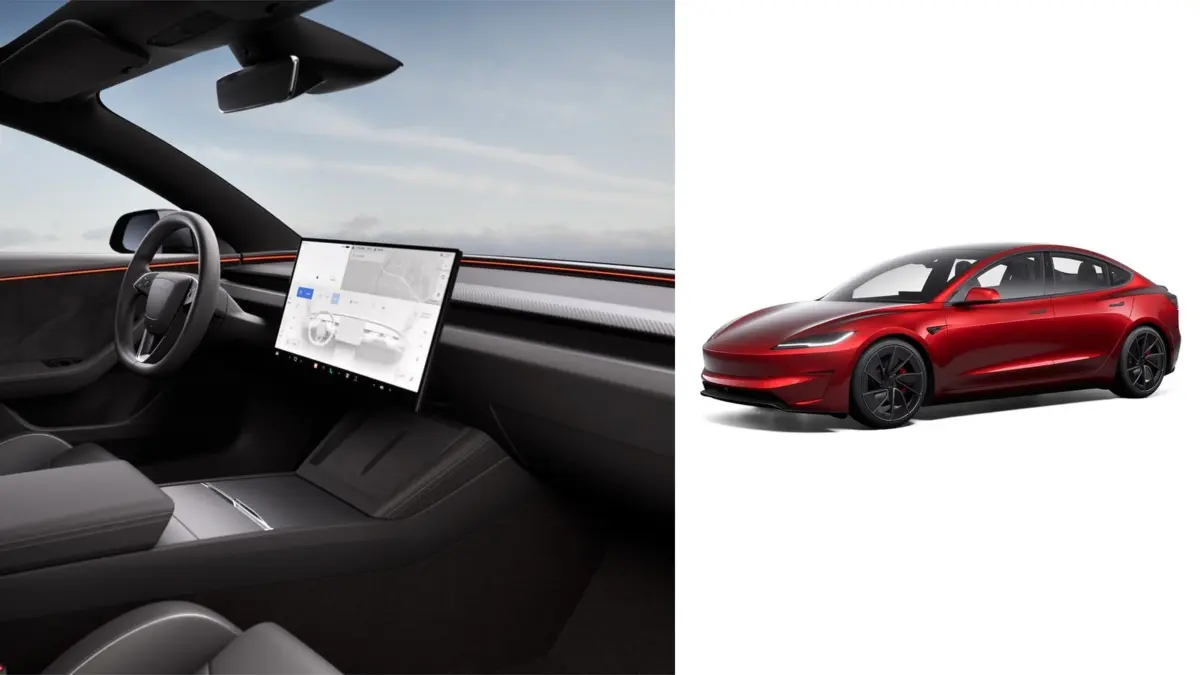
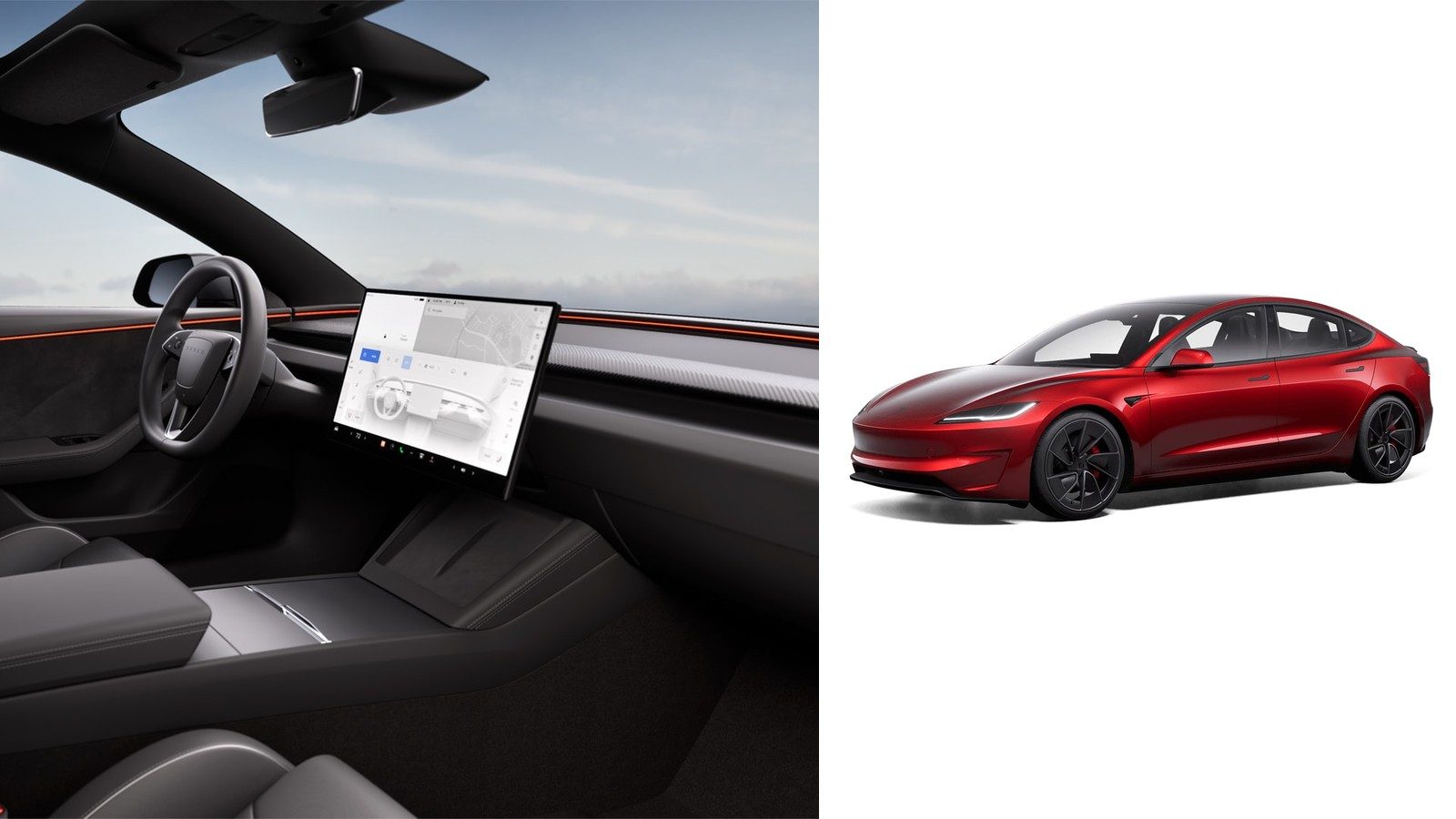
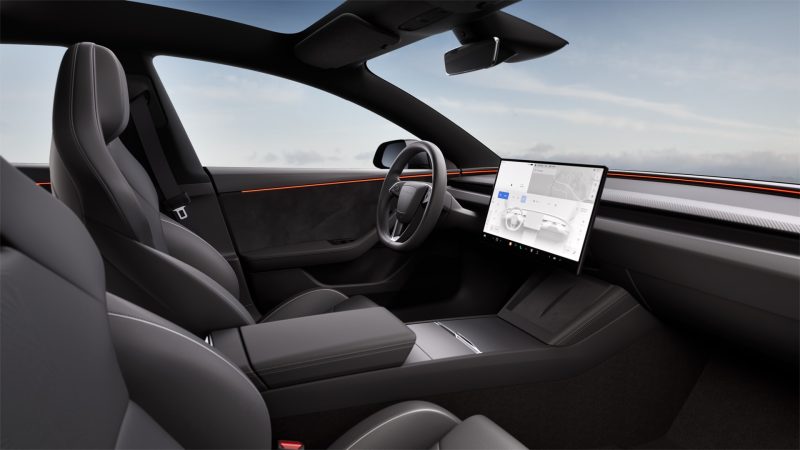
Tesla has officially implemented a sweeping, cross-border refresh for its popular Model 3 electric vehicle line across the United States, Puerto Rico, and Mexico. Announced via a social media announcement on Thursday evening by Tesla North America, the headline feature of this update is the integration of a larger 16-inch center touchscreen across every trim level—replacing the previous 15.4-inch display unit.
This hardware modification brings North American Model 3 vehicles into alignment with their Chinese-market counterparts, which received the identical screen upgrade just 24 hours prior. Alongside the expanded digital real estate, the refresh delivers notable mechanical and aerodynamic refinements.
The range-topping Model 3 Performance now features an exclusive black headliner, an increased EPA-estimated driving range of 316 miles (up from 309 miles), and a boosted peak power output of 528 horsepower. Meanwhile, the Model 3 Premium AWD experiences a massive acceleration enhancement, slashing its 0-to-60 mph sprint time from 4.2 seconds down to 3.8 seconds, while offering an impressive 346 miles of total range.
Despite these substantial hardware and software optimizations, Tesla has opted to hold base pricing steady. The entry-level Model 3 Rear-Wheel Drive (RWD) retains its accessible $36,990 starting price, preserving the brand’s competitive edge in an increasingly crowded electric vehicle market.
Chronology
To understand how this rapid product evolution unfolded across global markets, it is helpful to examine the precise timeline of Tesla’s iterative updates throughout the year:
- January 2026: Tesla initiates a trend of interior modernization by introducing the larger 16-inch display to the Model Y Premium in the United States, signaling a broader hardware transition across its mass-market lineup.
- May 2026: Canadian consumers notice a pricing shift as Canadian-market Model 3 RWD vehicles begin arriving directly from Giga Shanghai, reflecting optimized global supply chain logistics.
- August 2026: Tesla rolls out Vehicle-to-Load (V2L) capability—delivering 2.4 kW of external AC power via specialized adapters—strictly limited to the Model Y Premium, Model Y Performance, and the Cybertruck in the North American market.
- September 30, 2026: Giga Shanghai implements the 16-inch center touchscreen upgrade for all Chinese-market Model 3 variants, alongside the introduction of a new light gray interior option and standard V2L capabilities (2.2 kW).
- October 1, 2026: Following the Chinese rollout, Tesla North America confirms via X (formerly Twitter) that the 16-inch screen and performance upgrades are officially arriving in the US, Puerto Rico, and Mexico. The online configurator updates immediately to reflect the new specifications.
- October 2, 2026: Automotive analysts dissect the official configurator changes, noting the surprising omission of Canadian orders from the current rollout, despite Canada sharing identical supply chain pipelines with the Chinese market.
Supporting Data
The updated North American Model 3 lineup introduces a complex matrix of pricing, performance metrics, and technological specifications. The official data breakdown illustrates the current state of Tesla’s electric sedan portfolio:
2026 Tesla Model 3 US Lineup Specifications
| Trim Level | Base Price (USD) | 0–60 mph Time | EPA Range | Center Touchscreen | Peak Power Output |
|---|---|---|---|---|---|
| Model 3 RWD (Base) | $36,990 | ~5.8 sec | Standard | 16 inches | Standard |
| Model 3 Premium RWD | $42,490 | ~5.2 sec | Extended | 16 inches | Standard |
| Model 3 Premium AWD | $47,490 | 3.8 sec (Improved) | 346 miles | 16 inches | Dual-Motor Standard |
| Model 3 Performance | $54,990 | 2.9 sec | 316 miles (Up from 309) | 16 inches | 528 hp (Upgraded) |
Key Hardware & Feature Discrepancies (US vs. China)
- Center Display: Both regions now feature the uniform 16-inch touchscreen interface.
- Vehicle-to-Load (V2L): Fully enabled across the entire Model 3 lineup in China (2.2 kW AC power); completely absent from the North American Model 3 ecosystem following this update.
- Interior Color Options: China introduces a fresh light gray interior scheme; North American buyers remain restricted to traditional all-black or black-and-white configurations, with the premium black headliner strictly quarantined to the Performance variant.
- Regional Exclusion: Canadian market units—despite being imported from Giga Shanghai—were left out of the initial North American announcement, with the configurator retaining the legacy 15.4-inch display setup at the time of reporting.
Official Responses and Industry Reactions
Tesla announced these modifications through its official corporate channels rather than a traditional press release. The concise update published by Tesla North America on X highlighted the democratization of the larger screen:
"Every Model 3 in the US, Puerto Rico & Mexico now comes with a larger 16″ center touchscreen. Additional highlights include a Black headliner for Model 3 Performance, more range (316 miles, up from 309) & improved peak power at 528hp, alongside quicker acceleration for the Model 3 Premium AWD."
However, the lack of explanatory commentary from Tesla executives has left automotive journalists and consumer advocates speculating on the origin of the sudden performance bumps. Tesla has not clarified whether the enhanced 528 horsepower on the Performance model and the blistering 3.8-second 0–60 mph time on the Premium AWD are the result of software-unlocked motor efficiency, inverter revisions, or physical battery cell chemistry tweaks. Furthermore, corporate communication has been entirely silent regarding whether existing owners of 2024–2026 Model 3 vehicles might receive retroactive power or range optimizations via over-the-air (OTA) software patches.
Industry analysts have also focused heavily on the geographical disparities of the rollout. Consumer groups in Canada have expressed frustration over being excluded from an update that affects vehicles built in the exact same manufacturing facility (Giga Shanghai) that services Asian markets where V2L and light-gray interior options are readily available.
Implications
This mid-cycle refresh carries significant implications for the broader electric vehicle landscape, consumer purchasing behavior, and Tesla’s internal manufacturing philosophy.
1. Supply Chain Standardization and Component Sharing
By bringing North American Model 3 cabin architecture into alignment with the Chinese market, Tesla continues to aggressively pursue manufacturing efficiency. Utilizing a singular, uniform 16-inch touchscreen assembly across all global production lines reduces tooling complexity, simplifies supplier contracts, and lowers unit costs. This focus on component commonality is a cornerstone of Tesla’s strategy to maintain healthy operating margins while keeping base vehicle prices stagnant at $36,990.
2. Widening Feature Disparities Across International Borders
The exclusion of Vehicle-to-Load (V2L) technology from the North American Model 3 highlights a persistent regional strategy by Tesla. While Chinese consumers benefit from bi-directional power capabilities capable of running household appliances or camping gear via a 2.2 kW adapter, North American buyers are forced to step up to a Model Y or a Cybertruck to access similar utility. This division risks frustrating buyers in the US and Mexico who view V2L as an increasingly standard utility feature in competing EVs from Hyundai, Kia, and Ford.
3. Heightened Competitive Pressure in the Performance Sedan Segment
By dropping the Premium AWD’s 0–60 mph time to 3.8 seconds and pushing the Performance variant to 528 horsepower without increasing prices, Tesla is directly countering rising pressures from legacy automakers and emerging EV startups. The Model 3 continues to offer unmatched performance-per-dollar metrics, making it increasingly difficult for rival sedans to justify higher sticker prices while offering slower acceleration and smaller digital interfaces.

4. Software Versus Hardware Arbitrage
The ambiguity surrounding whether these range and power increases can be retroactively applied to older vehicles touches upon a sensitive nerve within the Tesla community. As software-defined vehicles become the industry standard, consumers increasingly expect continuous hardware-level improvements to be unlocked via OTA updates. If the 316-mile range and 528 hp output on the Model 3 Performance are strictly hardware-dependent, early adopters may feel pressured to trade up sooner than anticipated, altering typical automotive depreciation and retention cycles.
Ultimately, Tesla’s latest quiet update demonstrates the company’s unique ability to rapidly inject rolling production changes into its vehicle lineup. Whether these improvements will be enough to appease North American consumers clamoring for V2L capabilities and broader interior customization remains to be seen as the updated cars begin arriving in driveways this fall.
