

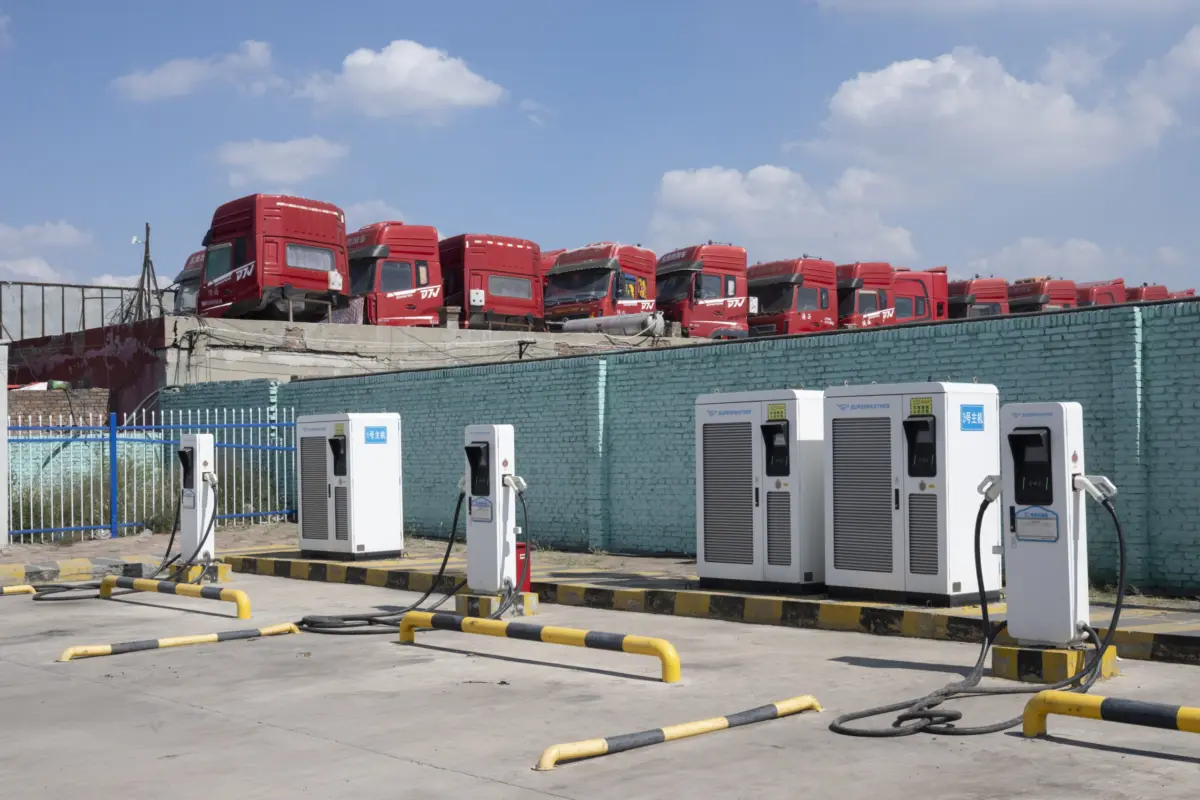
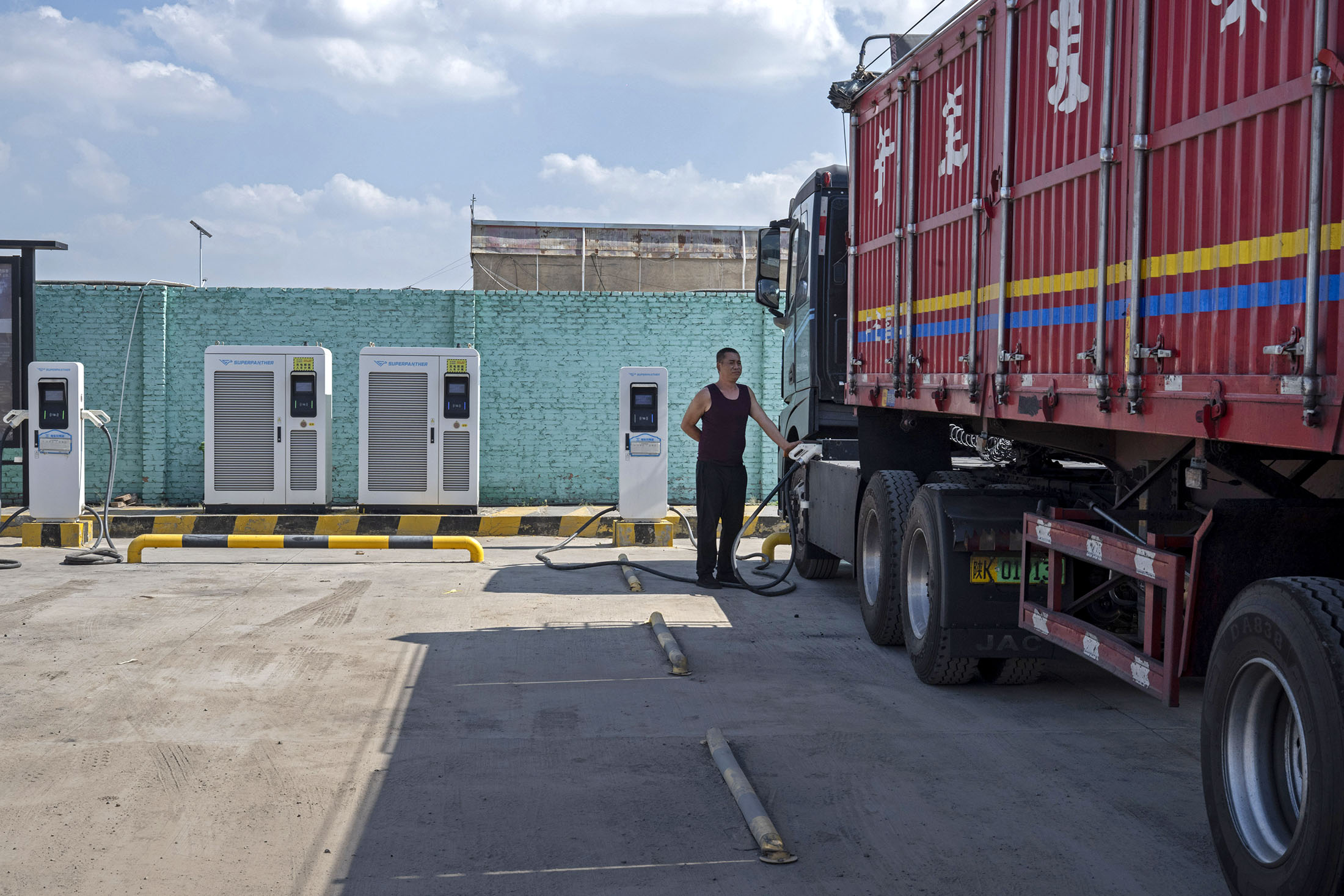
YULIN, China — As Qu Shaolong guides his heavy-duty electric truck into a sprawling charging station tucked into the arid expanse of Yulin, a colossal shift in the world’s energy architecture unfolds in real time.
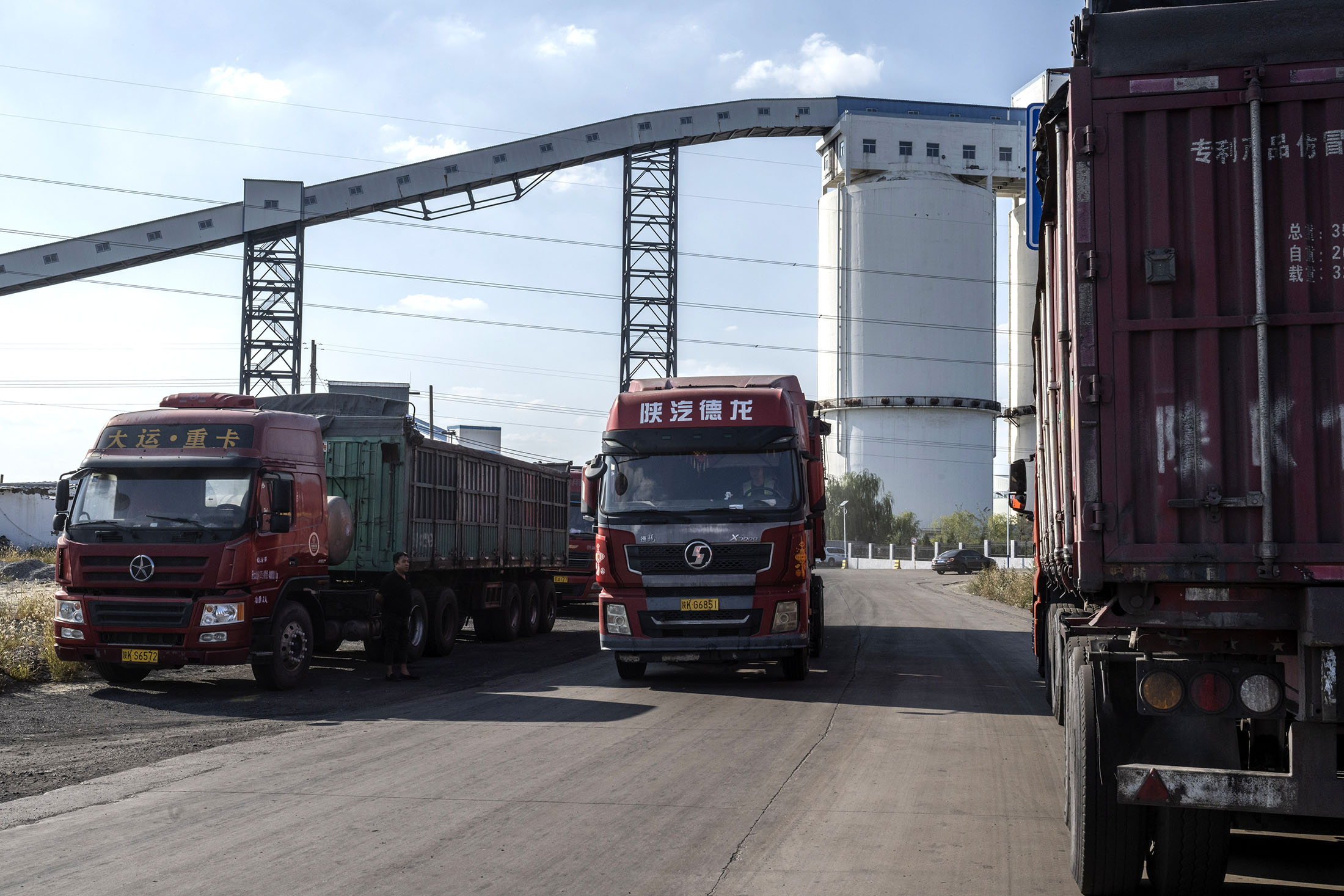
The roads traversing this major coal hub in Shaanxi province are perpetually congested with massive commercial rigs ferrying raw materials from remote mines to regional railheads. Yet, the auditory and sensory landscape of these thoroughfares is undergoing a radical metamorphosis. The thunderous, rhythmic roar of diesel combustion engines is increasingly giving way to the high-pitched hum of electric motors and the hissing release of hydraulic systems.
More and more of these behemoths are, like Qu’s, entirely battery-operated. For fleet owners and independent drivers alike, the transition offers a vital shield against volatile diesel prices that have skyrocketed amid geopolitical shocks.
“I don’t think anyone will switch back to diesel trucks,” says the 39-year-old driver, who has spent the last three years behind the wheel of an electrified hauler. “Nobody wants to return to a last-generation technology.”
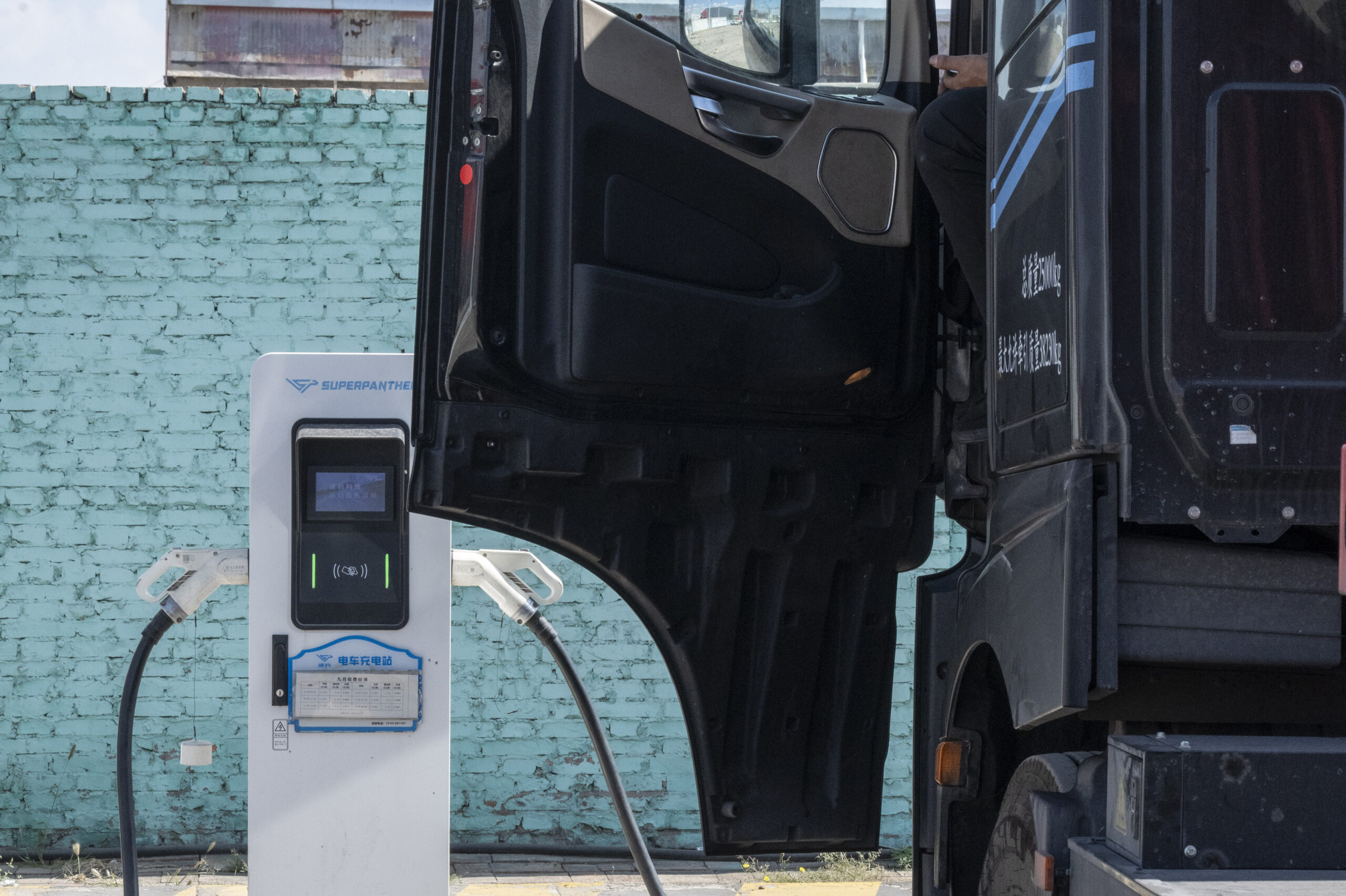
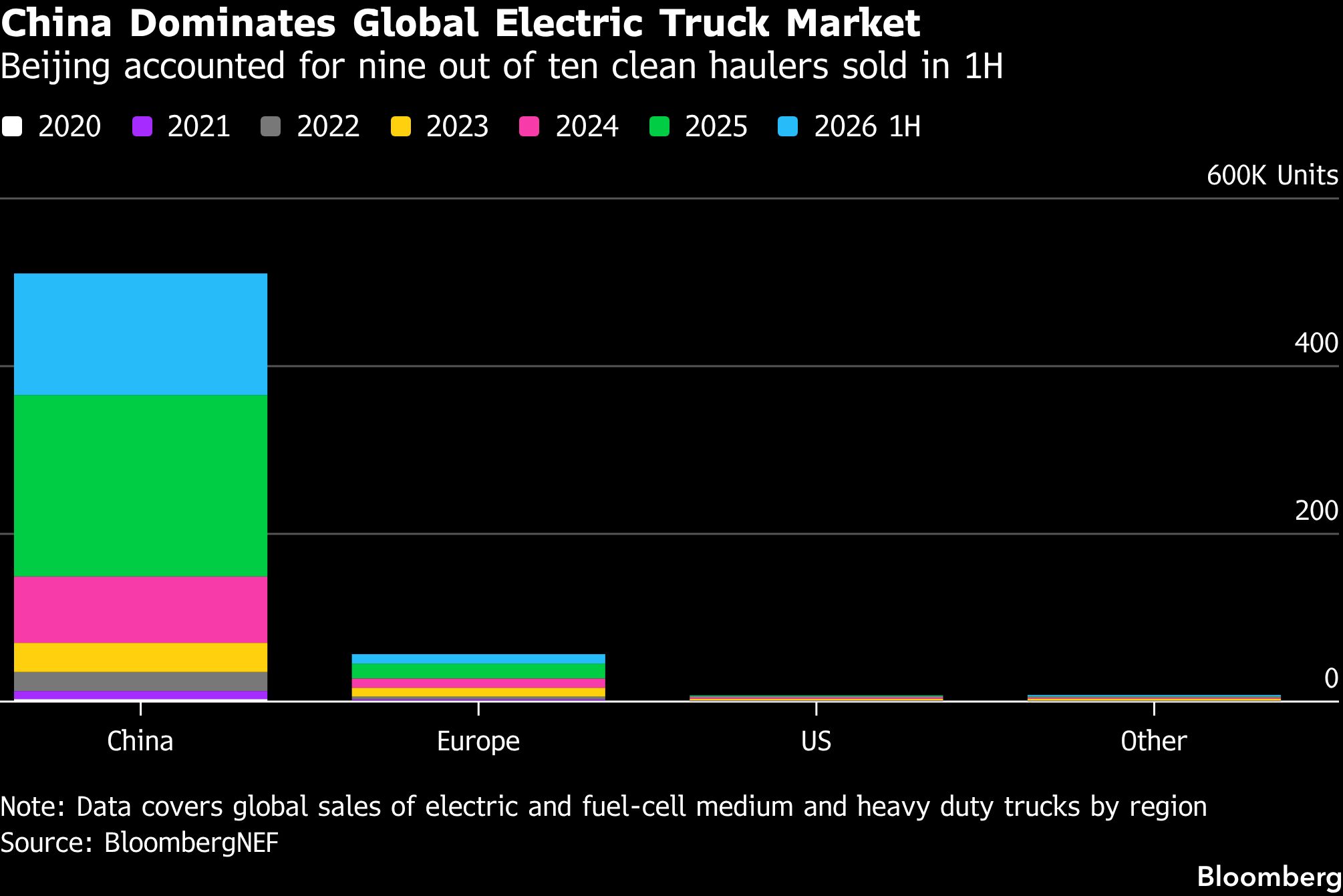
Qu is just one of thousands of operators driving a structural transformation in the world’s largest oil-importing market. According to data from BloombergNEF, Chinese sales of electric trucks surged nearly 80% in the first half of the year compared to the same period in 2025. Boosted by global oil shocks—exacerbated by conflict in the Middle East and Ukrainian strikes on Russian refining infrastructure—these zero-emission rigs are currently on pace to account for roughly one-third of all heavy truck sales in China this year, a staggering leap from just 8% a couple of years ago.
Main Facts: The Numbers Behind the Shift
The pivot toward fleet electrification in China is no longer an experimental niche; it is a macroeconomic force reshaping domestic energy consumption and global trade dynamics.
- Surging Market Share: Electric truck sales jumped nearly 80% year-on-year in the first half, positioning the segment to capture nearly 33% of China’s total heavy-rig market.
- Global Dominance: China accounts for more than 9 out of every 10 electric trucks sold globally.
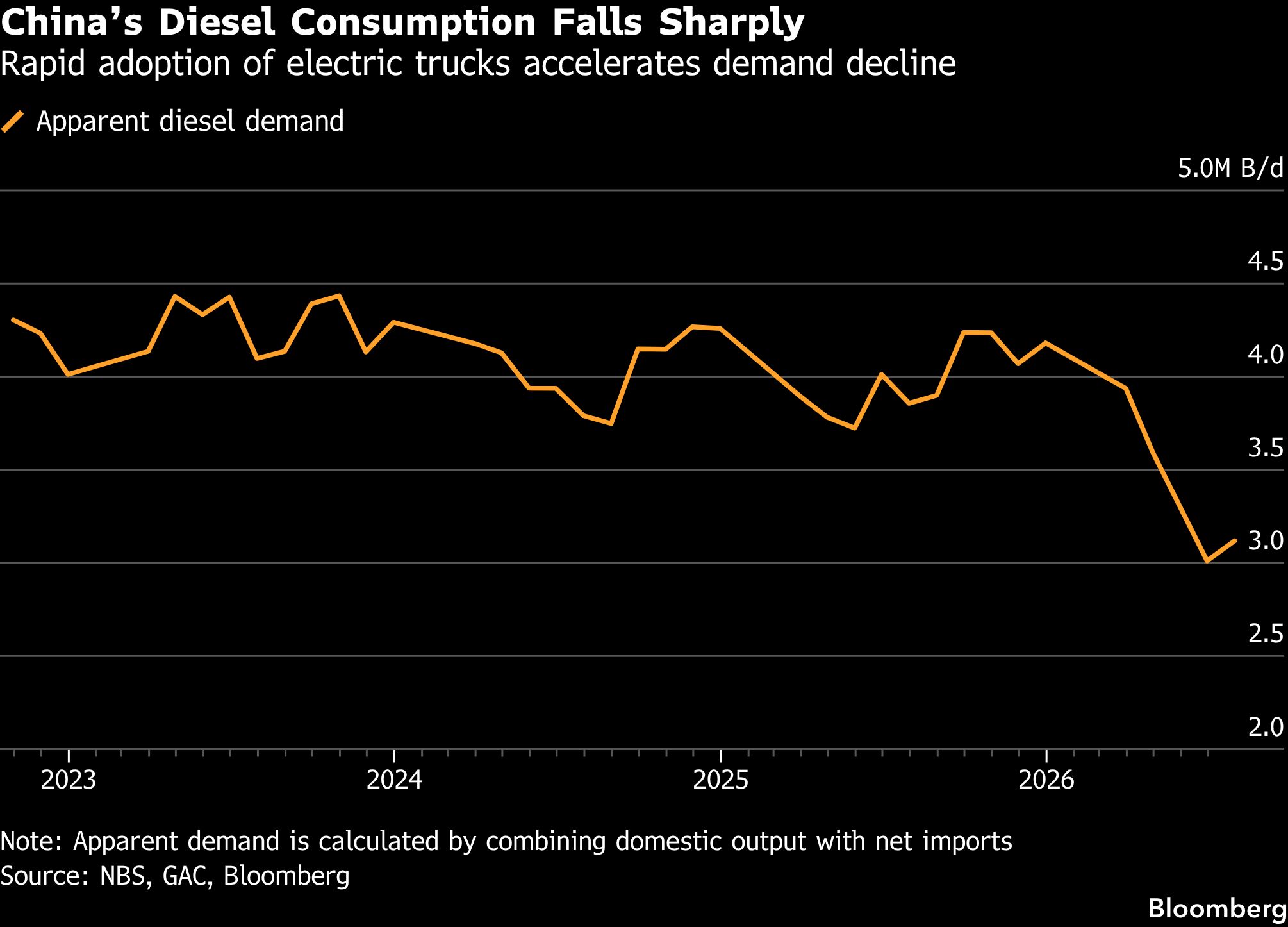
- The Diesel Drop: Domestic diesel consumption is projected by the Sinopec Economics & Development Research Institute to plummet by more than 10% this year alone.
- Cost Disparities: Recharging an e-truck in China costs roughly 200 yuan ($30)—less than one-third of the expense required to fill a traditional diesel tank. On a standard 200-kilometer freight run, off-peak charging in China costs approximately $21, compared to $101 for a comparable diesel route in the United States.
- Upfront Investments: An electric heavy-duty truck commands an initial price tag of roughly 600,000 yuan ($84,000), compared to 400,000 yuan ($56,000) for an equivalent diesel model.
Chronology of Adoption: From Niche Experiments to National Strategy
The rapid rise of China’s e-trucking industry is the result of a deliberate, multi-decade policy evolution that systematically moved clean-transport technology from controlled environments to open highways.
- 2008: The foundational roots were planted when China tested its first light-duty electric commercial vehicles during pilot programs in cities like Wuhan, laying the groundwork for battery and motor integration.
- 2024: The industry crossed a major commercial threshold. Manufacturers like Fujian SuperPanther Power Technology began aggressive domestic production, while Beijing introduced nationwide annual scrappage-subsidy programs offering cash incentives to replace aging diesel fleets.
- 2025: Government policy shifted sharply toward heavy-duty commercial vehicles. Metropolitan centers including Beijing, Shanghai, and Shenzhen enacted preferential urban road-access laws for clean rigs, while industrial hubs like Linfen mandated the complete replacement of conventional diesel trucks.
- 2026 (Present): A new national roadmap established binding targets for the sector: alternative-energy vehicles are mandated to comprise at least 20% of the nation’s total heavy-truck fleet and account for 40% of all new sales by 2030. Simultaneously, Chinese manufacturers have begun aggressively exporting electric tractor trucks to Southeast Asia, Latin America, Africa, and Europe.
Supporting Data: Economics and Infrastructure
While the long-term savings of operating an electric rig are indisputable, fleet managers must navigate a complex matrix of capital expenditures, insurance premiums, and localized charging ecosystems.
Physically, modern e-trucks closely resemble their fossil-fueled predecessors, save for a massive, rectangular battery enclosure sandwiched neatly between the driver’s cabin and the cargo trailer. This structural integration utilizes advanced battery chemistry primarily supplied by domestic giants like Contemporary Amperex Technology Co. Ltd. (CATL), alongside vehicle manufacturing powerhouses such as BYD Co., Sany Heavy Industry Co., and XCMG Construction Machinery Co.
For transport enterprises, the economic calculation relies heavily on utilization rates. Liu Shuan, a 34-year-old coal trader in Yulin whose firm purchased 15 SuperPanther e-trucks last year, notes that the steep initial capital outlay is offset rapidly through intense, daily usage. He projects that the fuel savings will completely recover the higher purchase price within a two-year window.
However, international logistics operators advise caution regarding auxiliary expenses. Kelvin Tang, APAC ground and rail leader at global freight firm CEVA Logistics—which operates a fleet of more than 500 e-trucks worldwide—points out the remaining friction points in the transition.
“While electric trucks generally offer significantly lower energy costs than diesel vehicles, vehicle acquisition costs, insurance expenses, and depreciation currently remain higher than those of conventional diesel trucks,” Tang explains.
Despite these hurdles, logistics providers are aggressively updating their asset pools. Nippon Express (China) Co. has deployed electric rigs to haul sensitive electronic components across the Yangtze River Delta. Li Wenjun, president of the firm’s Chinese operations, notes that the company maintains an explicit corporate ambition to transition 100% of its regional fleet to electric vehicles over the next three to four years, supplementing similar deployments in Japan, Taiwan, and Hong Kong.
Official Responses and Strategic Perspectives
Energy security and resilience against external supply shocks have become paramount concerns for policymakers worldwide, casting the Chinese e-truck phenomenon in a broader geopolitical light.
Anders Hove, a senior research fellow at the Oxford Institute for Energy Studies, emphasizes the unprecedented speed of the transition compared to the passenger vehicle market.
“The EV revolution that began with China’s passenger car fleet has now quickly spread into the field of heavy-duty trucking,” Hove observes. Because commercial rigs are utilized far more intensively and experience rapid fleet turnover, the electrification cycle is occurring at an accelerated pace. “As EV adoption accelerates, EVs become a larger and larger cushion” against severe petroleum supply shocks, such as those triggered by conflicts in the Middle East.

This sentiment is echoed by domestic research institutions tracking the domestic market. Fairy Wang, vice president of the Sinopec research institute, highlighted the extraordinary velocity of the trend during a recent industry forum in Beijing.
“This year, electric heavy-duty trucks have emerged as a highlight,” Wang told attendees. “Right now, we think half, or even more of trucks sold this year will be electric.”
International equipment suppliers are also taking note of how geopolitical anxiety is accelerating overseas demand. Piak Hwee Tan, vice president of international key accounts at SuperPanther, notes that overseas interest has spiked dramatically following recent disruptions to global oil supply lines.
“In Asia, there are a lot of governments that are talking about electrifying their trucks and looking for renewable energy, especially after the crisis in the Middle East,” Tan says. Following initial deliveries to European markets, the firm is preparing to flood Southeast Asian markets with heavy-duty electric models.
Implications: A Global Threat to Long-Term Oil Demand
The implications of China’s rapid adoption of electric freight stretch far beyond its borders, posing a structural threat to long-term global oil demand.
For Beijing, the masterstroke of the e-truck revolution lies in domestic resource optimization. Rather than remaining shackled to volatile global petroleum markets and vulnerable maritime oil supply lines, China’s commercial transport sector increasingly runs on domestic electricity generated by a mix of vast coal reserves and rapidly expanding renewable energy installations.
Furthermore, this domestic manufacturing prowess is spilling over internationally. As Western nations grapple with their own transport-related inflation headaches—such as the United States facing record-high diesel prices that have sparked intense political debate ahead of midterm elections—developing nations across the Global South are looking closely at the Chinese playbook.
By proving that heavy-duty commercial freight can be successfully electrified on a massive scale without sacrificing industrial output, China has established a blueprint for energy independence. As charging corridors expand, battery costs decline, and zero-emission trucks transition from hauling bulk coal to carrying high-value consumer goods and electronics, the era of ubiquitous diesel dominance is drawing to a definitive close.
For truck drivers like Qu Shaolong on the dusty highways of Shaanxi, looking back is no longer an option. The future of freight is heavy, silent, and fully charged.
