

In partnership with ECHO
For more than half a century, backpack blowers have been the undisputed workhorses of commercial landscaping and professional lawn care crews. Having practically invented the backpack blower category over 50 years ago, ECHO has spent decades refining the technology. Today, commercial contractors and property maintenance professionals face an unprecedented array of choices. With a shifting landscape defined by evolving environmental regulations, advancing battery capabilities, and higher labor costs, choosing the right tool for a trailer requires a strategic balance of performance, comfort, upfront cost, and operational efficiency.
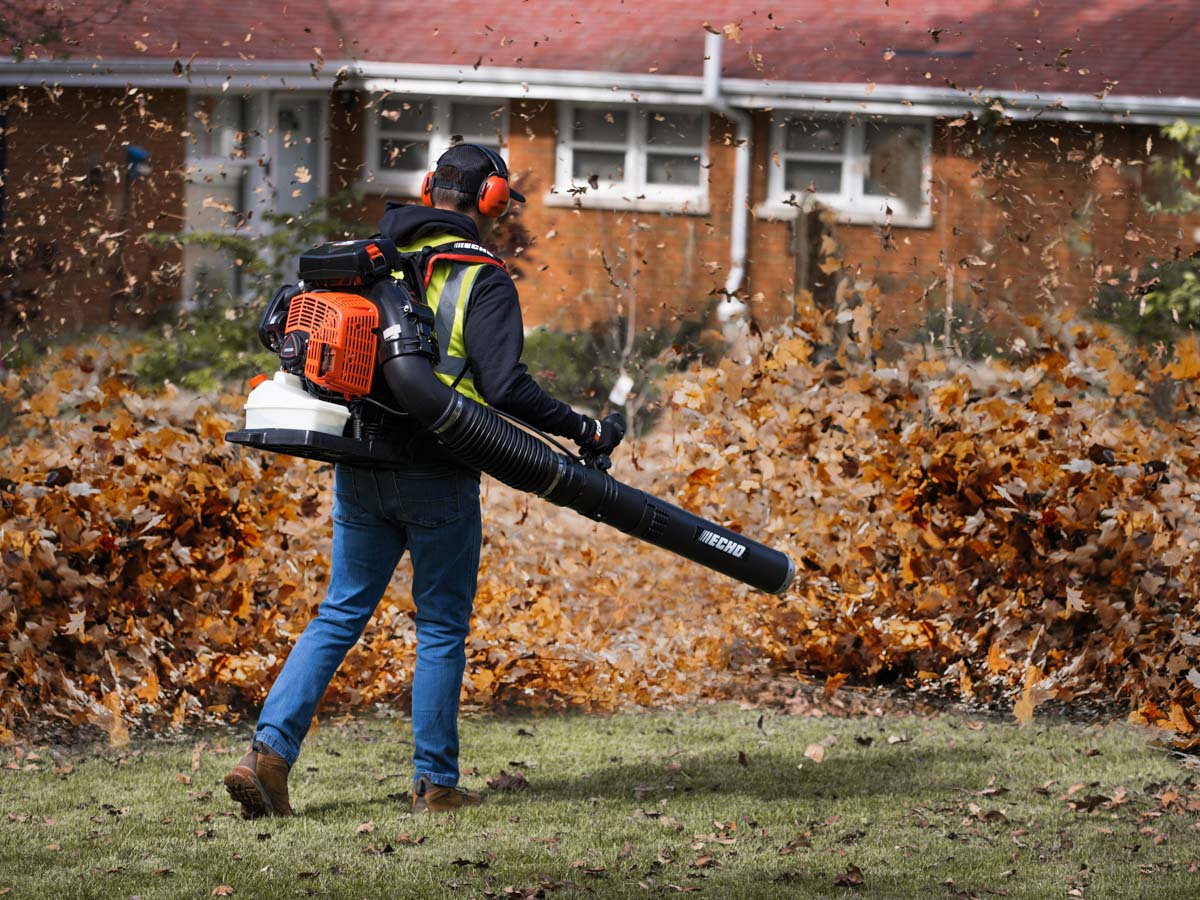
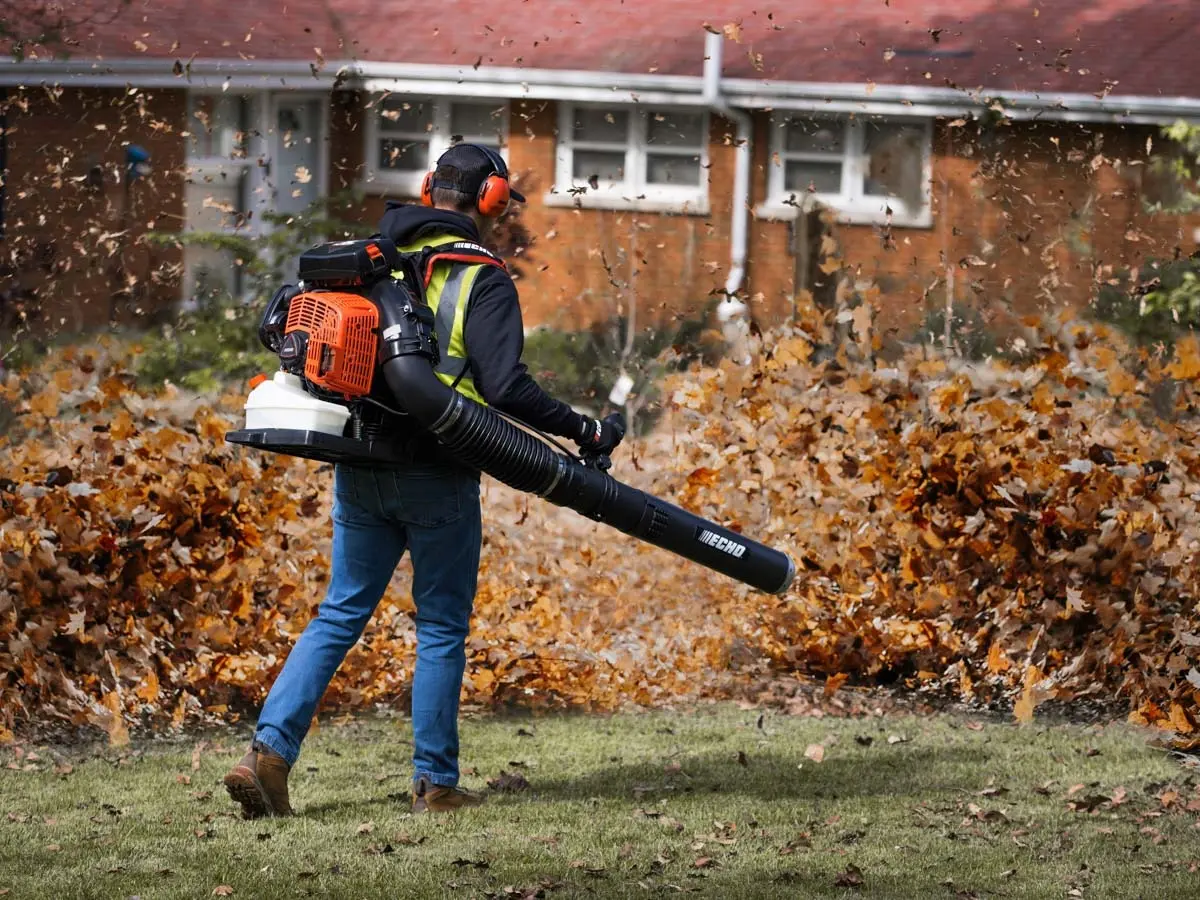
To navigate this expanding market, industry experts sat down with Jason Wilk of ECHO to break down how professional crews determine which models deserve a spot on their trucks. From evaluating core specifications to analyzing the debut of the groundbreaking PB-9510, this comprehensive guide explores what it takes to invest in the right commercial backpack blower.
Main Facts: Decoding Performance, Power, and Preference
When professional landscapers evaluate a backpack blower, they are rarely swayed by marketing buzzwords alone. Instead, they look at hard performance metrics, ergonomic layouts, and power plant philosophies.

At the most fundamental level, backpack blower performance is measured across three primary metrics: MPH (Miles Per Hour), CFM (Cubic Feet per Minute), and Newton Force.
- Air Speed (MPH): This represents the velocity of the air exiting the tube. Think of MPH as your reach—the higher the air speed, the farther away you can push stubborn debris.
- Air Volume (CFM): This measures the sheer volume of air moving through the system per minute. If MPH is your reach, CFM is your capacity. A higher CFM rating means you can sweep a wider path and move a massive quantity of leaves simultaneously.
- Newton Force: This is the ultimate industry standard for measuring actual blowing force. Unlike theoretical calculations, Newton force is governed by strict ANSI testing standards requiring a specialized force meter. By combining air speed and CFM into a single real-world measurement of work being done, Newton force serves as the single most reliable metric when comparing competing blowers.
The Great Throttle Debate: Tube-Mounted vs. Hip-Mounted
Beyond raw power, operators must choose between a tube-mounted throttle ("T" models) and a hip-mounted throttle ("H" models). According to ECHO sales data, user preference splits remarkably evenly down the middle at roughly 50/50.

With a tube-mounted setup, the operator manages engine speed, cruise control settings, and directional airflow entirely with their right hand, leaving the left hand free to manipulate obstacles or move objects without pausing the workflow. Conversely, a hip-mounted throttle divides the operation: the left hand controls the performance level at the hip, while the right hand guides the tube. Both methods accommodate cruise control, allowing operators to free up a hand when debris management demands it. Because performance remains identical regardless of configuration, operators are encouraged to test both styles at a local dealer.
Chronology: The Evolution of Commercial Clearing Power
The commercial blowing sector has transformed drastically from the early days of high-emission, low-comfort two-stroke units.
- The 1970s–1990s: ECHO pioneers the commercial backpack blower category, establishing standardized petrol-powered units that replace sweeping and raking with mechanical clearing force.
- The 2010s: Mid-displacement engines dominate trailer fleets, offering reliable post-mowing cleanup alongside heavier fall leaf capabilities. Models like the PB-770 become the industry benchmark for blending power and manageable weight.
- The Late 2010s to Early 2020s: High-displacement gas units break previous records. The introduction of ECHO’s PB-9010 shatters expectations by delivering an unprecedented 48 Newtons of blowing force, redefining what a handheld backpack unit can achieve.
- The Present and Future (Fall 2026): ECHO pushes the boundaries of internal combustion engineering further with the upcoming launch of the PB-9510, ramping gas performance up to an astonishing 56 Newtons. Simultaneously, advanced lithium-ion battery platforms—spearheaded by tabless cell technology and high-output brushless motors—begin challenging gas dominance in specific urban markets and regulated zones.
Supporting Data: Gas vs. Battery and Model Breakdown
While battery-powered outdoor power equipment (OPE) continues to capture headlines and market share—largely driven by municipal regulations and clients demanding quieter operations—gas remains the dominant force on commercial trailers.
| Feature / Metric | Gas-Powered Units (e.g., PB-580, PB-770, PB-9510) | Battery-Powered Units (e.g., DPB-7700) |
|---|---|---|
| Primary Driver | Maximum raw power, familiar maintenance, low upfront cost | Zero direct emissions, ultra-low noise, regulatory compliance |
| Peak Blowing Force | Up to 56 Newtons (PB-9510) | Up to 36 Newtons (DPB-7700) |
| Runtime Management | Instant refuel via fuel tank | Battery swapping and charging infrastructure management |
| Maintenance | Routine engine service (filters, spark plugs, fuel mix) | Virtually maintenance-free electric motors |
Three Primary ECHO Models Trusted by Professionals
To understand how these metrics translate to the field, consider the three core models that anchor professional landscaping fleets:
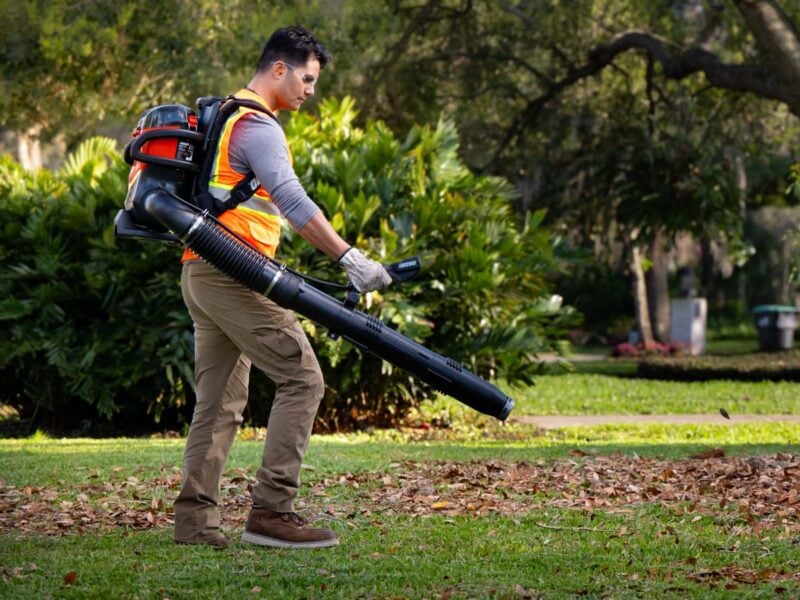
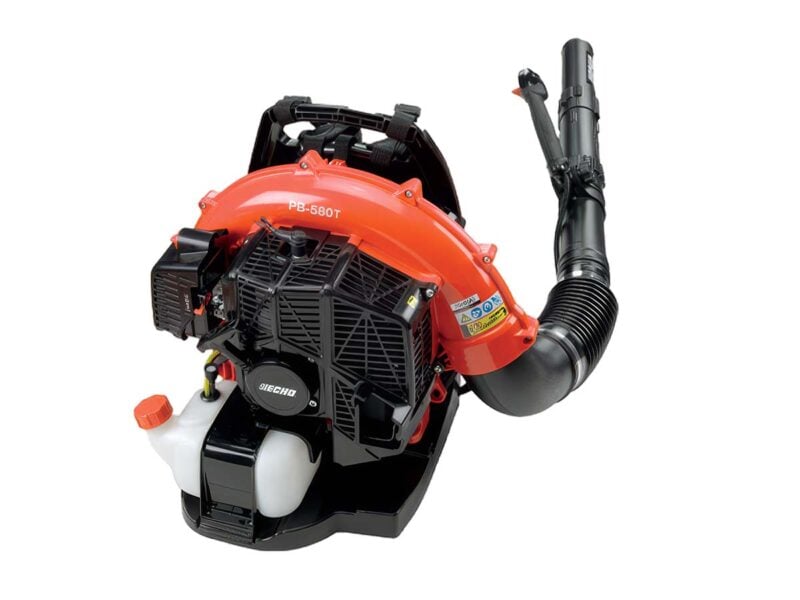
- ECHO PB-580 (Lightweight Workhorse): Powered by a 58.2 cc engine, the PB-580 serves as the quintessential entry point for growing businesses. Delivering up to 22 Newtons of blowing force, it trades extreme high-displacement power for a lighter chassis and extended daily comfort, making it ideal for rapid post-mowing cleanups on sidewalks and driveways.
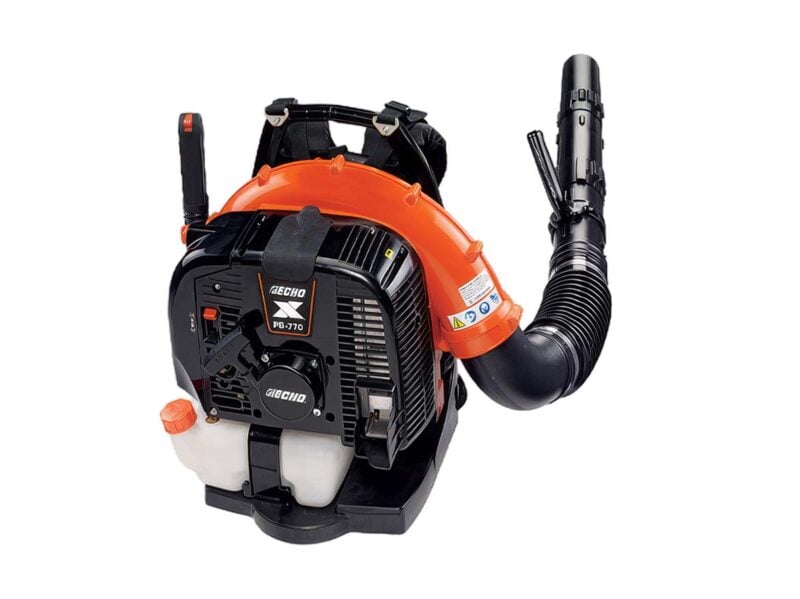
- ECHO PB-770 (The Industry Sweet Spot): Delivering 33 Newtons of blowing force—a 50% increase over the PB-580 with less than two pounds of added weight—the PB-770 is a favorite upgrade for mow-and-blow crews. It bridges the gap between everyday turf maintenance and entry-level fall leaf management.
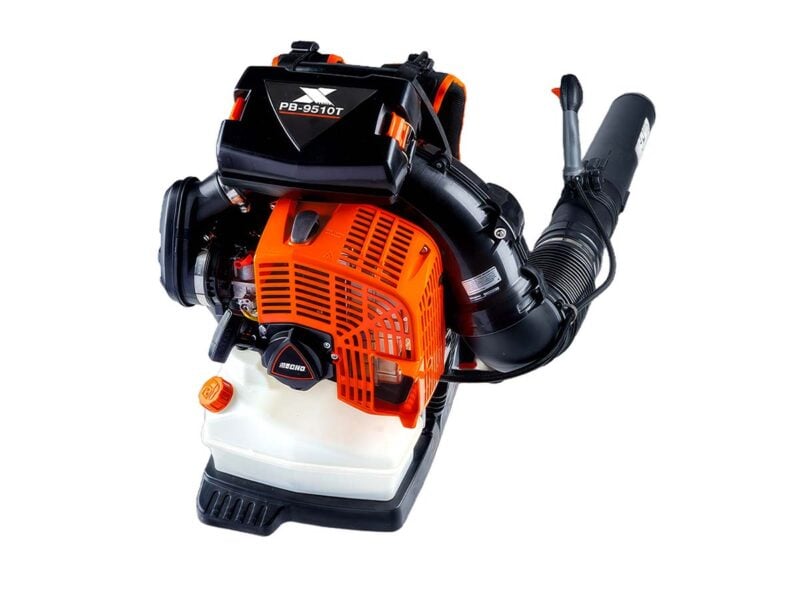
- ECHO PB-9510 (The Flagship Powerhouse, Launching Fall 2026): Representing the pinnacle of ECHO’s engineering, the PB-9510 builds upon the legacy of the PB-9010. Through meticulous refinements to piston shapes and transfer port angles, engineers squeezed an elite 56 Newtons out of the platform. It is engineered specifically for heavy-duty leaf removal and wet, packed debris common in regions like the Northeast.
Specialized Problem Solvers
For unique operating conditions, ECHO offers specialized solutions:
- PB-5810: Tailored for estate owners and commercial operators prioritizing reduced fatigue, featuring a 44% easier pull cord than the PB-580, a dry weight of just 20.9 pounds, and an upgraded output of 27 Newtons.
- DPB-7700: The premier battery-powered alternative to the PB-770. Utilizing 56V technology, it matches and exceeds gas output with 36 Newtons of force while adding smart features like throttle-integrated LED battery displays, MAXOUT constant-performance technology, and rear safety illumination.
Official Responses and Industry Insights
According to Jason Wilk of ECHO, the key to building a sustainable equipment fleet lies in matching the tool to the specific economic and geographic demands of the business.
"Buy the best equipment that fits your budget," Wilk advises commercial operators. "Don’t skimp on performance if you can afford to step up; your crew will appreciate the higher productivity. At the same time, there’s no point in paying for performance you’ll never use, so don’t chase higher Newton force numbers if there aren’t real gains."
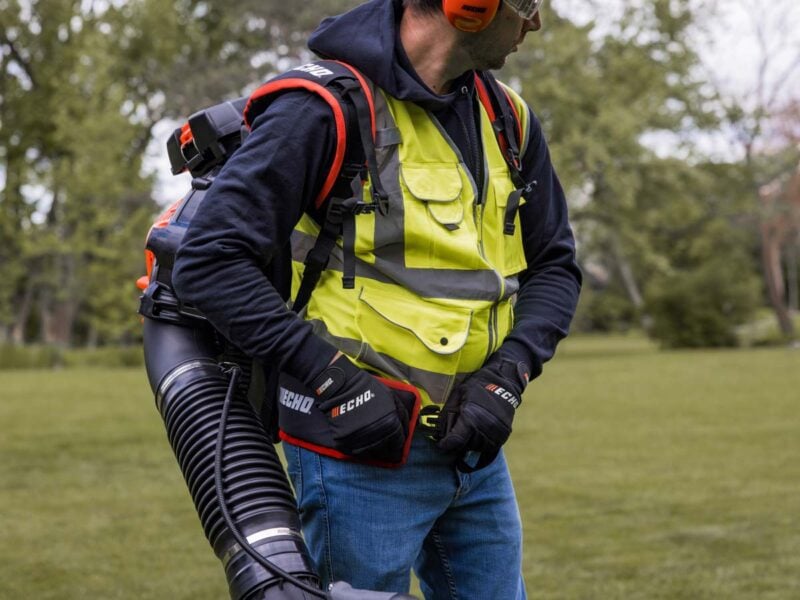
Wilk also highlights the importance of operator comfort over long shifts. Weight reduction is helpful, but harness ergonomics—such as padded shoulder straps and integrated back-panel cooling airflow—ultimately determine how fatigued an operator feels at the end of a grueling workday. For cold-weather operations, ECHO even supplies a vent plug to block airflow during chilly autumn and winter cleanups.
Implications for Landscape Businesses
The decisions commercial landscape owners make regarding their backpack blowers carry profound operational and financial implications.
Investing in ultra-powerful units like the upcoming PB-9510 or high-end battery platforms like the DPB-7700 requires a higher initial capital expenditure. However, the productivity gains—such as clearing a property 15 minutes faster or eliminating engine maintenance headaches—can quickly offset equipment costs through increased daily client capacity.
Conversely, over-specifying a fleet can drain capital unnecessarily. Small-property maintenance crews handling turf clippings do not require the 56-Newton output of a flagship blower, where the extra weight and cost yield diminishing returns. By carefully weighing regional debris density, crew endurance, local noise and emissions regulations, and maintenance workflows, lawn care professionals can curate a trailer fleet engineered for maximum profitability.
