

ORLANDO, Fla. — In an era defined by aggressive decarbonization targets, stringent energy efficiency mandates, and tightening environmental regulations, the heating, ventilation, and air conditioning (HVAC) industry faces mounting pressure to innovate. Building owners, facility managers, and mechanical contractors are continuously searching for systems that deliver exceptional performance without compromising environmental stewardship or spatial constraints.
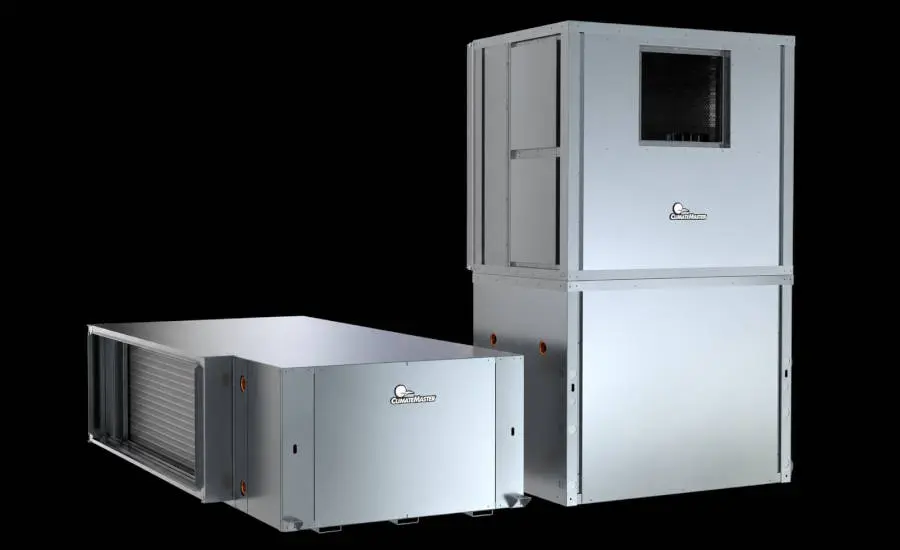
Meeting this demand head-on, ClimateMaster has officially launched its Tranquility (SB) Compact High-Capacity Series, a state-of-the-art water-source heat pump (WSHP) engineered specifically for demanding commercial applications. Bridging the gap between high-capacity thermal conditioning and sustainable refrigerant technology, the Tranquility SB series aims to redefine what is possible in commercial climate control. Spanning capacities from 6 to 25 tons, the new product line integrates low-Global Warming Potential (GWP) refrigerant, advanced variable-flow hydronic capabilities, and intelligent, cloud-enabled controls into a remarkably compact footprint.
Main Facts: Engineering Excellence in a Compact Footprint
The Tranquility (SB) Compact High-Capacity Series has been designed to address the multifaceted challenges of modern commercial architecture. Urban density, premium real estate costs, and the intricacies of retrofitting aging infrastructure mean that mechanical rooms and ceiling plenums are frequently cramped. ClimateMaster’s engineering team prioritized spatial efficiency without sacrificing thermal output or mechanical accessibility.
Key Specifications and Technical Highlights:
- Capacity Range: Available in robust configurations from 6 to 25 tons, making it versatile enough for medium-sized zones or as part of a decentralized large-scale commercial strategy.
- Refrigerant Transition: The series utilizes R-454B, a low-GWP, hydrofluoroolefin (HFO)-based refrigerant that significantly reduces the environmental impact compared to legacy fluids like R-410A, aligning with evolving global hydrofluorocarbon (HFC) phasedown schedules.
- Energy Compliance: The system routinely exceeds ASHRAE 90.1 energy efficiency standards, providing building owners with lower operational expenditures and helping properties achieve green building certifications such as LEED and WELL.
- Compact Cabinet Design: Engineered to fit through standard commercial doorways and into confined mechanical spaces, drastically reducing structural modification costs during retrofits.
- Acoustic Management: Equipped with ClimateMaster’s proprietary UltraQuiet sound-absorbing package, ensuring low noise criteria (NC) levels suitable for schools, healthcare facilities, and executive office spaces.
Chronology: The Path to Low-GWP Commercial Heat Pumps
The introduction of the Tranquility SB series does not happen in a vacuum; it is the culmination of years of regulatory evolution, chemical engineering breakthroughs, and shifting market demands within the HVAC sector.
The Regulatory Catalyst (2020–2022)
The journey toward low-GWP commercial heat pumps accelerated with the passage of the American Innovation and Manufacturing (AIM) Act in the United States, which mandated an 85% reduction in the production and consumption of HFCs over a 15-year timeline. Simultaneously, state-level regulations—particularly in California and northeastern states—began banning high-GWP refrigerants like R-410A in new commercial equipment ahead of federal deadlines. ClimateMaster recognized that manufacturers failing to pivot quickly would leave their contractor networks stranded with non-compliant hardware.
R-454B Integration and Testing (2022–2023)
Transitioning to a lower-GWP alternative requires rigorous thermodynamic modeling and safety validation. R-454B (an A2L mildly flammable refrigerant blend) emerged as the industry’s preferred drop-in/replacement choice for R-410A due to its comparable operating pressures, excellent heat transfer characteristics, and drastically lower GWP of 466 (compared to 2088 for R-410A). ClimateMaster’s research and development teams spent over two years testing compressor reliability, oil compatibility, and safety mitigation systems to ensure R-454B could be safely deployed in high-capacity multi-ton chassis.
Field Trials and Soft Launch (Early 2024)
Before commercial rollout, prototype units of the Tranquility SB series underwent extensive field trials in diverse climate zones across North America. Partnering with select mechanical contractors, ClimateMaster tested the units in demanding environments—ranging from humid southern healthcare facilities to variable-load midwestern office complexes. Feedback from these trials focused on installation flexibility, control commissioning speed, and acoustic performance, allowing engineers to fine-tune the final production models.
Commercial Market Release (Late 2024–Present)
With the formal launch of the Tranquility (SB) Compact High-Capacity Series, ClimateMaster has made the units fully available to its nationwide distribution network, supported by specialized training programs for technicians working with A2L refrigerants.
Supporting Data: Efficiency, Hydraulics, and Control Architecture
A deep dive into the engineering specifications of the Tranquility SB series reveals a sophisticated matrix of mechanical and digital innovations designed to optimize every facet of HVAC operation.
Dual Refrigeration Circuits and EC Plug Fans
To maintain precise temperature control and part-load efficiency, the larger models in the Tranquility SB lineup incorporate dual refrigeration circuits. This redundancy not only enhances system reliability—allowing partial operation if one circuit requires maintenance—but also enables superior dehumidification and staging.
Coupled with high-efficiency Electronically Commutated (EC) plug fans, the units deliver optimal airflow across varying static pressures. EC motors provide stepless speed control, reducing electrical consumption and allowing technicians to dial in exact cubic feet per minute (CFM) requirements directly from the digital control interface.
vFlow Modulating Water Valves
Hydronic balancing has historically been a persistent pain point in water-source heat pump applications, often requiring manual balancing valves and excessive pump energy. The Tranquility SB series solves this by integrating vFlow modulating water valves.
The vFlow technology automatically adjusts water flow through the coaxial heat exchanger based on real-time operating conditions. By optimizing water flow relative to compressor capacity, the system minimizes pumping power across the entire central loop, yielding substantial whole-building energy savings and protecting the heat exchanger from scaling or thermal shock.
Dehumidification Control via Hot Gas Reheat
In commercial spaces with high latent loads—such as schools, museums, and densely populated offices—cooling alone is insufficient; controlling humidity is critical to prevent indoor air quality issues and mold growth. ClimateMaster has engineered an optional hot gas reheat (HGR) package available in vertical configurations.
When active, the HGR system utilizes waste heat from the refrigeration cycle to reheat supply air after it has been dehumidified by the cooling coil. This allows the unit to maintain precise relative humidity setpoints without overcooling the conditioned space, eliminating the energy penalty of traditional reheat strategies.
Intelligent Controls: DXM2.6 and ClimaLink Edge
Modern HVAC equipment is only as good as its control interface. The Tranquility SB series is anchored by ClimateMaster’s advanced DXM2.6 communicating controls. The DXM2.6 platform acts as the brain of the heat pump, providing comprehensive fault detection and diagnostics (FDD), real-time sensor monitoring, and simplified troubleshooting.
For building automation system (BAS) integration, the ClimaLink Edge connectivity module provides native support for open protocols including BACnet MS/TP and Modbus. This ensures that facility managers can seamlessly integrate the Tranquility SB units into enterprise-level building management systems without needing expensive protocol converters or proprietary gateways.
Official Responses: Industry Perspectives on the Launch
The commercial HVAC community has responded enthusiastically to ClimateMaster’s latest offering, viewing it as a timely solution to some of the industry’s most pressing engineering challenges.
"The commercial real estate market is caught between two powerful forces: the absolute necessity to decarbonize and lower operating carbon footprints, and the physical realities of tight mechanical spaces in retrofit projects," said a senior product manager at ClimateMaster during the launch briefing. "With the Tranquility SB series, we didn’t just swap out a refrigerant and call it a day. We re-engineered the platform from the ground up to incorporate variable hydronic flow, advanced EC fan technology, and communication protocols that speak the language of modern smart buildings. We are giving contractors a tool that is simultaneously environmentally future-proof and exceptionally easy to install."
Mechanical contractors have similarly praised the flexibility of the platform. Field installation specialists note that the ability to configure water connections in the field, coupled with multiple horizontal and vertical discharge arrangements, significantly lowers the risk of ordering errors and installation delays.
"When you’re working on a retrofit project in a 40-year-old downtown high-rise, every inch counts," remarked a Lead Project Engineer for a major national mechanical contracting firm. "If a unit doesn’t fit through the service elevator or the mechanical room door, your project is instantly delayed by days or weeks. ClimateMaster’s focus on a compact cabinet with field-configurable connections is a massive win for our field crews. Add in the DXM2.6 controllers that make startup look effortless, and you have a system built with the contractor’s daily reality in mind."
Industry analysts point out that the inclusion of R-454B positions ClimateMaster advantageously against competitors who may still be relying on transitional refrigerants with higher environmental tolls or more restrictive safety classifications.
Implications: What the Tranquility SB Series Means for the Commercial HVAC Landscape
The introduction of the Tranquility (SB) Compact High-Capacity Series carries broad implications for building owners, mechanical engineers, and the broader commercial construction industry.
1. Accelerating the Decarbonization of Commercial Real Estate
As cities and states implement stringent building performance standards (such as Local Law 97 in New York City or Building Energy Efficiency Standards in California), building owners face heavy financial penalties for excess carbon emissions. Water-source heat pump systems, when tied to geothermal loops or efficient central boilers and cooling towers, represent one of the most efficient methods of thermal conditioning. By incorporating low-GWP R-454B refrigerant, the Tranquility SB series helps asset owners drastically shrink both their direct emissions (refrigerant leakage potential) and indirect emissions (energy consumption), safeguarding real estate investments against future regulatory tightening.
2. Streamlining the Contractor Workforce Transition
The transition to A2L refrigerants has introduced legitimate concerns regarding technician training, safety protocols, and handling procedures. ClimateMaster’s thoughtful integration of diagnostic tools like the DXM2.6 controller helps mitigate these challenges. By simplifying startup, commissioning, and automated fault detection, the system reduces the margin for human error during installation—a critical advantage given the ongoing skilled labor shortage in the mechanical trades.
3. Redefining Life-Cycle Cost Expectations
Initial equipment acquisition cost is only one component of a commercial HVAC system’s financial footprint. Over a 15-to-20-year operational lifecycle, energy consumption and maintenance overhead dominate the cost equation. Features like vFlow modulating water valves and high-efficiency EC plug fans directly target pump and fan energy—often the largest parasitic loads in a central WSHP system. Consequently, facilities utilizing the Tranquility SB series can expect measurably lower utility bills, reduced maintenance callouts, and extended equipment longevity.
4. A Template for Future System Design
As smart building integration becomes an absolute baseline expectation rather than a luxury, the architecture of the Tranquility SB series offers a blueprint for future HVAC design. The seamless convergence of thermodynamic efficiency, acoustic engineering, and open-protocol BACnet/Modbus connectivity demonstrates that high-capacity mechanical equipment can be both brute-force powerful and digitally sophisticated.
Conclusion
ClimateMaster’s Tranquility (SB) Compact High-Capacity Series arrives at a critical juncture for the commercial HVAC sector. By addressing the tripartite demands of environmental compliance (low-GWP R-454B), spatial economy (compact 6-to-25-ton footprints), and operational intelligence (DXM2.6 and vFlow technologies), the company has delivered a solution tailored for the realities of modern construction and retrofitting.
For mechanical contractors striving to meet tight deadlines, facility managers tasked with curbing energy expenditures, and building owners navigating an increasingly stringent regulatory landscape, the Tranquility SB series offers a reliable, future-ready path forward. As the commercial real estate market continues its relentless march toward total sustainability, innovations of this caliber ensure that the mechanical systems keeping our buildings comfortable are working just as hard to protect the world outside.
