

OKLAHOMA CITY — In the modern commercial real estate landscape, every square inch of usable space represents capital. As architectural designs lean increasingly toward exposed ceilings, minimalist aesthetics, and tighter floor-to-floor heights, mechanical engineers and HVAC contractors are continuously tasked with fitting robust climate control systems into impossibly small plenums.
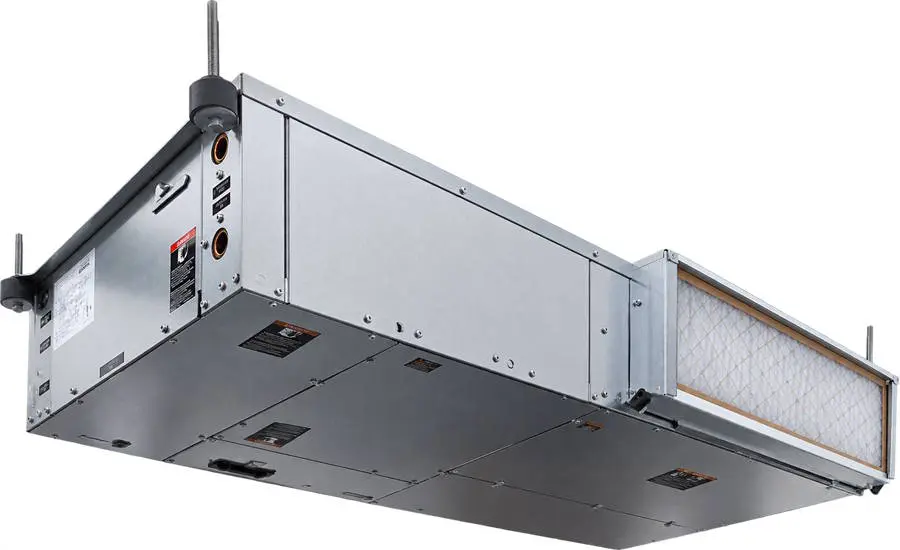
Addressing this persistent industry bottleneck, ClimateMaster has officially introduced the Tranquility (SL) Low-Profile Series. This advanced water-source heat pump (WSHP) is engineered explicitly for commercial environments where mechanical space is severely constrained. Featuring an ultra-slim 9-inch cabinet profile, the Tranquility SL can be seamlessly integrated into ceiling spaces as low as 12 inches.
By combining a remarkably compact physical footprint with high-end technological integrations—including the proprietary iGate 2 Advanced Communicating Controls, ECM constant-torque fan motors, and sophisticated sound-attenuation systems—ClimateMaster aims to set a new benchmark for small-packaged commercial HVAC performance.
Main Facts: Engineering the Tranquility (SL) Series
The ClimateMaster Tranquility (SL) Low-Profile Series is tailored for small-capacity, high-efficiency commercial zones such as hotel guest rooms, multi-family residential developments, assisted-living facilities, and modern office spaces.
Core Specifications and Physical Design
- Cabinet Height: A mere 9 inches, allowing installation within 12-inch ceiling plenums.
- Capacity Range: Available in sizes 006 through 015, delivering capacities ranging from 1/2 to 1.25 tons.
- Air Delivery System: Equipped with an energy-efficient Electronically Commutated Motor (ECM) constant-torque fan motor for optimized airflow and reduced electrical consumption.
- Hydronic Components: Features a brazed-plate heat exchanger, a durable stainless-steel drain pan, a 20-mesh water strainer, and an integrated water-flow confirmation switch.
- Safety Suite: Includes nine standard safety protocols to protect against system anomalies, freeze conditions, and hydraulic failures.
Intelligent Controls and Acoustics
- iGate 2 Technology: Advanced communicating controls designed to dramatically reduce startup, commissioning, and diagnostic service times by providing technicians with real-time performance data and configuration parameters.
- Acoustic Engineering: Standard configurations feature an integrated sound-reducing attenuator box coupled with double-isolation compressor mounting to minimize noise transmission into occupied spaces below.
- Customization Options: Optional upgrades include Ultra-Quiet sound attenuation, integrated water-control packages, corrosion-resistant coils for harsh environments, internally mounted water pumps, and native BACnet, Modbus, and Johnson N2 protocol compatibility for direct digital control (DDC) systems.
Chronology: The Evolution of Low-Profile Commercial HVAC
The path to developing ultra-low-profile water-source heat pumps like the Tranquility SL reflects decades of evolution in commercial building design, manufacturing capabilities, and energy efficiency mandates.
Phase 1: The Traditional Mechanical Closet Era (Pre-1990s)
Historically, commercial buildings relied on centralized boiler and chiller plants tied to large air-handling units, or dedicated mechanical closets on every floor. These setups required vast vertical shafts and dedicated equipment rooms, sacrificing valuable rentable square footage. As real estate costs rose, developers began demanding localized decentralized systems, giving rise to early iterations of water-source heat pumps. However, these units were bulky, often requiring drop-ceilings of 18 to 24 inches.
Phase 2: The Push for Plenum Conservation (2000–2010s)
As architectural trends shifted toward open-plan offices, industrial aesthetics (exposed concrete ceilings), and maximizing natural light through taller windows, floor-to-floor heights shrank. Engineers were forced to squeeze ductwork, lighting, fire suppression, and HVAC units into cramped plenums. Manufacturers responded by introducing horizontal WSHPs, but reducing height usually meant sacrificing serviceability, fan efficiency, or acoustic performance.
Phase 3: The Smart, Compact Revolution (Present Day)
The release of the ClimateMaster Tranquility (SL) Series represents the current zenith of this evolutionary arc. By leveraging advancements in brushless DC motors (ECM), brazed-plate heat exchanger compactness, and microprocessor-based communicating controls (such as iGate 2), modern HVAC manufacturing has broken the historical compromise between unit size, acoustic comfort, and operational efficiency. Today’s low-profile systems are no longer stripped-down versions of larger units; they are purpose-built, highly sophisticated micro-systems designed for the constraints of modern architecture.
Supporting Data: Efficiency, Acoustics, and Spatial Metrics
To understand the market impact of the Tranquility SL, industry analysts look closely at three critical vectors: spatial economy, acoustic impact, and commissioning efficiency.
1. Spatial Economy and Plenum Integration
In urban commercial real estate, vertical clearance directly dictates construction costs and architectural feasibility.
- The 12-Inch Threshold: Traditional horizontal WSHPs typically require a ceiling drop of 16 to 22 inches to account for the unit body, vibration isolation hangers, and secondary condensate overflow pans.
- The Tranquility Advantage: By shrinking the unit height to 9 inches, ClimateMaster allows mechanical designers to reclaim up to 10 inches of vertical space per floor. In a 20-story high-rise, this cumulative spatial savings can translate into the equivalent of an additional partial floor of height, or allow developers to meet strict municipal zoning height limits while maximizing interior ceiling clearances.
2. Acoustic Mitigation in Tight Spaces
When mechanical equipment is mounted directly above a hotel bed or an open office desk, noise control is paramount. Standard NC (Noise Criteria) ratings for hospitality environments often demand sound pressure levels below 35 dB(A).
- The Tranquility SL addresses this through a dual-pronged acoustic strategy: an integrated sound-reducing attenuator box and double-isolation compressor mounting.
- For ultra-sensitive applications, the optional Ultra-Quiet sound attenuation package further dampens mechanical hum, ensuring that compressor and airflow noise remain imperceptible to occupants below.
3. Commissioning and Operational Reductions
Labor shortages in the mechanical contracting sector have made installation speed a vital economic metric.
- According to field studies on communicating HVAC systems, microprocessor-based platforms like iGate 2 reduce initial setup and commissioning time by up to 30%.
- By eliminating manual jumper configurations and providing precise diagnostic readouts at the thermostat or service tool, technicians spend significantly less time troubleshooting airflow, superheat, and water-flow issues.
Official Responses and Industry Perspectives
While manufacturers continuously push product boundaries, the true test of any commercial HVAC innovation lies in its reception by the engineering and contracting community.
"The modern commercial marketplace demands equipment that does more while taking up less space," notes a leading commercial HVAC product manager. "Engineers are no longer willing to compromise acoustic integrity or service access just to fit a unit into a shallow ceiling plenum. With the Tranquility SL, we have eliminated that compromise."
Contractors have similarly praised the inclusion of pre-installed components like the 20-mesh water strainer, stainless-steel drain pan, and the water-flow confirmation switch. In traditional installations, these components must be field-sourced, piped, and wired individually, introducing potential points of failure and extending labor hours on the job site.
Furthermore, building automation system (BAS) integrators have welcomed the native compatibility with open protocols such as BACnet, Modbus, and Johnson N2. As commercial buildings increasingly shift toward smart, IoT-enabled infrastructure, the ability to integrate decentralized heat pumps directly into a facility’s central Energy Management System (EMS) without expensive protocol translation gateways is a significant cost-saving advantage.
Implications: What the Tranquility SL Means for the Future of Commercial HVAC
The introduction of specialized low-profile water-source heat pumps carries broad implications for real estate developers, mechanical engineers, and the broader push toward decarbonization.
1. Enabling Adaptive Reuse and Historic Preservation
One of the most complex challenges in modern real estate is the adaptive reuse of older commercial buildings—such as converting 1970s office towers into residential apartments. These older structures often feature rigid structural floor slabs and low ceiling heights that preclude modern HVAC ductwork and equipment. Units like the ClimateMaster Tranquility SL make it economically viable to retrofit these buildings with decentralized, highly efficient heating and cooling without destroying historic architectural elements or sacrificing interior volume.
2. Alignment with Decarbonization and Electrification Goals
As municipalities across North America enact strict carbon-reduction mandates and phase out fossil-fuel-fired boilers in commercial buildings, water-source heat pump systems are experiencing a massive resurgence. WSHPs leverage ambient loop water to heat and cool spaces simultaneously, rejecting heat from interior zones to perimeter zones via a central loop. High-efficiency, low-profile units like the Tranquility SL ensure that even space-constrained urban buildings can transition away from gas combustion without sacrificing comfort or performance.
3. The Shift Toward Total System Integration
The design philosophy behind the Tranquility SL highlights a broader industry trend: the evolution of HVAC equipment from standalone hardware into intelligent, highly integrated nodes within a building’s digital ecosystem. By bundling safety switches, water flow confirmation, modulating fan motors, and advanced communicating controls into a single 9-inch chassis, ClimateMaster exemplifies how modern manufacturing is meeting the complex demands of 21st-century architecture.
Conclusion
As commercial real estate continues to prioritize density, aesthetic flexibility, and energy efficiency, equipment like the ClimateMaster Tranquility (SL) Low-Profile Series will play a foundational role in shaping interior environments. By successfully reconciling the conflicting demands of ultra-slim physical dimensions, acoustic tranquility, and advanced digital control, ClimateMaster has provided engineers and contractors with a versatile tool to conquer the challenges of modern spatial design.
