

Overflowing gutters are more than just an aesthetic eyesore; they pose a genuine threat to a home’s structural integrity. Neglected channels allow rainwater to pool, spilling over the sides to saturate exterior walls, erode landscaping, and ultimately compromise the foundation of the house. For decades, combating this seasonal hazard meant suiting up in heavy-duty work gloves, positioning an unsteady ladder against the roofline, and manually scooping rotting, sludge-like debris out by hand.
Fortunately, advancements in residential maintenance equipment have introduced a diverse array of innovative gutter-cleaning solutions. Modern tools range from manual scoops and scrapers designed to minimize hand contact to sophisticated attachments that integrate seamlessly with existing pressure washers, wet/dry vacuums, and leaf blowers. To help homeowners navigate this crowded marketplace, product testing experts evaluated the top-performing gutter cleaners across multiple categories. Through rigorous, hands-on testing, reviewers identified the standout models for efficiency, safety, and overall value.
Chronology of Gutter Cleaning: From Manual Labor to Ground-Level Efficiency
The evolution of gutter cleaning reflects a broader industry shift toward homeowner safety and ergonomic design. Historically, maintenance involved only two choices: climb a ladder with a bucket and trowel, or hire a professional exterior cleaning service. Both options presented distinct drawbacks, namely physical danger and recurring out-of-pocket expenses.
- Early Innovations: The first major shift came with the invention of manual gutter scoops—plastic or metal trowels contoured to fit standard K-style gutters. While these tools kept fingers safely away from sharp edges and hidden pests, they still required the user to scale a ladder and repeatedly reposition it as they cleared small sections.
- The Pneumatic Revolution: As consumer-grade leaf blowers and wet/dry vacuums became household staples in the late 20th and early 21st centuries, manufacturers recognized an opportunity. By engineering lightweight extension tubes and angled nozzles, brands enabled homeowners to leverage high-velocity air to blast debris out of gutters while remaining safely planted on solid ground.
- High-Pressure Adaptations: Most recently, pressure washer attachments and specialized water wands have entered the market. These systems utilize standard municipal water pressure or high-powered PSI pumps to scour gutters clean, flushing away stubborn silt and leaves without the need for manual scraping.
Supporting Data and Testing Methodology
To provide consumers with objective recommendations, testing protocols were established based on real-world application. Reviewers analyzed more than two dozen products before narrowing the field to the top 10 models for hands-on evaluation.
Testing Parameters
- Products Tested: 9 distinct gutter-cleaning tools and kits.
- Total Testing Time: Over 10 hours of active, on-site deployment.
- Evaluations Per Product: 5 to 6 distinct performance tests per tool.
- Price Range: $3 to $100, accommodating various household budgets.
Each tool was hooked up to its designated power source—ranging from a standard garden hose to heavy-duty leaf blowers and gas-powered pressure washers—or operated manually from an extension ladder. Testers scored each model using a comprehensive rubric that weighted Ease of Use (flexibility, weight, and assembly), Effectiveness (debris removal capacity), and Value (cost relative to performance).

Official Reviewer Findings: The Top Gutter Cleaners of the Year
The following products emerged from testing as category leaders, each demonstrating exceptional performance in specific use-case scenarios.
1. Best Overall: The Gutter Tool
- Ratings: Ease of Use: 4/5 | Effectiveness: 4/5 | Value: 4.5/5
- The Verdict: For homeowners who prefer a manual approach without direct hand contact, The Gutter Tool stands out as the premier choice. Constructed from durable yet lightweight plastic, it easily screws onto a standard extension pole or broomstick. Its clever dual-sided design features a spoon end to drag debris toward the ladder and a flat scoop to push material around gutter brackets.
- Expert Insight: "The Gutter Tool is sturdy and ensures you’re able to reach and gather nearly anything in the gutter, which means less time moving your ladder," notes Tom Scalisi, product reviewer. While it requires an extension pole (sold separately) and doesn’t lift the debris out of the gutter for you, its smart engineering drastically reduces the physical labor of manual cleaning.
2. Best Runner-Up: Orbit Telescoping Gutter Cleaning Wand
- Ratings: Ease of Use: 4.5/5 | Effectiveness: 4/5 | Value: 4/5
- The Verdict: Requiring nothing more complex than a standard garden hose, the Orbit telescoping wand is arguably the most straightforward tool on the market. Extending from 40 to 70 inches, it allows owners of ranch and Cape-style homes to clear lower-story gutters entirely from the ground. An adjustable head and integrated shut-off valve provide precise control over water direction and pressure.
3. Best Bang for the Buck: Amerimax Home Products 8300 Gutter Getter Scoop
- Ratings: Ease of Use: 3.5/5 | Effectiveness: 4/5 | Value: 4.5/5
- The Verdict: At a minimal price point, the Gutter Getter scoop offers an exceptionally affordable way to clean gutters. Featuring a flexible tip that conforms to the interior channel of the gutter and a raised handle to protect knuckles, this tool holds a large volume of debris. Testers noted that pinching the sides of the scoop together minimizes spills during extraction.
4. Best Vacuum Attachment: Craftsman Wet/Dry Vacuum Gutter Cleaning Kit
- Ratings: Ease of Use: 3.5/5 | Effectiveness: 5/5 | Value: 5/5
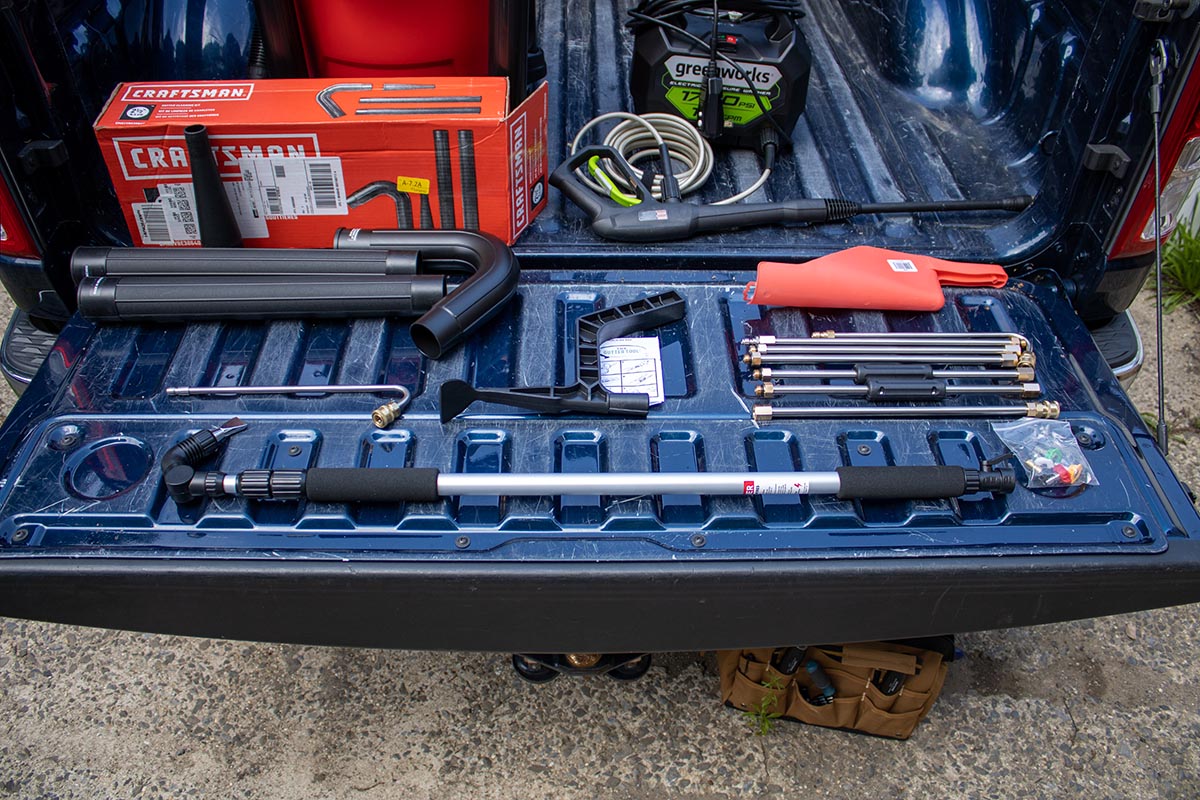
- The Verdict: This four-piece kit transforms a standard wet/dry shop vacuum into a high-powered gutter maintenance system. Compatible with 2.5-inch vacuum outlets, the kit includes extension wands and a hooked nozzle. While designed primarily to blow debris out via the vacuum’s exhaust port, testers discovered that running it through the suction port is even more practical, vacuuming up leaves and trapping them inside the canister to prevent a messy yard cleanup.
5. Best for Pressure Washer: Sun Joe SPX-SRL9 Sky Lance
- Ratings: Ease of Use: 4/5 | Effectiveness: 5/5 | Value: 4.5/5
- The Verdict: Rated for pressure washers ranging from 1,800 to 4,000 PSI, the Sun Joe Sky Lance converts a pressure washer into a high-reach cleaning lance. Featuring heavy-duty threaded wands (adjustable between 3, 6, and 9 feet), a dedicated trigger gun, and a shoulder strap to manage the weight, this tool blasts away caked-on mud and stubborn debris with professional-grade force.
6. Best for Leaf Blower: Worx WA4096 Leafjet Blower GutterPro Attachment
- Ratings: Ease of Use: 3/5 | Effectiveness: 4/5 | Value: 4/5
- The Verdict: Blower attachments frequently suffer from a common flaw: popping off mid-use under high air pressure. Worx solved this issue by incorporating a screw-and-lock connection system for its extension tubes and elbow nozzle. Providing up to 11 feet of total reach, the universal adapter cinches securely onto most major leaf blower brands.
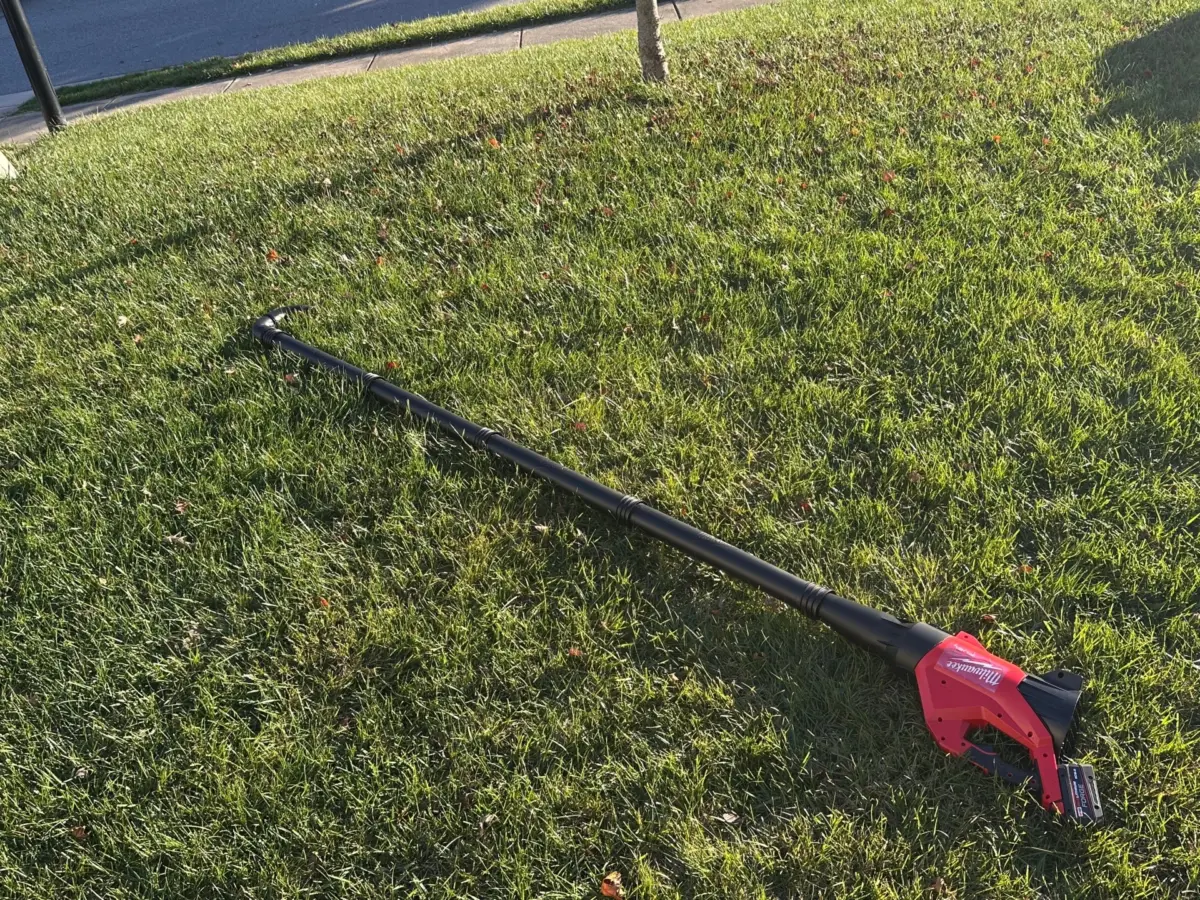
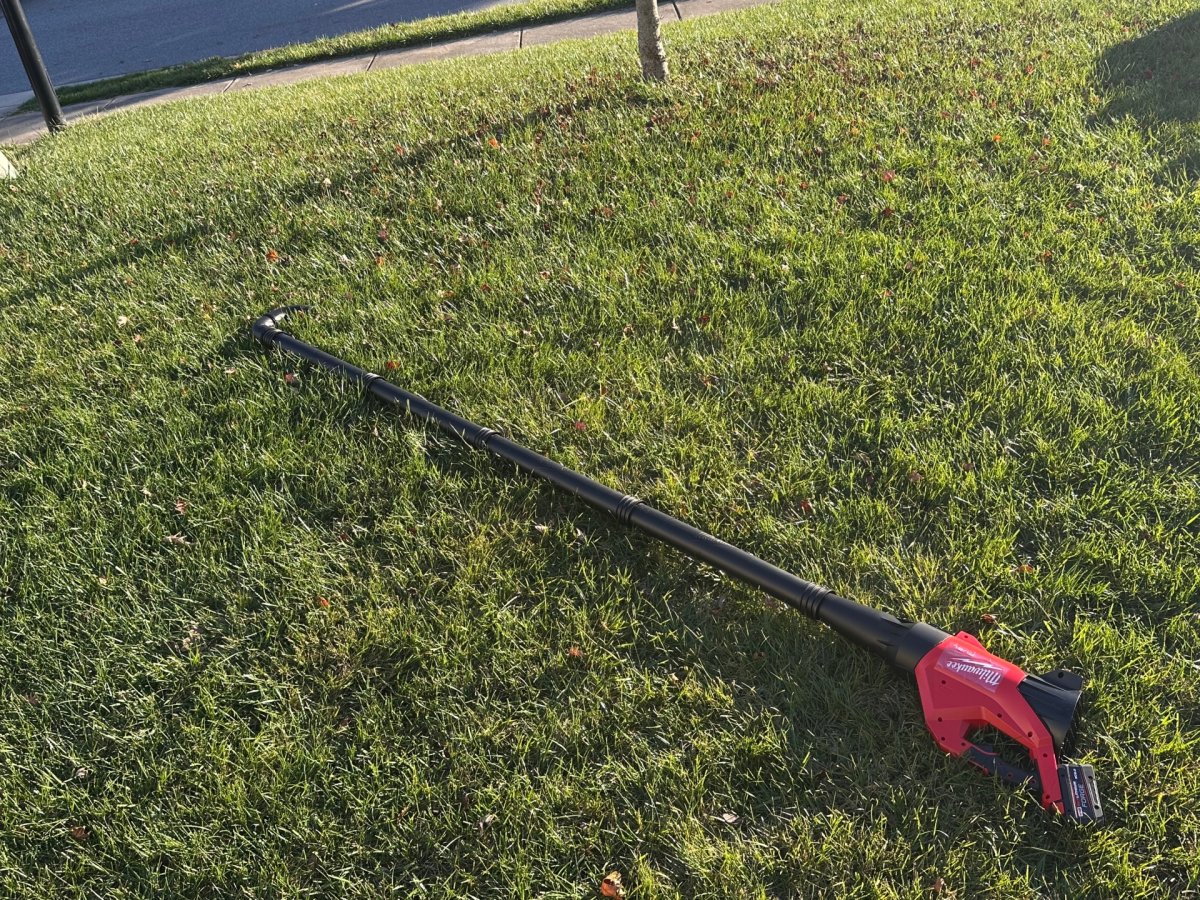
7. Best Leaf Blower Kit: Milwaukee M18 FUEL Blower with Gutter Attachment
- Ratings: Ease of Use: 4/5 | Effectiveness: 5/5 | Value: 4/5
- The Verdict: For users heavily invested in cordless power tool ecosystems, the Milwaukee M18 FUEL handheld blower paired with its dedicated gutter attachment is a powerhouse. Weighing under 6 pounds (sans battery), the unit delivers a balanced 120 MPH max air speed—enough to clear wet, clumped leaves without exerting excessive torque on the user’s arms. Built-in cruise control allows operators to lock in airflow speed without keeping a constant finger on the trigger.
8. Also Consider: Black & Decker Gutter Cleaner Blower Attachment
- Ratings: Ease of Use: N/A | Effectiveness: N/A | Value: N/A
- The Verdict: Utilizing a soft, flexible collar that clamps onto most handheld blowers, this budget-friendly option provides up to 12 feet of reach via four rigid extension tubes. Because the connection is flexible, users can maintain a more comfortable, horizontal posture while operating the leaf blower from the ground.
Industry Implications and Future Trends
The expansion of consumer-grade pneumatic and hydraulic gutter-cleaning accessories points toward a larger shift in DIY home maintenance: safety-first engineering. Falls from ladders remain one of the leading causes of home-improvement-related injuries and emergency room visits in the United States.
By designing lightweight carbon-fiber and plastic extension systems that integrate with tools homeowners already own (such as leaf blowers and garden hoses), manufacturers are successfully reducing the necessity of hazardous ladder work. Furthermore, the rise of modular, multi-use attachments—such as wands that double as vehicle-washing tools or garden sprayers—reflects consumer demand for versatile equipment that maximizes storage space and delivers high financial value.
Expert Buying Guide: What to Consider When Choosing a Gutter Cleaner
Before purchasing a gutter-cleaning tool, homeowners should carefully evaluate several critical variables to ensure they select the right product for their specific property.
1. Identify Your Gutter Conditions
Inspect your gutters before undertaking a cleaning project. While minor issues like loose brackets or small leaks can be repaired with sealants, structural problems such as severe sagging or deep dents will disrupt the water pitch. A bent gutter creates an artificial dam where debris continually collects, rendering regular cleaning only a temporary fix. In such cases, full section replacement or the installation of high-quality gutter guards may be necessary.
2. Measure Required Attachment Length
If you intend to work entirely from the ground, calculate the vertical distance to your roofline. Ground-based wands and blower attachments must feature sufficient extension length to clear the edge of the roof safely. For manual scoops and scrapers, ensure the extension pole you pair with the tool provides adequate reach without becoming top-heavy and difficult to control.
3. Account for Auxiliary Equipment
Always verify what supporting equipment a gutter cleaner requires before buying. A pressure washer attachment is useless without a functioning pressure washer rated within the manufacturer’s PSI parameters. Similarly, shop-vacuum attachments require compatible canister diameters and adequate motor horsepower to lift heavy, damp organic matter.
4. Prioritize Ergonomics and Ease of Use
Operating an extended pole while fighting against the reactive force of compressed air or pressurized water can quickly induce fatigue. Homeowners should look for lightweight materials, supportive shoulder straps (such as those included with the Sun Joe Sky Lance), and secure locking mechanisms that prevent sections from shaking loose during high-velocity operation.
Frequently Asked Questions (FAQs)
Q: Is there an effective tool to clean gutters entirely from the ground?
Yes. Homeowners can utilize pressure washer lance kits, wet/dry vacuum extensions, or specialized leaf blower attachment tubes to clear roofing channels without ever stepping foot on a ladder.
Q: How much PSI is required to safely pressure-wash gutters?
A setting of approximately 1,700 PSI is generally sufficient to strip away dirt, leaves, and light silt. Exceeding this pressure risks denting aluminum gutters or stripping protective coatings.
Q: How frequently should residential gutters be cleaned?
Experts recommend scheduling a thorough gutter cleaning at least once or twice per year—ideally late in the autumn after deciduous trees have dropped their foliage, and once more in the spring to clear accumulated seeds and blossoms.
Q: What are the primary warning signs of a clogged gutter?
Visual indicators include standing water pooling in the channel, plants sprouting from decomposing organic matter, and water spilling in sheets over the edge of the gutter rather than channeling smoothly down the downspout during a heavy rainstorm.
