


While most households are familiar with the immediate psychological tolls of a chaotic living environment—such as sensory overload, elevated stress levels, and mounting anxiety—few individuals pause to calculate the steep financial price tag attached to physical disarray. Beyond the aesthetic frustration of a messy desk drawer or an overflowing pantry, clutter operates as a silent financial drain. It siphons money from bank accounts through a steady drip of avoidable duplicate purchases, costly late fees, wasted perishable goods, and the staggering recurring expenses of off-site storage units.
To uncover the true economic anatomy of clutter, we spoke with Lori Bailey, founder and owner of Miss Organized, a premier professional organizing firm serving the New York and New Jersey metropolitan areas. Bailey breaks down the five primary ways unmanaged possessions deplete your wealth, offering actionable, expert-backed strategies to reclaim control over both your physical space and your finances.
1. Missed Returns: The Cost of Procrastination
One of the most immediate and preventable losses tied to household clutter stems from missed return windows. In the age of frictionless e-commerce, buying items online is easier than ever, but sending unwanted goods back requires an intentional series of steps. When a home lacks organizational systems, returned items frequently languish in purgatory.
“Clients will often toss a purchase in a pile or in the backseat of the car, meaning to return it soon, but ‘soon’ turns into months,” explains Bailey. “By the time they rediscover it, the return window has closed, and money that could have come back to them is gone for good.”
This phenomenon of deferred decision-making effectively transforms temporary buyer’s remorse into permanent financial loss. When items sit unreturned, households forfeit hundreds—sometimes thousands—of dollars annually that could have been credited back to their accounts.
Strategies to Secure Your Refunds:
- Designate a Return Station: Establish a singular, highly visible drop zone near your home’s primary exit or inside a dedicated mudroom shelf specifically for items awaiting return.
- Digitize Receipts: Immediately photograph paper receipts or flag digital order confirmations in a dedicated email folder labeled "Returns."
- Set Hard Calendar Alerts: The moment an item arrives and is deemed unsuitable, input a reminder in your smartphone calendar alerting you to process the return at least three days before the expiration deadline.
2. Expired Goods Thrown Away: The ‘Waste Tax’
Clutter acts as a camouflage for consumables, hiding groceries in the deep recesses of a pantry, prescription medications in overcrowded medicine cabinets, and skincare or cosmetics in cluttered vanity drawers until their expiration dates pass.

“People paid full price, and now they’re paying the ‘waste tax’ of throwing it out and re-buying,” Bailey notes.
When food spoils or specialized beauty products expire unseen, consumers effectively flush hard-earned money down the drain. Furthermore, this cycle of waste forces households to repurchase items they already own, compounding the financial loss.
Reclaiming Control Over Consumables:
To combat out-of-sight, out-of-mind waste, Bailey recommends deploying practical structural tools throughout the home.
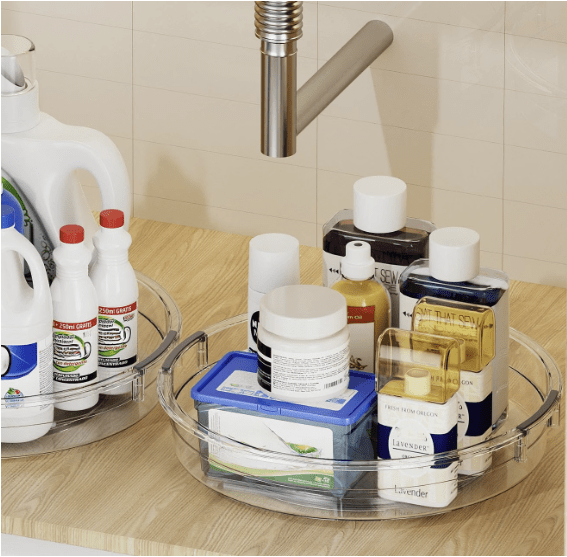
- Utilize Lazy Susans: Commonly relegated to kitchens, rotating trays are exceptionally effective when placed inside refrigerators, deep pantry corners, and bathroom vanities. A lazy Susan eliminates blind spots, ensuring items are easily seen and reached.
- Adopt the FIFO Method: First-In, First-Out is a standard inventory management practice in commercial kitchens that belongs in residential pantries. When unpacking groceries, place newly purchased items at the back of the shelf, pushing older items to the front so they are consumed first.
- Prioritize Clear Acrylic Containers: Ditch opaque storage bins and baskets in favor of clear acrylic organizers. Being able to scan inventory at a glance prevents double-buying.
- Label with Dates: Use a simple label maker or painter’s tape to mark purchase and expiration dates on bulk goods and specialized products, removing guesswork from your household inventory.
3. Late Fees and Missed Refunds: The Price of Paper Chaos
Physical clutter is rarely limited to consumer goods; it frequently manifests as mounting stacks of mail, unopened envelopes, utility bills, and warranty information. When administrative documents are swallowed by household clutter, the consequences quickly translate into financial penalties.
“Bills buried in paper piles get paid late or not at all, racking up penalty fees,” notes Bailey. “Also, rebate forms, warranty claims, and return windows expire because the paperwork or receipt was never findable in time.”
The financial fallout here is twofold: you suffer direct cash penalties from creditors and utility companies for tardy payments, and you miss out on valuable rebates, manufacturer guarantees, and insurance reimbursements.

Restoring Order to Your Administrative Life:
- Embrace Paperless Billing: Eliminate the physical clutter pipeline at its source by opting into electronic statements and auto-pay features for fixed monthly expenses.
- Create a ‘Action Required’ Folder: For paperwork that necessitates physical action—such as medical bills, tax documents, or mail-in rebates—designate a single vertical file folder placed in a central command center.
- Schedule Weekly Administrative Sessions: Dedicate 15 minutes every Sunday to sorting mail, processing bills, and shredding outdated paper junk before it can accumulate into unmanageable drifts.
4. Duplicate Purchases: Paying Twice for What You Already Own
Perhaps the most insidious financial drain caused by disorganization is the silent accumulation of duplicate items. When a home lacks designated storage structures, residents frequently find themselves unable to locate everyday tools and household goods when they are needed most.
Rather than spending 20 minutes searching through an unorganized utility closet or junk drawer, many consumers take the path of least resistance: they simply buy another one.
“When clients can’t find something, they buy it again rather than dig through their mess,” explains Bailey. “Multiplied over years, this shows up as three sets of scissors, five phone chargers, and a pantry with four half-used bottles of olive oil.”
When compounded across a lifetime, purchasing duplicates of hardware, kitchen supplies, stationery, and electronic accessories totals thousands of dollars in entirely avoidable expenditures.
Implementing the ‘One Home, One Place’ Philosophy:
To curb the urge to buy redundant goods, Bailey champions a fundamental organizational rule: A home for everything, and everything in its home.
- Category Zoning: Group like items together by strict function rather than scattering them across multiple rooms. Store all writing utensils in one space, all adhesives in another, and all lighting accessories together.
- Pre-Shopping Audits: Before heading to the hardware store or supermarket, check your designated zones. If you maintain a strict inventory location for tape measures or batteries, you will instantly know whether a purchase is genuinely necessary.
5. Storage Units: The Long-Term Financial Trap
When residential clutter reaches a critical mass where items can no longer be contained within the home, many individuals turn to off-site storage units as an easy way out. However, according to industry experts, renting external square footage is frequently a financially flawed strategy.
“You’re often paying more than the stuff is worth,” warns Bailey. “People rarely do the math on this: $150 a month for 3 years is $5,400. It’s often more than what’s actually inside would sell for or cost to replace.”
Off-site storage units transform temporary accumulations of unwanted possessions into permanent monthly financial liabilities. Over years, consumers often spend enough in rental fees to purchase the contents of the unit several times over.
Escaping the Storage Unit Cycle:
- Conduct a Value Assessment: Calculate the replacement cost of the items sitting in your storage unit versus the total cumulative cost of renting the unit over a projected 24-to-36-month period. In most cases, liquidating or donating the contents is vastly more economical.
- Audit Before You Pack: Never move items directly from a home into a storage facility without thoroughly editing down the inventory. If possessions are not valuable enough to keep in your immediate living space, they rarely warrant paying rent to keep them elsewhere.
Implications and Moving Forward
The hidden costs of clutter extend far beyond the physical boundaries of a messy home—they directly erode personal net worth through a combination of missed opportunities, administrative penalties, and redundant spending.
As professional organizers like Lori Bailey emphasize, transitioning from a reactive lifestyle of clutter to a proactive posture of organization is not merely an exercise in domestic tidying; it is a fundamental wealth-preservation strategy. By implementing systems such as dedicated return stations, clear inventory management, and strict administrative protocols, households can transform their living spaces from financial liabilities into orderly, cost-effective environments.
