SOUTH JAKARTA — In an era defined by fast-paced consumption, hyper-saturated aesthetic trends, and the relentless expansion of commercial coffee culture, finding a moment of genuine stillness can feel like an impossible luxury. Yet, nestled within the bustling, café-dense Panglima Polim neighborhood of South Jakarta, a quiet architectural rebellion has taken root.
Designed by the emerging spatial design studio Matter of Something, Jun Matcha Club is a masterclass in adaptive reuse and spatial minimalism. Converted from a mundane, utilitarian former residential garage, this intimate sanctuary deliberately turns its back on the loud, industrial tropes of contemporary café design. Instead, it offers patrons a slower, highly contemplative spatial experience grounded entirely in the ancient, meditative rituals of preparing and consuming matcha.
Through a thoughtful fusion of Japanese aesthetic philosophies and authentic Indonesian craftsmanship, the project demonstrates how neglected urban spaces can be reimagined as urban oases. Captured through the lens of architectural photographer Kafin Noe’man, Jun Matcha Club stands as a testament to the power of restraint, local sourcing, and material honesty.
Main Facts: Architecture, Concept, and Location
At its core, Jun Matcha Club is an exploration of contrast. It juxtaposes the chaotic, vehicle-congested streets of South Jakarta with an interior landscape defined by absolute tranquility.
Project Name: Jun Matcha Club
Architectural & Interior Design Studio: Matter of Something
Location: Panglima Polim, South Jakarta, Indonesia
Original Building Typology: Residential Garage
Primary Design Focus: Adaptive reuse, material sustainability, artisanal craftsmanship, and contemplative spatial design
Design Philosophy: Translating the core tenets of matcha preparation—ritual, attentiveness, and restraint—into physical architecture
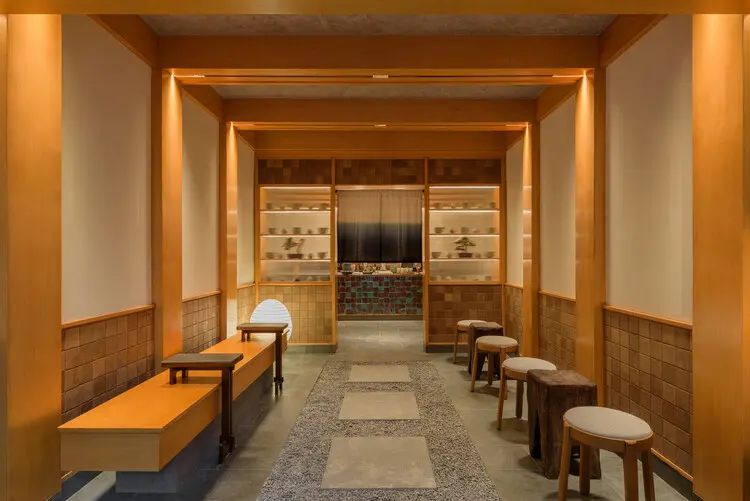
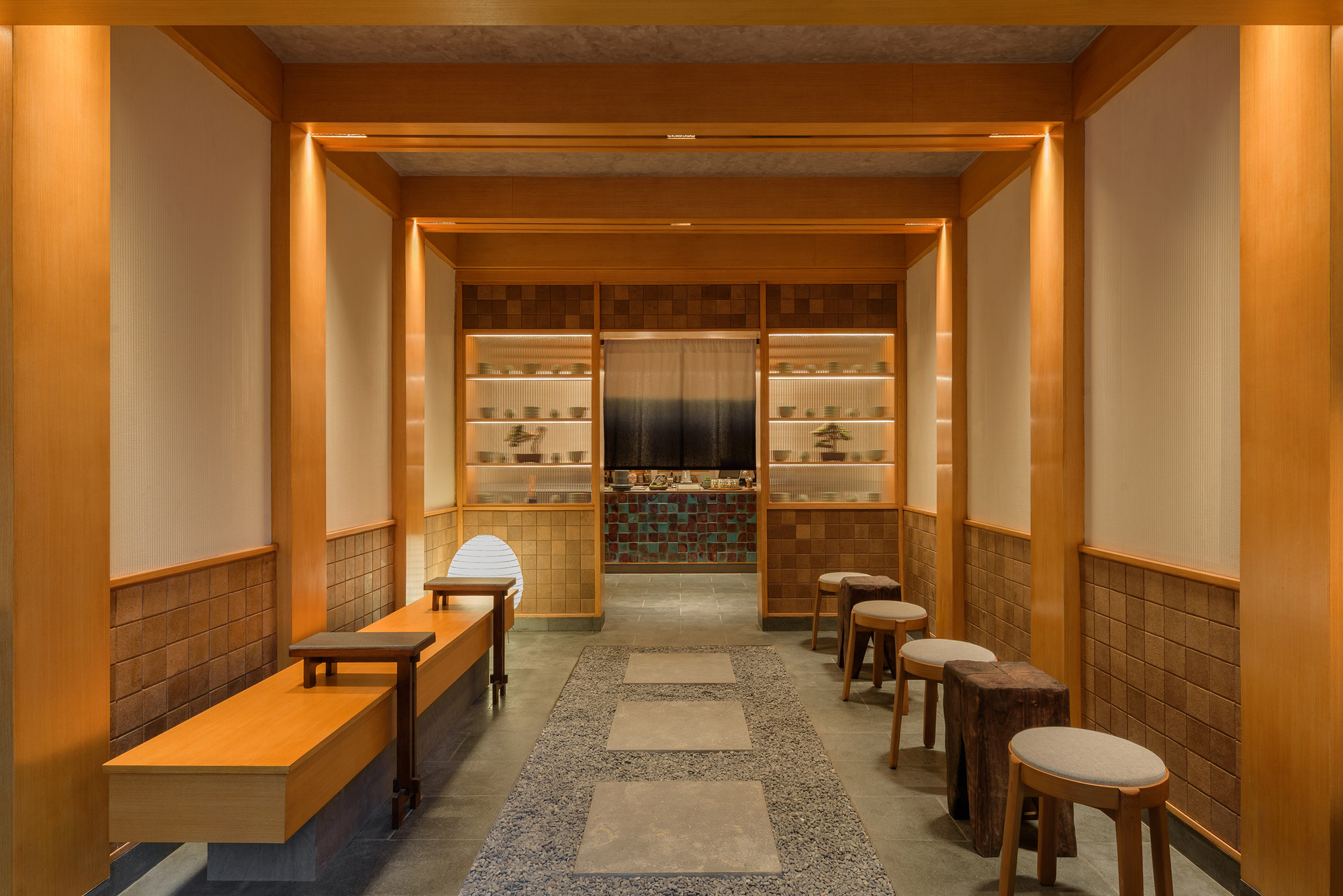
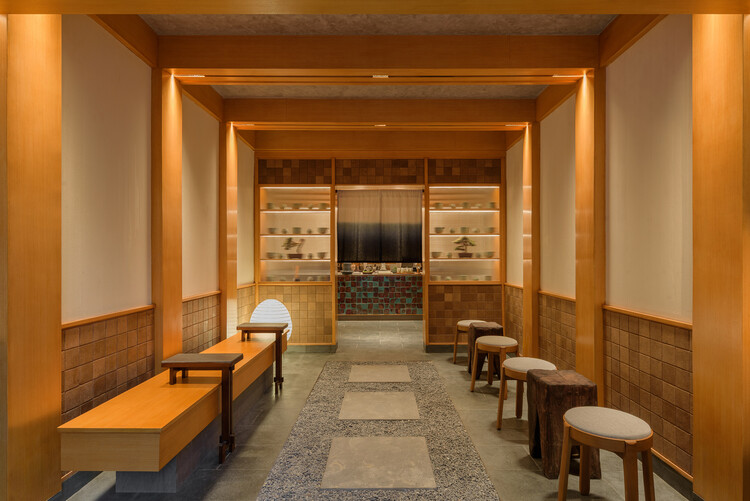
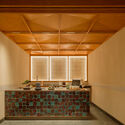
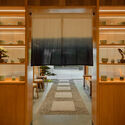
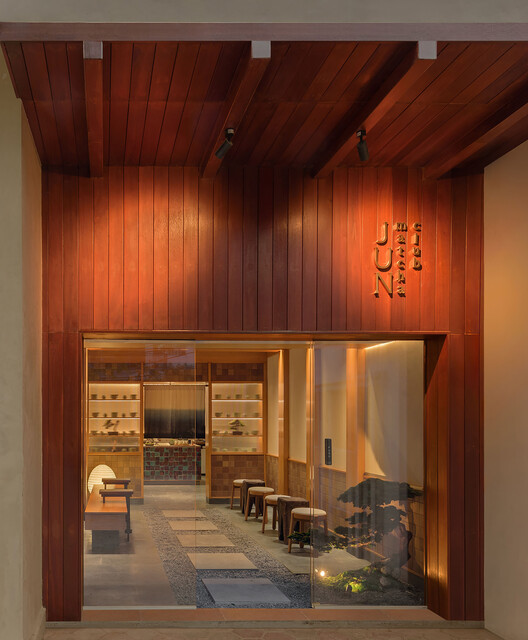
Rather than attempting to erase the building’s domestic, utilitarian origins, Matter of Something embraced the compact footprint of the former garage. The architectural intervention relies on a stripped-back material palette that highlights the raw beauty of natural wood and glass. Every design decision serves a singular purpose: to direct the visitor’s focus away from urban distractions and toward the deliberate, rhythmic movements of the tea master.
Chronology: From Forgotten Garage to Matcha Sanctuary
The realization of Jun Matcha Club was a meticulous journey that spanned spatial analysis, material sourcing, and delicate construction within a confined urban envelope.
Phase 1: Conceptualization and Spatial Analysis (Early Development)
The project began when the founders of Jun Matcha Club secured a modest, weathered garage space in Panglima Polim—a neighborhood rapidly transforming into Jakarta’s premier culinary and café district. Recognizing the neighborhood’s saturation of loud, high-turnover coffee shops, the design team at Matter of Something identified an opportunity to carve out a distinct niche.
Instead of competing for attention with bold signage and aggressive street-front spectacles, the architects proposed an inward-looking sanctuary. The initial design phase focused on stripping away unnecessary architectural layers of the old garage, exposing its raw structural bones, and establishing a layout that naturally dictated a slower, more deliberate flow of movement for incoming guests.
Phase 2: Material Sourcing and Craftsmanship Collaboration
Central to the narrative of Jun Matcha Club is a commitment to local Indonesian craftsmanship. Once the spatial shell was cleared, the design team collaborated closely with local artisans to source sustainable timber and construct custom architectural elements.
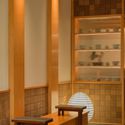
Unlike mainstream commercial builds that rely on imported, prefabricated fixtures, every shelf, counter, and partition in the café was custom-built. This phase required weeks of prototyping to ensure that the timber grain, lighting temperatures, and glass placements worked harmoniously to evoke the wabi-sabi philosophy—finding beauty in imperfection, simplicity, and natural authenticity.
Phase 3: Construction, Detailing, and Opening
The final construction phase involved delicate detailing within the tight garage envelope. Installers integrated seamless glass partitions and soft, directional lighting that mimics natural daylight filtered through traditional shoji screens.
Upon its completion and subsequent opening in August 2026, the café immediately captured the attention of architectural critics and design enthusiasts alike. By transforming a concrete box meant for automobile storage into a temple of tea, Matter of Something successfully established a new benchmark for boutique hospitality design in Southeast Asia.
Supporting Data: The Panglima Polim Culinary Landscape
To fully understand the significance of Jun Matcha Club, one must examine the socio-spatial dynamics of Panglima Polim, one of South Jakarta’s most dynamic lifestyle corridors.
Neighborhood Evolution: Over the past decade, Panglima Polim has evolved from a quiet residential suburb into a dense commercial hub characterized by independent coffee shops, boutique clothing stores, and artisanal eateries.
The "Third Place" Phenomenon: Urban studies in Jakarta indicate a 40% rise in demand for micro-hospitality spaces—venues under 100 square meters that prioritize intimate community gatherings over mass commercial volume.
Material Sustainability Metrics: Matter of Something prioritized a localized supply chain for Jun Matcha Club, sourcing over 85% of its timber and hardware from within the greater Jakarta and regional Indonesian artisan networks, significantly reducing the project’s carbon footprint compared to standard commercial interior fit-outs.
Aesthetic Shift: Market data shows a growing consumer fatigue toward industrial-chic cafés (exposed concrete, black steel pipes, and loud music). Jun Matcha Club represents a broader market pivot toward "mindful minimalism," where acoustic softness, warm woods, and natural lighting take precedence.
Official Responses and Design Intentions
In their official press release and project statements, the architects at Matter of Something elaborated on the philosophical underpinnings that guided the design of Jun Matcha Club:
"Located within a former residential garage in South Jakarta’s Panglima Polim neighbourhood, Jun Matcha Club responds to the area’s growing concentration of independent cafés and restaurants, offering a slower, more contemplative spatial experience centred around the ritual of preparing matcha."
The studio emphasized that the architecture is not merely a backdrop for a commercial transaction, but an active participant in the culinary ritual:
"The project draws from the values embedded in matcha practice—ritual, attentiveness, and restraint—and translates them through Indonesian craftsmanship and locally sourced materials."
According to the design team, every structural element was chosen to reinforce a sense of pause. The tactile quality of the wood invites touch, the low-profile shelving reduces visual clutter, and the careful curation of natural light ensures that the interior shifts moods gracefully alongside the progression of the Jakarta sun. Patrons do not simply walk in to grab a beverage and leave; they are invited to slow their breathing, observe the whisking of the green tea powder, and engage in a momentary retreat from urban life.
Implications: The Future of Adaptive Reuse in Urban Jakarta
The completion of Jun Matcha Club carries significant implications for urban planning, interior architecture, and commercial real estate development across Jakarta and the wider Indonesian archipelago.
1. Breathing New Life into Urban Residual Spaces
Jakarta is a sprawling megacity grappling with high land costs, traffic congestion, and a severe scarcity of green or open public spaces. By successfully transforming a utilitarian residential garage into a culturally vibrant, highly regarded architectural destination, Matter of Something demonstrates the immense potential of adaptive reuse. Instead of demolishing older urban structures to make way for monolithic glass towers, architects can look to micro-interventions that preserve the scale and character of historical neighborhoods while introducing fresh programmatic uses.
2. Redefining the Southeast Asian Café Culture
For years, the region’s café boom was dominated by Western-inspired coffee shop archetypes that favored loud social spaces, vibrant social media backdrops, and high-energy environments. Jun Matcha Club charts a different course. By anchoring its design in the quiet discipline of the Japanese tea ceremony while honoring local Indonesian artisan traditions, the project proves that commercial viability does not require sensory overload. It signals a maturation of the local design consumer base, who increasingly value mental wellness, spatial breathing room, and authentic material expression.
3. Elevating Local Craftsmanship
By partnering directly with regional woodworkers and fabricators, Matter of Something highlights a sustainable economic model for interior design. Rather than outsourcing fixtures to international industrial manufacturers, investing in local craft communities fosters regional economic resilience and ensures that every architectural project possesses a unique, place-based identity that cannot be replicated anywhere else in the world.
Conclusion
Jun Matcha Club is much more than a trendy spot to grab a cup of green tea in South Jakarta. It is a thoughtful spatial intervention that proves profound experiences can emerge from the most modest of footprints. Through the creative vision of Matter of Something, an ordinary residential garage has been elevated into a timeless monument of calm, reminding us that architecture, at its finest, has the power to heal, slow down, and center the human spirit amidst the noise of the modern metropolis.