

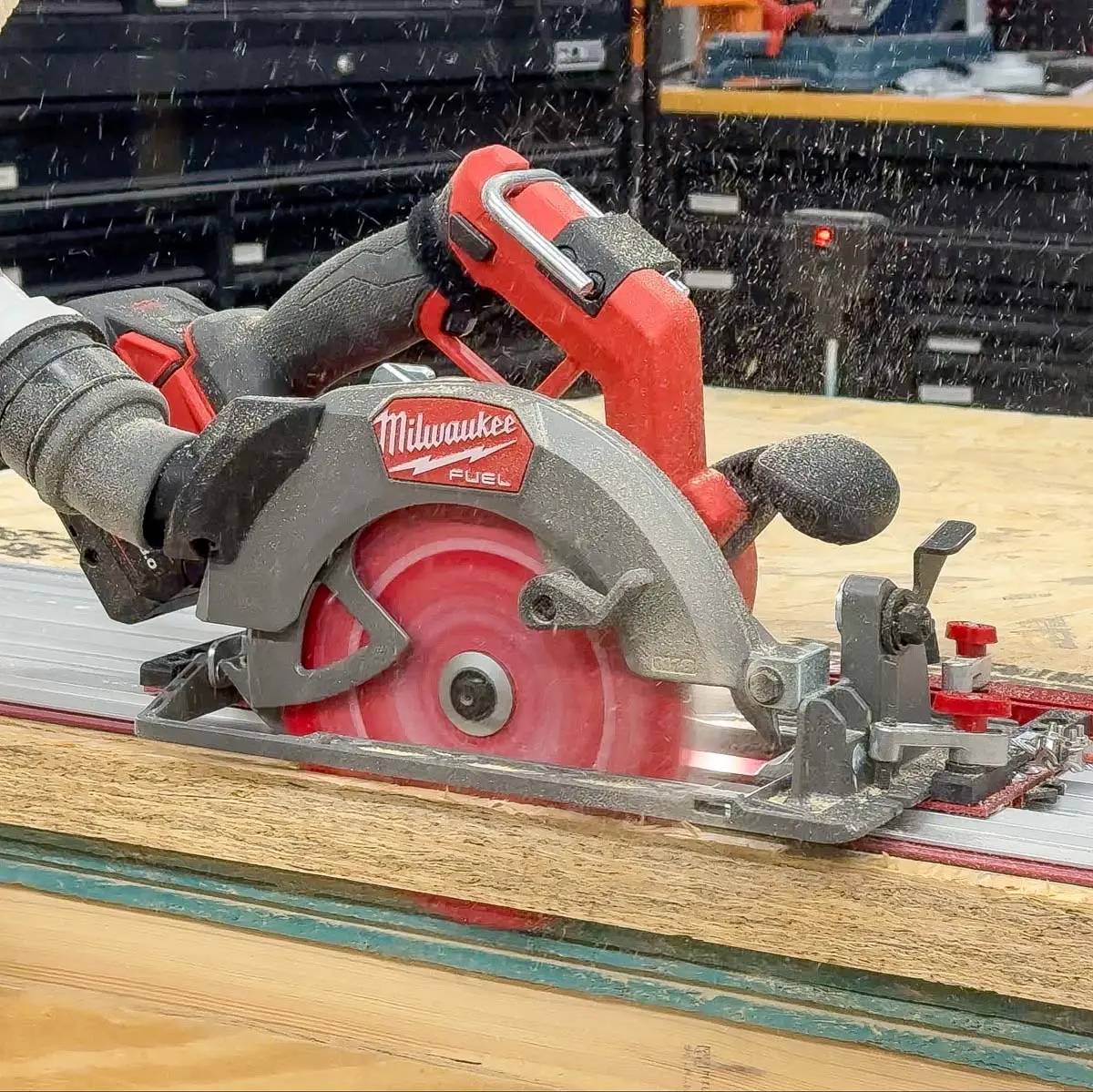
When it comes to evaluating professional-grade cordless power tools, the spec sheet is usually a tradesman’s first point of reference. Among the metrics proudly displayed on boxes and product pages, No-Load Revolutions Per Minute (RPM) stands out as a primary indicator of capability. Naturally, the assumption follows a straightforward logic: higher RPM means faster cutting, increased productivity, and a superior tool.
However, recent rigorous testing conducted by the Pro Tool Reviews team on some of the most popular cordless circular saws on the market challenges this long-held industry assumption. As data collection revealed a surprisingly wide variance in no-load RPM speeds across top-tier brands, a deeper question emerged: How much do RPMs really matter when it comes to real-world cutting performance?
Main Facts: The Core Findings of the Head-to-Head Testing
To determine which cordless circular saws rise above the competition, the editorial team put twelve prominent models through a standardized, highly controlled evaluation process.
The primary takeaways from the testing data include:
- RPM Correlation is Inconsistent: While saws with higher no-load RPM ratings generally performed well, the correlation between high speed and fast cutting times was far from absolute.
- The Performance Spread: Top-performing units completed a standardized 7-foot rip cut in under 10 seconds, while the slowest models required nearly 20 seconds.
- Torque Bridges the Gap: Saws with lower rated no-load speeds occasionally outperformed units with significantly higher speed ratings, proving that raw rotational velocity tells only half the story.
- The Spec Sheet Blind Spot: Unlike cordless drills and impact drivers, where torque figures are reliably published, circular saw manufacturers do not provide standardized torque ratings, making it difficult to judge motor stamina from paper specifications alone.
Chronology: The Evolution of Cordless Power and Testing Methodology
The journey toward understanding the true mechanics of circular saw efficiency began with the rapid evolution of lithium-ion battery technology and brushless motors. Over the past decade, cordless saws have transitioned from supplementary jobsite accessories to primary cutting tools capable of rivaling—and often surpassing—traditional corded equipment.
Developing a Controlled Testing Environment
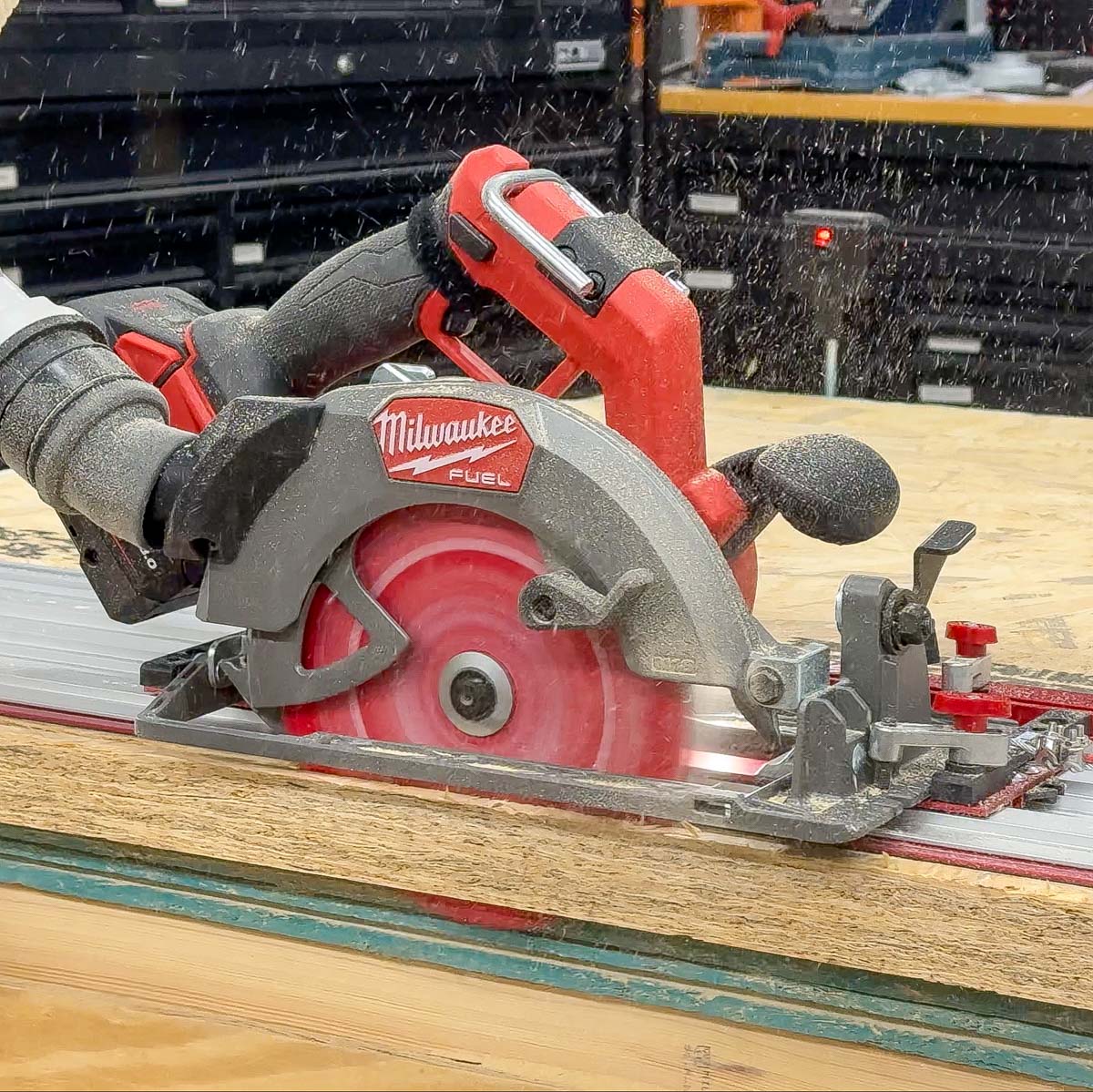
To evaluate these heavy-duty tools without introducing human bias, the testing team engineered a specialized, repeatable testing rig:
- Standardized Mounting: Each circular saw was securely mounted to an identical sliding sled and track system.
- Consistent Feed Force: Instead of relying on manual pushing—which introduces variable force based on fatigue or operator strength—the sled was pulled forward by a constant 10-pound weight.
- Challenging Material: The test material consisted of two stacked sheets of 3/4-inch OSB subfloor. This medium placed a genuine, consistent load on the motor without entirely burying the blade, mimicking realistic jobsite conditions.
- Precision Timing: A laser-triggered timing system was integrated to capture exact completion times down to the hundredth of a second, entirely eliminating human stopwatch error. (Due to the physical spacing required for the laser gate setup, the cut length was standardized at 7 feet rather than a full 8-foot sheet).
Supporting Data: Head-to-Head Test Results
The results of the 7-foot rip-cut test, paired alongside each manufacturer’s rated no-load RPM speed, reveal fascinating insights into how different engineering approaches yield vastly different cutting speeds.
| Circular Saw Model | Fastest Time (7-Foot Rip Cut) | No-Load RPM Rating |
|---|---|---|
| Milwaukee 2834 | 9.76 seconds | 6,000 RPM |
| Metabo HPT C3607DB | 10.10 seconds | 6,000 RPM |
| Flex FX2141 | 13.35 seconds | 5,800 RPM |
| Makita GSH01 | 13.53 seconds | 6,000 RPM |
| Hilti SC 30WR-22 | 13.75 seconds | 4,700 RPM |
| Ryobi PBLCS302 | 14.10 seconds | 5,000 RPM |
| Kobalt KXCS 124B-03 | 14.87 seconds | 5,500 RPM |
| DeWalt DCS578 | 15.53 seconds | 5,800 RPM |
| Skil CR5440B-00 | 16.70 seconds | 5,300 RPM |
| Craftsman CMCS551 | 17.67 seconds– | 5,000 RPM |
| Ridgid R8657 | 18.72 seconds | 5,400 RPM |
| Bosch GKS18V-25N | 19.64 seconds | 5,000 RPM |
Industry Perspectives and Official Manufacturer Context
The Mathematics of Blade Speed
To understand why manufacturers emphasize RPM, one must look at the basic math of cutting geometry. A standard 24-tooth framing blade engages the material 24 times for every complete revolution of the arbor.
- At 5,000 RPM, a 24-tooth blade delivers 120,000 tooth-strikes per minute.
- At 5,800 RPM, that same blade delivers 139,200 tooth-strikes per minute—representing a 16% increase in frequency.
The theoretical assumption is clear: more frequent tooth engagement should equate to faster material removal. However, theory and real-world application diverge the moment a blade encounters resistance.
The Missing Metric: Torque Under Load
Tool manufacturers have long grappled with how to communicate power effectively to end-users. While power tool brands readily supply torque specifications (in inch-pounds or Newton-meters) for drills, impact drivers, and impact wrenches, no such universal standard exists for circular saws.
Some manufacturers, such as DeWalt, have periodically published electrical power outputs measured in watts, offering a helpful glimpse into motor capacity. However, because this practice is not universally adopted across the industry, cross-brand comparisons remain difficult.
Industry experts note that testing circular saw torque in a reliable, repeatable manner is exceptionally complex. Unlike drilling or fastening—where stall torque can be measured statically—a circular saw operates dynamically, requiring a delicate balance between rotational speed and rotational force.
Implications for Professionals: How to Choose Your Next Saw
For professional tradesmen and contractors navigating an increasingly crowded marketplace, these findings carry significant implications for purchasing decisions, platform loyalty, and jobsite productivity.
1. Speed Versus Torque: The Real-World Dynamic
RPM ratings measure a saw running freely in open air (no-load speed). But the moment the carbide teeth bite into dense lumber or layered subflooring, friction and resistance take over.
- In light, thin materials, minimal torque is required to maintain high RPMs, allowing high-speed saws to dominate.
- Under heavy, sustained loads, RPMs inevitably drop. This is where torque becomes the deciding factor. Saws equipped with robust motors and advanced electronic management systems maintain their blade velocity under pressure, preventing the tool from bogging down.
When a saw rated at 5,800 RPM finishes behind a unit with a lower specification, it is almost invariably because the motor lacked the torque reserves required to maintain momentum under load. Ultimately, actual blade speed under load dictates cutting efficiency, not the empty-air rating printed on the box.
2. Invest in the Ecosystem, Not Just the Tool
When building out a cordless inventory, professionals are advised to look beyond individual tool performance metrics. Battery platforms represent a long-term investment. Choosing a brand should depend on the depth, reliability, and breadth of the entire tool system rather than chasing the absolute fastest circular saw in a single head-to-head test. A comprehensive ecosystem that fulfills every daily jobsite need provides far more long-term value than a fragmented collection of isolated top-tier tools.
3. Buy at the Flagship Level
For tradesmen demanding peak performance, budget tiering matters. Brands consistently reserve their most advanced brushless motors, superior gearing, and most sophisticated electronic protections for their flagship, professional-tier models. While these tools command a higher upfront price point, they deliver the sustained power and durability required for professional applications.
4. The Death of the Corded Saw
Perhaps the most encouraging takeaway for modern construction professionals is the broader trajectory of cordless technology. Every major professional brand’s flagship cordless circular saw now comfortably outperforms traditional top-tier 15-amp corded models in real-world productivity.
Even if a specific brand’s saw ranks lower within a comparative testing lineup, the operational freedom, elimination of generator dependencies, and ergonomic mobility deliver massive productivity gains over legacy corded equipment.
What has your experience taught you on the jobsite? Do high RPM ratings influence your purchasing decisions, or do you prioritize raw power and handling? Let us know your thoughts in the comments below.
