

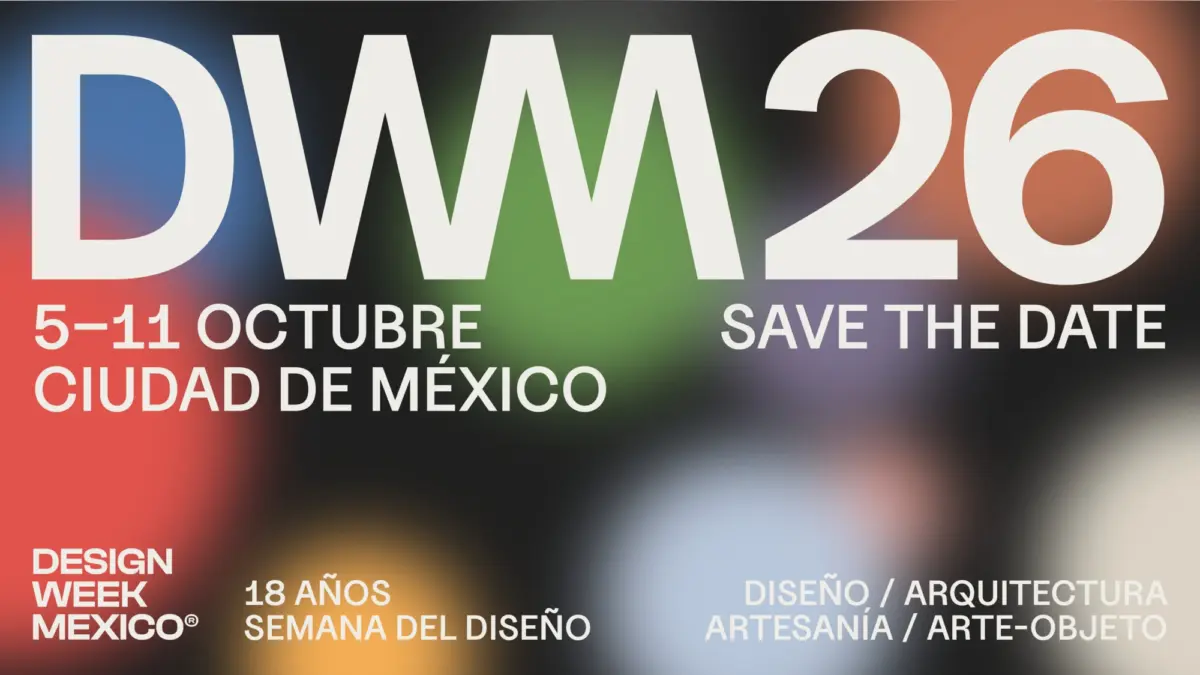
Mexico City — From October 5 to October 11, 2026, Mexico City will once again transform into a vibrant global epicenter for innovation, architecture, and creative excellence. Design Week Mexico 2026 (#DWM26) officially opens its doors this autumn, promising a deeply immersive, multidisciplinary exploration of how modern design addresses an increasingly interconnected, fluid, and complex world.
Marking a distinct evolution from previous iterations, this year’s festival embraces a significantly broader and more diverse curatorial vision. It challenges both the general public and seasoned design professionals to reflect on the built and manufactured environments through inclusive perspectives that transcend traditional, rigid boundaries. Amidst this expansive international framework, Chile steps into the spotlight as the official Guest Country of Honor, bringing a rich tapestry of Andean and Southern Cone design narratives to the heart of North America.
Main Facts
Design Week Mexico 2026 stands as one of Latin America’s most influential design platforms, bridging local craftsmanship with cutting-edge international innovation.
- Event Dates: October 5 – October 11, 2026.
- Host City: Mexico City, Mexico.
- Guest Country of Honor: Chile.
- Core Curatorial Theme: Fluid, global, and inclusive perspectives that move beyond traditional design approaches, fostering cross-cultural dialogue across Latin America.
- Primary Venues: Various architectural landmarks, cultural centers, and exhibition spaces throughout Mexico City.
- Participants: Leading international and regional architects, industrial designers, urban planners, students, and creative visionaries.
Chronology: The Evolution of Design Week Mexico
To understand the weight and momentum of the 2026 edition, it is essential to trace the journey of Design Week Mexico since its inception, viewing #DWM26 as the culmination of nearly two decades of cultural maturation.
Phase 1: Foundation and Local Roots (Late 2000s – Early 2010s)
Design Week Mexico was originally founded to position Mexico City on the global creative map. In its early years, the festival focused heavily on highlighting Mexican interior design, furniture production, and traditional artisanal techniques. It served primarily as a domestic bridge connecting local creators with early-stage international audiences.
Phase 2: International Expansion and Urban Integration (Mid 2010s)
As the event gained traction, it expanded its footprint across Mexico City’s diverse neighborhoods—from Polanco and Roma to Juárez and San Ángel. The introduction of architectural pavilions, such as the DWM Pavilion series, brought temporary experimental architecture into public spaces, engaging citizens directly with structural and spatial concepts.
Phase 3: Collaborative Cross-Pollination (Late 2010s – 2020s)
DWM increasingly integrated "Guest Countries" and "Guest States" of Honor, featuring design powerhouses such as Switzerland, Quebec, and various Mexican states (like Oaxaca and Jalisco). This framework transformed the festival from a local showcase into an international nexus of trade, cultural exchange, and critical discourse regarding sustainability and heritage.
Phase 4: The 2026 Paradigm Shift (#DWM26)
With the launch of the 2026 edition, the festival rejects conventional boundaries. Moving away from siloed disciplines (such as treating architecture, fashion, and industrial design as separate entities), #DWM26 adopts a fluid methodology. It addresses global crises—ranging from climate resilience to social equity—through the lens of collaborative, inclusive design systems.
Supporting Data: The Economic and Cultural Footprint of Design
The creative industries in Latin America represent a rapidly expanding sector of economic growth and social innovation. According to recent urban development and cultural metrics regarding Mexico City:
- Creative Economy Contribution: The creative sector accounts for a substantial percentage of Mexico City’s service-driven GDP, providing employment for tens of thousands of architects, designers, fabricators, and cultural workers.
- International Tourism Impact: Design Week Mexico consistently draws tens of thousands of international visitors, architecture enthusiasts, and global press representatives during its active week, boosting the hospitality, culinary, and retail sectors.
- Bilateral Cultural Exchange: The partnership with Chile as the Guest Country of Honor builds upon decades of growing commercial and cultural ties between Santiago and Mexico City, amplifying South-North and South-South collaborative ventures in design-led manufacturing.
Official Responses and Curatorial Vision
The curatorial team behind Design Week Mexico 2026 has emphasized that this year’s program is designed to provoke active inquiry rather than passive observation.
In an official statement released ahead of the October opening, the organizers noted:
"Design is no longer just about the objects we place in a room or the buildings we erect on a skyline. It is a dynamic language of survival, identity, and connection. With #DWM26, we are intentionally breaking down the walls between disciplines and geographies. By welcoming Chile as our Guest Country of Honor, we are opening a vital conversation about how Southern and North American creative minds navigate shared modern challenges—from resource scarcity to the preservation of indigenous craft in a digital age."
Representatives from the Chilean delegation similarly expressed enthusiasm regarding their prominent role at the festival:
"Being named Guest Country of Honor at Design Week Mexico 2026 is a profound milestone for Chilean design. Our creators have long balanced the rugged geographies of our territory with a deeply sophisticated urban sensibility. We look forward to presenting works that reflect our material innovations, sustainable paradigms, and our deep-rooted desire to connect with our Latin American peers on a global stage."
Implications: What #DWM26 Means for the Future of Design
The implications of Design Week Mexico 2026 extend far beyond the exhibition halls and temporary pavilions of October. The festival serves as a testing ground for several critical shifts within the global design discourse:

1. Decentralization of Global Design Centers
For decades, global design trends were dictated almost exclusively by traditional European and North American capitals. Events like #DWM26 aggressively challenge this hegemony, establishing Mexico City and Santiago as vital nodes where innovative paradigms are generated, debated, and exported back to the global North.
2. The Imperative of Fluidity and Inclusivity
By explicitly moving away from rigid definitions of what constitutes "good design," the 2026 festival encourages creators to embrace ambiguity, fluid identities, and cross-disciplinary collaborations. This includes merging high-tech parametric architecture with ancient artisanal textiles, ensuring that technological progress does not erase cultural memory.
3. Sustainability as an Operational Baseline
Environmental consciousness is no longer an optional "add-on" for modern designers. The projects showcased at #DWM26 underscore circular economies, locally sourced materials, and low-carbon construction methods. The Chilean pavilion and participating Latin American studios are expected to highlight breakthrough materials derived from agricultural waste, mineral byproducts, and regenerative forestry.
Conclusion
As Mexico City prepares to welcome the global design community from October 5 to October 11, 2026, Design Week Mexico stands poised to deliver its most ambitious edition to date. By dismantling traditional boundaries, fostering deep cross-cultural alliances with Chile, and championing fluid, inclusive visions of the future, #DWM26 reinforces the notion that design is the ultimate tool for reimagining how we live, build, and coexist in a changing world.
