

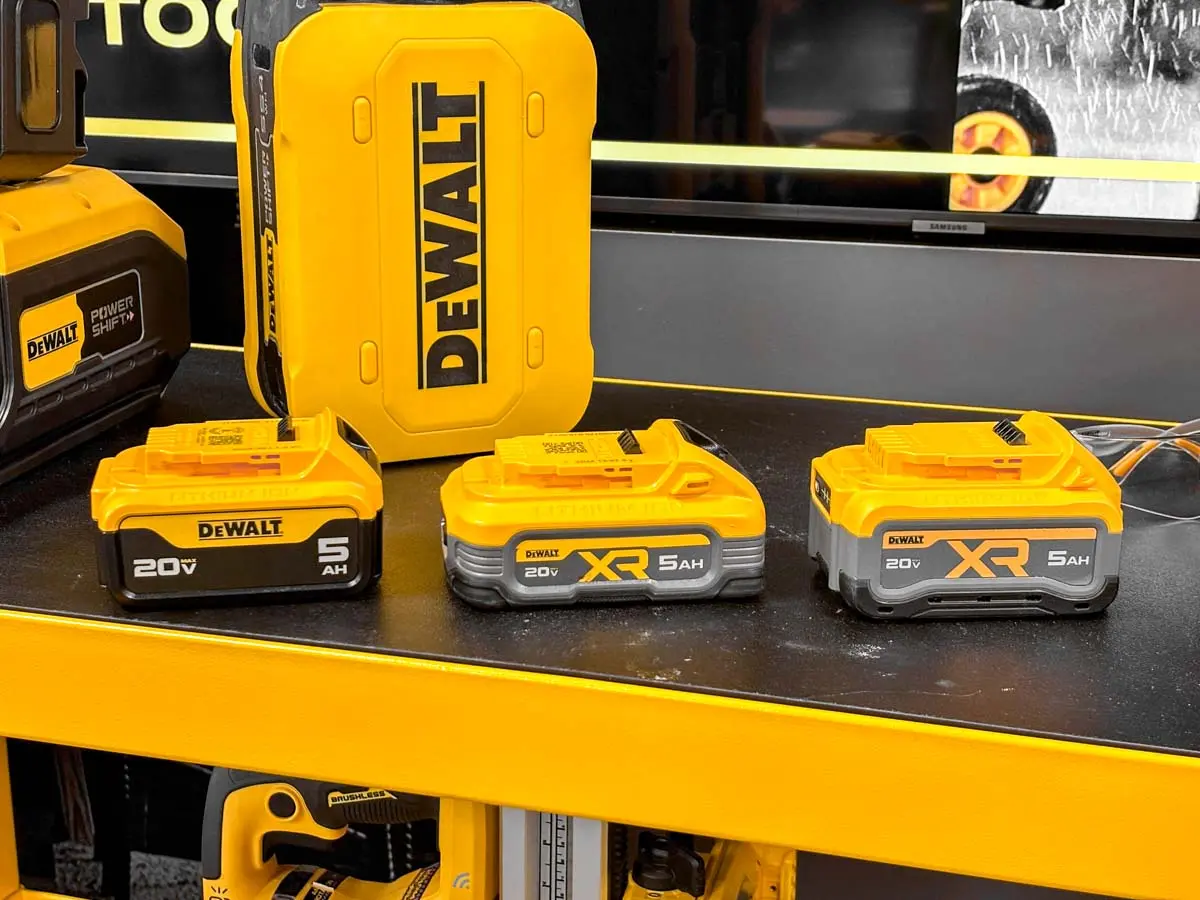
BALTIMORE — During DeWalt’s flagship "Built Black and Yellow" experience held in Baltimore, brand representatives and battery engineers pulled back the curtain on a major strategic shift coming to the company’s massive 20V Max ecosystem. For years, trade professionals, contractors, and DIY enthusiasts have navigated a growing sea of proprietary tier names—such as "Powerstack" and "Powerpack"—to identify DeWalt’s most advanced energy storage solutions.
That is all about to change.
In an effort to streamline the user experience and simplify how professionals select power equipment on the job site, DeWalt is officially retiring the standalone "Powerstack" and "Powerpack" product marketing monikers. However, trade professionals and tool loyalists can breathe a sigh of relief: the advanced engineering, cutting-edge chemistry, and high-performance capabilities driving these cells are not going away. Instead, DeWalt is migrating these technologies under a single, unified banner: the XR (Extreme Runtime) brand.
While the underlying model numbers remain unchanged, the visual aesthetic and product nomenclature on retail shelves and job sites are getting a thorough modernization. This extensive guide breaks down everything you need to know about DeWalt’s 20V Max battery rebranding, how to differentiate between the various cell architectures, and what this means for your next tool investment.
Main Facts: What Is Actually Changing?
To understand DeWalt’s new labeling architecture, it helps to look at the big picture. The primary objective of this overhaul is to eliminate confusion at the point of sale.
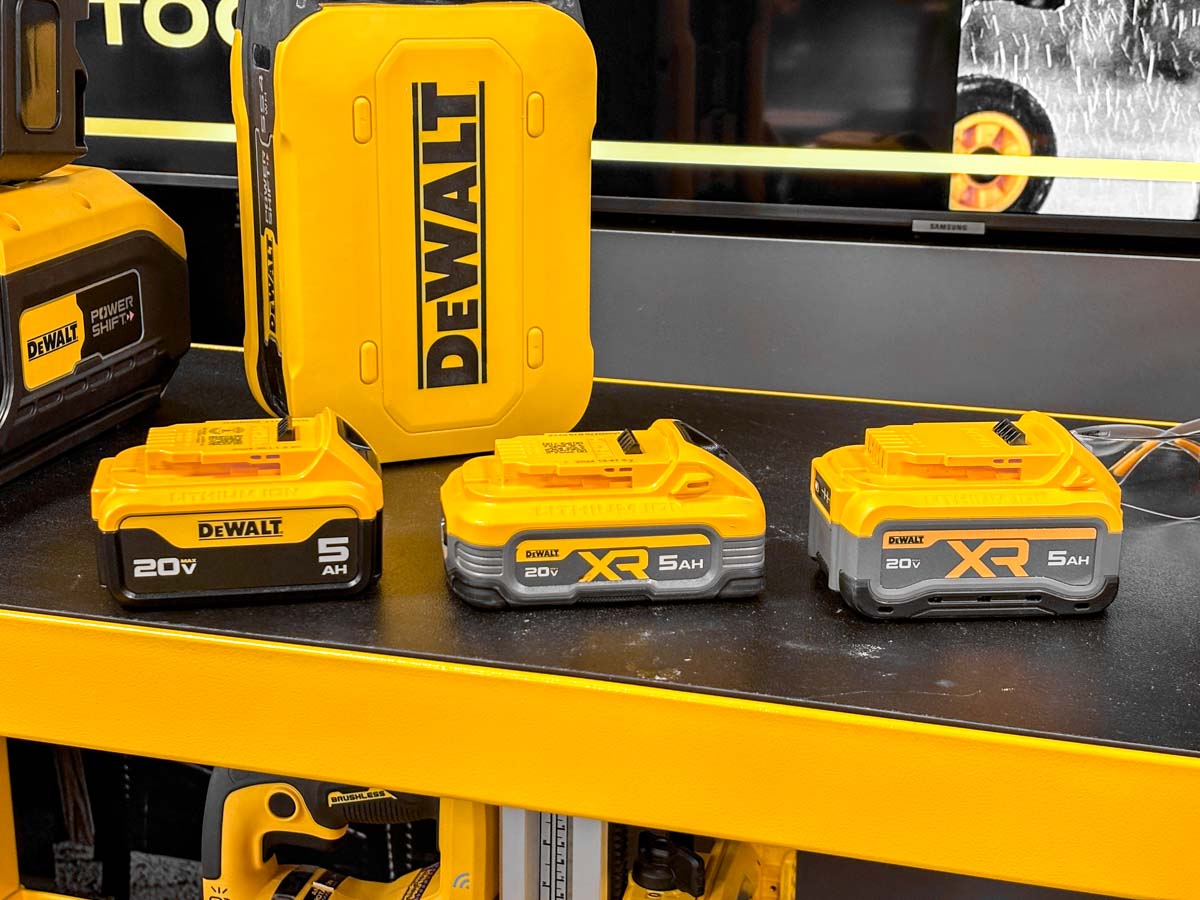
Previously, a buyer had to weigh standard lithium-ion packs against pouch-cell Powerstack batteries and tabless Powerpack batteries, all while parsing various sub-brands. DeWalt’s new strategy divides the 20V Max battery family into two clear, distinct tiers based on performance capability:
- Standard 20V Max Batteries: These traditional cylinder-cell packs are dropping the "XR" badge entirely. Because most retailers and end-users already referred to them simply by their voltage and Amp-hour (Ah) ratings—and because underlying model numbers are staying the same—this is largely a cosmetic update to the housing labels.
- Advanced 20V Max XR Batteries: This is where the major consolidation happens. Both the pouch-cell architecture (formerly known as Powerstack) and the tabless cylindrical cell architecture (formerly known as Powerpack) are being unified under the XR designation.
Specialty iterations—including oil-resistant housings and tether-ready variants for work at height—will still be available for select models, but the overarching labeling hierarchy has been fundamentally simplified.
OLD DEWALT 20V MAX NAMING        -->        NEW DEWALT 20V MAX NAMING
--------------------------------------------------------------------------------
Standard XR Batteries           -->        Standard 20V Max Batteries (XR label dropped)
Powerstack (Pouch Cell)         -->        20V Max XR (Pouch Cell Architecture)
Powerpack (Tabless Cell)        -->        20V Max XR (Tabless Cell Architecture)
Chronology of the Brand Evolution: From Niche Tech to Mainstream XR
To appreciate why DeWalt is making this move now, it is vital to trace the evolution of the brand’s energy platforms over the past several years.
- The Traditional Era: For over a decade, DeWalt’s 20V Max system relied heavily on standard 18650 and later 21700 cylindrical lithium-ion cells. The "XR" badge served as the premium indicator for brushless-compatible tools and higher-efficiency packs.
- The Pouch Cell Disruption (Powerstack): DeWalt shocked the industry by introducing stacked lithium-ion pouch cells, branded as "Powerstack." This technology dramatically lowered internal resistance, allowing the battery to deliver higher peak power, faster delivery, and a more compact, lightweight footprint compared to traditional cylindrical setups.
- The Tabless Revolution (Powerpack): Following pouch cells, DeWalt introduced high-capacity tabless cylindrical cells under the "Powerpack" moniker. Tabless technology opened up the current pathways across the entire base of the cell, mitigating thermal bottlenecks and allowing heavy-drain tools (like large angle grinders and rotary hammers) to run cooler and push past previous power ceilings.
- The 2026 Consolidation: At the Baltimore "Built Black and Yellow" event, DeWalt executives recognized that having three distinct advanced sub-brands ("XR," "Powerstack," and "Powerpack") created unnecessary friction for buyers. By pulling pouch-cell and tabless technologies under the prestigious XR umbrella, DeWalt is returning to a streamlined "Good, Better, Best" mental model for consumers.
Supporting Data: Understanding the Advanced Cell Technologies
While the marketing names are merging under the XR banner, the physical and chemical differences between the batteries remain profound. DeWalt’s advanced lineup relies on two distinct internal architectures designed for entirely different application profiles.
1. Pouch Cell Technology (Formerly Powerstack)
- Design Philosophy: Uses flat, stacked sheets of lithium-ion material rather than rolled cylinders.
- Key Advantages: Unmatched power density, extremely low profile, lighter weight, and superior voltage maintenance under heavy loads.
- Best Suited For: Compact drills, impact drivers, overhead work, and applications where user fatigue and tool balance are critical.
2. Tabless Cell Technology (Formerly Powerpack)
- Design Philosophy: Modifies standard cylindrical cells by creating a continuous conductive foil "tabless" path across the ends of the roll.
- Key Advantages: Drastically reduced internal electrical resistance, significantly lower operating temperatures during high-draw applications, and extended overall cycle life.
- Best Suited For: High-demand trade tools, demolition hammers, circular saws, and continuous heavy-duty cutting or grinding where thermal throttling is a risk.
Navigating the Ah Capacity Overlap
Because DeWalt is rolling all advanced architectures into the XR family, users must pay close attention to physical form factors and model numbers—especially as new capacities emerge.
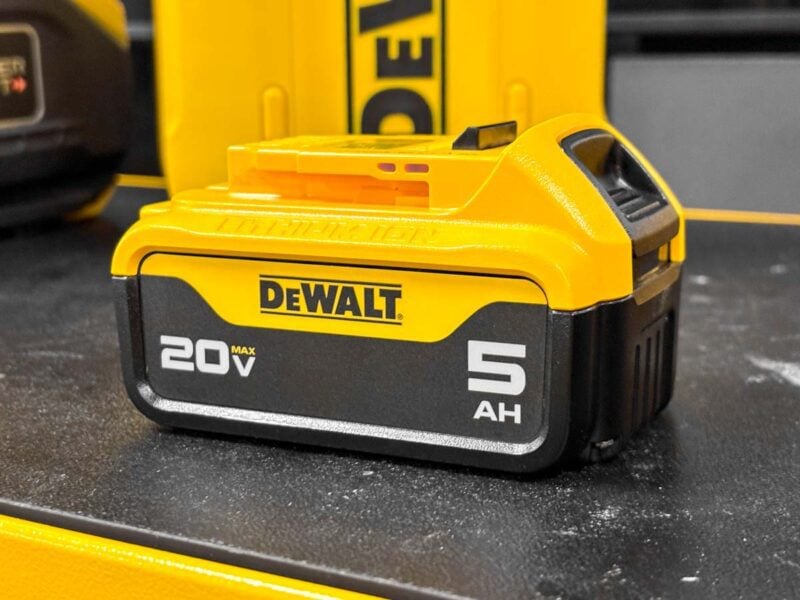
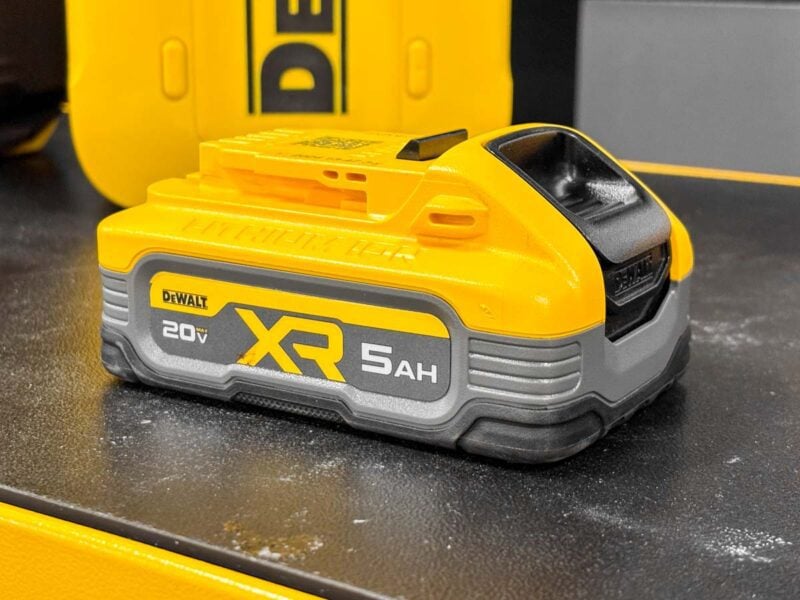
For instance, DeWalt is launching an upcoming 5.0Ah tabless battery. Under the previous system, this would have been marketed as a Powerpack. Moving forward, it will debut simply as a 20V Max XR battery.
If you are trying to differentiate between a pouch-cell XR pack and a tabless XR pack in the 5.0Ah class:
- Tabless Packs: Generally shorter from front-to-back, but slightly thicker from top-to-bottom.
- Pouch Cell Packs: Typically feature a more streamlined, ultra-flat profile.
Official Responses and Industry Insights
Speaking directly with engineering and product development teams in Baltimore, the rationale behind the rebrand boils down to one fundamental principle: clarity on the job site.
"Pros do not want to stop and decipher marketing acronyms when they are trying to replace a battery on a fast-paced commercial job site," noted a DeWalt product manager during the technical briefing. "Our tools operate in demanding environments. By consolidating our high-performance architectures under the tried-and-true XR label, we make it instantly clear that whether a professional reaches for a pouch-cell or tabless battery, they are getting our absolute highest tier of runtime and power delivery."
Industry analysts have largely praised the move, noting that tool brands frequently fall into the trap of over-complicating their accessory and battery tiers as new chemistries emerge. By maintaining backward compatibility across the entire 20V Max ecosystem—meaning every new XR battery still fits every legacy 20V Max tool DeWalt has produced since 2010—the brand is protecting past user investments while simplifying future purchases.
Implications for Contractors, Pros, and DIYers
What does this rebranding mean for you if you are currently invested in the DeWalt ecosystem?
1. No Obsolescence
First and foremost: Your current batteries are not obsolete. A legacy Powerstack or Powerpack battery will continue to charge on your existing chargers and power your existing tools without issue. The change is strictly to the labeling on new production units hitting retail shelves.
2. A Shift in Retail Purchasing Habits
When shopping online or walking through the aisles of home improvement centers, you will see the terms "Powerstack" and "Powerpack" fade out. Buyers should adjust their search habits:
- Look for "20V Max" when shopping for standard, budget-friendly, or lower-tier replacement cells.
- Look for "20V Max XR" when hunting for premium performance, keeping in mind that you must check the specifications or physical shape to confirm whether the XR pack utilizes pouch-cell or tabless technology.
3. Clearer Upgrade Paths
For general contractors managing a fleet of tools, the simplified naming convention makes inventory management more intuitive. Apprentices and crew leads can easily identify high-output XR packs designated for demanding trade applications without needing a masterclass in internal cell engineering.
The Bottom Line: Quick Reference Guide
DeWalt’s transition to a unified naming system is ultimately designed to clear the air. To ensure you purchase the exact battery configuration your workflow demands during this transition period, keep this quick cheat sheet in mind:
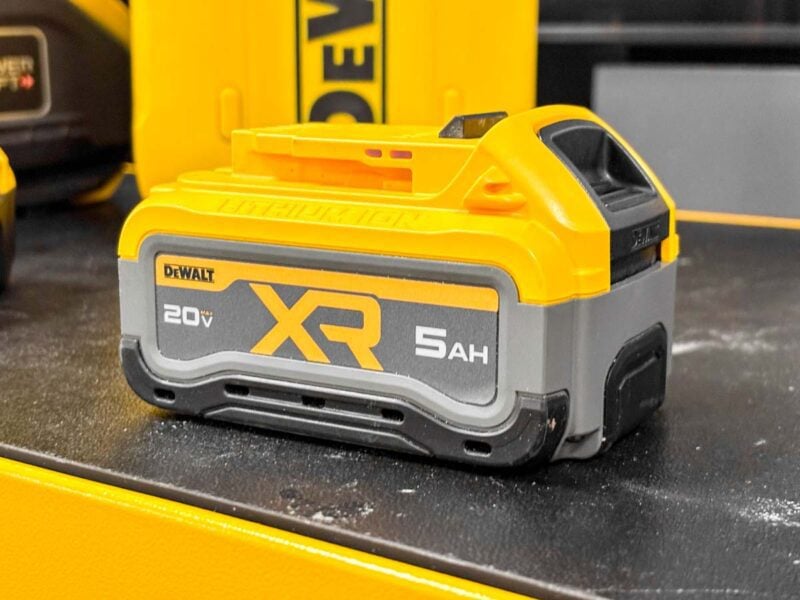
- Standard Packs: Labeled simply as 20V Max (The "XR" designation has been removed from standard tier batteries).
- Advanced Pouch Cell Packs (Ex-Powerstack): Now labeled as 20V Max XR (Characterized by ultra-compact, flat-sheet internal architecture).
- Advanced Tabless Packs (Ex-Powerpack): Now labeled as 20V Max XR (Characterized by high-draw, low-heat cylindrical tabless design).
Always double-check the specific model numbers and physical form factors on the packaging to ensure you match your power delivery expectations to the right job-site application. DeWalt’s technology remains as rugged and innovative as ever—it just wears a cleaner, more unified badge.
